
Quick answer
What Is LAMP2 Genetic Test?
The LAMP2 genetic test is a DNA test, usually from a blood sample, that looks for changes in the LAMP2 gene that cause Danon disease. It is used when your doctor suspects inherited thickening of the heart muscle, especially with heart rhythm problems, muscle weakness, or vision problems. The results help guide monitoring and testing for your family.
Sources01 / Understanding the procedure
About LAMP2 Genetic Test
What Is the LAMP2 Genetic Test
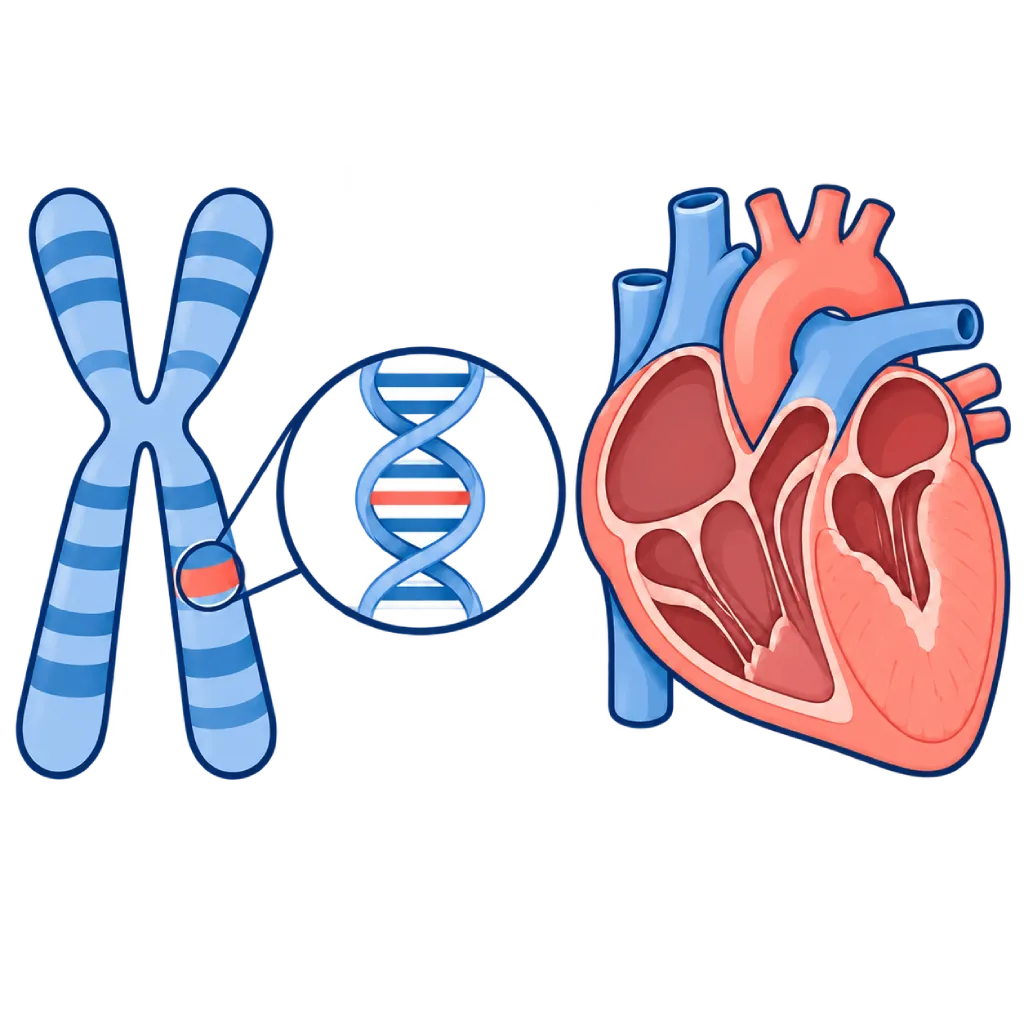
The LAMP2 gene contains instructions for making a protein that helps cells recycle material they no longer need. Harmful changes in this gene cause Danon disease, a rare inherited disorder in which this material builds up in the heart muscle, skeletal muscles, and the retina of the eye. The LAMP2 genetic test reads this gene from your DNA to look for these changes.
When Doctors Suspect Danon Disease
Danon disease often looks similar to ordinary hypertrophic cardiomyopathy. Several clues lead doctors to consider this test:
- Very severe thickening of the heart muscle at a young age, especially in boys or teenage males.
- A pre-excitation pattern on the ECG, a pattern similar to Wolff-Parkinson-White syndrome.
- Symptoms outside the heart, such as muscle weakness, learning difficulties, or vision problems.
- Laboratory results showing high levels of muscle enzymes (CK) or liver enzymes with no other clear cause.
- A family history of cardiomyopathy, heart failure at a young age, heart transplant, or sudden death.
How It Works in Brief
DNA is taken from white blood cells, then the sequence of letters that make up the LAMP2 gene is read and compared with the common sequence. The laboratory also checks whether any part of the gene is missing or duplicated.
What the Results Mean
- Disease-causing variant (pathogenic or likely pathogenic): confirms the diagnosis of Danon disease and forms the basis for testing family members.
- Variant of uncertain significance: a change that cannot yet be confirmed as harmful or harmless. This result is not used to make decisions and may be reassessed in the future.
- No variant found: Danon disease becomes less likely, but your doctor will still look for other causes of your clinical picture.
Inheritance Pattern in Families
The LAMP2 gene is located on the X chromosome. Men who carry a variant pass it on to all of their daughters, but not to their sons. Women who carry a variant have a 50 percent chance of passing it on to each child. In men, the disease usually appears earlier and is more severe. Women generally develop symptoms later, but can still have serious heart disease. Some cases occur because of a new gene change with no family history.
02 / Understanding the procedure
When Is This Procedure Considered?
A doctor may consider this procedure in the situations below. The decision is always made after a thorough assessment.
- Severe Heart Muscle Thickening at a Young AgeEspecially in boys or teenage males, or when the thickening far exceeds what is usually found.
- Heart Muscle Thickening with an Extra Electrical PathwayThe ECG shows a pre-excitation pattern, as in Wolff-Parkinson-White syndrome.
- Heart Symptoms Accompanied by Muscle or Eye ProblemsFor example, muscle weakness, high levels of muscle enzymes (CK) or liver enzymes, learning difficulties, or vision problems.
- Cardiomyopathy with an Unclear CauseLAMP2 is usually tested together with other genes in a cardiomyopathy gene panel.
- Family Members of Patients with Danon DiseaseOnce a variant is found in one family member, relatives can have targeted testing for the same variant.
Situations to Consider First
- No Genetic Counseling YetThe results affect you and your family. Counseling before the test helps you understand its benefits, limitations, and possible results.
- History of Bone Marrow Transplant or Recent TransfusionDNA in the blood may come from the donor, so the doctor chooses another type of sample or delays sample collection.
- Children Without SymptomsThe timing of testing in children is discussed with parents or guardians, based on the benefit of monitoring for the child.
- Previous Genetic TestingBring the results report. The test may not need to be repeated, or additional testing may be enough.
- Not Yet Ready to Receive ResultsThe test can be postponed until you are ready. Heart examinations and monitoring continue in the meantime.
03 / Before the procedure
How Should You Prepare?
The LAMP2 genetic test only requires a blood sample, so preparation is simple. The main part is information about your health and your family's health.
No fasting needed. You can eat, drink, and take your medicines as usual. If the sample collected is saliva, avoid eating, drinking, smoking, and chewing gum for about 30 minutes beforehand.
Family history. Note any family members on your mother's and father's sides who have had heart disease, cardiomyopathy, a pacemaker or ICD implant, a heart transplant, sudden death at a young age, muscle weakness, learning difficulties, or vision problems.
Previous test results. Bring your ECG, echocardiography, cardiac MRI, Holter recording, and laboratory results such as muscle enzymes (CK) and liver enzymes.
Family genetic test results. If a family member has already been tested, bring their report. The variant name written in the report allows a faster targeted test.
History of transfusion or transplant. Tell the team if you have recently received a blood transfusion or have ever had a bone marrow transplant.
Companion. You may bring your partner or family to the counseling session. Children are accompanied by a parent or guardian who gives consent.
Unsure about the preparation instructions? Ask our team before the procedure.
04 / During the procedure
How Is the Procedure Done?
Sample collection usually takes 15 minutes. Counseling before the test may be done on the same day or scheduled separately, and results usually come out within a few weeks.
Consultation and Genetic Counseling
Your doctor reviews your heart test results, draws up your family tree, then explains the purpose of the test, the possible results, and their impact on your family. After that, you sign the consent form.
Choosing the Type of Test
If the cause is not yet known, LAMP2 is usually tested together with other genes in a cardiomyopathy gene panel, including genes that cause other diseases that look similar, such as Fabry disease. If the family variant is already known, a targeted test for that variant is enough.
Sample Collection
A few milliliters of blood are drawn from a vein in your arm, like a regular blood test. In certain situations, the sample may be saliva or a swab from the inside of your cheek.
Laboratory Analysis
DNA is extracted from the sample, then the gene sequence is read using sequencing technology. Every change found is assessed according to international guidelines to determine whether it causes disease.
Explaining the Results
Results are explained in a follow-up consultation, not only through a written report. Your doctor discusses what the results mean, the monitoring and treatment plan, and which family members are advised to be tested.
05 / Benefits and risks
Benefits and Risks Should Be Discussed Together.
Every medical procedure has benefits and risks. Your doctor will explain both for your situation before the procedure.
Benefits You Can Expect
- Confirming the DiagnosisDistinguishes Danon disease from other hypertrophic cardiomyopathies that look similar on heart tests.
- A More Precise Monitoring PlanDanon disease can worsen more quickly, so heart rhythm monitoring, consideration of an ICD, and referral for advanced heart failure care can be prepared earlier.
- Explaining Symptoms Outside the HeartMuscle weakness, learning difficulties, or vision problems can be understood as part of the same disease and managed together with the relevant doctors.
- Targeted Testing for Family MembersRelatives can be tested for the same variant. Relatives who do not carry the variant generally do not need routine monitoring for this disease.
- Information for Family PlanningA clear inheritance pattern helps you and your partner plan a pregnancy together with your doctor and a genetic counselor.
The benefits of a procedure are not a promise of a cure. Ask how the results will affect your care plan.
Risks You Should Know
- Minor Pain or BruisingAt the needle site where blood was drawn, usually mild and quick to go away.
- Uncertain ResultsA variant of uncertain significance may be found. This result is not used for treatment decisions or family testing, and may be reassessed later.
- A Negative Result Does Not Always Rule Out the DiseaseNot all gene changes can be detected, so your doctor still assesses your condition based on the clinical picture and other tests.
- Findings in Other GenesWhen a gene panel is used, variants may be found in other genes that need to be explained and may require additional tests.
- Emotional and Family ImpactResults may cause anxiety and also provide information about the risk to other family members. Counseling helps you cope with this.
Risks can differ from person to person. A full explanation and consent are given after an individual assessment.
06 / After the procedure
What Is Recovery Like?
There is no special recovery period after sample collection.
After the blood draw. Press on the puncture site for a few minutes. A small bruise may appear and will go away on its own. You can return to your activities right away.
While waiting for results. Continue your medicines and heart follow-up visits as usual. Waiting for results is not a reason to delay planned tests or treatment.
After the results are out. Attend the results consultation. If a variant is found, your doctor will draw up a plan to monitor your heart rhythm, heart function, muscles, and eyes, and discuss testing for family members.
Emotional support. It is normal to feel anxious while waiting for or receiving results. Let the team know if you need more time or additional support.
Warning signs to watch for. This test does not cause heart symptoms, but the heart condition being evaluated may get worse. Go to the emergency room right away or contact the medical team if you experience:
- Fainting or near fainting
- A very fast or irregular heartbeat
- Chest pain or severe shortness of breath
- Shortness of breath when lying down, leg swelling, or rapid weight gain
Know the Signs That Need Prompt Care.
Follow the team's guidance on warning signs. If severe or sudden symptoms appear after the procedure, go to the nearest emergency department right away or call Heart Attack Center 1500 258.
07 / Team and support
Doctors and Procedure Support
The doctors below are listed for this procedure. Listed by name, not by ranking.

dr. Radityo Prakoso, Sp.JP(K)
Pediatrics & Congenital Heart Disease
Congenital and Structural Heart Center
Clinical focusPediatric Cardiology Consultation · Congenital Heart Disease Care
View Profile
dr. Siska S. Danny, Sp.JP(K)
Interventional Cardiology
Coronary Intervention Procedures
Clinical focusPCI for Acute Coronary Syndrome · Primary Coronary Intervention
View Profile
dr. Sunu B. Raharjo, Sp.JP(K), Ph.D.
Arrhythmia and Electrophysiology
Arrhythmia and Device Center
Clinical focusClinical and Interventional Electrophysiology · Cardiac Arrhythmia Ablation
View Profile08 / Common questions
Before You Plan the Procedure.
Frequently asked questions about the LAMP2 genetic test. The decision to have the test is made together with your doctor after genetic counseling.
What is Danon disease?
Danon disease is a rare inherited disorder caused by changes in the LAMP2 gene. Waste material inside cells builds up, mainly in the heart muscle, skeletal muscles, and the retina of the eye. This can lead to thickening of the heart muscle, rhythm problems, heart failure, muscle weakness, learning difficulties, and vision problems. In males, symptoms usually appear in childhood or adolescence and are more severe.
Do I need to fast before the LAMP2 genetic test?
No. DNA is not affected by food, drinks, or medicines, so you can eat and take your medicines as usual before the blood draw. If the sample collected is saliva, avoid eating, drinking, smoking, and chewing gum for about 30 minutes beforehand so the sample is not mixed with food residue.
How long does it take to get the test results?
Results usually come out within a few weeks, depending on the type of test and the laboratory. A targeted test for a variant already known in the family is usually faster than a full gene panel. The team will give you an estimated time when your sample is collected. While waiting, continue your treatment and heart follow-up visits as usual.
What does a negative test result mean?
In patients with symptoms, a negative result makes Danon disease less likely, but does not completely rule it out because not all gene changes can be detected. Your doctor will still look for other causes and continue heart monitoring. In family members tested for a known family variant, a negative result is much more conclusive.
Which family members need to be tested?
Once a disease-causing variant is found, doctors usually recommend targeted testing for close relatives, such as parents, siblings, and children. Because the LAMP2 gene is on the X chromosome, all daughters of a man who carries the variant will inherit it, while each child of a woman who carries the variant has a 50 percent chance. Counseling helps decide the order of testing.
Can children have this test?
Yes, especially if the child already shows signs of the disease or there is a known variant in the family. Danon disease can appear in childhood, especially in boys, so test results help determine when heart monitoring should start. The timing of testing in children without symptoms is discussed with parents or guardians during genetic counseling.
Sources and Medical Review
Translated from the Indonesian edition medically reviewed by dr. Radityo Prakoso, Sp.JP(K).
Sources as cited in the Indonesian edition.
- Arbelo E, Protonotarios A, Gimeno JR, et al. 2023 ESC Guidelines for the management of cardiomyopathies. Eur Heart J. 2023;44(37):3503-3626.
- Wilde AAM, Semsarian C, Márquez MF, et al. EHRA/HRS/APHRS/LAHRS Expert Consensus Statement on the state of genetic testing for cardiac diseases. Europace. 2022;24(8):1307-1367.
- Hershberger RE, Givertz MM, Ho CY, et al. Genetic Evaluation of Cardiomyopathy: A Heart Failure Society of America Practice Guideline. J Card Fail. 2018;24(5):281-302.
- Maron BJ, Roberts WC, Arad M, et al. Clinical Outcome and Phenotypic Expression in LAMP2 Cardiomyopathy. JAMA. 2009;301(12):1253-1259.
- Brambatti M, Caspi O, Maolo A, et al. Danon disease: Gender differences in presentation and outcomes. Int J Cardiol. 2019;286:92-98.
- Richards S, Aziz N, Bale S, et al. Standards and guidelines for the interpretation of sequence variants: a joint consensus recommendation of the American College of Medical Genetics and Genomics and the Association for Molecular Pathology. Genet Med. 2015;17(5):405-424.