
Quick answer
What Is Endovascular Aneurysm Repair?
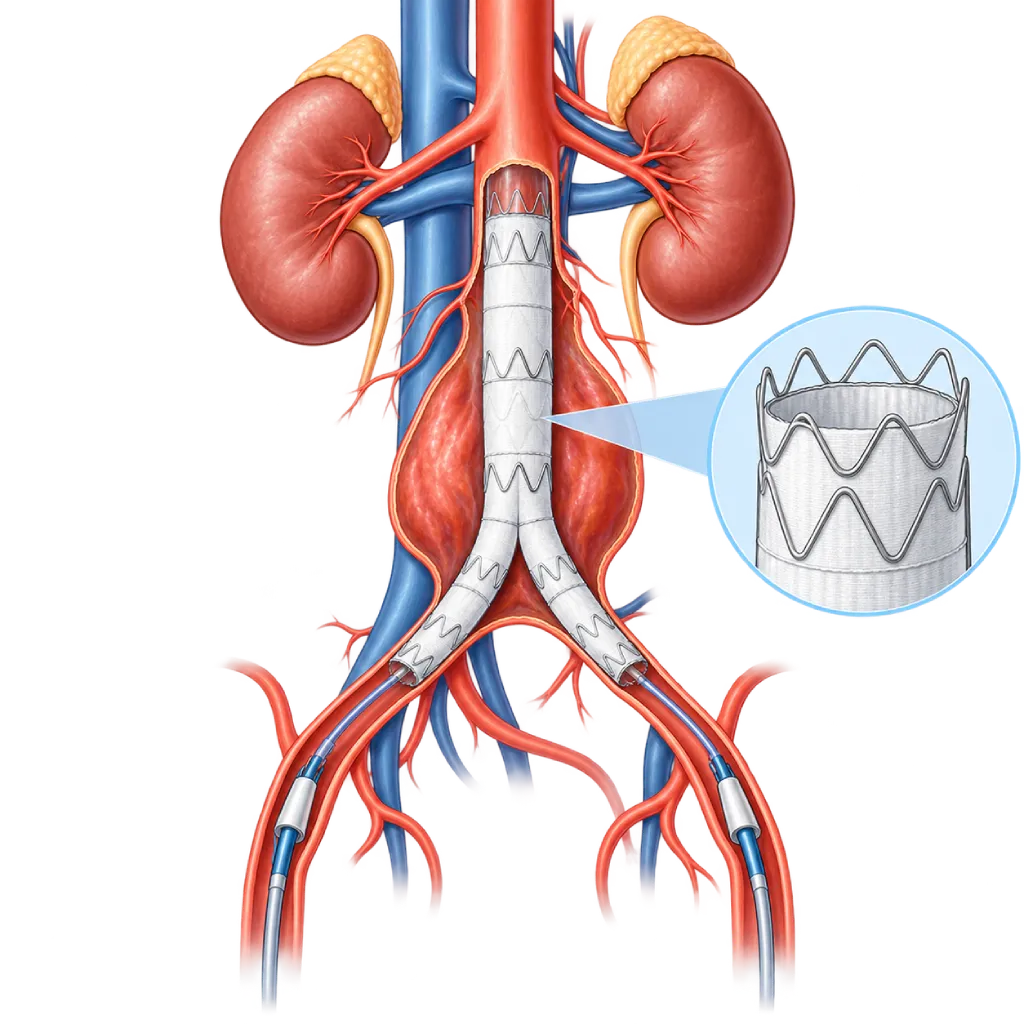
Endovascular aneurysm repair (EVAR) is a procedure to treat a widened abdominal aorta without opening the abdomen. A metal-framed fabric tube (stent graft) is inserted through an artery in the groin, then placed in the widened part of the aorta so blood no longer presses against the weak wall. The procedure usually takes 1 to 3 hours.
Sources01 / Understanding the procedure
About Endovascular Aneurysm Repair
What Is Endovascular Aneurysm Repair
The aorta is the main blood vessel that carries blood from the heart to the rest of the body. In the abdomen, the wall of the aorta can weaken and bulge like a balloon. This widening is called an abdominal aortic aneurysm. It usually causes no symptoms, but as it grows larger, its wall can rupture and cause severe bleeding inside the abdomen.
Endovascular aneurysm repair, or EVAR, repairs the aneurysm from inside the blood vessel. A stent graft, which is a tube of synthetic fabric with a metal frame, is placed inside the aorta so that blood flows inside the tube. The aneurysm sac is not removed, but it no longer receives the pressure of the blood flow.
When an Aneurysm Needs Repair
Small aneurysms are usually just monitored regularly with ultrasound or CT, along with blood pressure control, quitting smoking, and cholesterol-lowering medication. Repair is usually recommended when the aneurysm diameter reaches about 5.5 cm in men or 5.0 cm in women, grows by 1 cm or more in a year, or causes abdominal or back pain. A ruptured aneurysm requires emergency treatment.
Aortic Shape Determines the Options
The stent graft needs to seal tightly against the healthy section of the aorta below the kidney (renal) arteries, called the aneurysm neck, and against the pelvic blood vessels. For this reason, before the procedure the doctor reviews CT angiography results to measure the length, width, and curvature of the aorta, as well as the size of the blood vessels in the groin. If the aneurysm neck is too short or angled, the doctor may consider a specialized stent graft with branches or openings (branched or fenestrated), or open surgery.
EVAR or Open Surgery
Large studies show that the risk in the first month after EVAR is lower than after open surgery, and the hospital stay is shorter. Over the long term, this early advantage is no longer seen, and after EVAR, repeat procedures are needed more often and imaging tests are needed for life. For this reason, open surgery, covered on the Aortic Surgery page, may be preferred for younger patients with a long life expectancy or when the shape of the aorta is not suitable. The choice is made together with the team, taking into account your age, health, aortic shape, and preferences.
Leaks and Lifelong Monitoring
After EVAR, blood sometimes still seeps into the aneurysm sac. This is called an endoleak. Some endoleaks go away on their own, while others need an additional procedure so the aneurysm does not keep growing. For this reason, CT angiography is usually done about one month after the procedure, followed by regular ultrasound or CT for life, depending on the results.
EVAR and Aortic Stent Grafts
EVAR is stent graft placement in the abdominal aorta. Stent graft placement in the chest aorta (TEVAR) and for tears in the aortic wall is covered on the Aortic Stent Graft Placement (Endovascular Aortic Repair) page.
02 / Understanding the procedure
When Is This Procedure Considered?
A doctor may consider this procedure in the situations below. The decision is always made after a thorough assessment.
- Large Abdominal Aortic AneurysmA diameter of about 5.5 cm in men or 5.0 cm in women.
- Rapidly Growing AneurysmGrowth of 1 cm or more in a year on regular follow-up scans.
- Aneurysm Causing SymptomsFor example, abdominal or back pain that is not explained by another cause.
- Ruptured AneurysmAn emergency procedure to stop the bleeding if the shape of the aorta is suitable.
- Pelvic (Iliac) Artery AneurysmWidening of the iliac artery, which often accompanies an abdominal aortic aneurysm.
- Higher Risk from Open SurgeryFor example, in older age or with accompanying heart and lung disease.
Situations to Consider First
- Aneurysm Neck Too Short or AngledA standard stent graft has difficulty sealing tightly; a specialized stent graft or open surgery is considered.
- Pelvic Arteries Too Small or Heavily CalcifiedThe device is difficult to insert; the doctor may use another route or choose open surgery.
- Small Aneurysm Without SymptomsUsually just monitored regularly because the risk of rupture is low.
- Unable to Undergo Lifelong MonitoringOpen surgery may be more suitable if regular follow-up imaging is difficult to attend.
03 / Before the procedure
How Should You Prepare?
Preparation starts a few days to a few weeks before the procedure, except for a ruptured aneurysm, which is treated as an emergency.
CT angiography. This test maps the size and shape of the aorta and the pelvic blood vessels, to choose the right stent graft size.
General tests. Blood tests, kidney function, an ECG, and if needed echocardiography or lung tests to assess your body's readiness.
Medications. Tell the team about all the medications you take. Blood thinners, certain diabetes medications, and other medications may need to be adjusted according to your doctor's instructions. Aspirin and cholesterol medications are usually continued.
Allergies and kidneys. Tell the team if you have ever had an allergy to contrast dye or have a kidney problem, so preventive steps can be prepared.
Fasting and quitting smoking. You will be asked to fast for several hours before the procedure. Quitting smoking as soon as possible helps recovery and slows the growth of the aneurysm.
Unsure about the preparation instructions? Ask our team before the procedure.
04 / During the procedure
How Is the Procedure Done?
EVAR is done in a catheterization lab or a hybrid operating room, which is an operating room equipped with X-ray imaging. The procedure usually takes 1 to 3 hours, under general anesthesia, regional anesthesia, or local anesthesia with a sedative.
Access Through the Groin
The doctor inserts small tubes into the arteries in both groins, using a needle puncture or a small incision. A blood thinner is given to prevent clots from forming during the procedure.
Mapping the Aorta
Contrast dye is injected and X-ray images are taken to confirm the location of the kidney arteries, the aneurysm neck, and the pelvic blood vessels.
Placing the Stent Graft
The main body of the stent graft, folded inside a catheter, is pushed into the aorta and then opened just below the kidney arteries. The legs of the stent graft are then connected into the left and right pelvic blood vessels. A balloon is inflated to press the stent graft firmly against the aortic wall.
Making Sure There Is No Leak
Contrast dye is injected again to confirm that blood flows inside the stent graft and does not seep into the aneurysm sac. The catheters are removed, and the blood vessels are closed with a closure device or stitches.
05 / Benefits and risks
Benefits and Risks Should Be Discussed Together.
Every medical procedure has benefits and risks. Your doctor will explain both for your situation before the procedure.
Benefits You Can Expect
- No Large Abdominal IncisionThe stent graft is inserted through an artery in the groin.
- Faster RecoveryThe hospital stay is usually shorter, and light activity can start sooner.
- Lower Early RiskAccording to large studies, the risk in the first month is lower than with open surgery.
- An Option for High-Risk PatientsCan be considered when your health does not allow open surgery.
- Can Be Done in an EmergencyFor a ruptured aneurysm, if the shape of the aorta is suitable for a stent graft.
The benefits of a procedure are not a promise of a cure. Ask how the results will affect your care plan.
Risks You Should Know
- Leak Into the Aneurysm Sac (Endoleak)Blood still seeps into the aneurysm sac; some leaks need an additional procedure.
- Stent Graft Movement or BlockageCan happen years later, which is why lifelong follow-up imaging is important.
- Problems in the GroinBruising, bleeding, or artery problems where the devices were inserted.
- Kidney ProblemsCaused by contrast dye or reduced blood flow to the kidney arteries; kidney function is monitored.
- Reduced Blood Flow to the Intestines or LegsRare; can occur if a branch vessel is covered or debris is carried by the bloodstream.
- Repeat Procedures Later OnNeeded more often after EVAR than after open surgery.
Risks can differ from person to person. A full explanation and consent are given after an individual assessment.
06 / After the procedure
What Is Recovery Like?
Most patients stay in the hospital for 1 to 3 days after EVAR. You can usually sit up and walk the next day.
Early monitoring. Your blood pressure, the puncture sites in the groin, the pulses in your feet, urine output, and kidney function are monitored.
Activity. Light activity can start right away. Avoid heavy lifting for about 1 to 2 weeks or as advised by your doctor, especially if you have an incision in the groin.
Medications. Antiplatelet, cholesterol-lowering, and blood pressure medications are usually continued to protect your blood vessels.
Follow-up imaging. CT angiography is usually done about one month after the procedure, followed by regular ultrasound or CT for life. Do not skip these appointments, even if you feel well.
Warning signs. Go to the emergency room right away if you have:
- Sudden, severe abdominal or back pain
- Severe dizziness, fainting, or cold sweats
- Growing swelling, bleeding, or severe pain in the groin
- A leg that is pale, cold, tingling, or painful at rest
- A high fever, or a wound that is red and draining pus
- Very little or no urine
Know the Signs That Need Prompt Care.
Follow the team's guidance on warning signs. If severe or sudden symptoms appear after the procedure, go to the nearest emergency department right away or call Heart Attack Center 1500 258.
07 / Team and support
Doctors and Procedure Support
The doctors below are listed for this procedure. Listed by name, not by ranking.

dr. Emanoel Oepangat, Sp.JP(K)
Interventional Cardiology
Vascular Diagnostic and Therapeutic Center +1 center
Clinical focusCoronary Intervention · Peripheral Vascular Intervention
View Profile
dr. Suko Adiarto, Sp.JP(K), Ph.D.
Interventional Cardiology
Vascular Diagnostic and Therapeutic Center +1 center
Clinical focusCoronary Intervention · Peripheral Vascular Intervention
View Profile
dr. Widya T. Suwatri, Sp.BTKV, Subsp. JD(K)
Adult Cardiac Surgery
Advanced Cardiovascular Surgical Care +1 center
Clinical focusMinimally Invasive Cardiac Surgery · Coronary Artery Bypass Surgery
View ProfileVascular Interventional Suite
A procedure room with X-ray imaging for diagnosing and treating narrowed, blocked, or enlarged blood vessels outside the heart…
CT Scan 512 Slices
A CT scanner that produces up to 512 image slices in a single rotation to show the coronary arteries, calcium in the artery…
The availability of technology and test support is confirmed with the team. Technology is chosen according to clinical need.
08 / Common questions
Before You Plan the Procedure.
Frequently asked questions about endovascular aneurysm repair (EVAR).
Does EVAR hurt?
During the procedure you do not feel pain because you receive general anesthesia, regional anesthesia, or local anesthesia with a sedative. Afterward, pain is usually mild and limited to the groin, unlike open surgery, which leaves a long incision in the abdomen. Pain relievers are given if needed. Some patients have a mild fever or fatigue for a few days after the procedure, which usually eases on its own.
What is the difference between EVAR and open surgery?
In open surgery, the abdomen is opened and the widened part of the aorta is replaced with an artificial tube that is sewn in place. In EVAR, a stent graft is placed from the inside through an artery in the groin. EVAR has a lower early risk and a faster recovery, but it requires lifelong monitoring and more often needs a repeat procedure. The results of open surgery usually last a long time with less frequent monitoring.
How long will I stay in the hospital, and when can I resume my activities?
Most patients stay in the hospital for 1 to 3 days. Walking is usually possible the day after the procedure. Light work can usually resume within 1 to 2 weeks. Avoid heavy lifting and strenuous exercise until your doctor allows it, especially if you have an incision in the groin. You can start driving once you move comfortably and no longer take pain relievers that make you drowsy.
Why do I need follow-up CT scans or ultrasounds for life?
A stent graft can shift, its connections can loosen, or blood can seep back into the aneurysm sac years after the procedure, often without symptoms. Regular tests help detect these problems early, before the aneurysm grows or ruptures. CT angiography is usually done about one month after the procedure, followed by regular ultrasound or CT depending on the results. Your doctor sets the follow-up schedule.
Does my aneurysm go away after EVAR?
The aneurysm sac remains because it is not removed. Once the stent graft is sealed tightly, the sac no longer receives blood pressure, so it usually stays the same size or slowly shrinks. If the sac grows instead, there is usually a leak that needs to be checked and may be treated with an additional procedure. For this reason, the aneurysm size is checked at every follow-up visit.
Can every abdominal aortic aneurysm be treated with EVAR?
Not always. EVAR requires a sufficiently long section of healthy aorta below the kidney arteries and pelvic blood vessels that are wide enough. If the shape is not suitable, the doctor may consider a specialized stent graft or open surgery. Small aneurysms are usually just monitored regularly without a procedure. Your doctor reviews your CT angiography results before deciding which option suits you.
Sources and Medical Review
Translated from the Indonesian edition medically reviewed by dr. Suko Adiarto, Sp.JP(K), Ph.D..
Sources as cited in the Indonesian edition.
- Wanhainen A, Van Herzeele I, Bastos Goncalves F, et al. European Society for Vascular Surgery (ESVS) 2024 Clinical Practice Guidelines on the Management of Abdominal Aorto-Iliac Artery Aneurysms. Eur J Vasc Endovasc Surg. 2024;67(2):192-331.
- Chaikof EL, Dalman RL, Eskandari MK, et al. The Society for Vascular Surgery practice guidelines on the care of patients with an abdominal aortic aneurysm. J Vasc Surg. 2018;67(1):2-77.e2.
- Mazzolai L, Teixido-Tura G, Lanzi S, et al. 2024 ESC Guidelines for the management of peripheral arterial and aortic diseases. Eur Heart J. 2024;45(36):3538-3700.
- Isselbacher EM, Preventza O, Hamilton Black J, et al. 2022 ACC/AHA Guideline for the Diagnosis and Management of Aortic Disease: A Report of the American Heart Association/American College of Cardiology Joint Committee on Clinical Practice Guidelines. Circulation. 2022;146(24):e334-e482.
- Patel R, Sweeting MJ, Powell JT, Greenhalgh RM. Endovascular versus open repair of abdominal aortic aneurysm in 15-years' follow-up of the UK endovascular aneurysm repair trial 1 (EVAR trial 1): a randomised controlled trial. Lancet. 2016;388(10058):2366-2374.
- Lederle FA, Kyriakides TC, Stroupe KT, et al. Open versus Endovascular Repair of Abdominal Aortic Aneurysm. N Engl J Med. 2019;380(22):2126-2135.
- IMPROVE Trial Investigators. Comparative clinical effectiveness and cost effectiveness of endovascular strategy v open repair for ruptured abdominal aortic aneurysm: three year results of the IMPROVE randomised trial. BMJ. 2017;359:j4859.