
Quick answer
What Is Peritoneal Dialysis?
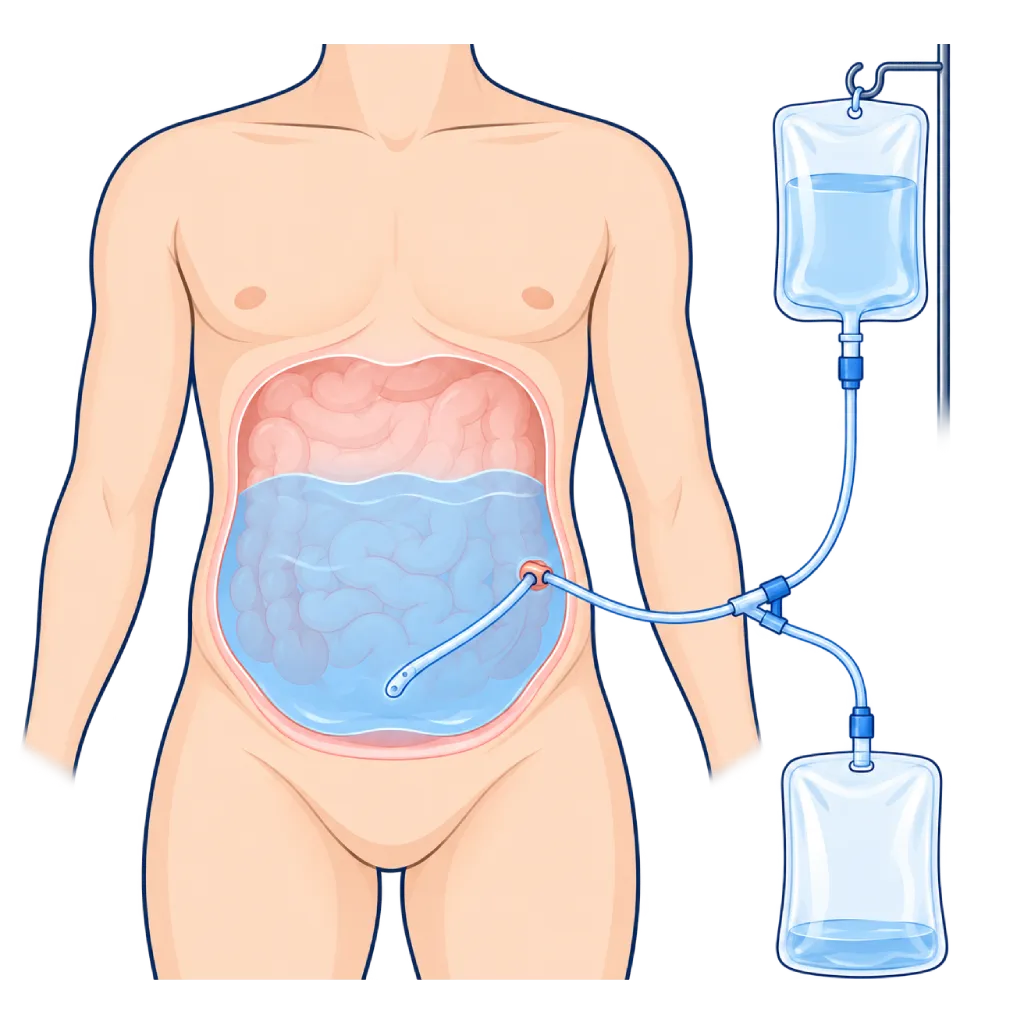
Peritoneal dialysis is a form of dialysis that uses the lining of the abdominal cavity (peritoneum) as a filter. A special fluid is put into the abdomen through a catheter, left for several hours to draw out waste and excess fluid, and then drained. After training, patients or their families can do it themselves at home.
Sources01 / Understanding the procedure
About Peritoneal Dialysis
What Is Peritoneal Dialysis
When the kidneys can no longer filter the blood, waste and fluid build up in the body. Peritoneal dialysis cleans the blood by using the peritoneum, the thin membrane that lines the abdominal cavity and is rich in blood vessels. Dialysis fluid is put into the abdominal cavity through a soft tube (catheter) that is placed permanently, and waste and excess fluid then move from the blood into the fluid before it is drained out.
How One Cycle Works
Each cycle has three stages: the old fluid is drained from the abdominal cavity, new fluid is put in, and then the fluid is left to dwell for several hours while you go about your activities.
- CAPD (continuous ambulatory peritoneal dialysis): fluid exchanges are done manually, usually 3 to 5 times a day. Each exchange takes about 30 to 40 minutes.
- APD (automated peritoneal dialysis): a small machine performs the fluid exchanges automatically while you sleep, usually for 8 to 10 hours every night.
Peritoneal Dialysis and the Heart
Chronic kidney disease and heart disease often go hand in hand. Because peritoneal dialysis works slowly and continuously, changes in fluid and blood pressure are usually more stable, which makes it suitable for some heart patients. In some patients with severe heart failure, kidney problems, and fluid buildup that is hard to control with medications, peritoneal dialysis may also be considered to help remove excess fluid.
Peritoneal Dialysis or Hemodialysis
Hemodialysis filters the blood with a machine in a dialysis unit, usually 2 to 3 times a week. Peritoneal dialysis is done at home every day, without needles, and gives you more flexibility with your schedule, but it requires discipline in keeping things clean. The choice of dialysis method is discussed with your doctor based on your health, your ability to care for yourself, and your home situation.
02 / Understanding the procedure
When Is This Procedure Considered?
A doctor may consider this procedure in the situations below. The decision is always made after a thorough assessment.
- End-Stage Kidney FailureKidney function has declined so much that waste and fluid can no longer be removed properly, and kidney replacement therapy is needed.
- Choosing Dialysis at HomePatients who want to have dialysis at home with a more flexible schedule, and who can care for the catheter themselves or with help from family.
- Less Stable Blood Pressure or Heart ConditionSlow, continuous fluid removal may be easier to tolerate than hemodialysis for some heart patients.
- Heart Failure with Fluid BuildupIn severe heart failure with kidney problems and fluid that is hard to remove with medications, peritoneal dialysis may be considered after evaluation by the heart and kidney teams.
- Preserving Remaining Kidney FunctionPeritoneal dialysis tends to help preserve remaining kidney function for longer.
Situations to Consider First
- History of Extensive Abdominal SurgeryAdhesions in the abdominal cavity can interfere with fluid flow. The doctor will assess whether peritoneal dialysis is still possible.
- Unrepaired HerniaFluid in the abdominal cavity adds pressure, so a hernia is usually repaired first.
- No One Yet Able to Perform Fluid ExchangesIf the patient cannot do it themselves, a trained family member or caregiver is needed.
- A Home That Is Hard to Keep CleanFluid exchanges require a clean room and a place to store supplies. The team can help assess and prepare your home.
- Severe Lung Disease or Active Bowel InflammationCertain conditions make peritoneal dialysis less suitable and need to be considered together with your doctor.
03 / Before the procedure
How Should You Prepare?
Preparation includes placing the catheter and training. The team will give you written instructions.
Choosing the catheter site. Before placement, the team marks where the catheter will exit the skin of your abdomen, taking into account your belt line and how you usually dress.
Emptying the bowel. You may be given a laxative the day before, because a full bowel can affect the position of the catheter.
Medications and fasting. Bring a list of all your medications. Blood thinners may need to be adjusted. Follow the fasting instructions from the team, and do not stop any medication without your doctor's direction.
Hygiene. Shower and clean your abdomen as instructed by the team on the day of the procedure.
Preparing your home. Prepare a clean, well-lit room for fluid exchanges, and a dry place to store the fluid bags.
Companion and training. Bring a family member who will help you, because training in fluid exchanges usually takes about one to two weeks.
Unsure about the preparation instructions? Ask our team before the procedure.
04 / During the procedure
How Is the Procedure Done?
Peritoneal dialysis begins with catheter placement at the hospital, followed by training and routine fluid exchanges at home.
Catheter Placement
A soft catheter is placed through the abdominal wall into the abdominal cavity. The procedure usually takes about one hour, under local anesthesia with a sedative, or under general anesthesia if it is placed using a laparoscopic technique. The outer end of the catheter exits the skin beside the navel.
Healing Period
When possible, the catheter is left for about two weeks so the wound can heal before it is used routinely. In urgent situations, dialysis can be started earlier with small volumes of fluid.
Training
A dialysis nurse trains you and your family in how to wash your hands, exchange the fluid, care for the catheter exit site, and recognize signs of infection, until you are ready to do it yourself.
Fluid Exchanges at Home
At each exchange, the old fluid is drained out into an empty bag, and then new fluid flows in from another bag. With APD, this step is done by a machine while you sleep.
Regular Follow-Up Visits
You see the doctor and dialysis nurse regularly for blood tests, assessment of dialysis adequacy, and adjustment of your fluid prescription.
05 / Benefits and risks
Benefits and Risks Should Be Discussed Together.
Every medical procedure has benefits and risks. Your doctor will explain both for your situation before the procedure.
Benefits You Can Expect
- Done at HomeThere is no need to visit a dialysis unit several times a week, so it is easier to fit around work and other activities.
- No Needles at Each Dialysis SessionFluid exchanges are done through the catheter that is already in place.
- More Stable Fluid RemovalIt works slowly every day, so changes in blood pressure and strain on the heart are usually smaller.
- Helps Preserve Remaining Kidney FunctionRemaining kidney function tends to last longer, which benefits long-term health.
- A More Flexible DietFluid and food restrictions are usually not as strict as with hemodialysis, although they still need to be managed with the team.
The benefits of a procedure are not a promise of a cure. Ask how the results will affect your care plan.
Risks You Should Know
- Abdominal Cavity Infection (Peritonitis)The main risk. Signs include cloudy fluid, abdominal pain, or fever, and it needs prompt treatment. The risk is greatly reduced with clean technique.
- Catheter Exit Site InfectionRedness, swelling, or pus on the skin around the catheter, which can usually be treated if found early.
- Catheter ProblemsThe catheter can shift, become blocked, or leak, so it sometimes needs to be repaired or replaced.
- HerniaFluid in the abdominal cavity adds pressure on the abdominal wall, so a hernia can develop.
- Higher Blood Sugar and Weight GainDialysis fluid contains sugar, some of which is absorbed by the body. Blood sugar and weight need to be monitored, especially in people with diabetes.
- Protein LossSome protein is lost into the dialysis fluid, so your protein intake needs to be planned with a dietitian.
Risks can differ from person to person. A full explanation and consent are given after an individual assessment.
06 / After the procedure
What Is Recovery Like?
After catheter placement, the majority of patients stay one night in the hospital or go home on the same day.
Caring for the wound and catheter. Keep the dressing dry and clean. Do not soak in a bath or swim until your doctor allows it, and follow the instructions on how to shower.
Activity. Avoid lifting heavy objects for several weeks so the wound can heal and a hernia does not develop.
Regular bowel movements. Constipation can interfere with fluid flow, so get enough fiber and take a laxative if advised.
Daily habits. Once dialysis is underway, record your weight, blood pressure, and the amount of fluid drained each day, and care for the catheter exit site as you were trained.
Warning signs to watch for. Contact the dialysis team or go to the emergency room right away if you experience:
- Drained fluid that looks cloudy
- Abdominal pain or fever
- Redness, swelling, or pus at the catheter exit site
- Fluid that will not drain out or flow in
- Rapid weight gain, swelling, or shortness of breath
Know the Signs That Need Prompt Care.
Follow the team's guidance on warning signs. If severe or sudden symptoms appear after the procedure, go to the nearest emergency department right away or call Heart Attack Center 1500 258.
07 / Team and support
Doctors and Procedure Support
The doctors below are listed for this procedure. Listed by name, not by ranking.

dr. Debby C. Soemitha, Sp.PD
Internal Medicine
Clinical focusDiabetes and Diabetes Complications · Obesity and Metabolic Disease
View Profile
dr. Siska S. Danny, Sp.JP(K)
Interventional Cardiology
Coronary Intervention Procedures
Clinical focusPCI for Acute Coronary Syndrome · Primary Coronary Intervention
View Profile08 / Common questions
Before You Plan the Procedure.
Questions patients and families often ask about peritoneal dialysis. The choice of dialysis method is made together with your doctor after an examination.
What is the difference between peritoneal dialysis and hemodialysis?
Hemodialysis filters the blood with a machine in a dialysis unit, usually 2 to 3 times a week, and requires access to a blood vessel. Peritoneal dialysis uses the lining of the abdominal cavity as a filter, is done every day at home, and does not use needles. Both replace part of the work of the kidneys, and the choice is tailored to your situation.
How long does one fluid exchange take?
With CAPD, one exchange takes about 30 to 40 minutes, usually 3 to 5 times a day. Between exchanges, the fluid stays in the abdominal cavity for several hours while you go about your activities. With APD, a machine performs the fluid exchanges while you sleep, for about 8 to 10 hours every night.
Is peritoneal dialysis safe for heart patients?
For many heart patients, peritoneal dialysis can be a good option because fluid is removed slowly, so blood pressure stays more stable. However, the decision is made together with the cardiologist and the kidney specialist, taking into account heart function, the condition of the abdomen, and the ability to care for the catheter at home.
Can I work and travel?
Yes. Many patients keep working because fluid exchanges can be scheduled between activities, or done by a machine during sleep. For travel, delivery of dialysis supplies to your destination can be arranged. Discuss your travel plans with the dialysis team well in advance, including how to keep things clean when exchanging fluid away from home.
What signs of infection should I watch for?
The main sign is drained fluid that looks cloudy, along with abdominal pain or fever, which can indicate peritonitis. Redness, swelling, or pus at the catheter exit site indicates an infection of the skin around the catheter. Contact the dialysis team right away if you notice these signs, and bring the bag of cloudy fluid when you come in.
Can peritoneal dialysis be done for life?
Many patients undergo peritoneal dialysis for years. Over time, the ability of the abdominal lining to filter can decline, or repeated infections can occur, so some patients need to switch to hemodialysis. A kidney transplant can also be discussed when possible. Regular follow-up visits help determine the right time to switch.
Sources and Medical Review
Translated from the Indonesian edition medically reviewed by dr. Debby C. Soemitha, Sp.PD.
Sources as cited in the Indonesian edition.
- Brown EA, Blake PG, Boudville N, et al. International Society for Peritoneal Dialysis practice recommendations: Prescribing high-quality goal-directed peritoneal dialysis. Perit Dial Int. 2020;40(3):244-253.
- Li PK, Chow KM, Cho Y, et al. ISPD peritonitis guideline recommendations: 2022 update on prevention and treatment. Perit Dial Int. 2022;42(2):110-153.
- Crabtree JH, Shrestha BM, Chow KM, et al. Creating and Maintaining Optimal Peritoneal Dialysis Access in the Adult Patient: 2019 Update. Perit Dial Int. 2019;39(5):414-436.
- Grossekettler L, Schmack B, Meyer K, et al. Peritoneal Dialysis as Therapeutic Option in Heart Failure Patients. ESC Heart Fail. 2019;6(2):271-279.