
Quick answer
What Is Heart Failure?
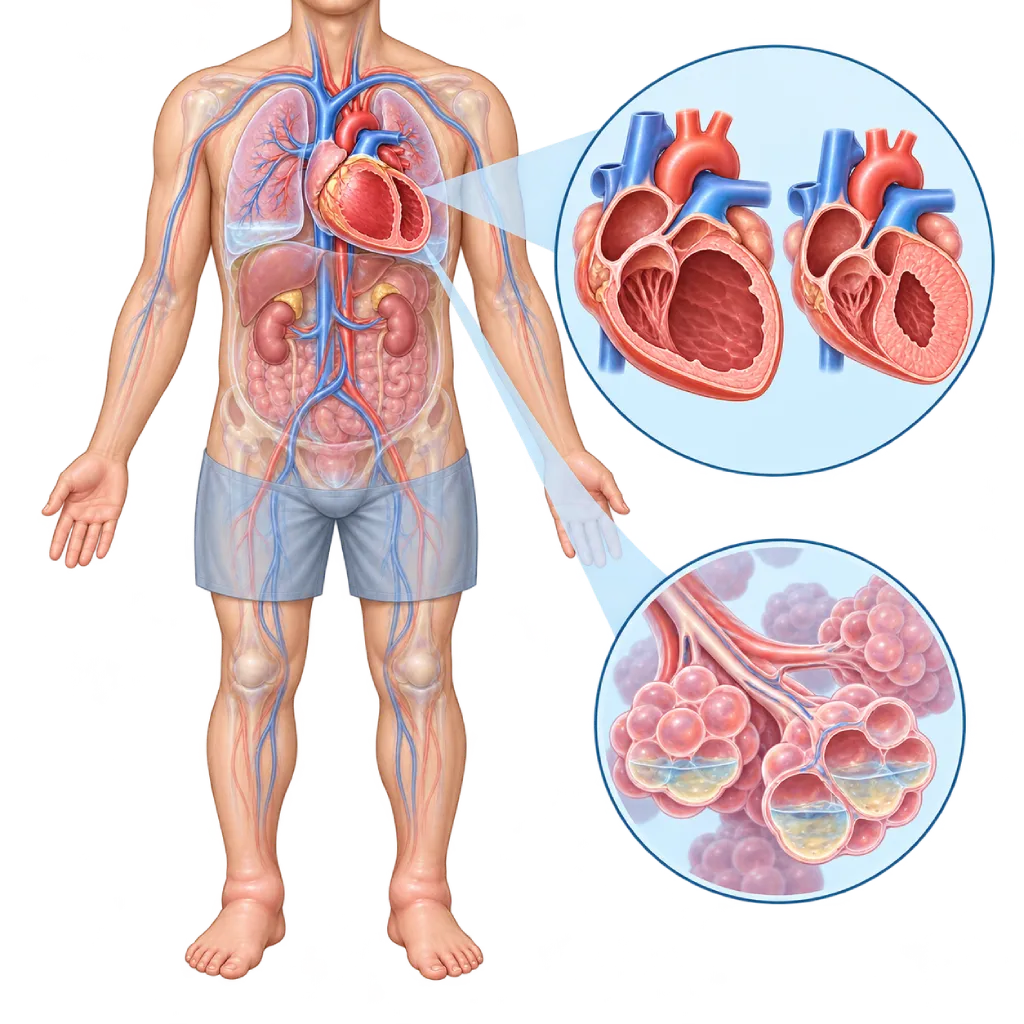
Heart failure is a condition in which the heart cannot pump or fill with as much blood as the body needs, causing shortness of breath, tiredness, and swelling in the legs. The heart does not stop working, but its ability is reduced and can be managed.
SourcesSigns That Need Urgent Help
- Severe shortness of breath at rest or being unable to lie down
- Coughing up frothy white or pink sputum
- Chest pain or pressure that does not go away with rest
- Fainting or nearly fainting
- Cold, pale skin or bluish lips with severe weakness
- Sudden confusion or extreme drowsiness
- A very fast or irregular heartbeat with weakness
If these signs appear, go to the nearest emergency department right away or call Heart Attack Center 1500 258.
01 / Understanding the condition
About Heart Failure
Heart failure is a syndrome, meaning a group of symptoms and signs, that develops when the heart cannot adequately pump blood or fill itself with blood. As a result, the pressure inside the heart rises and blood flow to the organs decreases, especially when the body is active. The name often sounds frightening, but heart failure does not mean the heart has stopped beating. The heart keeps working, but it can no longer meet the body's needs.
When the heart's performance declines, the body tries to compensate by retaining salt and water, speeding up the heart rate, and narrowing the blood vessels. In the short term this helps, but over time fluid builds up in the lungs, legs, and abdomen. This buildup is called congestion, and it is the main cause of shortness of breath and swelling.
Types of Heart Failure
Doctors classify heart failure in two ways. By its course over time, there is chronic heart failure, which lasts a long time and is managed with long-term care, and acute heart failure, in which symptoms appear for the first time or worsen quickly and need urgent treatment. By ejection fraction, the percentage of blood in the left ventricle that is pumped out with each heartbeat, there are three types: reduced ejection fraction (40% or less), mid-range or mildly reduced ejection fraction (41 to 49%), and preserved ejection fraction (50% or more). This classification matters because the medicine options differ. Each type is covered on its own page.
Stages of Heart Failure
The 2022 AHA/ACC/HFSA guideline also describes four stages. Stage A is people at risk, for example those with hypertension or diabetes. Stage B is pre-heart failure: there are already changes in the structure or function of the heart, but no symptoms. Stage C is heart failure with symptoms, and stage D is advanced heart failure that still causes severe symptoms despite treatment. Recognizing stages A and B gives an opportunity to prevent symptoms from developing.
Living with Heart Failure
Heart failure usually does not go away completely, but its course can be changed. Guideline-directed medicines, treatment of the cause, self-care at home, and cardiac rehabilitation have been shown to reduce symptoms and hospital stays, and in the reduced ejection fraction type they also extend life expectancy. In some people, pumping function improves after the cause is treated. The key is diagnosis as early as possible and regular checkups.
02 / Understanding the condition
Types and Related Conditions
The following conditions belong to the Heart Failure group. Open each one for a full explanation.
03 / Understanding the condition
Symptoms to Recognize.
Common Symptoms
- Shortness of breath during activity, and over time also when lying down
- Waking at night short of breath and feeling relief after sitting up
- Needing to raise your head on more pillows to sleep comfortably
- Tiring easily and being able to do less than before
- Swelling in the ankles and legs
- Rapid weight gain over a few days
- Dry cough or wheezing, especially at night
- A bloated feeling in the abdomen and reduced appetite
Symptoms in Older Adults
In older adults, symptoms can be vague and mistaken for normal signs of aging.
- Weakness and lack of energy without a clear cause
- Getting confused easily or having trouble concentrating
- Doing fewer daily activities, sitting or lying down more often
- Loss of appetite
- Frequent urination at night
Symptoms in Infants
In babies, heart failure is usually related to a congenital defect, which is covered on the Congenital Heart Disease page.
- Fast breathing, especially during feeding
- Tiring easily and often stopping during feeding
- Heavy sweating during feeding
- Difficulty gaining weight
- Fussiness and a pale appearance
04 / Understanding the condition
What Causes This Condition?
- Coronary artery disease and a previous heart attack that damaged the heart muscle
- High blood pressure that has gone uncontrolled for a long time, making the heart muscle thick and stiff
- Heart valve disease, such as a narrowed or leaking valve
- Cardiomyopathy, a disease of the heart muscle, including types that run in families
- Heart rhythm disorders, especially atrial fibrillation or a heartbeat that stays too fast for a long time
- Inflammation of the heart muscle (myocarditis), heavy alcohol use, or side effects of certain cancer treatments
- Buildup of substances in the heart muscle, such as amyloid
- Congenital heart disease, especially in babies and children
05 / Understanding the condition
Who Is at Higher Risk?
Lifestyle
Smoking, heavy drinking, a high-salt diet, lack of physical activity, and excess weight add to the strain on the heart year after year.
Medical
Hypertension, diabetes, high cholesterol, obesity, chronic kidney disease, sleep apnea, and a history of heart attack are major risk factors. Certain cancer treatments can also weaken the heart muscle.
Genetic
Some cardiomyopathies run in families. Tell your doctor about any heart failure or sudden death at a young age in close family members.
Age
The risk rises with age. According to the 2021 ESC guidelines, about 10% or more of people over 70 have heart failure.
Groups at Higher Risk
- People with Hypertension and Diabetes: Blood pressure and blood sugar that stay uncontrolled for a long time slowly damage the heart muscle and blood vessels.
- People with a History of Heart Attack: The damaged part of the heart muscle can weaken the pump, sometimes years later.
- Older Adults: The heart and blood vessels become stiffer with age, and coexisting conditions are more common.
- Cancer Treatment Survivors: Some chemotherapy drugs and radiation therapy to the chest can affect the heart muscle, so monitoring is needed.
- Relatives of People with Cardiomyopathy: Close relatives may carry the same gene change and are advised to have a heart examination.
06 / Understanding the condition
How Is It Diagnosed?
Your doctor starts by asking about your symptoms, medical history, and the medicines you take, then checks for signs of fluid buildup such as leg swelling, bulging neck veins, and crackling sounds in the lungs. If heart failure is suspected, guidelines recommend three initial tests: a recording of the heart's electrical activity (ECG), an NT-proBNP or BNP blood test, and echocardiography. NT-proBNP is a hormone released by the heart when it is under heavy strain; a normal level makes heart failure unlikely. Echocardiography confirms the diagnosis, measures the ejection fraction, and shows any valve or heart muscle abnormalities.
After that, your doctor looks for the cause and any coexisting conditions with blood tests, a chest X-ray, and, if needed, cardiac MRI, CT coronary angiography, or cardiac catheterization. The results of all these tests determine the type of heart failure and your treatment plan.
Electrocardiogram (ECG)
A recording of the heart's electrical activity to look for rhythm disorders, signs of a previous heart attack, and thickening of the muscle. A completely normal ECG makes heart failure unlikely.
NT-proBNP and BNP Test
A blood test for a hormone released by the heart when it is under heavy strain. It helps confirm or rule out heart failure in people who are short of breath and is used to monitor the course of the disease.
Echocardiography
Ultrasound of the heart to measure the ejection fraction, chamber size, wall thickness, valve function, and estimated pressures inside the heart. The main test for determining the type of heart failure.
Chest X-Ray
An X-ray of the chest to see the size of the heart, fluid in the lungs, and other causes of breathlessness that come from the lungs.
Laboratory Tests
Complete blood count, kidney function, electrolytes, blood sugar, thyroid, and iron levels to look for causes and coexisting conditions.
Cardiac MRI
Assesses the heart muscle tissue when echocardiography is not clear enough, for example to look for scarring, inflammation, or buildup of substances such as amyloid.
Coronary Angiography
Looks for narrowing of the coronary arteries when coronary artery disease is suspected as the cause.
07 / Understanding the condition
Treatment Options.
Treatment is decided by a doctor after an assessment. The categories below can help you follow the conversation with your doctor.
Guideline-Directed Medicines
For reduced ejection fraction, guidelines recommend four main classes of medicines: an ACE inhibitor or ARNI, a beta blocker, an MRA, and an SGLT2 inhibitor. SGLT2 inhibitors are also recommended for other types. Your doctor chooses the medicines and raises the doses gradually.
Diuretics to Reduce Fluid
These fluid-removing medicines relieve shortness of breath and swelling. Your doctor sets the dose based on your weight and symptoms, and it may be changed when your condition worsens.
Treating the Cause
Opening narrowed coronary arteries, repairing or replacing valves, controlling blood pressure, or treating rhythm disorders can improve how the heart works.
Implantable Heart Devices
An ICD prevents sudden death from dangerous rhythms, and resynchronization therapy (CRT) coordinates the contraction of the ventricles in selected patients with a low ejection fraction.
Self-Care and Rehabilitation
Weighing yourself every day, limiting salt, taking medicines regularly, and doing supervised exercise in a cardiac rehabilitation program.
Advanced Heart Failure Therapy
If symptoms stay severe despite full treatment, your doctor may discuss a mechanical heart pump (LVAD), a heart transplant, or palliative care.
08 / Understanding the condition
Complications to Watch For.
Sudden Worsening and Hospitalization
Symptoms can worsen quickly and require hospital care, which is covered on the Acute Heart Failure page. Regular checkups and self-care help prevent this.
Heart Rhythm Disorders
Atrial fibrillation and dangerous ventricular rhythms occur more often in a weak or enlarged heart. Atrial fibrillation also increases the risk of stroke.
Sudden Cardiac Arrest
When the ejection fraction is very low, the risk of dangerous ventricular rhythms rises, so some people need an ICD, which is covered on the Sudden Cardiac Death page.
Reduced Kidney Function
Reduced blood flow and fluid congestion strain the kidneys. In turn, kidney disease also makes heart failure worse.
Liver Congestion
Blood backing up in the veins can enlarge the liver, cause a feeling of fullness in the abdomen, and impair liver function.
Loss of Muscle Mass and Weight
In advanced heart failure, appetite drops and muscles waste away, making the body weaker. Adequate nutrition and exercise help prevent this.
09 / Understanding the condition
What Can You Do?
- Keep your blood pressure within the target agreed with your doctor.
- Manage diabetes and cholesterol with regular checkups.
- Quit smoking and limit alcohol.
- Maintain a healthy weight and stay active for at least 150 minutes a week.
- Cut down on salt, processed foods, and instant foods.
- Have your heart checked if you are receiving cancer treatment that can affect the heart.
- If a close family member has cardiomyopathy, ask your doctor about screening.
10 / Understanding the condition
When Should You See a Doctor?
See a cardiologist if you have shortness of breath or tiredness that is new or getting worse, especially if you have hypertension, diabetes, or a history of heart disease. If you have already been diagnosed, contact your doctor early if the following signs of worsening appear.
- Shortness of breath with light activity, or needing more pillows to sleep.
- Increasing swelling in the legs or abdomen.
- Weight gain of 2 kg or more in 3 days.
- Dizziness, weakness, or new complaints after a change in medicines.
- Go to the emergency room right away if you have severe shortness of breath at rest, chest pain, frothy sputum, or fainting.
Don't Wait in an Emergency.
If symptoms are severe or come on suddenly, go to the nearest emergency department right away or call Heart Attack Center 1500 258, rather than waiting for an appointment.
11 / Common questions
Questions You May Have.
Frequently asked questions about heart failure.
Does heart failure mean the heart will stop?
No. The term heart failure means the heart cannot pump or fill with blood as the body needs, not that it stops beating. Many people with heart failure keep working and staying active with regular treatment. Even so, the condition needs to be taken seriously, because it can get worse if medicines are stopped or if triggers such as too much salt and infections are not controlled.
Can heart failure be cured?
It depends on the cause. Heart failure caused by something treatable, such as a heartbeat that is too fast, valve disease, or inflammation of the heart muscle, can improve markedly after the cause is treated. For most people, heart failure is a long-term condition that is controlled rather than cured. Even when pumping function improves, medicines are usually continued, because stopping them can make the condition return.
What is the difference between heart failure and a heart attack?
A heart attack happens when a coronary artery is suddenly blocked, so part of the heart muscle does not get enough blood. Heart failure is a condition in which the heart's pumping or filling is reduced, and it often develops slowly. A heart attack can cause heart failure because the damaged muscle weakens the pump. Heart attacks are covered on the Myocardial Infarction / Heart Attack page.
What does the ejection fraction on my echocardiography result mean?
The ejection fraction is the percentage of blood in the left ventricle that is pumped out with each heartbeat. A value of 50% or more is called preserved, 41 to 49% mildly reduced, and 40% or less reduced. This number helps your doctor choose medicines, but your symptoms, the cause, and other test results are also taken into account. The value can change with treatment.
How much salt and fluid can I have?
Generally, no more than 5 grams of salt per day is recommended, about one teaspoon, including hidden salt in soy sauce, sauces, processed foods, and instant foods. Not everyone needs to limit fluids; this is usually only recommended in severe heart failure or when blood sodium levels are low. Follow the limits set by your doctor, because each person's needs are different.
Can people with heart failure exercise?
Yes, and it is recommended when the condition is stable. Regular physical activity improves your ability to be active and your quality of life, and it reduces hospital stays. Start with light intensity such as walking, then increase gradually. A safe way to start is through a cardiac rehabilitation program supervised by a team. Avoid exercise while shortness of breath or swelling is getting worse, and contact your doctor if your symptoms do not improve.
Sources and Medical Review
Translated from the Indonesian edition medically reviewed by Dr. dr. Dicky A. Hanafy, Sp.JP(K).
Sources as cited in the Indonesian edition.
- McDonagh TA, Metra M, Adamo M, Gardner RS, Baumbach A, Böhm M, et al. 2021 ESC Guidelines for the diagnosis and treatment of acute and chronic heart failure. Eur Heart J. 2021;42(36):3599-3726.
- McDonagh TA, Metra M, Adamo M, Gardner RS, Baumbach A, Böhm M, et al. 2023 Focused Update of the 2021 ESC Guidelines for the diagnosis and treatment of acute and chronic heart failure. Eur Heart J. 2023;44(37):3627-3639.
- Heidenreich PA, Bozkurt B, Aguilar D, Allen LA, Byun JJ, Colvin MM, et al. 2022 AHA/ACC/HFSA Guideline for the Management of Heart Failure: A Report of the American College of Cardiology/American Heart Association Joint Committee on Clinical Practice Guidelines. Circulation. 2022;145(18):e895-e1032.
- Bozkurt B, Coats AJS, Tsutsui H, Abdelhamid CM, Adamopoulos S, Albert N, et al. Universal definition and classification of heart failure: a report of the Heart Failure Society of America, Heart Failure Association of the European Society of Cardiology, Japanese Heart Failure Society and Writing Committee of the Universal Definition of Heart Failure. Eur J Heart Fail. 2021;23(3):352-380.
- Savarese G, Becher PM, Lund LH, Seferovic P, Rosano GMC, Coats AJS. Global burden of heart failure: a comprehensive and updated review of epidemiology. Cardiovasc Res. 2023;118(17):3272-3287.
- Jaarsma T, Hill L, Bayes-Genis A, La Rocca HPB, Castiello T, Čelutkienė J, et al. Self-care of heart failure patients: practical management recommendations from the Heart Failure Association of the European Society of Cardiology. Eur J Heart Fail. 2021;23(1):157-174.
Doctors Who Treat This Condition

dr. Siska S. Danny, Sp.JP(K)
Interventional Cardiology
Coronary Intervention Procedures
Clinical focusPCI for Acute Coronary Syndrome · Primary Coronary Intervention
View Profile
Dr. dr. Dicky A. Hanafy, Sp.JP(K)
Arrhythmia and Electrophysiology
Arrhythmia and Device Center +1 center
Clinical focusElectrophysiology and Arrhythmia Ablation · Pacemaker and ICD Implantation
View Profile
Dr. med. dr. Denio A. Ridjab, Sp.JP(K)
Interventional Cardiology
Coronary Intervention Procedures +2 centers
Clinical focusInterventional Cardiology · Coronary Artery Disease
View Profile