
Quick answer
What Is NT-proBNP and BNP Test?
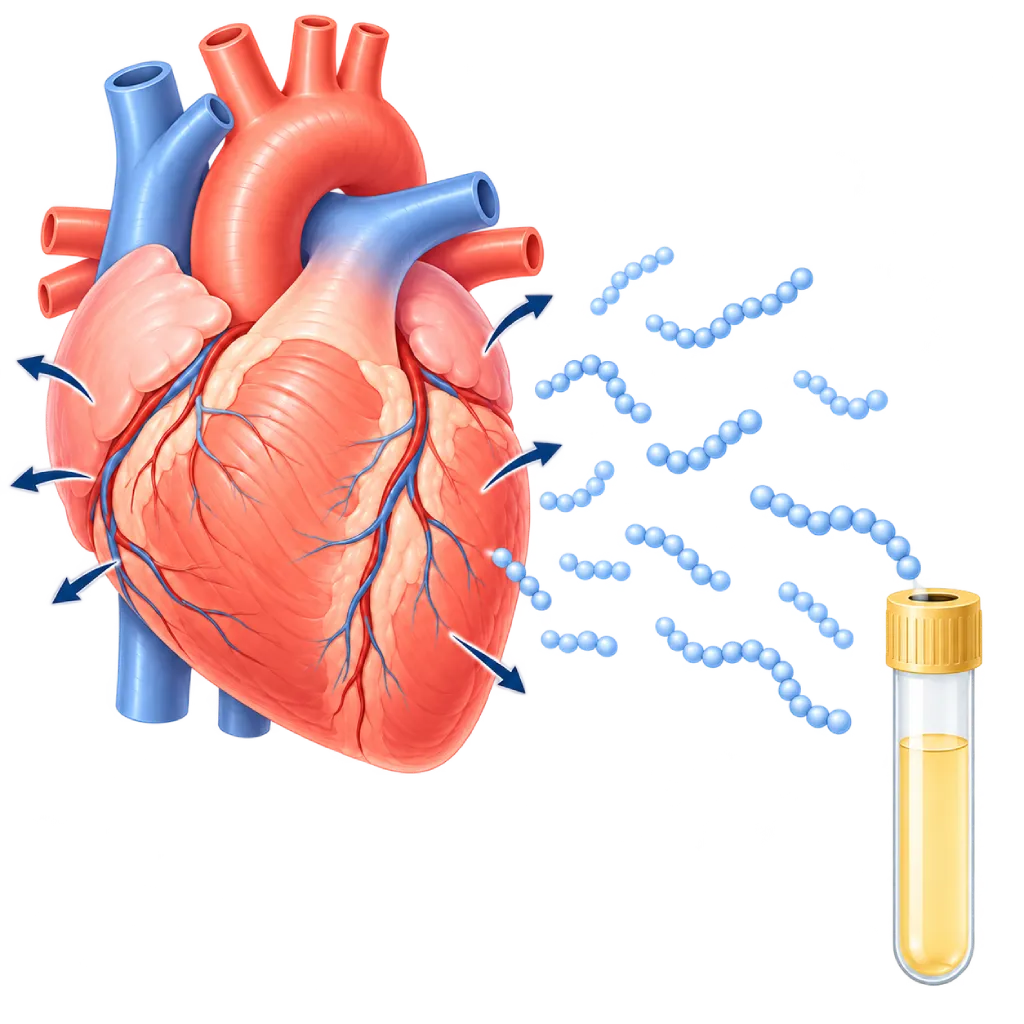
An NT-proBNP or BNP test measures a hormone released by the heart's lower chambers when their walls are stretched from working too hard. A low level makes heart failure unlikely, while a high level helps the doctor support the diagnosis, assess its severity, and monitor the results of heart failure treatment over time.
Sources01 / Understanding the procedure
About NT-proBNP and BNP Test
What Are NT-proBNP and BNP
When the heart's lower chambers are stretched or the pressure inside them rises, the heart muscle releases the hormone BNP (B-type natriuretic peptide), along with its partner, NT-proBNP, into the blood. BNP helps the body get rid of salt and water and widens the blood vessels, which reduces the strain on the heart. Generally, the greater the strain on the heart, the higher the levels.
How It Works in Brief
Blood is drawn from a vein in your arm, and the laboratory measures NT-proBNP or BNP. Both assess the same thing, but their numbers and cutoffs differ, so results are only compared with the same type of test.
Reading the Results
The following cutoffs are general guidance from the European heart failure guidelines. Each laboratory may use its own cutoffs.
- Symptoms that develop gradually: NT-proBNP below 125 pg/mL or BNP below 35 pg/mL makes heart failure unlikely.
- Shortness of breath that comes on suddenly: NT-proBNP below 300 pg/mL or BNP below 100 pg/mL makes acute heart failure unlikely.
- High levels: support a suspicion of heart failure, but still need to be confirmed, especially with echocardiography.
Factors That Affect the Results
Levels can be higher in older age, kidney disease, atrial fibrillation, pulmonary embolism, pulmonary hypertension, severe infection, and heart attack. In contrast, levels tend to be lower in people with obesity. In patients taking sacubitril/valsartan, BNP levels also rise because of how the drug works, so NT-proBNP is more suitable for monitoring.
Role in Monitoring
Levels that fall after treatment indicate that the strain on the heart has eased, while levels that stay high or rise indicate a risk of worsening and a need to review treatment. This test is also used to monitor the heart during certain cancer treatments and to help assess risk in people with diabetes or high blood pressure.
02 / Understanding the procedure
When Is This Procedure Considered?
A doctor may consider this procedure in the situations below. The decision is always made after a thorough assessment.
- Shortness of Breath with No Clear CauseHelps distinguish breathlessness caused by the heart from other causes, such as the lungs.
- Leg Swelling or Tiring EasilyTo look for signs of excessive strain on the heart.
- Monitoring Heart Failure TreatmentChanges in levels help assess whether treatment is working.
- Assessing Risk Before Hospital DischargeLevels that stay high indicate a need for closer monitoring.
- During Certain Cancer TreatmentsHelps detect heart problems caused by treatment early.
- High Risk of Heart FailureFor example, in diabetes, high blood pressure, or kidney disease.
Situations to Consider First
- Kidney DiseaseLevels can be high because the kidneys clear less of the hormone.
- Atrial FibrillationAn irregular rhythm tends to raise levels.
- ObesityLevels tend to be lower, so a normal result is read with caution.
- Taking Sacubitril/ValsartanBNP also rises because of how the drug works, so NT-proBNP is used instead.
- Older AgeLevels are usually higher in older adults.
03 / Before the procedure
How Should You Prepare?
The NT-proBNP or BNP test uses a blood sample and needs no special preparation.
Eating and drinking. No fasting is needed, unless another test done at the same time requires fasting.
Medications. Take your medications as usual. Bring a list of your medications, especially heart failure medications such as sacubitril/valsartan.
Activity. Avoid strenuous exercise right before the test, and sit quietly for a few minutes before your blood is drawn.
Important information. Tell the staff if you have kidney disease or an irregular heart rhythm, or are pregnant.
Previous results. Bring your previous NT-proBNP or BNP results, and make sure the type of test is the same so they can be compared.
Unsure about the preparation instructions? Ask our team before the procedure.
04 / During the procedure
How Is the Procedure Done?
Drawing blood is usually done within 10 minutes. Results are usually available within a few hours or on the same day.
Identity Check
The staff match your identity with the test request and ask what medications you are taking.
Blood Draw
Blood is drawn from a vein in the crook of your elbow and collected in a special tube.
Laboratory Testing
An analyzer measures the NT-proBNP or BNP level in pg/mL. In emergencies, the results can be prioritized.
Reading the Results
The doctor reads the results together with your symptoms, physical examination, ECG, chest X-ray, and kidney function. If the level is high, the next step is usually echocardiography.
05 / Benefits and risks
Benefits and Risks Should Be Discussed Together.
Every medical procedure has benefits and risks. Your doctor will explain both for your situation before the procedure.
Benefits You Can Expect
- Simple and QuickOnly a small amount of blood is needed, and results can be ready within a few hours.
- Helps Rule Out Heart FailureA low level makes heart failure unlikely.
- Assesses How Much Strain the Heart Is UnderHigh levels are linked to a greater risk of worsening.
- Monitors Treatment ResultsChanges in levels help the doctor assess and adjust therapy.
- Early Detection of Heart StrainHelps identify risk in people with diabetes or high blood pressure.
The benefits of a procedure are not a promise of a cure. Ask how the results will affect your care plan.
Risks You Should Know
- Minor Pain or BruisingAt the needle puncture site, usually mild and quick to go away.
- Brief Dizziness or FaintingSome people feel dizzy when blood is drawn. Tell the staff so you can lie down.
- Results Affected by Other ConditionsAge, kidney function, heart rhythm, body weight, and medications can change the levels.
- Infection at the Puncture SiteVery rare because the skin is cleaned and the equipment used is sterile and single-use.
Risks can differ from person to person. A full explanation and consent are given after an individual assessment.
06 / After the procedure
What Is Recovery Like?
There is no recovery period. You can return to your activities right away.
Puncture site. A small bruise is normal and goes away within a few days.
If the level is high. The doctor usually follows up with echocardiography and adjusts treatment if needed.
Monitoring. In heart failure, the test can be repeated as directed by your doctor to see changes in levels.
Warning signs. Go to the emergency room right away or contact the medical team if you have:
- Worsening shortness of breath, especially when lying down or when it wakes you up at night
- Increasing swelling in the legs or abdomen
- Weight gain of more than 2 kg in 3 days
- Chest pain, a strongly pounding heart, or fainting
Know the Signs That Need Prompt Care.
Follow the team's guidance on warning signs. If severe or sudden symptoms appear after the procedure, go to the nearest emergency department right away or call Heart Attack Center 1500 258.
07 / Team and support
Doctors and Procedure Support
The doctors below are listed for this procedure. Listed by name, not by ranking.

Dr. dr. Dafsah A. Juzar, Sp.JP(K)
Interventional Cardiology
Coronary Intervention Procedures +1 center
Clinical focusComplex Coronary Intervention · Cardiac Catheterization
View Profile
dr. Santi R. Dewayanti, Sp.P
Pulmonology
Clinical focusLung and Respiratory Disease · Asthma and COPD
View Profile
dr. Siska S. Danny, Sp.JP(K)
Interventional Cardiology
Coronary Intervention Procedures
Clinical focusPCI for Acute Coronary Syndrome · Primary Coronary Intervention
View Profile08 / Common questions
Before You Plan the Procedure.
Questions people often ask about NT-proBNP and BNP tests. Your doctor will explain what the results mean for your condition.
What is the difference between NT-proBNP and BNP?
Both are released together by the heart muscle. BNP is the active hormone, while NT-proBNP is its partner fragment, which is more stable and stays in the blood longer. Their numbers and normal cutoffs differ, so an NT-proBNP result cannot be compared directly with a BNP result.
Does a high NT-proBNP always mean heart failure?
Not always. Levels can also rise because of older age, kidney disease, atrial fibrillation, pulmonary embolism, pulmonary hypertension, or severe infection. For this reason, the doctor reads the results together with your symptoms and other tests, and then usually confirms with echocardiography to look at the structure and function of the heart.
What is a normal NT-proBNP level?
As general guidance, when symptoms develop gradually, NT-proBNP below 125 pg/mL makes heart failure unlikely. When shortness of breath comes on suddenly, the cutoff is below 300 pg/mL. Normal levels increase with age, and each laboratory may use its own cutoffs, so review your results with your doctor.
Do I need to fast before an NT-proBNP test?
No. This test is not affected by food, so you can eat and drink as usual. If another test that requires fasting is done at the same time, follow the instructions for that test. Try to avoid strenuous exercise right before the test and sit quietly for a few minutes before your blood is drawn.
Why does my doctor want to repeat this test?
In heart failure, changes in levels over time are more meaningful than a single number. Falling levels indicate that treatment is working, while rising levels can be an early sign of worsening, even before symptoms become severe. Repeat testing helps the doctor adjust treatment in a timely way.
Does a normal result mean my heart is healthy?
A normal result makes heart failure unlikely, but it does not rule out all heart disease. Coronary artery disease, rhythm disorders, or mild valve problems can still be present even when levels are normal. If your symptoms continue, the doctor may suggest other tests, such as an ECG, echocardiography, or a treadmill stress test, based on your needs.
Sources and Medical Review
Translated from the Indonesian edition medically reviewed by dr. Siska S. Danny, Sp.JP(K).
Sources as cited in the Indonesian edition.
- McDonagh TA, Metra M, Adamo M, et al. 2021 ESC Guidelines for the diagnosis and treatment of acute and chronic heart failure. Eur Heart J. 2021;42(36):3599-3726.
- Heidenreich PA, Bozkurt B, Aguilar D, et al. 2022 AHA/ACC/HFSA Guideline for the Management of Heart Failure. Circulation. 2022;145(18):e895-e1032.
- Mueller C, McDonald K, de Boer RA, et al. Heart Failure Association of the European Society of Cardiology practical guidance on the use of natriuretic peptide concentrations. Eur J Heart Fail. 2019;21(6):715-731.
- Bayes-Genis A, Docherty KF, Petrie MC, et al. Practical algorithms for early diagnosis of heart failure and heart stress using NT-proBNP: A clinical consensus statement from the Heart Failure Association of the ESC. Eur J Heart Fail. 2023;25(11):1891-1898.