
Quick answer
What Is Cardiopulmonary Syndrome?
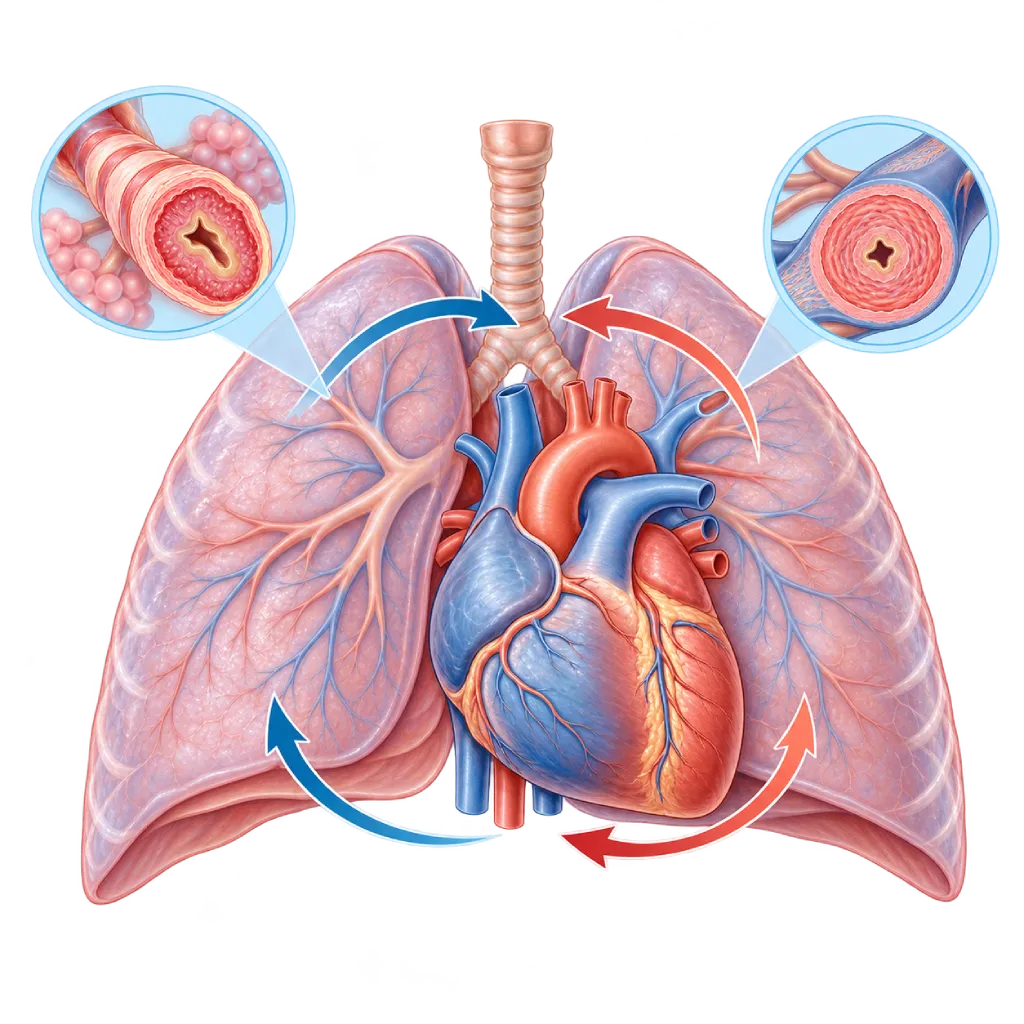
Cardiopulmonary syndrome is when heart disease and chronic lung disease occur together and worsen each other, for example COPD with heart failure. The symptoms overlap, so both organs need to be examined and treated under one plan.
SourcesSigns That Need Urgent Help
- Severe shortness of breath at rest
- Chest pain or a feeling of pressure in the chest
- Bluish lips or fingertips
- Confusion, extreme drowsiness, or difficulty waking up
- Coughing up frothy sputum or blood
- A very fast heartbeat with dizziness or fainting
If these signs appear, go to the nearest emergency department right away or call Heart Attack Center 1500 258.
01 / Understanding the condition
About Cardiopulmonary Syndrome
Cardiopulmonary syndrome is a term for when heart disease and chronic lung disease occur together in the same person and worsen each other. It is not the name of a single disease, but a description of two organs affected at the same time. Common combinations are COPD with heart failure, COPD with coronary artery disease, pauses in breathing during sleep with high blood pressure or atrial fibrillation, and chronic lung disease with high pressure in the lungs. An overview of how the heart and lungs are connected is covered on the Cardiovascular-Related Lung Disease page.
A Cycle That Worsens Both Organs
Chronic lung disease lowers oxygen levels and triggers inflammation throughout the body. The blood vessels in the lungs narrow, lung pressure rises, and the right side of the heart is strained, as covered on the Cor Pulmonale page. Overinflated lungs also reduce how well the heart fills. In turn, a weak heart causes fluid to back up in the lungs, making breathing harder, as covered on the Lung Disease Caused by Heart Disease page. A COPD flare-up or lung infection can trigger a heart attack and rhythm disorders in the weeks that follow, while worsening heart failure makes breathlessness in COPD worse.
Symptoms That Are Easily Confused
Shortness of breath, fatigue, cough, and leg swelling can come from either organ. As a result, one disease is often masked by the other: COPD in people with heart failure often goes unrecognized, and the reverse is also true. Lung function tests are also less accurate while the lungs are still congested with fluid, so they need to be repeated once the condition is stable. That is why symptoms that do not improve with treatment for one organ are a reason to examine the other.
One Plan for Two Organs
The recommended approach is a shared plan between a cardiologist and a pulmonologist. The majority of medications for both diseases can be used together. For example, cardioselective beta-blockers can generally still be used in COPD, and inhaled bronchodilators are generally safe for the heart with a doctor's monitoring. Quitting smoking, vaccinations, rehabilitation that trains the heart and lungs together, oxygen when levels are low, and an action plan for flare-ups help keep both organs stable.
02 / Understanding the condition
Symptoms to Recognize.
Common Symptoms
- Shortness of breath during activity that gradually gets worse
- Chronic cough with phlegm
- Swelling in the ankles or legs
- Tiring easily and having difficulty finishing daily activities
- Heart palpitations or an irregular pulse
- Shortness of breath when lying down or waking at night short of breath
- Loud snoring and excessive daytime sleepiness
Symptoms in Older Adults
In older age, heart and lung symptoms often appear together and look vague, so they are easily dismissed as part of aging.
- Reduced daily activity without obvious shortness of breath
- Confusion or drowsiness when oxygen levels drop
- Loss of appetite and weight changes without a clear cause
- Falls or near fainting
03 / Understanding the condition
What Causes This Condition?
- Long-term smoking that damages both the lungs and the blood vessels of the heart
- COPD occurring together with heart failure or coronary artery disease
- Chronically low oxygen levels that raise lung pressure and strain the right side of the heart
- Body-wide inflammation in chronic lung disease that also damages blood vessels
- Repeated pauses in breathing during sleep that trigger high blood pressure and rhythm disorders
- COPD flare-ups or lung infections that trigger a heart attack, arrhythmia, or heart failure
- Interstitial lung disease or past tuberculosis that damages lung tissue and blood vessels
04 / Understanding the condition
Who Is at Higher Risk?
Lifestyle
Long-term smoking damages the lungs and blood vessels at the same time. Too little physical activity, excess body weight, and alcohol add to the strain on the heart.
Medical
COPD, long-standing asthma, past tuberculosis, interstitial lung disease, pauses in breathing during sleep, heart failure, coronary artery disease, hypertension, diabetes, and atrial fibrillation.
Age
Chronic heart and lung diseases occur together more often with age, especially in older adults taking many medications.
Other
Smoke from wood-burning stoves, air pollution, and dust or fumes at work that damage the lungs over a long period.
Groups at Higher Risk
- People with COPD and Heart Disease: A COPD flare-up can trigger worsening of the heart, and the reverse is also true. Regular checkups with a cardiologist and a pulmonologist help keep both stable.
- Long-Term Smokers and Former Smokers: Cigarette smoke damages the lungs and blood vessels at the same time, so COPD and coronary artery disease often appear together.
- People with Sleep Apnea: Repeated pauses in breathing during sleep raise blood pressure, trigger atrial fibrillation, and strain the heart. Covered on the Obstructive Sleep Apnea page.
- Older Adults with Multiple Chronic Conditions: Older age often comes with both heart and lung disease, with vague symptoms and many medications that need to be coordinated.
05 / Understanding the condition
How Is It Diagnosed?
Your doctor assesses the heart and lungs together, not one at a time. You will be asked about smoking, smoke exposure, flare-ups, and previous hospital stays, and your oxygen level will be measured. Spirometry assesses airflow in the lungs and should be done when your condition is stable, because fluid congestion can distort the results. An ECG, an NT-proBNP test, and echocardiography assess the heart's rhythm, strain, and pumping, as well as an estimate of lung pressure. A chest X-ray helps show the size of the heart, fluid, and changes in the lungs.
When it is still unclear which organ the symptoms come from, cardiopulmonary exercise testing can show whether the heart, lungs, or muscles are limiting your ability to be active. A sleep study is done if pauses in breathing during sleep are suspected, and a blood gas analysis if oxygen levels are low. If lung pressure is suspected to be high, right heart catheterization is used to confirm it. The combined results of these tests form the basis of a shared treatment plan.
Lung Function Test (Spirometry)
Assesses airflow in the lungs to confirm COPD or asthma; it should be done when your condition is stable and there is no fluid congestion.
Echocardiography
Assesses the pumping of the left and right sides of the heart, the valves, and an estimate of lung pressure in people with chronic lung disease.
NT-proBNP and BNP Test
Helps identify heart failure masked by COPD symptoms; results are interpreted together with other tests.
Electrocardiogram (ECG)
Looks for atrial fibrillation, other fast rhythms, signs of a past heart attack, and signs of strain on the right side of the heart.
Chest X-Ray
Shows the size of the heart, fluid in the lungs or chest cavity, and lung changes such as emphysema.
Cardiopulmonary exercise testing: gradually increasing exercise while measuring breathing, oxygen, and ECG to see which organ is limiting your ability to be active.
Sleep study (polysomnography): records breathing, oxygen levels, and heart rhythm during sleep when pauses in breathing during sleep are suspected.
06 / Understanding the condition
Treatment Options.
Treatment is decided by a doctor after an assessment. The categories below can help you follow the conversation with your doctor.
Integrated Treatment Plan
Your cardiologist and pulmonologist create one plan, coordinate your medications, and share the follow-up schedule. Covered on the Integrated Medication Therapy page.
Guideline-Based Heart Medications
Heart failure and coronary artery disease are treated as usual. Cardioselective beta-blockers can generally still be used in COPD. Covered on the Heart Failure Management page.
Inhaled Medications for the Lungs
Long-acting bronchodilators reduce breathlessness and COPD flare-ups. These medications are generally safe for the heart with a doctor's monitoring.
Heart and Lung Rehabilitation
Supervised exercise, breathing techniques, and education designed for both organs. Covered on the Structured Cardiac Rehabilitation Program page.
Oxygen and Breathing Support During Sleep
Long-term oxygen if blood oxygen levels are very low, and a positive airway pressure device (CPAP) for people with pauses in breathing during sleep.
Quitting Smoking and Vaccination
Quitting smoking protects both organs. Influenza, pneumococcal, and COVID-19 vaccines prevent infections that trigger flare-ups.
Flare-Up Action Plan
Written guidance on the signs of a flare-up, which medications to use, and when to contact your doctor or go to the emergency room.
07 / Understanding the condition
Complications to Watch For.
Cor Pulmonale
High lung pressure from chronic lung disease makes the right ventricle enlarge and weaken, causing leg swelling. Covered on the Cor Pulmonale page.
Heart Events After a Lung Flare-Up
The risk of heart attack, rhythm disorders, and heart failure rises in the weeks after a COPD flare-up or a severe lung infection.
Heart Rhythm Disorders
Low oxygen levels, inflammation, and strain on the upper heart chambers trigger atrial fibrillation and other fast rhythms.
Chronic Respiratory Failure
Oxygen levels that stay low or carbon dioxide that builds up require home oxygen or a breathing support device.
Repeated Hospital Stays
A flare-up in one organ often drags down the other, so hospital stays are more frequent when both are not under control.
Reduced Physical Capacity
Breathlessness and fatigue make people move less, muscles weaken, and breathlessness comes on more easily. Rehabilitation helps break this cycle.
08 / Understanding the condition
What Can You Do?
- Quit smoking and stay away from other people's smoke.
- Take your heart medications and inhalers on schedule, and bring all your medications to checkups.
- Complete your influenza, pneumococcal, and COVID-19 vaccinations as your doctor advises.
- Stay physically active and join a rehabilitation program if recommended.
- Weigh yourself every morning if you have heart failure, and report rapid weight gain.
- Reduce exposure to cooking smoke, air pollution, and dust at work.
- Get checked for loud snoring and excessive daytime sleepiness.
- Ask for a written action plan so you can recognize the signs of a flare-up early.
09 / Understanding the condition
When Should You See a Doctor?
Get checked if you have chronic heart or lung disease and your shortness of breath gets worse, new symptoms appear, or your ability to be active declines. If you smoke or used to smoke and have heart disease, ask for a lung function test. Go to the emergency room right away if you have severe shortness of breath or chest pain.
- Shortness of breath that gets worse even though you take your heart medications and inhalers regularly
- Leg swelling or rapid weight gain
- More phlegm or phlegm that changes color, with a fever
- Loud snoring, pauses in breathing during sleep, or excessive daytime sleepiness
- Heart palpitations or an irregular pulse
- Severe shortness of breath, chest pain, bluish lips, or confusion: go straight to the emergency room
Don't Wait in an Emergency.
If symptoms are severe or come on suddenly, go to the nearest emergency department right away or call Heart Attack Center 1500 258, rather than waiting for an appointment.
10 / Common questions
Questions You May Have.
Frequently asked questions about heart disease and lung disease occurring together.
Is cardiopulmonary syndrome a single disease?
No. Cardiopulmonary syndrome is a term for heart disease and chronic lung disease that occur together and worsen each other, for example COPD with heart failure. Medical guidelines generally address each disease separately, then emphasize the importance of recognizing and treating coexisting conditions. That is why your diagnosis is usually written as two or more diseases, and your treatment plan is designed to cover both.
How can lung disease strain the heart?
Chronic lung disease lowers the oxygen level in the blood. The body responds by narrowing the blood vessels in the lungs, so lung pressure rises and the right ventricle has to pump harder. Chronic inflammation also damages blood vessels, and overinflated lungs press on the heart. Over time, the right side of the heart can enlarge and weaken. Treating the lung disease, giving oxygen when needed, and quitting smoking help ease this strain.
Are inhaled lung medications safe for my heart?
In general, yes. Long-acting inhaled bronchodilators for COPD have been studied in many people who also have heart disease. Some people feel palpitations after using a reliever inhaler, especially when it is overused. Tell your doctor if you notice palpitations, chest pain, or an irregular rhythm after starting an inhaled medication. Do not stop or change your medication on your own, because your doctor can adjust the type.
Why can a COPD flare-up trigger heart problems?
During a COPD flare-up, oxygen levels drop, inflammation increases, and the heart works harder. This can trigger a heart attack, rhythm disorders, or worsening heart failure. Studies show that this risk rises especially in the first weeks after a flare-up, particularly if it requires a hospital stay. That is why chest pain, palpitations, or breathlessness that does not improve after a flare-up should be checked, and preventing flare-ups also protects the heart.
What exercise program suits me if I have heart and lung problems?
A supervised rehabilitation program suits many people with heart and lung disease. The program starts with a test to set safe limits, then walking, stationary cycling, and muscle exercises are increased gradually, along with breathing techniques and education. Oxygen levels and heart rate are monitored during exercise. Ask your doctor whether you need oxygen while exercising, and avoid exercising during a flare-up or a fever.
Do I need checkups with both a pulmonologist and a cardiologist?
If you have both heart disease and lung disease, checkups with both doctors help keep both organs stable. The appointments do not have to be at the same time, but both doctors need to know all your medications and test results. Bring a complete list of your medications, including inhalers, as well as notes on your symptoms or daily weight to every checkup. That way, your medications can be coordinated and tests do not need to be repeated.
Sources and Medical Review
Translated from the Indonesian edition medically reviewed by dr. Santi R. Dewayanti, Sp.P.
Sources as cited in the Indonesian edition.
- Rabe KF, Hurst JR, Suissa S. Cardiovascular disease and COPD: dangerous liaisons? Eur Respir Rev. 2018;27(149):180057.
- Canepa M, Franssen FME, Olschewski H, Lainscak M, Böhm M, Tavazzi L, et al. Diagnostic and Therapeutic Gaps in Patients With Heart Failure and Chronic Obstructive Pulmonary Disease. JACC Heart Fail. 2019;7(10):823-33.
- Morgan AD, Zakeri R, Quint JK. Defining the relationship between COPD and CVD: what are the implications for clinical practice? Ther Adv Respir Dis. 2018;12:1753465817750524.
- McDonagh TA, Metra M, Adamo M, Gardner RS, Baumbach A, Böhm M, et al. 2021 ESC Guidelines for the diagnosis and treatment of acute and chronic heart failure. Eur Heart J. 2021;42(36):3599-726.
- Shlobin OA, Adir Y, Barbera JA, Cottin V, Harari S, Jutant EM, et al. Pulmonary hypertension associated with lung diseases. Eur Respir J. 2024;64(4):2401200.
- Yeghiazarians Y, Jneid H, Tietjens JR, Redline S, Brown DL, El-Sherif N, et al. Obstructive Sleep Apnea and Cardiovascular Disease: A Scientific Statement From the American Heart Association. Circulation. 2021;144(3):e56-67.
- Rochester CL, Alison JA, Carlin B, Jenkins AR, Cox NS, Bauldoff G, et al. Pulmonary Rehabilitation for Adults with Chronic Respiratory Disease: An Official American Thoracic Society Clinical Practice Guideline. Am J Respir Crit Care Med. 2023;208(4):e7-26.
Doctors Who Treat This Condition

dr. Santi R. Dewayanti, Sp.P
Pulmonology
Clinical focusLung and Respiratory Disease · Asthma and COPD
View Profile
Dr. med. dr. Denio A. Ridjab, Sp.JP(K)
Interventional Cardiology
Coronary Intervention Procedures +2 centers
Clinical focusInterventional Cardiology · Coronary Artery Disease
View Profile
dr. Debby C. Soemitha, Sp.PD
Internal Medicine
Clinical focusDiabetes and Diabetes Complications · Obesity and Metabolic Disease
View Profile