
Quick answer
What Is Lifestyle Counseling and Risk Management?
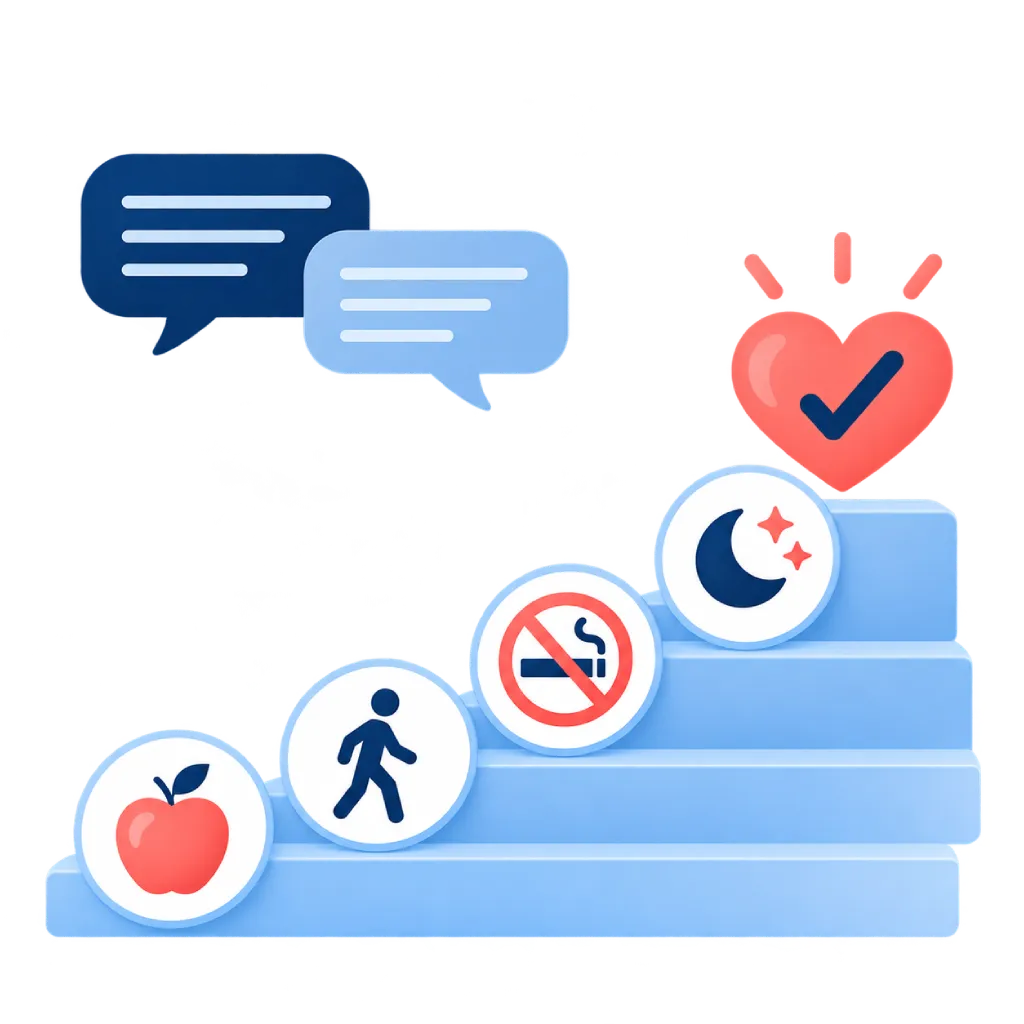
Lifestyle counseling and risk management is a consultation session to help you change habits that affect your heart health. The doctor assesses your risk factors, then works with you to set small, realistic steps for diet, physical activity, quitting smoking, weight, sleep, and stress management, and then monitors your progress.
Sources01 / Understanding the procedure
About Lifestyle Counseling and Risk Management
What Is Lifestyle Counseling and Risk Management
Many heart attacks and strokes are linked to factors that can be changed, such as smoking, diet, lack of physical activity, excess weight, blood pressure, cholesterol, and blood sugar. Lifestyle counseling is a consultation session to help you change the daily habits that affect these factors. This counseling is useful for preventing heart disease, and also for preventing repeat events in people who already have heart disease.
How It Works in Brief
Knowing what is healthy is often not enough to change habits. That is why counseling uses methods that support behavior change: exploring your personal reasons for changing, choosing one or two small, realistic steps, setting clear targets, recording your progress, and reviewing it at the next session. Research shows that repeated counseling like this improves diet, physical activity, blood pressure, and cholesterol.
Topics Discussed
- Diet: eating patterns such as the Mediterranean or DASH diet, with more vegetables, fruit, nuts and legumes, whole grains, and fish, and less salt, sugar, and saturated fat. This is covered on the Hypertension Management and Dyslipidemia Management pages.
- Physical activity: at least 150 to 300 minutes per week of moderate activity, plus strength training twice a week, starting gradually according to your ability. Reducing sitting time is also beneficial.
- Quitting smoking: counseling together with stop-smoking medicines gives a greater chance of success than trying on your own. E-cigarettes and other forms of tobacco are also discussed.
- Weight: losing 5 to 10 percent of your body weight already helps improve blood pressure, blood sugar, and cholesterol.
- Sleep, stress, and alcohol: sleeping 7 to 9 hours a night, recognizing signs of breathing pauses during sleep (sleep apnea) such as loud snoring, ways to manage stress, and limiting or avoiding alcohol.
Connection with Other Programs
Counseling can be done once or several times. For people who need long-term support with targets for blood pressure, cholesterol, and blood sugar, counseling becomes part of a broader program. This is covered on the Cardiovascular Risk Management Program page. After a heart attack, stent placement, or heart surgery, counseling becomes part of cardiac rehabilitation. This is covered on the Structured Cardiac Rehabilitation Program page. Initial risk assessment is covered on the Individual Heart Risk Screening page.
02 / Understanding the procedure
When Is This Procedure Considered?
A doctor may consider this procedure in the situations below. The decision is always made after a thorough assessment.
- Uncontrolled Heart Risk FactorsSuch as high blood pressure, cholesterol, or blood sugar.
- Smokers Who Want to QuitIncluding e-cigarette users.
- Excess Weight or a Large Waist CircumferenceEspecially when accompanied by metabolic syndrome.
- Physical InactivityA job that involves a lot of sitting, or not being used to exercising.
- After a Heart Attack, Stent Placement, or StrokeTo prevent repeat events.
- Family History of Heart DiseaseTo build healthy habits from an early stage.
Situations to Consider First
- Chest Pain, Shortness of Breath, or Fainting During ActivityThis needs to be checked before you increase physical exercise.
- Unstable Heart DiseaseExercise starts once your condition is stable and should preferably be supervised.
- Diabetes Treated with Glucose-Lowering MedicinesChanges in diet and exercise can make blood sugar drop too low; doses may need to be adjusted.
- Eating Disorders or Severe DepressionThese require specialized support together with a mental health professional.
- Pregnancy or BreastfeedingAdvice on diet, exercise, and stop-smoking medicines is adjusted.
03 / Before the procedure
How Should You Prepare?
The main preparation is bringing a picture of your daily habits.
Food and activity log. Record what you eat and drink and your physical activity for 3 to 7 days, or bring data from an app or smartwatch if you have one.
Test results. Bring your recent blood pressure, cholesterol, blood sugar, and medical check-up results.
Medication list. Bring all the medicines, supplements, and traditional herbal remedies you are taking.
Personal goals. Think about what you want to change and what has been holding you back so far.
Companion. If possible, bring your partner or a family member who helps prepare meals at home.
Unsure about the preparation instructions? Ask our team before the procedure.
04 / During the procedure
How Is the Procedure Done?
The initial session usually lasts about 45 minutes. Follow-up sessions are usually shorter and are scheduled every few weeks as needed.
Initial Assessment
The doctor asks about your eating habits, activity, smoking, sleep, and stress, then checks your blood pressure, weight, height, and waist circumference and reviews your lab results.
Setting Priorities
Together with you, the doctor chooses one or two changes that have a big impact and are easy to carry out, for example quitting smoking or walking for 30 minutes every day.
Making a Plan
Targets are made clear and measurable, along with ways to overcome obstacles. If needed, the doctor prescribes stop-smoking medicines or refers you to a clinical nutrition specialist or a physical medicine and rehabilitation specialist.
Regular Review
At the next session, your progress is compared with your targets. The plan is reinforced if the targets have not been reached, and new steps are added if they have.
05 / Benefits and risks
Benefits and Risks Should Be Discussed Together.
Every medical procedure has benefits and risks. Your doctor will explain both for your situation before the procedure.
Benefits You Can Expect
- Lower Risk of Heart DiseaseA healthy diet, staying active, and quitting smoking lower the risk of heart attack and stroke.
- A Realistic PlanSteps are tailored to your habits, work, and food culture.
- Higher Chance of Quitting SmokingCounseling combined with stop-smoking medicines is more successful than trying on your own.
- Improved Blood Pressure and CholesterolFor some people, the need for medicines may decrease.
- Better Fitness and Better SleepMany people feel more energetic in daily life.
The benefits of a procedure are not a promise of a cure. Ask how the results will affect your care plan.
Risks You Should Know
- Muscle or Joint InjuryIf exercise is increased too quickly; build up gradually.
- Blood Sugar Dropping Too LowIn people taking diabetes medicines who change their diet or exercise; monitor your blood sugar.
- Side Effects of Stop-Smoking MedicinesFor example nausea or sleep problems; usually mild and can be adjusted.
- Nicotine Withdrawal SymptomsIrritability, restlessness, or difficulty concentrating in the early weeks, which then ease.
Risks can differ from person to person. A full explanation and consent are given after an individual assessment.
06 / After the procedure
What Is Recovery Like?
There is no recovery period. The main thing is to follow the plan little by little, consistently.
Start with small steps. One new habit practiced regularly is more useful than many changes that are quickly abandoned.
Track your progress. Records of your steps, weight, or smoke-free days help keep you motivated.
Involve your family. Changing your diet is easier when the whole household takes part.
Do not give up if you slip. Going back to smoking or to old habits is common; discuss it at your next session and try again.
Warning signs. Stop the activity and go to the emergency room right away if you experience:
- Chest pain or pressure that does not ease with rest
- Severe shortness of breath or fainting
- A very fast heartbeat with dizziness
Know the Signs That Need Prompt Care.
Follow the team's guidance on warning signs. If severe or sudden symptoms appear after the procedure, go to the nearest emergency department right away or call Heart Attack Center 1500 258.
07 / Team and support
Doctors and Procedure Support
The doctors below are listed for this procedure. Listed by name, not by ranking.

dr. Ayu Amalia U. Putri, Sp.KFR
Physical Medicine & Rehabilitation
Clinical focusCardiac Rehabilitation · Postoperative Rehabilitation
View Profile
dr. Debby C. Soemitha, Sp.PD
Internal Medicine
Clinical focusDiabetes and Diabetes Complications · Obesity and Metabolic Disease
View Profile
dr. Juweni Joe, Sp.GK
Clinical Nutrition
Clinical focusMedical Nutrition Intervention · Nutrition for Cardiovascular Patients
View Profile08 / Common questions
Before You Plan the Procedure.
Frequently asked questions about lifestyle counseling and risk management. Your plan is made together with your doctor.
What is the difference between this counseling and the risk management program?
Lifestyle counseling focuses on changing habits, such as diet, physical activity, smoking, sleep, and stress, and can be done once or several times. The cardiovascular risk management program is long-term support that combines counseling with targets for blood pressure, cholesterol, and blood sugar, plus medicines if needed. Your doctor helps you choose the one that suits you.
Do I need counseling if I am not sick yet?
Yes, especially if you have risk factors such as high blood pressure, cholesterol, or blood sugar, excess weight, smoking, or a family history of heart disease. Healthy habits built earlier give longer-lasting protection. Counseling helps turn good intentions into real steps that fit your daily life.
How much exercise is recommended?
For adults, at least 150 to 300 minutes per week of moderate activity such as brisk walking, or 75 to 150 minutes of vigorous activity, plus strength training twice a week. If you are not used to exercising, start with 10 minutes and build up gradually. People with heart disease should consult their doctor beforehand so the intensity is safe.
Are e-cigarettes safer?
E-cigarettes still contain nicotine and other substances that affect the heart and blood vessels, so they are not recommended for people who do not smoke. For smokers, the recommended way to quit is counseling together with stop-smoking medicines. If you use e-cigarettes, discuss a plan to stop using them with your doctor.
What kind of diet is good for the heart?
There is no single miracle diet. The eating patterns widely supported by research are the Mediterranean and DASH patterns: plenty of vegetables, fruit, nuts and legumes, whole grains, fish, and vegetable oils, with little salt, sugar, processed meat, and saturated fat. These patterns can be adapted to everyday Indonesian food with the help of a clinical nutrition specialist.
What if I fail to quit smoking?
Failing on an initial attempt is very common and is not a reason to give up. The majority of smokers need several attempts before they quit successfully, and each attempt teaches you about your triggers and how to deal with them. Talk with your doctor about changing your strategy or stop-smoking medicine, then set a new quit date.
Sources and Medical Review
Translated from the Indonesian edition medically reviewed by dr. Juweni Joe, Sp.GK.
Sources as cited in the Indonesian edition.
- Visseren FLJ, Mach F, Smulders YM, et al. 2021 ESC Guidelines on cardiovascular disease prevention in clinical practice. Eur Heart J. 2021;42(34):3227-3337.
- US Preventive Services Task Force. Behavioral Counseling Interventions to Promote a Healthy Diet and Physical Activity for Cardiovascular Disease Prevention in Adults With Cardiovascular Risk Factors: US Preventive Services Task Force Recommendation Statement. JAMA. 2020;324(20):2069-2075.
- Bull FC, Al-Ansari SS, Biddle S, et al. World Health Organization 2020 guidelines on physical activity and sedentary behaviour. Br J Sports Med. 2020;54(24):1451-1462.
- Rigotti NA, Kruse GR, Livingstone-Banks J, Hartmann-Boyce J. Treatment of Tobacco Smoking: A Review. JAMA. 2022;327(6):566-577.
- Lloyd-Jones DM, Allen NB, Anderson CAM, et al. Life's Essential 8: Updating and Enhancing the American Heart Association's Construct of Cardiovascular Health: A Presidential Advisory From the American Heart Association. Circulation. 2022;146(5):e18-e43.