
Quick answer
What Is Dyslipidemia?
Dyslipidemia is a condition in which blood fat levels are abnormal, for example LDL cholesterol or triglycerides are too high, or HDL cholesterol is too low. It usually causes no symptoms, but it speeds up the narrowing of blood vessels that triggers heart attacks and strokes.
SourcesSigns That Need Urgent Help
- Pain or pressure in the chest that may spread to the arm, neck, or jaw
- Sudden shortness of breath, cold sweat, or weakness
- Sudden facial drooping, weakness in an arm or leg, or slurred speech
- Severe pain in the upper abdomen that goes through to the back, with nausea and vomiting
- Sudden pain, paleness, and coldness in a leg
If these signs appear, go to the nearest emergency department right away or call Heart Attack Center 1500 258.
01 / Understanding the condition
About Dyslipidemia
Dyslipidemia is a condition in which the levels of fats (lipids) in the blood are abnormal. The blood fats that are measured include LDL cholesterol, often called bad cholesterol, HDL cholesterol or good cholesterol, and triglycerides. Dyslipidemia can take the form of high LDL, high triglycerides, low HDL, or a combination of all three. The body actually needs cholesterol to build cell walls and hormones, but too much of it in the blood causes problems.
Why Cholesterol Affects the Heart
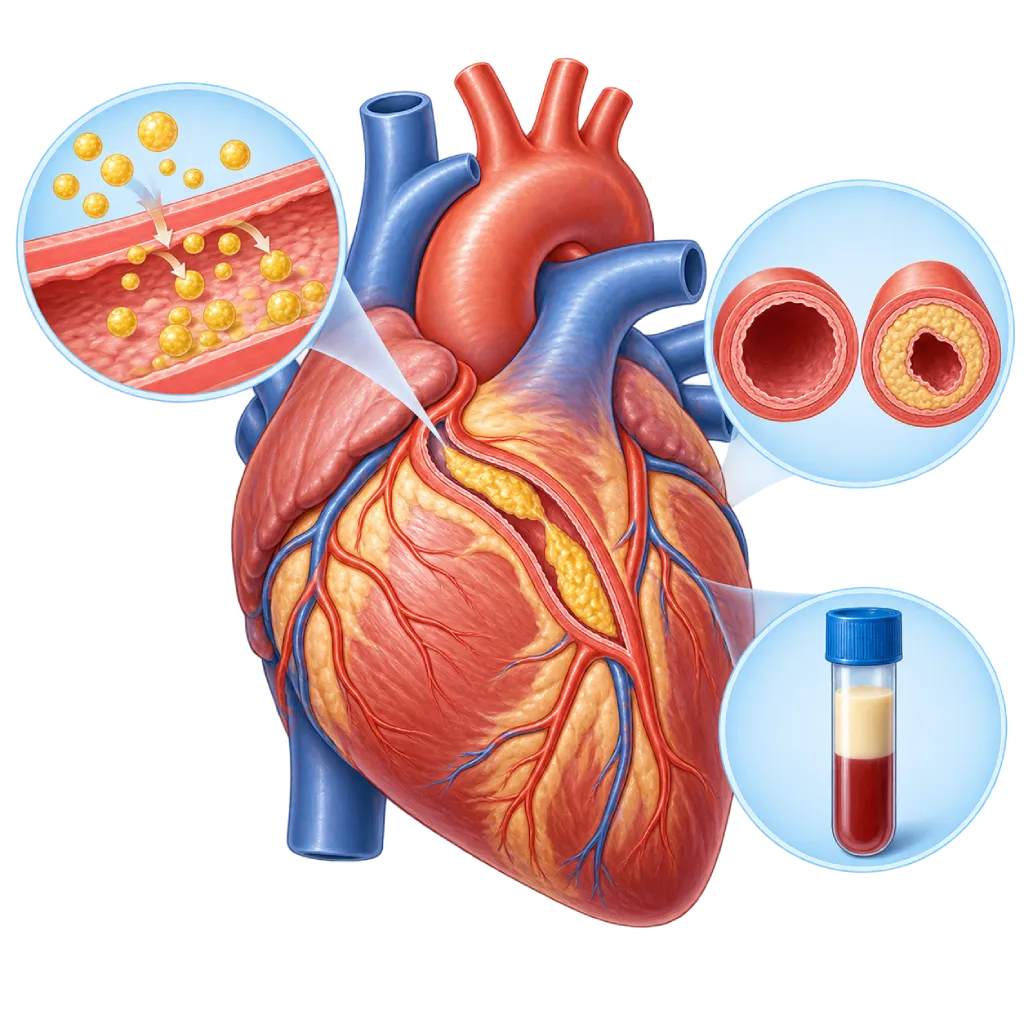
LDL particles can enter the artery wall and build up into plaque, a deposit of fat, inflammatory cells, and connective tissue. This process, called atherosclerosis, progresses silently over many years. The higher the LDL level and the longer it lasts, the larger the plaque that forms. Plaque can narrow the coronary arteries that supply blood to the heart muscle, the arteries to the brain, and the leg arteries. If a plaque ruptures, a blood clot forms that can suddenly block the vessel and cause a heart attack or stroke. High triglycerides also add to the risk, and very high levels can trigger inflammation of the pancreas.
Primary and Secondary
Primary dyslipidemia comes from inherited factors. One form worth recognizing is familial hypercholesterolemia, a genetic disorder that causes very high LDL from birth and affects about 1 in 200 to 300 people. Lipoprotein(a), a type of fat particle whose level is almost entirely determined by genes, can also add to the risk. Secondary dyslipidemia is triggered by a diet high in saturated fat, excess weight, lack of physical activity, alcohol, diabetes, hypothyroidism, kidney disease, or certain medicines.
It Can Be Controlled
Because it causes almost no symptoms, dyslipidemia is usually discovered only through a blood test. The 2019 ESC/EAS guidelines and their 2025 update emphasize that the lower the LDL, the lower the risk of heart attack and stroke. Your LDL target is set based on your overall risk level, not on the cholesterol number alone. Dietary changes, physical activity, quitting smoking, and cholesterol-lowering medicines when needed have been proven to reduce the risk of heart events. Regular testing helps make sure your target stays on track year after year.
02 / Understanding the condition
Symptoms to Recognize.
Common Symptoms
Most people with dyslipidemia have no symptoms at all, so the condition is usually found through a blood test.
- Usually no symptoms at all
- Flat yellowish patches on the eyelids (xanthelasma)
- Yellowish lumps on the heel tendons, the backs of the hands, or the elbows (xanthomas)
- A grayish-white ring at the edge of the cornea before age 45
- Small yellowish bumps that appear in clusters on the skin when triglycerides are very high
03 / Understanding the condition
What Causes This Condition?
- Inherited gene disorders, such as familial hypercholesterolemia, that cause high LDL from birth
- High lipoprotein(a) levels due to inherited factors
- A diet high in saturated and trans fats, such as fried foods, animal fats, and processed foods
- Too much sugar, refined flour, and alcohol, which raise triglycerides
- Excess weight, especially belly fat, along with insulin resistance
- Other diseases such as diabetes, hypothyroidism, chronic kidney disease, or liver disease
- Certain medicines, for example corticosteroids, retinoids, and some immunosuppressive or antiretroviral drugs
04 / Understanding the condition
Who Is at Higher Risk?
Lifestyle
A diet high in saturated fat, sugar, and processed foods, lack of physical activity, smoking, and drinking alcohol. Smoking also lowers HDL cholesterol.
Medical
Diabetes, obesity, metabolic syndrome, hypothyroidism, chronic kidney disease, and polycystic ovary syndrome. Pregnancy also raises blood fat levels temporarily.
Genetic
A parent or sibling with very high cholesterol, or with early heart disease, meaning before age 55 in men and before age 60 in women.
Age
Cholesterol levels tend to rise with age. In women, LDL usually increases after menopause.
Groups at Higher Risk
- People with Diabetes: Diabetes often comes with high triglycerides and low HDL, and the risk of heart disease is higher, so LDL targets are usually stricter.
- Families with Very High Cholesterol: If a close family member has very high LDL or had an early heart attack, blood fat testing is recommended, including for children.
- People with Heart Disease or Stroke: People who have had a heart attack, a stent, or a stroke are at very high risk, with an LDL target below 55 mg/dL.
- People Who Are Overweight: Excess belly fat and lack of activity are linked to high triglycerides and low HDL.
- Postmenopausal Women: After menopause, falling estrogen levels make LDL cholesterol tend to rise, so regular testing is still needed.
05 / Understanding the condition
How Is It Diagnosed?
Dyslipidemia is diagnosed with a lipid profile blood test. Because it causes almost no symptoms, this test is recommended for adults at regular intervals, and earlier if you have risk factors or family members with very high cholesterol. Abnormal results are usually confirmed with a repeat test.
The doctor then looks for secondary causes, such as diabetes, hypothyroidism, kidney disease, liver disease, or certain medicines. The doctor also asks about your family history and looks for physical signs such as xanthomas. If LDL is very high, for example above 190 mg/dL, the doctor may suspect familial hypercholesterolemia and suggest testing other family members.
The next step is to assess your overall cardiovascular risk. In people who already have coronary artery disease, stroke, diabetes with organ damage, or chronic kidney disease, the risk is already high without needing to be calculated. For others, the doctor uses a risk calculator such as SCORE2 and, if needed, additional tests such as a coronary calcium score to decide on the LDL target and whether medicine is needed.
Cholesterol and Lipid Profile Screening
Measures total cholesterol, LDL, HDL, and triglycerides. Fasting is usually not required unless triglycerides are very high or your doctor asks for it. Measuring lipoprotein(a) at least once in a lifetime is recommended.
Individual Heart Risk Screening
Combines age, blood pressure, cholesterol, smoking, and diabetes to estimate the 10-year risk of heart attack and stroke, for example with SCORE2, as the basis for the LDL target.
HbA1c Test
Looks for diabetes or prediabetes, which often accompanies high triglycerides and low HDL.
Thyroid Function Test
Looks for hypothyroidism, a treatable cause of high cholesterol.
Kidney Function Test
Assesses kidney function, because kidney disease can raise blood fats and affect the choice of medicine.
Liver Function Test
Assesses liver health as a possible cause of blood fat problems and as a baseline before cholesterol-lowering medicine.
Cardiac CT Scan
A coronary calcium score from a non-contrast CT may be considered if your risk is borderline, to see whether plaque is already present in the coronary arteries.
06 / Understanding the condition
Treatment Options.
Treatment is decided by a doctor after an assessment. The categories below can help you follow the conversation with your doctor.
Heart-Healthy Diet
Cut back on saturated and trans fats, and eat more vegetables, fruit, nuts and legumes, whole grains, and fish. Limit sugar and alcohol if your triglycerides are high.
Physical Activity and a Healthy Weight
Aerobic activity of about 150 to 300 minutes per week and losing weight if you are overweight help lower triglycerides and improve HDL.
Quitting Smoking
Stopping smoking raises HDL and lowers the risk of a heart attack, whatever your cholesterol level.
Statins
The main class of LDL-lowering medicines, proven to reduce the risk of heart attack and stroke. Your doctor decides the type and dose based on your LDL target.
Additional LDL-Lowering Medicines
If the target has not been reached or statins cannot be used, your doctor may add ezetimibe, a PCSK9 inhibitor, inclisiran, or bempedoic acid.
Triglyceride-Lowering Medicines
For persistently high triglycerides, your doctor may consider fibrates or certain types of omega-3 fatty acids after lifestyle and LDL have been addressed.
07 / Understanding the condition
Complications to Watch For.
Coronary Artery Disease
Plaque in the coronary arteries reduces blood flow to the heart muscle and causes chest pain during activity. Covered on the Coronary Artery Disease page.
Heart Attack
A ruptured plaque triggers a clot that suddenly blocks a coronary artery. Covered on the Myocardial Infarction / Heart Attack page.
Ischemic Stroke
Narrowing or blockage of the neck and brain arteries can stop blood flow to part of the brain. Covered on the Ischemic Stroke page.
Peripheral Artery Disease
Plaque in the leg arteries causes calf pain when walking and foot wounds that are slow to heal. Covered on the Peripheral Artery Disease page.
Acute Pancreatitis
Very high triglycerides, usually above about 880 mg/dL, can trigger inflammation of the pancreas with severe abdominal pain that requires hospital care.
08 / Understanding the condition
What Can You Do?
- Have a lipid profile checked starting in young adulthood and repeat it as your doctor advises
- Replace fried foods and animal fats with dishes that are grilled, boiled, or steamed
- Eat more vegetables, fruit, nuts and legumes, and whole grains every day
- Stay active for about 150 minutes per week, for example brisk walking or cycling
- Quit smoking and limit alcoholic drinks
- Keep your weight and waist size within a healthy range
- If a close family member has very high cholesterol, have other family members tested too, including children
09 / Understanding the condition
When Should You See a Doctor?
Because dyslipidemia rarely causes symptoms, have your lipid profile checked even if you feel healthy. If you are already taking medicine, attend your scheduled checkups to see whether you have reached your LDL target. Go to the emergency room right away if you develop chest pain, signs of stroke, or severe abdominal pain.
- You have never had your cholesterol checked, or your last test was a long time ago
- You have diabetes, hypertension, obesity, or kidney disease
- A close family member has very high cholesterol or had an early heart attack
- Yellowish patches or lumps appear on your eyelids or tendons
- Muscle pain, weakness, or dark urine while taking cholesterol medicine
- You have had a heart attack, a stent, or a stroke
Don't Wait in an Emergency.
If symptoms are severe or come on suddenly, go to the nearest emergency department right away or call Heart Attack Center 1500 258, rather than waiting for an appointment.
10 / Common questions
Questions You May Have.
Frequently asked questions about dyslipidemia and high cholesterol.
What LDL cholesterol level is considered normal?
There is no single number that applies to everyone. The ESC/EAS guidelines use targets based on risk level: below 116 mg/dL for low risk, below 100 mg/dL for moderate risk, below 70 mg/dL for high risk, and below 55 mg/dL for very high risk, for example after a heart attack. Your doctor determines your risk group from your overall health.
Do I need to fast before a cholesterol test?
Usually it is not required. The ESC/EAS guidelines state that non-fasting blood samples can be used for routine testing, because LDL and HDL levels barely change after eating. Triglycerides do rise slightly after a meal. If your triglycerides are high or your doctor needs a more precise result, you may be asked to fast overnight before the blood draw. Follow the instructions from your doctor or the laboratory.
Do I have to take cholesterol medicine for life?
For many people, yes. Statins and other LDL-lowering medicines work as long as you take them; if stopped, LDL levels usually rise again within a few weeks. Protection against heart attack and stroke grows the longer LDL is kept low. Do not stop or reduce your medicine on your own. If you have side effects, discuss them with your doctor so a more suitable type or combination of medicines can be found.
Do statins damage the liver or kidneys?
Statins are generally safe for long-term use. A mild rise in liver enzymes can occur, but serious liver damage is very rare. Statins do not damage the kidneys. A more common complaint is muscle pain, and in many cases it turns out not to be caused by the statin. If needed, your doctor checks liver enzymes and creatine kinase, then adjusts the type or dose of medicine.
Can thin people have high cholesterol?
Yes. Cholesterol levels are influenced by inherited factors, not just body weight and diet. In familial hypercholesterolemia, LDL is already high from childhood even with a slim body and a good diet. That is why every adult is advised to have a lipid profile checked, especially if a close family member has very high cholesterol or had a heart attack at a young age.
Can supplements or herbal remedies replace cholesterol medicine?
No. The 2025 update of the ESC/EAS guidelines does not recommend supplements or vitamins that have not been proven safe and have not been proven to lower LDL for reducing the risk of heart disease. Some products can also interact with medicines. A healthy diet remains the foundation of care. If you want to use a supplement, discuss it with your doctor first and do not stop medicines you have been prescribed.
Sources and Medical Review
Translated from the Indonesian edition medically reviewed by Dr. med. dr. Denio A. Ridjab, Sp.JP(K).
Sources as cited in the Indonesian edition.
- Mach F, Baigent C, Catapano AL, Koskinas KC, Casula M, Badimon L, et al. 2019 ESC/EAS Guidelines for the management of dyslipidaemias: lipid modification to reduce cardiovascular risk. Eur Heart J. 2020;41(1):111-188.
- Mach F, Koskinas KC, Roeters van Lennep JE, Tokgözoğlu L, Badimon L, Baigent C, et al. 2025 Focused Update of the 2019 ESC/EAS Guidelines for the management of dyslipidaemias. Eur Heart J. 2025.
- Visseren FLJ, Mach F, Smulders YM, Carballo D, Koskinas KC, Bäck M, et al. 2021 ESC Guidelines on cardiovascular disease prevention in clinical practice. Eur Heart J. 2021;42(34):3227-3337.
- Grundy SM, Stone NJ, Bailey AL, Beam C, Birtcher KK, Blumenthal RS, et al. 2018 AHA/ACC/AACVPR/AAPA/ABC/ACPM/ADA/AGS/APhA/ASPC/NLA/PCNA Guideline on the Management of Blood Cholesterol: A Report of the American College of Cardiology/American Heart Association Task Force on Clinical Practice Guidelines. Circulation. 2019;139(25):e1082-e1143.
- Kronenberg F, Mora S, Stroes ESG, Ference BA, Arsenault BJ, Berglund L, et al. Lipoprotein(a) in atherosclerotic cardiovascular disease and aortic stenosis: a European Atherosclerosis Society consensus statement. Eur Heart J. 2022;43(39):3925-3946.
Doctors Who Treat This Condition

Dr. med. dr. Denio A. Ridjab, Sp.JP(K)
Interventional Cardiology
Coronary Intervention Procedures +2 centers
Clinical focusInterventional Cardiology · Coronary Artery Disease
View Profile
dr. Debby C. Soemitha, Sp.PD
Internal Medicine
Clinical focusDiabetes and Diabetes Complications · Obesity and Metabolic Disease
View Profile
dr. Juweni Joe, Sp.GK
Clinical Nutrition
Clinical focusMedical Nutrition Intervention · Nutrition for Cardiovascular Patients
View Profile