
Quick answer
What Is Liver Function Test?
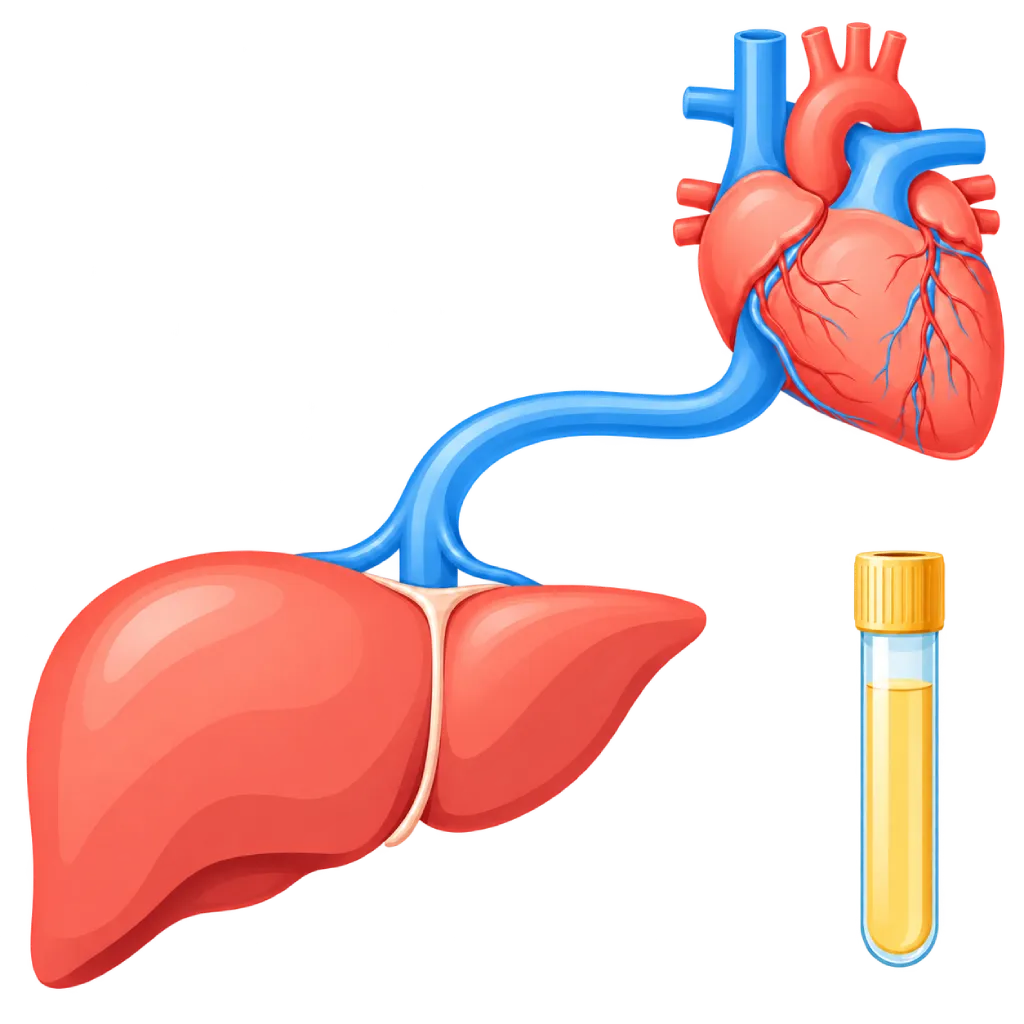
A liver function test is a group of blood tests that measure liver enzymes such as ALT (SGPT) and AST (SGOT), bilirubin, and albumin. The results help your doctor assess liver inflammation or blocked bile flow. In heart patients, it shows how heart failure affects the liver and helps monitor the safety of certain medicines.
Sources01 / Understanding the procedure
About Liver Function Test
What Is a Liver Function Test
A liver function test is a group of blood tests that reflect the condition of the liver. The liver processes nutrients and medicines, makes proteins such as albumin and blood clotting factors, and removes bilirubin through bile. When the liver is inflamed, its bile flow is blocked, or its function declines, the levels of several substances in the blood change.
How It Works in Brief
Blood is drawn from a vein in your arm, and the laboratory measures several substances at once. Your doctor looks not at a single number but at the pattern of increases: whether they mainly involve enzymes from liver cells, substances related to bile flow, or proteins made by the liver.
Reading the Results
Each laboratory has its own normal range. Mild increases are fairly common and are sometimes only temporary.
- ALT (SGPT): an enzyme found mainly in liver cells. Its level rises when liver cells are inflamed or damaged.
- AST (SGOT): found in the liver, but also in muscles and the heart muscle, so an increase can come from outside the liver.
- ALP and GGT: rise when bile flow is blocked. GGT can also rise because of alcohol and certain medicines.
- Bilirubin: a yellow substance that the liver removes through bile. High levels turn the skin and the whites of the eyes yellow.
- Albumin and total protein: proteins made by the liver that fall when liver function has been reduced for a long time.
A blood clotting time test (PT or INR) is sometimes added to assess the liver's ability to make clotting factors.
The Liver and the Heart
The liver and the heart are closely connected. In heart failure, especially on the right side, blood can back up in the liver, raising bilirubin, ALP, and GGT. When blood pressure drops very low, for example in shock, blood flow to the liver decreases and AST and ALT can rise sharply within a few days. Some heart medicines, such as amiodarone, need to be accompanied by regular liver function tests. Fatty liver related to obesity and diabetes also increases the risk of heart disease.
02 / Understanding the procedure
When Is This Procedure Considered?
A doctor may consider this procedure in the situations below. The decision is always made after a thorough assessment.
- Heart Failure or Swelling in the Abdomen and LegsTo see whether blood is backing up in the liver and how much it affects the liver.
- Before or While Taking Certain MedicinesFor example, statin cholesterol medicines, amiodarone, or certain medicines for pulmonary hypertension.
- Yellowing of the Skin or EyesTo find out whether the cause lies in the liver or in the bile flow.
- Fatty Liver, Obesity, or DiabetesThese conditions are often accompanied by raised liver enzymes and a risk of heart disease.
- Preparation for Heart Surgery or a Major ProcedureHelps assess your general condition and bleeding risk before the procedure.
- After Shock or Very Low Blood PressureTo assess the effect of reduced blood flow on the liver.
Situations to Consider First
- Strenuous Exercise in the Past 1 to 2 DaysCan raise AST and ALT from muscle rather than from the liver.
- Drinking AlcoholCan raise GGT and other liver enzymes. Avoid alcohol for at least one day before the test.
- Medicines, Traditional Herbal Remedies, or SupplementsSome can raise liver enzymes. Tell the staff about everything you take.
- Recent Heart Attack or Muscle InjuryAST can rise from the heart muscle or skeletal muscle.
- PregnancyALP can rise naturally because it is also produced by the placenta.
03 / Before the procedure
How Should You Prepare?
A liver function test uses a blood sample, and preparation is simple.
Eating and drinking. Fasting is usually not needed, unless the laboratory asks for it or another test done at the same time requires fasting, such as fasting blood sugar or cholesterol. Drink water as usual.
Alcohol and exercise. Avoid alcohol for at least one day before the test, and avoid strenuous exercise for 1 to 2 days beforehand.
Medicines. Take your medicines as usual. Bring a list of your medicines, including traditional herbal remedies, herbal supplements, and vitamins.
Important information. Tell the staff if your skin or eyes are yellow, if you have recently had a heart attack, or if you are pregnant.
Previous results. Bring previous liver function test or liver ultrasound results so your doctor can see any changes.
Unsure about the preparation instructions? Ask our team before the procedure.
04 / During the procedure
How Is the Procedure Done?
The blood draw usually takes 10 minutes, and results are usually available the same day.
Identity Check
The staff match your identity with the test request and ask about medicines, alcohol, and strenuous exercise that may affect the results.
Blood Draw
Blood is drawn from a vein in the crook of your elbow. The staff take care not to damage the sample, because ruptured blood cells can raise the AST result.
Laboratory Testing
An analyzer measures ALT, AST, ALP, GGT, bilirubin, albumin, and total protein as requested by your doctor.
Reading the Results
Your doctor interprets the pattern of increases together with your symptoms, the medicines you take, your heart function, and other tests. If needed, your doctor requests a repeat test, hepatitis tests, or a liver ultrasound.
05 / Benefits and risks
Benefits and Risks Should Be Discussed Together.
Every medical procedure has benefits and risks. Your doctor will explain both for your situation before the procedure.
Benefits You Can Expect
- Simple and QuickOnly a small amount of blood is needed, and results are usually available the same day.
- A Picture of Liver HealthHelps identify inflammation, blocked bile flow, or reduced liver function.
- Monitors Medicine SafetyHelps your doctor adjust medicines whose effects on the liver need monitoring.
- Shows How Heart Failure Affects the LiverChanges in the results help assess blood congestion in the liver.
- Guides Further TestingThe result pattern helps your doctor choose the next test, such as a liver ultrasound.
The benefits of a procedure are not a promise of a cure. Ask how the results will affect your care plan.
Risks You Should Know
- Minor Pain or BruisingAt the needle site, usually mild and quick to fade.
- Brief Dizziness or FaintingSome people feel dizzy when blood is drawn. Tell the staff so you can lie down.
- Results Affected by Temporary ConditionsStrenuous exercise, alcohol, or a damaged sample can change the results, so a repeat test is sometimes needed.
- Infection at the Puncture SiteVery rare, because the skin is cleaned and the equipment used is sterile and single-use.
Risks can differ from person to person. A full explanation and consent are given after an individual assessment.
06 / After the procedure
What Is Recovery Like?
There is no recovery period. You can return to your activities right away.
Puncture site. A small bruise is normal and fades within a few days.
If the results are abnormal. Your doctor looks for the cause. Do not stop your heart medicines on your own because of a liver test result; talk to your doctor beforehand.
Monitoring. If you take a medicine that requires monitoring, the test is repeated regularly as directed by your doctor.
Warning signs. Go to the emergency room right away or contact the medical team if you have:
- Yellowing of the skin or the whites of the eyes
- Dark, tea-colored urine or pale stools
- Severe pain in the upper right abdomen
- An abdomen that enlarges, or swelling that increases quickly
- Extreme drowsiness or confusion
Know the Signs That Need Prompt Care.
Follow the team's guidance on warning signs. If severe or sudden symptoms appear after the procedure, go to the nearest emergency department right away or call Heart Attack Center 1500 258.
07 / Team and support
Doctors and Procedure Support
The doctors below are listed for this procedure. Listed by name, not by ranking.

dr. Debby C. Soemitha, Sp.PD
Internal Medicine
Clinical focusDiabetes and Diabetes Complications · Obesity and Metabolic Disease
View Profile
dr. Khaira U. Yusrie, Sp.PD-KGEH
Gastroenterology & Hepatology
Clinical focusInternal Medicine · Gastroenterology and Hepatology
View Profile
dr. Siska S. Danny, Sp.JP(K)
Interventional Cardiology
Coronary Intervention Procedures
Clinical focusPCI for Acute Coronary Syndrome · Primary Coronary Intervention
View Profile08 / Common questions
Before You Plan the Procedure.
Frequently asked questions about liver function tests. Your doctor explains what the results mean for your condition.
What is checked in a liver function test?
A liver function test usually measures ALT (SGPT), AST (SGOT), ALP, GGT, bilirubin, albumin, and total protein. A blood clotting time test is sometimes added. The contents of the panel can differ between laboratories and are adjusted to your needs, so your doctor may request some or all of these tests.
What do high AST and ALT (SGOT and SGPT) levels mean?
High AST and ALT indicate that some cells are damaged or inflamed, usually in the liver. The causes vary, from fatty liver, hepatitis, medicines, and alcohol to reduced blood flow to the liver. AST can also rise because of injury to muscles or the heart muscle, so your doctor interprets the results together with other tests.
How are liver function tests related to heart disease?
In heart failure, blood can back up in the liver, raising bilirubin, ALP, and GGT. During shock or very low blood pressure, AST and ALT can rise sharply because the liver does not get enough blood flow. This test is also used to monitor certain heart medicines and to assess fatty liver, which increases the risk of heart disease.
Do cholesterol medicines (statins) damage the liver?
Severe liver damage from statins is very rare. Mild increases in liver enzymes sometimes occur and often improve on their own. Your doctor usually checks liver function before starting a statin, then repeats the test if symptoms appear, such as yellowing of the skin or pain in the upper right abdomen. Do not stop your statin on your own without talking to your doctor.
Do I need to fast before a liver function test?
Usually not, unless the laboratory asks you to or another test done at the same time requires fasting, such as fasting blood sugar or cholesterol. What matters more is avoiding alcohol for at least one day before the test and avoiding strenuous exercise for 1 to 2 days beforehand, because both can raise the results.
What happens if my liver function test results are abnormal?
Your doctor looks at the pattern of increases and searches for the cause, for example by asking about medicines, herbal remedies, and alcohol, then requesting a repeat test, hepatitis tests, or a liver ultrasound. Mild increases are often only temporary. If the cause is related to the heart, improving heart function can also improve the liver test results.
Sources and Medical Review
Translated from the Indonesian edition medically reviewed by dr. Khaira U. Yusrie, Sp.PD-KGEH.
Sources as cited in the Indonesian edition.
- Kwo PY, Cohen SM, Lim JK. ACG Clinical Guideline: Evaluation of Abnormal Liver Chemistries. Am J Gastroenterol. 2017;112(1):18-35.
- Newsome PN, Cramb R, Davison SM, et al. Guidelines on the management of abnormal liver blood tests. Gut. 2018;67(1):6-19.
- Samsky MD, Patel CB, DeWald TA, et al. Cardiohepatic interactions in heart failure: an overview and clinical implications. J Am Coll Cardiol. 2013;61(24):2397-2405.
- Duell PB, Welty FK, Miller M, et al. Nonalcoholic fatty liver disease and cardiovascular risk: a scientific statement from the American Heart Association. Arterioscler Thromb Vasc Biol. 2022;42(6):e168-e185.
- Bays H, Cohen DE, Chalasani N, et al. An assessment by the Statin Liver Safety Task Force: 2014 update. J Clin Lipidol. 2014;8(3 Suppl):S47-S57.