
Quick answer
Chronic gastritis is inflammation of the stomach lining that lasts a long time or keeps coming back, often felt as chronic stomach trouble (known in Indonesia as maag), upper abdominal pain, nausea, bloating, or feeling full quickly. It needs to be checked if complaints persist, become more frequent, or come with vomiting blood, black stools, shortness of breath, chest pressure, or radiating pain, especially in people with heart risk factors.
See sourcesUpper abdominal pain, bloating, nausea, feeling full quickly, or a burning feeling in the chest are often dismissed as “just maag”, the everyday Indonesian term for stomach trouble. For many busy working people, these complaints are usually eased first by eating, resting for a moment, or taking stomach medicine already at home. However, if the complaints keep coming back, last a long time, or feel different from usual, it is better not to simply guess what is causing them.
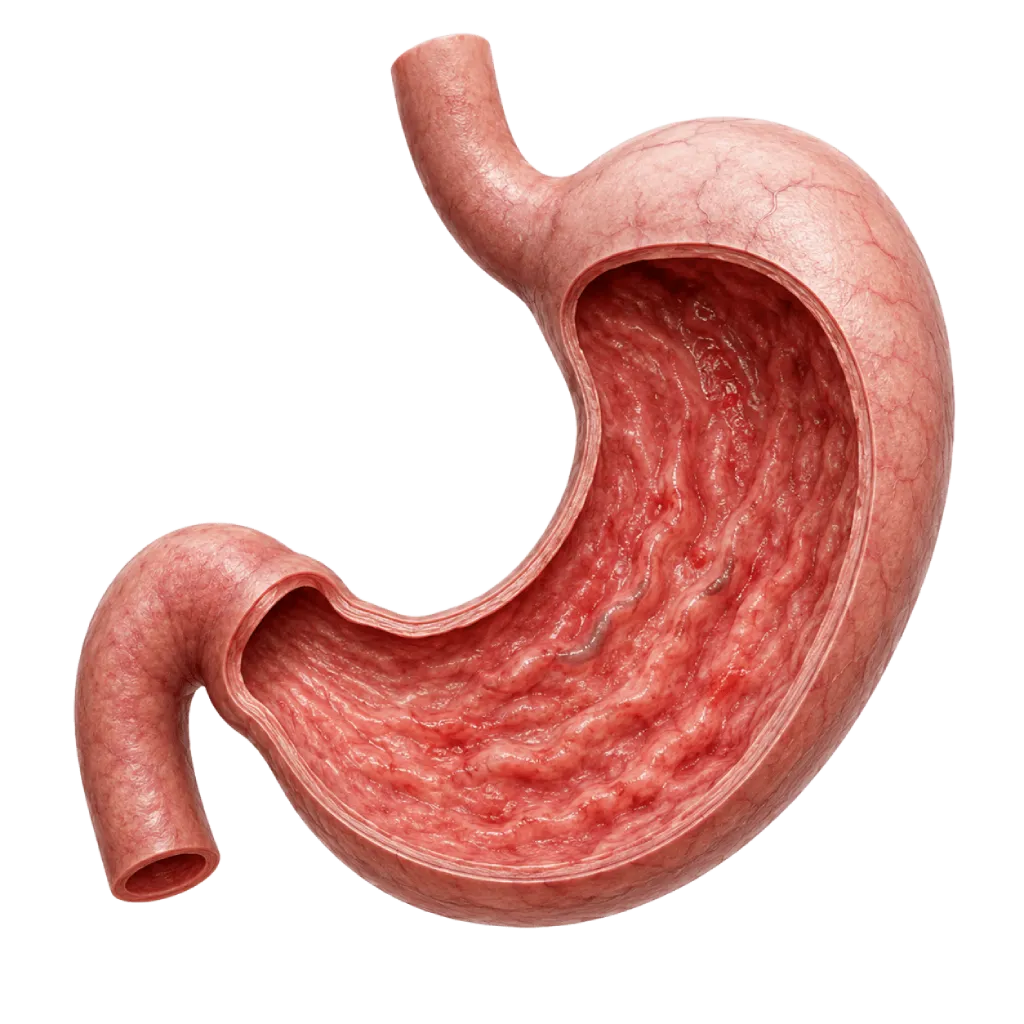 Chronic gastritis is one condition that can cause recurring stomach complaints. It involves inflammation of the stomach lining that lasts a long time or develops slowly. In some people, the symptoms are mild and vague. In others, the complaints can be disruptive enough to interfere with daily activities. Gastritis also does not always cause symptoms, so a doctor’s assessment remains important if complaints persist or come with warning signs.
What often makes patients unsure is when digestive complaints are felt close to the chest. A burning chest, upper abdominal pain, nausea, or discomfort after eating are indeed often related to digestive problems. However, chest complaints and heart symptoms can also feel alike in some people, and they are not always easy to tell apart from the description of symptoms alone. Heartburn, angina, and a heart attack can feel very similar, so chest pain that persists or has no clear cause needs to be evaluated medically.
This article helps you understand what chronic gastritis is, its causes, symptoms, tests, how to manage it, and when upper abdominal pain needs further examination, especially if there are chest complaints, shortness of breath, or heart risk factors.
What Is Chronic Gastritis?
Definition of Chronic Gastritis
Gastritis is inflammation of the stomach’s protective lining. This lining protects the stomach wall from acid, digestive enzymes, and various substances that enter with food or medication. When the lining becomes irritated or inflamed, complaints such as upper abdominal pain, nausea, bloating, or feeling full quickly may appear.
It is called chronic gastritis when the inflammation lasts a long time, develops slowly, or keeps coming back. In everyday conversation in Indonesia, many people call it chronic maag. However, the term “maag” actually describes a set of complaints, whereas chronic gastritis is a medical condition that needs to be assessed based on the history of symptoms and, if needed, further tests. Cleveland Clinic distinguishes acute gastritis as a condition that appears suddenly and is temporary, while chronic gastritis is a long-term condition that can develop slowly and is not always felt at all times.
Differences Between Acute and Chronic Gastritis
Put simply:
| Type of Gastritis | General Picture | What to Understand |
|---|---|---|
| Acute Gastritis | Appears suddenly and usually lasts a shorter time | Often related to temporary irritation, for example from certain medications, alcohol, infection, or an acute medical condition |
| Chronic Gastritis | Lasts longer or keeps recurring | The underlying cause needs to be found, such as H. pylori infection, use of certain pain relievers, or an autoimmune condition |
This difference matters because treatment aims not only to relieve discomfort, but also to find the cause so that the complaints do not keep coming back.
Main Causes of Chronic Gastritis
Chronic gastritis does not always have a single cause. In some patients, the cause is clear. In others, stomach complaints can be influenced by several things at once, such as a history of infection, medication use, smoking, alcohol, or certain medical conditions.
H. Pylori Infection
One important cause of chronic gastritis is infection with the bacterium Helicobacter pylori, or H. pylori. This bacterium can live in the stomach and trigger inflammation of the stomach lining. H. pylori gastritis occurs when this bacterial infection causes inflammation in the stomach, and its transmission may be related to contact with vomit, stool, saliva, or contaminated food or water.
In the Indonesian context, the national consensus on dyspepsia and H. pylori infection also treats H. pylori evaluation as an important part of assessing certain dyspepsia complaints, especially when there are clinical indications and alarm signs. The consensus states that testing can be done directly through endoscopy or indirectly through methods such as the urea breath test, stool tests, urine tests, or serology, depending on the clinical context.
Use of Certain Pain Relievers
Nonsteroidal anti-inflammatory drugs (NSAIDs), which include some types of pain relievers, can irritate the stomach lining if used regularly or long term. Regular use of NSAID pain relievers can cause both acute and chronic gastritis because they can damage the protective function of the stomach lining.
However, this does not mean everyone should immediately stop the medications they are taking. If you regularly take pain relievers, aspirin, blood thinners, or medications for heart and blood vessel conditions, talk with your doctor first before changing or stopping them. Stopping certain medications without medical guidance can create other risks.
Alcohol, Smoking, and Stomach Irritation
Alcohol can irritate and weaken the stomach lining, making the stomach more vulnerable to irritation. Alcohol and certain medications can cause acute or chronic gastritis depending on how much and how often they are used.
Smoking can also worsen digestive health and slow the healing process in some conditions. In this article, alcohol and smoking are discussed not to judge, but to help readers recognize factors that can make complaints worse and should be reduced gradually.
Autoimmune Conditions and Other Factors
In some cases, chronic gastritis can be related to an autoimmune condition, in which the immune system attacks the body’s own cells. Autoimmune gastritis occurs when the body attacks the cells that make up the stomach lining, and this condition can be linked to other autoimmune disorders and vitamin B12 deficiency.
Other, less common causes may include bile reflux, inflammatory bowel disease, certain infections, or the effects of certain medical treatments. Because the causes can vary, recurring stomach complaints should not always be assumed to result only from spicy food, coffee, or stress.
Symptoms of Chronic Gastritis You Should Know
Common Symptoms
Symptoms of chronic gastritis can differ from person to person. Some feel clear pain in the upper abdomen, some only feel bloated after eating, and others have no typical symptoms. Most people with gastritis or gastropathy have no symptoms; when symptoms do appear, they can include pain or discomfort in the upper abdomen, nausea, vomiting, feeling full quickly, feeling too full after eating, reduced appetite, and even weight loss.
Commonly reported complaints include:
- Pain, a stinging sensation, or discomfort in the upper abdomen.
- Nausea.
- Vomiting.
- Bloating or a feeling of fullness.
- Feeling full quickly while eating.
- Reduced appetite.
- Recurring digestive complaints.
- Discomfort after eating.
For busy people, these symptoms are often brushed off with “it will go away on its own”. Sometimes they do improve, but if they keep coming back, become more disruptive, or require repeated medication, the cause needs to be found.
Symptoms to Watch Out For
Gastritis can cause more serious problems if the stomach lining develops sores or bleeds. If gastritis or gastropathy causes erosions or ulcers, the stomach lining can bleed; signs of bleeding can include black or tarry stools, red or maroon blood in the stool, fatigue, shortness of breath, dizziness, vomiting blood, or vomit that looks like coffee grounds.
Seek medical help immediately if you experience:
- Vomiting blood.
- Black or tarry stools.
- Severe or worsening abdominal pain.
- Severe weakness, dizziness, or feeling close to fainting.
- Shortness of breath.
- Weight loss with no clear cause.
- Complaints that do not improve or occur more often.
- Chest pain that persists or feels unusual.
Symptoms like these are not a reason to wait. A medical evaluation helps determine whether the complaints come from the stomach, another part of the digestive tract, or a condition that needs attention more quickly.
Chronic Gastritis, GERD, or Heart Symptoms?
Why Can the Complaints Feel Similar?
The upper abdomen sits close to the lower chest. That is why discomfort in the stomach, acid reflux, or a burning feeling in the chest can sometimes make it hard to tell: is this stomach trouble, GERD, or something more serious?
Heartburn is usually related to stomach acid rising into the esophagus. Heartburn often feels like a burning sensation in the chest that may involve the upper abdomen, usually appears after eating or when lying down or bending over, may come with a sour taste in the mouth, and sometimes improves with antacids. However, the same source emphasizes that heartburn, angina, and a heart attack can feel very similar, so chest pain that persists or has no clear cause needs to be evaluated promptly.
The key message is simple: not all upper abdominal pain is a sign of a heart problem, but not every chest complaint should be immediately assumed to be stomach trouble.
Comparison Table: Gastritis, GERD, and Heart Symptoms
| Condition | Common Complaints | Commonly Reported Triggers | When to Be Cautious |
|---|---|---|---|
| Chronic Gastritis | Upper abdominal pain, nausea, feeling full quickly, bloating, reduced appetite | Stomach irritation, H. pylori, certain pain relievers, alcohol, autoimmune conditions | If it persists, if there is vomiting of blood, black stools, or weight loss, or if flare-ups become more frequent |
| GERD / Heartburn | A burning chest, a sour or bitter taste in the mouth, a feeling of food coming back up | After a large meal, lying down after eating, trigger foods or drinks | If it flares up often, disturbs sleep, or feels like unexplained chest pain |
| Heart Complaints | Chest pressure, shortness of breath, cold sweat, radiating pain, severe nausea, dizziness | Physical activity, physical or emotional stress, or appearing without a clear trigger in people at risk | If accompanied by shortness of breath, radiating pain, dizziness, cold sweat, or heart risk factors |
When Should You Be More Suspicious of a Heart Problem?
The American Heart Association notes that warning signs of a heart attack can include discomfort in the center of the chest that lasts more than a few minutes or comes and goes, and that feels like pressure, squeezing, fullness, or pain. Symptoms can also appear as discomfort in the arm, back, neck, jaw, or stomach, as well as shortness of breath with or without chest pain.
Be more cautious if upper abdominal or chest pain comes with:
- A chest that feels heavy, pressured, squeezed, or uncomfortable.
- Shortness of breath.
- A cold sweat.
- Severe nausea.
- Dizziness or feeling close to fainting.
- Pain spreading to the arm, back, neck, jaw, shoulder, or abdomen.
- Complaints that appear during activity and improve with rest.
- Risk factors such as hypertension, diabetes, high cholesterol, smoking, obesity, or a family history of heart disease.
In women, heart attack symptoms can also be more subtle, such as shortness of breath, nausea, vomiting, shoulder, back, or arm pain, extreme tiredness, or abdominal discomfort. For this reason, if symptoms feel unusual, do not delay getting checked just because it is “probably just stomach trouble”.
How Is Chronic Gastritis Diagnosed?
Chronic gastritis cannot be diagnosed from a “stinging” or “bloated” feeling alone. The doctor needs to understand the pattern of complaints, medication history, risk factors, and warning signs. If needed, further tests can help confirm the cause.
Reviewing the History of Complaints
The doctor will usually ask about:
- When the complaints started.
- How often they flare up.
- Whether the complaints appear before eating, after eating, at night, or during activity.
- Medications you are taking or often take.
- Your history of using pain relievers.
- Any history of stomach trouble, GERD, stomach ulcers, or endoscopy.
- Any history of vomiting blood, black stools, weight loss, anemia, or difficulty swallowing.
- Heart risk factors if the complaints also involve the chest, shortness of breath, or palpitations.
Doctors can diagnose gastritis or gastropathy by asking about medical history, symptoms, and medications used, performing a physical examination, and considering an upper gastrointestinal endoscopy with biopsy or other tests.
Testing for H. Pylori
If the doctor suspects an H. pylori infection, testing can be done in several ways. A stool test can be used to check for H. pylori infection and blood in the stool, while a urea breath test can help detect H. pylori infection through a breath sample.
Mayo Clinic also lists stool or breath tests as options to find out whether someone has H. pylori, with the choice of test tailored to the patient’s clinical situation.
Endoscopy and Biopsy
An upper gastrointestinal endoscopy is an examination that uses a flexible tube with a camera to look at the esophagus, stomach, and the first part of the small intestine. During the endoscopy, the doctor can take a small tissue sample, or biopsy, if needed. Endoscopy with biopsy can be used to diagnose gastritis or gastropathy, look for the cause, and treat complications.
Endoscopy is not always needed for every stomach complaint. However, it may be considered if symptoms persist, there are warning signs, complaints do not improve, or the doctor needs to confirm the cause. The Indonesian national consensus on dyspepsia emphasizes that evaluating alarm signs must be part of assessing patients with dyspepsia; alarm signs include unintentional weight loss, progressive difficulty swallowing, repeated or persistent vomiting, gastrointestinal bleeding, anemia, fever, a mass in the upper abdomen, a family history of stomach cancer, or new dyspepsia after age 45.
If the Complaints Point to the Heart
If upper abdominal or chest complaints are atypical, appear during activity, or come with shortness of breath, palpitations, a cold sweat, or dizziness, or if there are heart risk factors, the doctor may consider a cardiovascular evaluation.
Tests that may be considered, depending on the indication, include:
- ECG.
- Blood pressure measurement.
- Certain blood tests.
- Echocardiography.
- Treadmill test.
- Holter monitoring.
- A CT scan of the heart or blood vessels, based on the doctor’s assessment.
The key point is not that all upper abdominal complaints must come from the heart. Quite the opposite: testing helps sort out the cause more calmly, so patients do not delay a condition that needs prompt action and do not stay anxious without answers.
Treatment and Prevention of Chronic Gastritis
Treatment Based on the Cause
Treatment of chronic gastritis depends on its cause. If it is related to H. pylori, the doctor may prescribe a combination of medications to eradicate the bacteria and reduce stomach acid production. The National Institute of Diabetes and Digestive and Kidney Diseases explains that H. pylori treatment generally includes two or more antibiotics, a proton pump inhibitor, and in some cases bismuth subsalicylate; the medications need to be taken as prescribed to reduce the risk of the bacteria surviving and of antibiotic resistance.
If gastritis or gastropathy is related to long-term NSAID use, the doctor may consider adjusting the medication, lowering the dose, using alternative pain medication, or prescribing stomach-protecting medication depending on the patient’s condition. These steps should be based on the doctor’s assessment.
Avoid treating chronic gastritis based only on other people’s experiences. A medication that suits one person may not be right for another, especially if there is a history of heart, kidney, or liver disease, high blood pressure, diabetes, or regular medication use.
Habit Changes That May Help
Besides medical treatment, changes in habits may help reduce flare-ups and improve stomach comfort. Steps you can discuss with your doctor include:
- Eating more regularly.
- Avoiding eating too quickly.
- Noting foods or drinks that trigger complaints.
- Cutting down on alcohol.
- Quitting smoking.
- Managing stress in realistic ways.
- Getting enough sleep.
- Not lying down right after eating if you have reflux complaints.
- Avoiding pain relievers without a doctor’s guidance if you often have stomach complaints.
Stress should not be described as the only cause of chronic gastritis. However, stress can affect eating patterns, sleep quality, pain perception, and lifestyle habits that eventually make complaints worse. For this reason, stress management remains relevant, but it is not a substitute for a medical evaluation.
A Note for Active Professionals
For active professionals, the main challenge is not just discomfort, but uncertainty. Complaints appear in the middle of a meeting, after coffee, while working late, or on the way home. Sometimes they improve, then come back. At this point, many people start to wonder: “Is this stomach trouble, GERD, or my heart?”
The right approach is not to guess. If complaints flare up often, require repeated medication, or feel different from usual, getting checked helps reduce uncertainty. If there are heart risk factors, an evaluation becomes even more important because heart symptoms do not always appear in the classic way.
When Should You Seek Medical Help?
Seek Help Immediately If There Are Warning Signs
Seek medical help immediately if you experience:
- Vomiting blood.
- Black or tarry stools.
- Chest pain that persists or has no clear cause.
- Shortness of breath.
- A cold sweat.
- Fainting or nearly fainting.
- Pain spreading to the arm, back, jaw, neck, or shoulder.
- Severe complaints that appear suddenly.
- Severe weakness, dizziness, or being unable to eat or drink.
It is advisable to seek help right away if there is severe pain, vomiting to the point of being unable to keep food down, dizziness, vomiting blood, blood in the stool, or black stools. For chest pain that persists when it is unclear whether it is heartburn, emergency help is advised because both heartburn and a developing heart attack can ease temporarily.
When Should You See a Cardiologist?
A consultation with a cardiologist should be considered if upper abdominal or chest complaints leave you unsure, especially if:
- The complaint feels like pressure, heaviness, or squeezing in the chest.
- It appears during activity and improves with rest.
- It comes with shortness of breath.
- It comes with palpitations, a cold sweat, dizziness, or severe nausea.
- The pain spreads to the arm, back, neck, jaw, shoulder, or abdomen.
- You have a history of hypertension, diabetes, high cholesterol, smoking, obesity, or a family history of heart disease.
A consultation does not mean every complaint must come from the heart. A consultation is a way to get clarity. For many patients, this clarity actually makes the next step calmer: whether a stomach evaluation, a heart evaluation, or both are needed, step by step according to the indication.
Notes Before Your Consultation
Information Worth Writing Down
To make your consultation more efficient, prepare short notes before seeing the doctor. They do not need to be complicated. Just write down the things that are most often forgotten when you are anxious or in a hurry.
Note down:
- When the complaints started.
- Where the pain is felt most.
- Whether the complaints appear after eating, when hungry, when lying down, or during activity.
- Whether there is chest pressure, shortness of breath, palpitations, or a cold sweat.
- Whether there is nausea, vomiting, black stools, or vomiting blood.
- What medications you have taken.
- Whether you regularly take pain relievers.
- Whether you have a history of stomach trouble, GERD, stomach ulcers, or endoscopy.
- Whether you have a history of hypertension, diabetes, high cholesterol, smoking, or a family history of heart disease.
- Whether you have lost weight for no clear reason.
Why Are These Notes Important?
Simple notes help the doctor see patterns. Do the complaints appear more often after eating? When lying down? When stressed? When climbing stairs? After taking pain relievers? Small differences like these can point the tests in a more accurate direction.
For busy readers, notes also make the consultation more efficient. You do not need to remember everything in the examination room. Just bring your notes, and the doctor can help sort out which complaints point to the digestive tract, which need a heart evaluation, and which require further testing.
Conclusion
Chronic gastritis often feels like recurring stomach trouble, but its causes are not always simple. Complaints can be related to H. pylori infection, certain pain relievers, alcohol, autoimmune conditions, or other factors that need a medical assessment. In many cases, symptoms can be managed well once the cause is identified and treated appropriately.
Just as important, upper abdominal pain or a burning chest does not always mean a heart problem, but it is also not always safe to assume it is ordinary stomach trouble. If the complaints feel unusual, persist, or come with shortness of breath, chest pressure, a cold sweat, dizziness, or radiating pain, or if you have heart risk factors, a medical examination helps confirm the cause more safely.
Stay calm, but do not guess on your own. Understanding the symptoms is the first step. Getting the right evaluation is the next.
Keep as a reminder
Checklist before Your Consultation
Tick what you have prepared.
0 of 6 items checked
Checks are kept only while this page is open.
Next step
Want to Find the Right Doctor?
Learn about doctors by specialty and clinical focus before you decide on your next step.
The information on this page is for educational purposes and does not replace medical consultation, diagnosis, or treatment. For any health concerns, please consult a doctor directly.
Doctors Related to This Topic

dr. Debby C. Soemitha, Sp.PD
Internal Medicine
Clinical focusDiabetes and Diabetes Complications · Obesity and Metabolic Disease
View Profile
Dr. dr. Jajang Sinardja, Sp.JP(K)
Interventional Cardiology
Coronary Intervention Procedures
Clinical focusAcute Coronary Syndrome · Primary Coronary Intervention
View Profile
dr. Adrianus Kosasih, Sp.JP(K)
Interventional Cardiology
Coronary Intervention Procedures
Clinical focusPrimary Coronary Intervention · PCI for Acute Coronary Syndrome
View ProfileSources and Transparency.

Reviewer
Translated from the Indonesian edition medically reviewed by dr. Khaira U. Yusrie, Sp.PD-KGEH, Internal Medicine on July 9, 2026.
Sources as cited in the Indonesian edition.
- National Institute of Diabetes and Digestive and Kidney Diseases. (2019). Symptoms & Causes of Gastritis & Gastropathy. National Institute of Diabetes and Digestive and Kidney Diseases.
- National Institute of Diabetes and Digestive and Kidney Diseases. (2019). Diagnosis of Gastritis & Gastropathy. National Institute of Diabetes and Digestive and Kidney Diseases.
- National Institute of Diabetes and Digestive and Kidney Diseases. (2019). Treatment of Gastritis & Gastropathy. National Institute of Diabetes and Digestive and Kidney Diseases.
- Mayo Clinic Staff. (2022). Gastritis: Symptoms and causes. Mayo Clinic.
- Mayo Clinic Staff. (2023). Heartburn or heart attack: When to worry. Mayo Clinic.
- American Heart Association. (n.d.). Warning Signs of a Heart Attack. American Heart Association.
- Cleveland Clinic. (2023). Gastritis: What It Is, Symptoms, Causes & Treatment. Cleveland Clinic.
- Syam AF, Simadibrata M, Makmun D, Abdullah M, Fauzi A, Renaldi K, Maulahela H, Utari AP. (2017). National Consensus on Management of Dyspepsia and Helicobacter pylori Infection. Acta Medica Indonesiana, 49(3), 279–287.
The information on this page is for educational purposes and does not replace medical consultation, diagnosis, or treatment. For any health concerns, please consult a doctor directly.
If you find information that needs clarifying, let us know through our Contact Us page.