
Quick answer
What Is Palpitations?
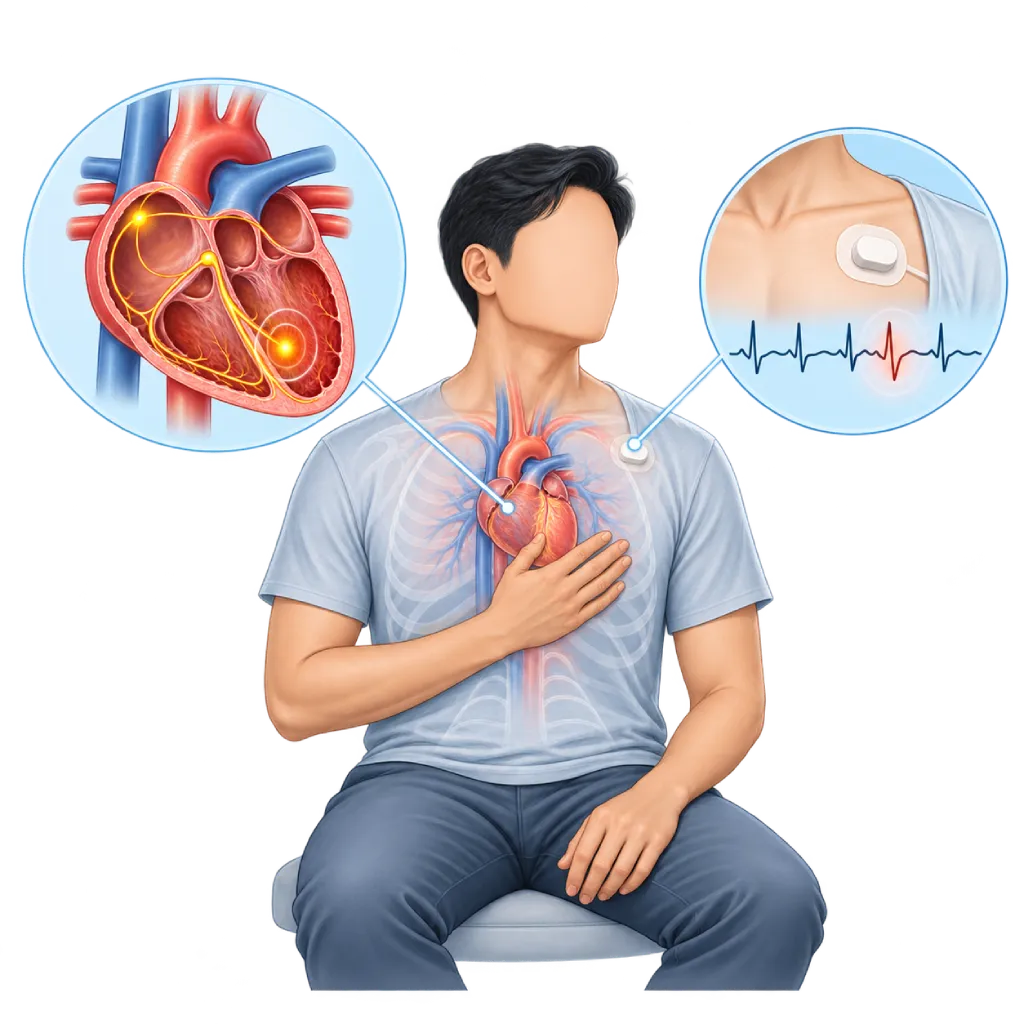
Palpitations are the feeling of your heart pounding, beating fast, hard, or irregularly. Most cases are triggered by minor things such as caffeine, anxiety, or extra heartbeats, but they sometimes signal a heart rhythm disorder that needs to be checked.
SourcesSigns That Need Urgent Help
- Fainting or nearly fainting during palpitations
- Chest pain, severe shortness of breath, or a cold sweat
- Very fast palpitations that do not stop after a few minutes
- Palpitations during exercise with severe dizziness
- Weakness on one side of the body, slurred speech, or a drooping face
- Palpitations with severe weakness in a person with heart disease
If these signs appear, go to the nearest emergency department right away or call Heart Attack Center 1500 258.
01 / Understanding the condition
About Palpitations
Palpitations are when you become aware of your own heartbeat, which you usually do not feel. The heartbeat may feel fast, strong, or irregular, as if it stops for a moment and then thumps, or like pounding in the neck. Palpitations are a symptom, not a diagnosis. This page helps you recognize possible causes and warning signs, not determine the cause on your own.
Causes That Are Usually Harmless
Many palpitations occur when the heart beats faster for normal reasons, for example after exercise, when you are anxious or panicking, with fever, after too little sleep, or after drinking coffee, strong tea, energy drinks, and alcohol. Smoking and some medications, such as cold medicines containing decongestants and certain asthma medications, can also trigger them. Extra beats from the upper or lower chambers of the heart, which feel like the heart is skipping, are common in healthy people and are usually harmless if the heart is otherwise normal. These are covered on the Premature Ventricular Contraction and Premature Atrial Contraction pages.
Causes Outside the Heart
An overactive thyroid gland, a low red blood cell count (anemia), low blood sugar, pregnancy, menopause, and dehydration can make the heart beat faster or harder. Palpitations from these causes are usually regular, build up gradually, and persist until the cause is treated. Simple blood tests often help find these causes.
Heart Rhythm Disorders
Some palpitations are caused by rhythm disorders, such as atrial fibrillation, supraventricular tachycardia, or ventricular tachycardia. Rhythm disorders are covered on the Heart Rhythm Disorders / Arrhythmia page. Palpitations that start and stop suddenly, are very fast or irregular, or come with dizziness, fainting, chest pain, and shortness of breath point more toward a rhythm disorder and need to be checked. This is more likely in people who already have heart disease, have had a heart attack, or have a family member who died suddenly at a young age.
The key to finding the cause is recording the heart rhythm while the symptoms are happening. Because palpitations often come and go, the doctor may use an ECG recording over several days, a patch recorder, or a recorder placed under the skin. Noting the time, duration, triggers, and how the palpitations feel each time they occur is also very helpful for your doctor.
02 / Understanding the condition
Symptoms to Recognize.
Common Symptoms
- The heart feels like it is beating fast, hard, or thumping
- The heartbeat feels irregular, or like it skips and then pauses for a moment
- Pounding felt in the chest, neck, or throat
- Palpitations that start and stop suddenly
- Palpitations that are more noticeable when lying on your left side or before falling asleep
- Anxiety, trembling, or sweating along with the palpitations
Symptoms in Children
Children often find it hard to describe palpitations; watch for changes that appear suddenly while they are playing or resting.
- Complains that their chest feels fast, pounding, or painful
- Suddenly turns pale or weak, or wants to lie down while playing
- A visibly very fast pulse in the neck or chest
- Dizziness or fainting during exercise
03 / Understanding the condition
What Causes This Condition?
- Extra beats from the upper or lower chambers of the heart that feel like the heart is skipping
- Caffeine, energy drinks, alcohol, smoking, or cold medicines with decongestants
- Anxiety, panic attacks, stress, lack of sleep, or after exercise
- An overactive thyroid gland, anemia, low blood sugar, fever, or dehydration
- Pregnancy and hormonal changes around or during menopause
- Rhythm disorders, such as atrial fibrillation, supraventricular tachycardia, or ventricular tachycardia
- Structural heart disease, such as valve problems or cardiomyopathy
- Certain medications, such as asthma medications, too much thyroid medication, or slimming pills that contain stimulants
04 / Understanding the condition
Who Is at Higher Risk?
Lifestyle
Drinking large amounts of coffee or energy drinks, alcohol, smoking, lack of sleep, and prolonged stress make palpitations more likely.
Medical
Heart disease, hypertension, thyroid disorders, anemia, frequent low blood sugar in diabetes, and anxiety or panic disorders.
Genetic
A family history of inherited rhythm disorders, cardiomyopathy, or sudden death at a young age.
Age
Atrial fibrillation and extra beats become more common with age, especially after 60.
Other
Pregnancy, menopause, and the use of medications or supplements that contain stimulants.
Groups at Higher Risk
- People with Heart Disease: Palpitations in people who have had a heart attack, have cardiomyopathy, or have valve problems are more likely to come from a rhythm disorder that needs treatment.
- Older Adults: Atrial fibrillation is more common in older age and increases the risk of stroke if it goes unrecognized.
- Pregnant or Menopausal Women: Changes in hormones and blood volume can trigger palpitations; most cases are harmless, but they should still be mentioned to the doctor.
- People with Anxiety Disorders: Panic attacks often cause palpitations, but rhythm disorders still need to be ruled out first because the symptoms can be similar.
- Relatives of Young People Who Died Suddenly: This history may point to an inherited rhythm disorder, so palpitations need to be examined more thoroughly.
05 / Understanding the condition
How Is It Diagnosed?
The doctor starts by asking what your palpitations feel like: fast or irregular, starting and stopping suddenly or gradually, how long they last, what triggers them, and whether they come with dizziness, fainting, chest pain, or shortness of breath. Tapping your finger to the rhythm you feel is often helpful. The doctor will also ask about coffee, alcohol, medications, supplements, any history of heart disease, and your family history, then check your pulse, blood pressure, and heart sounds.
An ECG is done for everyone with palpitations. If the ECG is recorded while palpitations are happening, the cause can often be seen right away. Because palpitations have often passed by the time of the examination, the doctor chooses a recording device based on how often the symptoms occur: a 24 to 48 hour Holter monitor for daily palpitations, a patch recorder or a recorder you switch on during palpitations for weekly episodes, and a recorder under the skin for rare palpitations with fainting. Blood tests check for anemia, thyroid function, and electrolytes. Echocardiography is done if structural heart disease is suspected.
Electrocardiogram (ECG)
A recording of the heart's electrical activity at rest, and during palpitations if possible, to look for rhythm disorders, extra beats, or signs of an inherited abnormality.
Holter Monitoring
A 24 to 48 hour rhythm recording for palpitations that occur almost every day.
Long-Term Heart Rhythm Monitoring
A patch recorder or a recorder you switch on during palpitations, used for several days to weeks, for less frequent symptoms.
Implantable Loop Recorder (ILR)
A recorder placed under the skin for rare palpitations with fainting or near fainting, when other tests have not found the cause.
Thyroid Function Test
A blood test to identify an overactive thyroid gland as the cause of palpitations.
Complete Blood Count (CBC)
A blood test to look for anemia, which makes the heart beat faster.
Echocardiography
An ultrasound of the heart if there is a heart murmur, a recorded rhythm disorder, or suspected structural heart disease.
06 / Understanding the condition
Treatment Options.
Treatment is decided by a doctor after an assessment. The categories below can help you follow the conversation with your doctor.
Explanation and Avoiding Triggers
If the cause is extra beats or normal palpitations in a healthy heart, an explanation from the doctor and cutting back on caffeine, alcohol, smoking, and lack of sleep are often enough.
Treating Causes Outside the Heart
Treating an overactive thyroid, anemia, or an anxiety disorder usually relieves palpitations. Medications that trigger palpitations can be reviewed by the doctor.
Vagal Maneuvers for SVT
In supraventricular tachycardia, bearing down in a specific way taught by the doctor can stop an episode. If it does not work, the episode needs to be treated in the emergency room.
Rhythm Control Medications
The doctor may prescribe beta blockers, calcium channel blockers, or antiarrhythmic medications depending on the type of rhythm disorder, as well as blood thinners if there is atrial fibrillation with a risk of stroke.
Catheter Ablation
A catheter procedure to deactivate the electrical source of the rhythm disorder, an option for SVT, atrial flutter, atrial fibrillation, and very frequent extra beats.
Pacemaker or ICD
Considered if palpitations are related to a heartbeat that is too slow, or to a dangerous rhythm from the lower chambers of the heart.
07 / Understanding the condition
Complications to Watch For.
Stroke from Atrial Fibrillation
If palpitations are caused by unrecognized atrial fibrillation, a blood clot can form in the upper chamber of the heart and then block a blood vessel in the brain.
Weakened Heart Pump
A very fast heartbeat lasting for weeks can weaken the heart muscle; this usually improves once the rhythm is controlled.
Fainting and Injury
A very fast or very slow rhythm disorder can reduce blood flow to the brain and cause fainting and injuries from falls.
Cardiac Arrest in Certain Rhythm Disorders
Ventricular tachycardia in structural heart disease or inherited rhythm disorders can progress to cardiac arrest, so warning signs need to be checked right away.
Prolonged Anxiety
Repeated palpitations that have not been explained can cause fear and disrupt daily activities, even when the cause is harmless.
08 / Understanding the condition
What Can You Do?
- Limit coffee, strong tea, and energy drinks if palpitations often appear after you have them.
- Avoid excessive alcohol and quit smoking.
- Get enough sleep and drink enough water, especially in hot weather or after sweating a lot.
- Manage stress with regular exercise, breathing exercises, or counseling.
- Ask your doctor or pharmacist before taking cold medicines, slimming pills, or stimulant supplements.
- Record each episode of palpitations: the time, duration, triggers, and accompanying symptoms.
- Learn to check your pulse at your wrist; if your smartwatch can record an ECG, record one during palpitations and show it to your doctor.
09 / Understanding the condition
When Should You See a Doctor?
Palpitations that appear occasionally after coffee, exercise, or during anxiety, and then go away on their own, are generally harmless. If palpitations come with fainting, chest pain, or severe shortness of breath, go to the emergency room right away. Make an appointment with a doctor if you experience any of the following.
- Palpitations that keep coming back or are becoming more frequent
- Palpitations that start and stop suddenly, or last more than a few minutes
- A heartbeat that feels irregular
- Palpitations with dizziness or nearly fainting, or palpitations that happen during exercise
- You have heart disease, hypertension, or a thyroid disorder
- A family member died suddenly at a young age
Don't Wait in an Emergency.
If symptoms are severe or come on suddenly, go to the nearest emergency department right away or call Heart Attack Center 1500 258, rather than waiting for an appointment.
10 / Common questions
Questions You May Have.
Frequently asked questions about palpitations, or a racing heart.
Are palpitations always a sign of heart disease?
No. Most cases of palpitations are caused by harmless things, such as extra beats, caffeine, anxiety, or lack of sleep. However, palpitations can also be a sign of a rhythm disorder that needs treatment. Because it is hard to tell the difference from how they feel alone, palpitations that are frequent, irregular, long-lasting, or come with dizziness and fainting should be checked with an ECG or a rhythm recording.
What should I do when my heart is racing?
Stop what you are doing, sit or lie down, and breathe slowly. Feel your pulse at your wrist and notice whether it is fast, regular, or irregular. If possible, note the time and duration, or record an ECG with a device recommended by your doctor. Go to the emergency room right away if palpitations come with fainting, chest pain, or severe shortness of breath, or do not stop within a few minutes.
Do I have to stop drinking coffee completely?
Not always. Research shows that coffee in moderate amounts does not increase dangerous rhythm disorders in most people, although it can increase extra beats in some people. If palpitations always appear after drinking coffee, strong tea, or energy drinks, cut back or stop to see whether the symptoms improve, then share the results with your doctor.
How can I tell palpitations caused by anxiety apart from a rhythm disorder?
It can be difficult. Palpitations from anxiety usually build up gradually, are regular, and ease gradually as you calm down. Rhythm disorders such as SVT often start and stop suddenly with a very fast heartbeat. However, a rhythm disorder can itself trigger a feeling of panic. For this reason, an ECG recording taken during symptoms is still needed before palpitations are attributed to anxiety alone.
Can a smartwatch detect rhythm disorders?
Some smartwatches can record a single-lead ECG and warn of an irregular rhythm that suggests atrial fibrillation. These recordings are useful to show your doctor, especially if they are taken during palpitations. However, the results can be wrong and do not replace an examination by a doctor. A normal recording also does not rule out all rhythm disorders.
Are palpitations during pregnancy dangerous?
Mild palpitations during pregnancy are fairly common because blood volume and heart rate increase, and they are usually harmless. However, tell your obstetrician if palpitations are frequent, last a long time, or come with dizziness, shortness of breath, chest pain, or fainting. The doctor can check an ECG, test for anemia and thyroid function, and refer you to a cardiologist if needed.
Sources and Medical Review
Translated from the Indonesian edition medically reviewed by dr. Sunu B. Raharjo, Sp.JP(K), Ph.D..
Sources as cited in the Indonesian edition.
- Raviele A, Giada F, Bergfeldt L, Blanc JJ, Blomstrom-Lundqvist C, Mont L, et al. Management of patients with palpitations: a position paper from the European Heart Rhythm Association. Europace. 2011;13(7):920-934.
- Brugada J, Katritsis DG, Arbelo E, Arribas F, Bax JJ, Blomstrom-Lundqvist C, et al. 2019 ESC Guidelines for the management of patients with supraventricular tachycardia. The Task Force for the management of patients with supraventricular tachycardia of the European Society of Cardiology (ESC). Eur Heart J. 2020;41(5):655-720.
- Van Gelder IC, Rienstra M, Bunting KV, Casado-Arroyo R, Caso V, Crijns HJGM, et al. 2024 ESC Guidelines for the management of atrial fibrillation developed in collaboration with the European Association for Cardio-Thoracic Surgery (EACTS). Eur Heart J. 2024;45(36):3314-3414.
- Zeppenfeld K, Tfelt-Hansen J, de Riva M, Winkel BG, Behr ER, Blom NA, et al. 2022 ESC Guidelines for the management of patients with ventricular arrhythmias and the prevention of sudden cardiac death. Eur Heart J. 2022;43(40):3997-4126.
- Steinberg JS, Varma N, Cygankiewicz I, Aziz P, Balsam P, Baranchuk A, et al. 2017 ISHNE-HRS expert consensus statement on ambulatory ECG and external cardiac monitoring/telemetry. Heart Rhythm. 2017;14(7):e55-e96.
- Thavendiranathan P, Bagai A, Khoo C, Dorian P, Choudhry NK. Does this patient with palpitations have a cardiac arrhythmia? JAMA. 2009;302(19):2135-2143.
- Marcus GM, Rosenthal DG, Nah G, Vittinghoff E, Fang C, Ogomori K, et al. Acute Effects of Coffee Consumption on Health among Ambulatory Adults. N Engl J Med. 2023;388(12):1092-1100.
Doctors Who Treat This Condition

dr. Sunu B. Raharjo, Sp.JP(K), Ph.D.
Arrhythmia and Electrophysiology
Arrhythmia and Device Center
Clinical focusClinical and Interventional Electrophysiology · Cardiac Arrhythmia Ablation
View Profile
Dr. dr. Dicky A. Hanafy, Sp.JP(K)
Arrhythmia and Electrophysiology
Arrhythmia and Device Center +1 center
Clinical focusElectrophysiology and Arrhythmia Ablation · Pacemaker and ICD Implantation
View Profile
dr. Debby C. Soemitha, Sp.PD
Internal Medicine
Clinical focusDiabetes and Diabetes Complications · Obesity and Metabolic Disease
View Profile