
Quick answer
What Is Complete Blood Count?
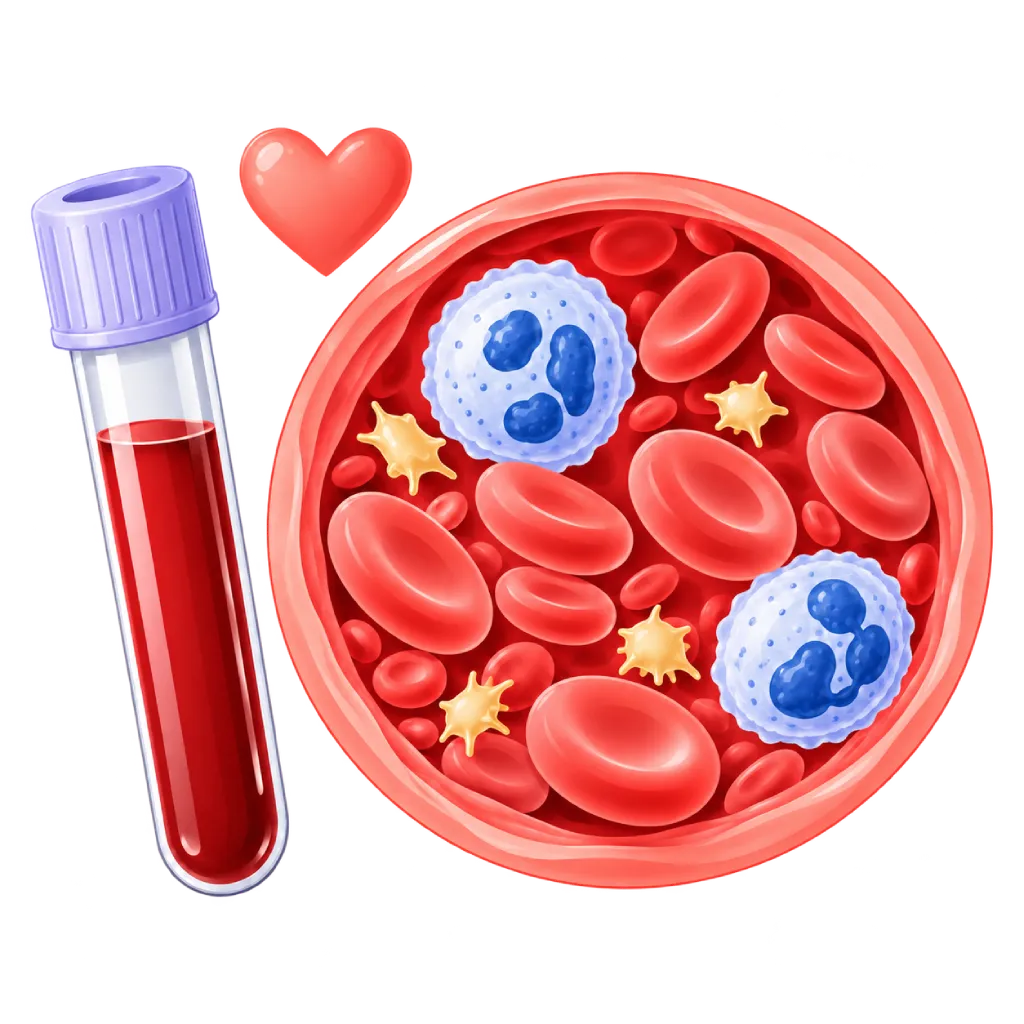
A complete blood count (CBC) counts and assesses red blood cells, hemoglobin, white blood cells, and platelets from a single blood sample. The results help detect anemia, infection, and clotting problems, and assess bleeding risk before catheterization, stent placement, or heart surgery, or while you are taking blood thinners.
Sources01 / Understanding the procedure
About Complete Blood Count
What Is a Complete Blood Count
A complete blood count is a blood test that counts and assesses three types of blood cells: red blood cells, which carry oxygen; white blood cells, which fight infection; and platelets, which help blood clot. The results give a general picture of your health and are often an initial test for many symptoms.
How It Works in Brief
Blood from your arm is collected in a tube containing an anticoagulant so the cells do not clump. An automated counter passes the cells one by one through a sensor, then counts them and measures their size. If a result is unusual, laboratory staff examine a blood smear under a microscope.
What Is Measured
- Hemoglobin (Hb) and hematocrit: the amount of the oxygen-carrying substance and the proportion of blood made up of red blood cells.
- Red blood cells and their indices: the number and size of the cells (MCV, MCH, MCHC, RDW). Cell size helps find the cause of anemia, for example small cells in iron deficiency.
- White blood cells and differential count: the number of white blood cells and the proportion of each type.
- Platelets: blood cell fragments that play a role in clotting.
Reading the Results
Normal ranges differ slightly between laboratories. As a general guide:
- Anemia: according to the WHO, Hb below 13 g/dL in men and below 12 g/dL in women who are not pregnant. The threshold is lower during pregnancy.
- White blood cells: about 4,000 to 10,000 per microliter. A high value may indicate infection or inflammation.
- Platelets: about 150,000 to 400,000 per microliter. A value below 150,000 is called thrombocytopenia.
Blood Count and the Heart
Anemia makes the heart work harder to deliver oxygen. As a result, shortness of breath, fatigue, palpitations, and chest pain can appear or get worse. Anemia and iron deficiency also often accompany heart failure, so a complete blood count and iron status are recommended for every patient with heart failure.
Before catheterization, stent placement, or heart surgery, Hb and platelets are assessed because low values increase the risk of bleeding and affect the choice of blood thinners. While you are taking blood thinners, a drop in Hb without a clear cause may indicate hidden bleeding. During heparin treatment, platelets are monitored because a small proportion of patients have a drop in platelets caused by this medication. A high white blood cell count with fever may point to an infection, including an infection of the heart valves.
02 / Understanding the procedure
When Is This Procedure Considered?
A doctor may consider this procedure in the situations below. The decision is always made after a thorough assessment.
- Tiredness, Weakness, or PalenessTo look for anemia as the cause.
- Shortness of Breath, Palpitations, or Chest PainAnemia can trigger or worsen heart symptoms.
- Heart FailureAnemia and iron deficiency often accompany it and worsen symptoms.
- Before Catheterization, Stent Placement, or Heart SurgeryAssessing Hb and platelets to estimate the risk of bleeding.
- Taking Blood Thinners or HeparinMonitoring for hidden bleeding and a drop in platelets.
- Fever or Suspected InfectionIncluding suspected infection of a heart valve or a heart device.
Situations to Consider First
- Not Drinking Enough FluidsConcentrated blood makes Hb and hematocrit appear higher.
- Large Volumes of IV FluidsDiluted blood makes Hb appear lower.
- Recent BleedingIn the early hours, Hb may not have dropped yet, so the test needs to be repeated.
- Recent Blood TransfusionThe results are already affected by the transfused blood. Tell the staff.
- Strenuous Exercise or Severe StressCan temporarily raise the white blood cell count.
- Platelet Clumping in the TubeCan make platelets falsely appear low, so the sample is repeated.
03 / Before the procedure
How Should You Prepare?
A complete blood count uses a blood sample and usually does not require any special preparation.
Eating and drinking. No fasting is needed, unless another test done at the same time requires fasting. Drink water as usual.
Medications. Take your medications as usual unless your doctor tells you otherwise, and bring a list of your medications.
Important information. Tell the staff if you are pregnant, have a fever, have recently received a transfusion, are taking blood thinners or heparin, or are undergoing chemotherapy.
Previous results. Bring your previous complete blood count results so the doctor can see any changes.
Unsure about the preparation instructions? Ask our team before the procedure.
04 / During the procedure
How Is the Procedure Done?
Blood collection is usually finished within 10 minutes, and results are usually available within a few hours on the same day.
Identity Check
The staff match your identity with the test request and ask about medications and conditions that may affect the results.
Blood Collection
Blood is drawn from a vein in the crook of your elbow into a purple-top tube containing an anticoagulant. The tube is gently turned upside down a few times so the blood mixes evenly and does not clot.
Laboratory Analysis
An automated counter counts the red blood cells, white blood cells, and platelets, and measures hemoglobin and cell size. If needed, a blood smear is examined under a microscope.
Interpreting the Results
The doctor interprets the results together with your symptoms, the medications you take, any planned procedure, and previous results, because a single number is rarely enough to determine the cause.
05 / Benefits and risks
Benefits and Risks Should Be Discussed Together.
Every medical procedure has benefits and risks. Your doctor will explain both for your situation before the procedure.
Benefits You Can Expect
- Simple and QuickOnly a small amount of blood is needed, and results are usually ready on the same day.
- Detects Anemia That Worsens Heart SymptomsAnemia can be treated so that shortness of breath and fatigue are reduced.
- Assesses Bleeding Risk Before ProceduresHelps the doctor choose safer medications and procedure approaches.
- Monitors the Safety of Blood ThinnersA drop in Hb or platelets can be recognized earlier.
- Part of a Medical Check-UpGives a general picture of your blood health in a single test.
The benefits of a procedure are not a promise of a cure. Ask how the results will affect your care plan.
Risks You Should Know
- Minor Pain or BruisingAt the needle site, usually mild and quick to go away.
- Brief Dizziness or FaintingSome people feel dizzy when blood is drawn. Tell the staff so you can lie down.
- Results Affected by Temporary ConditionsNot drinking enough, IV fluids, or a mild infection can change the results, so a repeat test is sometimes needed.
- Infection at the Puncture SiteVery rare because the skin is cleaned and the equipment used is sterile and single-use.
Risks can differ from person to person. A full explanation and consent are given after an individual assessment.
06 / After the procedure
What Is Recovery Like?
There is no recovery period. You can return to your activities right away.
Puncture site. A small bruise is normal and goes away within a few days. If you take blood thinners, press on the puncture site a little longer.
If your Hb is low. The doctor looks for the cause, for example with tests for iron, vitamin B12, or a source of bleeding, and then treats it.
If your platelets are low. The doctor may review the medications you take, including blood thinners and heparin, and repeat the test.
Warning signs. Go to the emergency room right away or contact the medical team if you experience:
- Black stools, vomiting blood, or coughing up blood
- Many bruises or red spots on the skin without a clear cause
- A nosebleed or bleeding gums that are hard to stop
- Shortness of breath or chest pain that gets worse
- High fever with chills
Know the Signs That Need Prompt Care.
Follow the team's guidance on warning signs. If severe or sudden symptoms appear after the procedure, go to the nearest emergency department right away or call Heart Attack Center 1500 258.
07 / Team and support
Doctors and Procedure Support
The doctors below are listed for this procedure. Listed by name, not by ranking.

dr. Debby C. Soemitha, Sp.PD
Internal Medicine
Clinical focusDiabetes and Diabetes Complications · Obesity and Metabolic Disease
View Profile
dr. Khaira U. Yusrie, Sp.PD-KGEH
Gastroenterology & Hepatology
Clinical focusInternal Medicine · Gastroenterology and Hepatology
View Profile
dr. Siska S. Danny, Sp.JP(K)
Interventional Cardiology
Coronary Intervention Procedures
Clinical focusPCI for Acute Coronary Syndrome · Primary Coronary Intervention
View Profile08 / Common questions
Before You Plan the Procedure.
Frequently asked questions about the complete blood count. What the results mean for your condition is explained by your doctor.
What does a complete blood count measure?
A complete blood count measures hemoglobin and hematocrit, the number and size of red blood cells, the number of white blood cells and their types, and the platelet count. The erythrocyte sedimentation rate is sometimes requested at the same time, but it is a separate test. Your doctor chooses additional tests, such as iron, based on your symptoms.
When is hemoglobin considered low?
According to the WHO, anemia in adults is defined as hemoglobin below 13 g/dL in men and below 12 g/dL in women who are not pregnant. The threshold is lower during pregnancy. The lower the hemoglobin, the more severe the anemia, and its cause needs to be found, for example iron deficiency or bleeding.
Why does anemia make heart disease worse?
When hemoglobin is low, the blood carries less oxygen, so the heart has to beat faster and pump more. In a heart that is already diseased, this extra workload can trigger chest pain, shortness of breath, and palpitations. In heart failure, anemia and iron deficiency also make patients tire more quickly.
Why is a complete blood count checked before catheterization or stent placement?
After stent placement, patients usually take blood thinners for several months. Low hemoglobin or platelets indicate a higher risk of bleeding. By knowing this in advance, the doctor can choose the access route, the type of medication, and the duration of medication that are safer for you.
Do I need to fast before the test?
No. A complete blood count is not affected by eating. Fasting is only needed if another test done at the same time, such as fasting blood sugar or cholesterol, requires it. Drink water as usual so you do not become dehydrated, because concentrated blood can make hemoglobin appear higher.
I take blood thinners, so why do I need regular blood tests?
Blood thinners prevent clots but can cause bleeding that is not always visible, for example in the digestive tract. A drop in hemoglobin can be an early sign of this. With heparin, platelets are also monitored because they can drop due to this medication. Do not stop your medication on your own; discuss the results with your doctor.
Sources and Medical Review
Translated from the Indonesian edition medically reviewed by dr. Khaira U. Yusrie, Sp.PD-KGEH.
Sources as cited in the Indonesian edition.
- World Health Organization. Guideline on haemoglobin cutoffs to define anaemia in individuals and populations. Geneva: World Health Organization; 2024.
- Anand IS, Gupta P. Anemia and iron deficiency in heart failure: current concepts and emerging therapies. Circulation. 2018;138(1):80-98.
- McDonagh TA, Metra M, Adamo M, et al. 2021 ESC Guidelines for the diagnosis and treatment of acute and chronic heart failure. Eur Heart J. 2021;42(36):3599-3726.
- Urban P, Mehran R, Colleran R, et al. Defining high bleeding risk in patients undergoing percutaneous coronary intervention: a consensus document from the Academic Research Consortium for High Bleeding Risk. Circulation. 2019;140(3):240-261.
- Cuker A, Arepally GM, Chong BH, et al. American Society of Hematology 2018 guidelines for management of venous thromboembolism: heparin-induced thrombocytopenia. Blood Adv. 2018;2(22):3360-3392.
- Delgado V, Ajmone Marsan N, de Waha S, et al. 2023 ESC Guidelines for the management of endocarditis. Eur Heart J. 2023;44(39):3948-4042.