
Quick answer
What Is Infective Endocarditis?
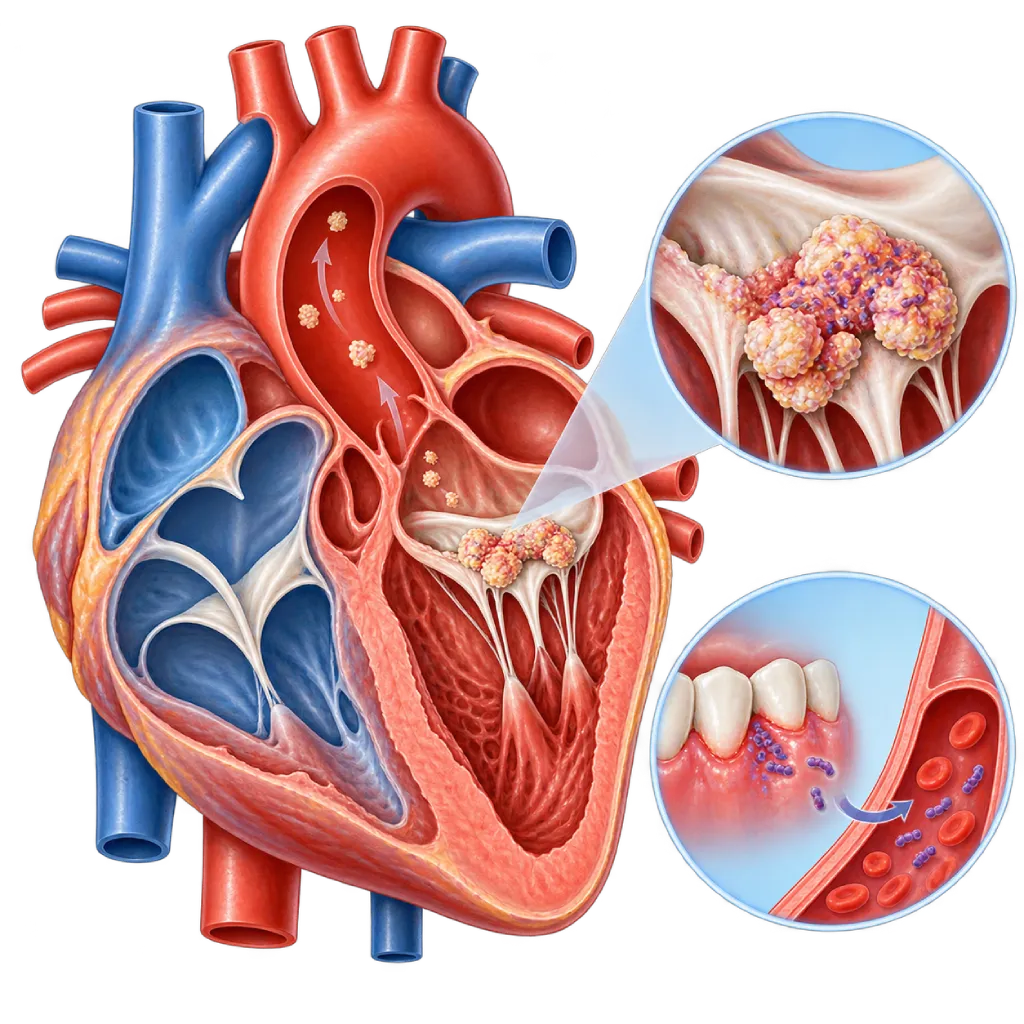
Infective endocarditis is an infection of the inner lining of the heart, especially the valves, caused by bacteria or sometimes fungi from the bloodstream. It needs to be treated in the hospital with long-term antibiotics, and some patients need valve surgery.
SourcesSigns That Need Urgent Help
- Sudden weakness on one side of the body, facial drooping, or slurred speech
- Severe shortness of breath or being unable to lie down
- Coughing up pink, frothy sputum
- Severe chest pain or very fast palpitations
- High fever with severe chills, cold skin, and extreme weakness or confusion
- Sudden pain in the abdomen, flank, or leg with fever
- Sudden blurred vision or loss of vision in one eye
If these signs appear, go to the nearest emergency department right away or call Heart Attack Center 1500 258.
01 / Understanding the condition
About Infective Endocarditis
Infective endocarditis is an infection of the endocardium, the inner lining of the heart, and it usually affects the valves. Germs enter the bloodstream, for example from the gums, the skin, or an IV catheter, and then attach to a valve. There they multiply together with blood clots and form clumps called vegetations.
Germs attach more easily to valves that are already damaged, to artificial valves, or to pacemaker leads. The ESC 2023 guidelines note that people with endocarditis are now increasingly older and are more often linked to artificial valves, implanted heart devices, and medical procedures. In many developing countries, rheumatic heart disease is still a common underlying cause.
Why It Needs Prompt Treatment
Vegetations can damage the valve leaflets so that the valve leaks severely within days, and the infection can spread to form an abscess around the valve. Pieces of vegetation can also travel in the bloodstream and block vessels in the brain, kidneys, spleen, or lungs. The ESC 2023 guidelines recommend care by an endocarditis team made up of cardiologists, cardiac surgeons, infectious disease specialists, and microbiologists.
Acute and Subacute Forms
Endocarditis can develop quickly over a few days with a high fever and a worsening condition, especially when it is caused by the bacterium Staphylococcus aureus. Another form develops slowly over several weeks to months, with a low-grade fever, weakness, night sweats, and weight loss, so it is often mistaken for the flu, typhoid fever, or an ordinary infection. Small red spots on the skin, the whites of the eyes, or under the nails can be a clue, but they do not always appear. That is why an unexplained fever in someone with a valve abnormality needs a more careful evaluation.
Principles of Treatment
The main treatment is intravenous antibiotics for 2 to 6 weeks or longer, chosen according to the germ that grows in blood cultures. In patients who are already stable, part of the treatment can be continued with oral antibiotics based on the doctor's assessment. About half of patients need valve surgery, for example when a valve leaks so severely that it causes heart failure, the infection cannot be controlled, or a large vegetation is at risk of breaking off. After recovery, the risk of reinfection remains, so dental hygiene and regular checkups become part of long-term care.
02 / Understanding the condition
Symptoms to Recognize.
Common Symptoms
- Fever that comes and goes for more than a few days without a clear cause
- Chills and sweating, especially at night
- Weakness, tiring easily, and loss of appetite
- Unintentional weight loss
- Muscle pain, joint pain, or back pain
- New shortness of breath or a new heart murmur
- Small red spots on the skin, the whites of the eyes, or under the nails
Symptoms in Older Adults
In older adults, fever may be mild or absent, so symptoms are easily mistaken for another illness.
- Weakness and a gradual decline in general condition
- New confusion or changes in behavior
- Loss of appetite and weight loss
- Low-grade fever or no fever at all
03 / Understanding the condition
What Causes This Condition?
- Bacteria from the mouth (streptococci) that enter the blood, for example from inflamed gums or tooth decay
- Bacteria from the skin (staphylococci), for example from wounds, injection needles, or IV catheters
- Bacteria from the digestive or urinary tract, such as enterococci
- Germs that enter during medical procedures, dialysis, or placement of a heart device
- Fungi, especially in people with weakened immunity or long-term catheters
04 / Understanding the condition
Who Is at Higher Risk?
Medical
Artificial heart valves, previous endocarditis, congenital heart disease, a pacemaker or ICD, and valves damaged by rheumatic disease, degeneration, or prolapse with leakage.
Lifestyle
Injection drug use and poor dental and oral hygiene increase the chance of germs entering the bloodstream.
Age
Endocarditis is now increasingly found in older people, who more often have degenerative valves, artificial valves, and a history of medical procedures.
Other
Dialysis through a catheter, long-term IV catheters, diabetes, weakened immunity, and tattoos or body piercings in people at high risk increase the risk of bloodstream infection.
Groups at Higher Risk
- People with Artificial Heart Valves: This includes valves placed through surgery or through a catheter; the risk is higher than with natural valves.
- Endocarditis Survivors: People who have had endocarditis are at high risk of getting it again.
- People with Congenital Heart Disease: Especially unrepaired cyanotic defects and repairs that use prosthetic material; the risk remains even after surgery.
- People with a Pacemaker or ICD: The device leads inside the heart can become a place where germs attach.
- People with Valve Disease: Valves damaged by rheumatic disease, degeneration, or prolapse with leakage are easier for germs to attach to.
05 / Understanding the condition
How Is It Diagnosed?
Endocarditis is suspected in people with a fever without a clear cause, especially if they have an artificial valve, a valve abnormality, an implanted heart device, or a history of injection drug use. The first step is to take blood cultures several times before antibiotics are given, and then perform echocardiography to look for vegetations and valve damage.
The diagnosis is made by combining clinical findings, culture results, and imaging according to the Duke criteria, which were updated in 2023 to include CT and PET/CT. Echocardiography through the esophagus, CT scans, and PET/CT help when initial results are not conclusive, especially with artificial valves or heart devices. Brain imaging with CT or MRI may be done to look for blockages that have not caused symptoms, because the results help determine the timing of surgery. If blood cultures do not grow anything, for example because antibiotics were already taken beforehand, the doctor may use special blood tests.
Blood cultures are taken several times, usually three sets, before antibiotics are started, to identify the germ causing the infection and the right antibiotic.
Echocardiography
Echocardiography through the chest wall is the first step to look for vegetations, valve leakage, and their effect on heart function.
Transesophageal echocardiography (through the esophagus) shows small vegetations, abscesses, and artificial valves more clearly, and is recommended for most patients with suspected endocarditis.
Cardiac CT Scan
Cardiac CT helps look for abscesses or complications around the valve, especially with artificial valves; CT of the brain or body looks for blockages in other organs.
Cardiac PET Scan
PET/CT with a glucose tracer (FDG) helps confirm infection of an artificial valve or heart device when other test results are not conclusive.
C-Reactive Protein (CRP) Test
Together with a complete blood count and erythrocyte sedimentation rate, it assesses inflammation and monitors the response to antibiotics.
Electrocardiogram (ECG)
Looks for new problems with the heart's electrical conduction, which can indicate an abscess around the aortic valve.
06 / Understanding the condition
Treatment Options.
Treatment is decided by a doctor after an assessment. The categories below can help you follow the conversation with your doctor.
Intravenous Antibiotics
Antibiotics given through an IV for 2 to 6 weeks or longer, chosen according to the germ found in blood cultures and the type of valve. Your doctor determines the type and duration.
Continued Oral Antibiotics
In patients who are stable and meet the criteria, part of the treatment period can be continued with oral antibiotics, based on the endocarditis team's assessment.
Valve Surgery
Recommended when a valve is so severely damaged that it causes heart failure, when the infection cannot be controlled or forms an abscess, or when a large vegetation is at risk of breaking off. The valve is repaired or replaced.
Removal of an Infected Heart Device
If the infection involves a pacemaker or ICD, the entire device along with its leads usually needs to be removed so the infection is fully cleared.
Treating the Source of Infection
The source of the germs, such as a problem tooth or an infected catheter, is found and treated so the infection does not come back.
Antifungal Medicines
If the cause is a fungus, long-term antifungal medicine is given, and valve surgery is usually also needed.
07 / Understanding the condition
Complications to Watch For.
Heart Failure
Rapid valve damage causes severe leakage, shortness of breath, and fluid in the lungs; this is the main reason for urgent surgery. Covered on the Heart Failure page.
Stroke and Blood Vessel Blockage
Pieces of vegetation can block vessels in the brain, spleen, kidneys, or lungs, especially with large vegetations and in the first few weeks. Covered on the Stroke page.
Abscess Around the Valve
The infection spreads to the tissue around the valve and can disrupt the heart's electrical pathways, so surgery is usually needed.
Spread of Infection to Other Organs
Germs can form abscesses in the spleen, spine, or other organs, or cause a fragile bulge in a blood vessel (mycotic aneurysm).
Impaired Kidney Function
The kidneys can be affected by blockages, immune reactions, or side effects of antibiotics, so kidney function is monitored during treatment.
Recurrent Infection
Endocarditis survivors are at risk of reinfection, so dental hygiene and preventive antibiotics before certain dental procedures are important.
08 / Understanding the condition
What Can You Do?
- Brush your teeth twice a day and see a dentist regularly
- If you are in a high-risk group, ask your doctor about preventive antibiotics before certain dental procedures
- Avoid tattoos and body piercings if you have an artificial valve or have had endocarditis
- Care for wounds and skin infections until they have fully healed
- Avoid injection drugs, and seek help if you are dependent on them
- Do not take antibiotics on your own when you have a fever without a clear cause, because this can keep blood cultures from growing
- Have your valves and heart devices checked on the schedule set by your doctor
09 / Understanding the condition
When Should You See a Doctor?
See a doctor if you have a fever for more than a few days without a clear cause, especially if you have an artificial valve, have had endocarditis before, have a valve abnormality or congenital heart disease, or have a pacemaker. Tell your doctor about your heart history, and do not take antibiotics on your own before you are examined. Go to the emergency room right away if signs of stroke or severe shortness of breath appear.
- Fever for more than three days without a clear cause in someone with a valve abnormality or an artificial valve
- Fever after a dental procedure, catheter placement, or heart surgery
- Night sweats, weakness, and weight loss over several weeks
- Small red spots on the skin, the eyes, or under the nails along with fever
- Sudden weakness on one side of the body, slurred speech, or severe shortness of breath
Don't Wait in an Emergency.
If symptoms are severe or come on suddenly, go to the nearest emergency department right away or call Heart Attack Center 1500 258, rather than waiting for an appointment.
10 / Common questions
Questions You May Have.
Frequently asked questions about infective endocarditis.
Can endocarditis be cured?
Many patients recover with the right antibiotics and, if needed, valve surgery. The outcome depends on the type of germ, the valve affected, how quickly treatment starts, and whether complications such as stroke or heart failure develop. After recovery, follow-up is still needed because the valve may be left with a leak and the risk of reinfection is higher. Dental and oral hygiene is an important part of long-term care.
Why does endocarditis treatment take so long?
Germs inside a vegetation are protected by a layer of blood clot and are hard for antibiotics to reach. That is why antibiotics need to be given for a long time, generally 2 to 6 weeks, and longer with artificial valves. Stopping treatment too early can make the infection come back. In patients who are stable, part of the treatment period can be continued with oral antibiotics based on the doctor's assessment.
Who needs antibiotics before a tooth extraction?
The ESC 2023 guidelines recommend preventive antibiotics before dental procedures that injure the gums only for high-risk groups: people with artificial valves (including valves placed by catheter), people who have had endocarditis, people with unrepaired cyanotic congenital heart disease, some patients after congenital heart surgery, and people with ventricular assist devices. Other groups do not need them, but they should still keep their teeth clean.
Does everyone with endocarditis need surgery?
No. About half of patients can recover with antibiotics alone. Surgery is recommended when a valve is so severely damaged that it causes heart failure, when the infection cannot be controlled or forms an abscess, when the germ is hard to treat (such as a fungus), or when a large vegetation is at risk of breaking off and traveling to the brain. The timing of surgery, whether urgently within days or after the infection has settled, is decided by the endocarditis team.
What is the link between endocarditis and dental health?
Bacteria from the mouth, especially from inflamed gums, are one source of the germs that cause endocarditis. These germs can enter the blood not only during a tooth extraction but also when brushing or chewing if the gums are unhealthy. That is why keeping your teeth clean and having them checked regularly plays an important role. Before valve surgery, your teeth are usually examined and treated first.
Is endocarditis contagious?
Endocarditis does not spread from person to person like the flu. The germs that cause it usually come from the patient's own body, for example from the mouth, skin, or digestive tract, and enter the blood before attaching to a valve. Family members do not need to keep away from the patient, but hand hygiene and wound care are still important, especially during the hospital stay.
Sources and Medical Review
Translated from the Indonesian edition medically reviewed by dr. Sri Diniharini, Sp.JP(K).
Sources as cited in the Indonesian edition.
- Delgado V, Ajmone Marsan N, de Waha S, Bonaros N, Brida M, Burri H, et al. 2023 ESC Guidelines for the management of endocarditis. Eur Heart J. 2023;44(39):3948-4042.
- Fowler VG Jr, Durack DT, Selton-Suty C, Athan E, Bayer AS, Chamis AL, et al. The 2023 Duke-International Society for Cardiovascular Infectious Diseases Criteria for Infective Endocarditis: Updating the Modified Duke Criteria. Clin Infect Dis. 2023;77(4):518-526.
- Baddour LM, Wilson WR, Bayer AS, Fowler VG Jr, Tleyjeh IM, Rybak MJ, et al. Infective Endocarditis in Adults: Diagnosis, Antimicrobial Therapy, and Management of Complications: A Scientific Statement for Healthcare Professionals From the American Heart Association. Circulation. 2015;132(15):1435-1486.
- Wilson WR, Gewitz M, Lockhart PB, Bolger AF, DeSimone DC, Kazi DS, et al. Prevention of Viridans Group Streptococcal Infective Endocarditis: A Scientific Statement From the American Heart Association. Circulation. 2021;143(20):e963-e978.
- Iversen K, Ihlemann N, Gill SU, Madsen T, Elming H, Jensen KT, et al. Partial Oral versus Intravenous Antibiotic Treatment of Endocarditis. N Engl J Med. 2019;380(5):415-424.
- Kang DH, Kim YJ, Kim SH, Sun BJ, Kim DH, Yun SC, et al. Early Surgery versus Conventional Treatment for Infective Endocarditis. N Engl J Med. 2012;366(26):2466-2473.
- Cahill TJ, Prendergast BD. Infective endocarditis. Lancet. 2016;387(10021):882-893.
Doctors Who Treat This Condition

dr. Sri Diniharini, Sp.JP(K)
Echocardiography & Cardiovascular Imaging
Cardiovascular Diagnostic Center +1 center
Clinical focusAdvanced Echocardiography · Transesophageal Echocardiography
View Profile
Dr. dr. Dudy A. Hanafy, Sp.BTKV, Subsp. JD(K), MARS
Adult Cardiac Surgery
Advanced Cardiovascular Surgical Care +1 center
Clinical focusMinimally Invasive Cardiac Surgery · Coronary Artery Bypass Surgery
View Profile
dr. Siska S. Danny, Sp.JP(K)
Interventional Cardiology
Coronary Intervention Procedures
Clinical focusPCI for Acute Coronary Syndrome · Primary Coronary Intervention
View Profile