
Quick answer
What Is C-Reactive Protein (CRP) Test?
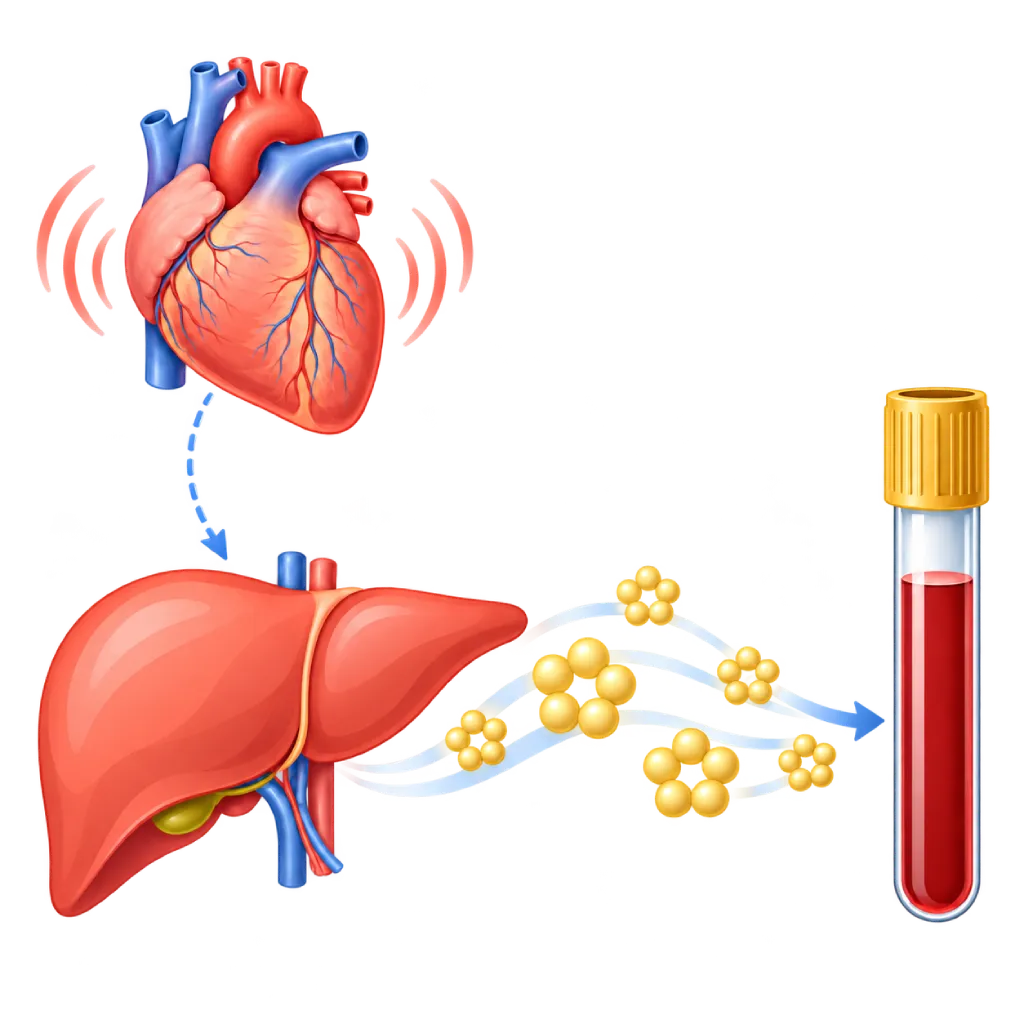
The C-reactive protein (CRP) test measures a protein the liver makes when the body has inflammation or an infection. Standard CRP is used to assess active infection and inflammation, such as pericarditis. The high-sensitivity version (hs-CRP) measures very low levels to help assess the risk of heart and blood vessel disease.
Sources01 / Understanding the procedure
About C-Reactive Protein (CRP) Test
What Is CRP
C-reactive protein (CRP) is a protein made by the liver as part of the body's response to inflammation. During an infection, injury, or inflammatory disease, its level in the blood can rise many times over. CRP does not show where the inflammation is, but it does show how active the inflammation is.
How It Works in Brief
Inflammation sends signals to the liver, which then makes CRP and releases it into the blood. The level rises within a few hours, peaks in about 2 days, and falls fairly quickly as the inflammation subsides. This makes CRP suitable for monitoring the course of a disease and the response to treatment from day to day.
CRP and hs-CRP
- Standard CRP: assesses an infection or inflammation that is currently active. Very high levels are often found in severe bacterial infections.
- hs-CRP (high sensitivity): measures very low levels in people who are currently healthy, to assess long-term heart disease risk together with cholesterol, blood pressure, and other risk factors.
Reading hs-CRP Results
As a general guide, an hs-CRP below 1 mg/L indicates low risk, 1 to 3 mg/L moderate risk, and above 3 mg/L higher risk. Prevention guidelines in the United States consider an hs-CRP of 2 mg/L or more a risk-enhancing factor. Results above 10 mg/L are usually caused by an infection or other inflammation, so the test is repeated after recovery.
CRP and Heart Disease
In pericarditis, CRP helps confirm the diagnosis and decide how long treatment should continue. CRP is also used to monitor myocarditis, endocarditis, and infections after surgery or heart device implantation. The buildup of plaque in blood vessels itself involves inflammation, so a high hs-CRP signals greater risk even when cholesterol looks normal.
02 / Understanding the procedure
When Is This Procedure Considered?
A doctor may consider this procedure in the situations below. The decision is always made after a thorough assessment.
- Suspected Pericarditis or MyocarditisHelps confirm inflammation of the lining or muscle of the heart.
- Monitoring Treatment of Heart InflammationIn pericarditis, a falling CRP helps determine how long treatment lasts.
- Fever After Surgery or Heart Device ImplantationTo look for and monitor infection of the wound or device.
- Suspected EndocarditisHelps assess heart valve infection and the response to antibiotics.
- Assessing Heart Disease RiskThe hs-CRP test complements cholesterol and other risk factors.
- Autoimmune Disease or Chronic InflammationFor example, lupus or arthritis, which can also affect the heart.
Situations to Consider First
- Current Flu, Infection, or InjuryThese raise hs-CRP temporarily, so risk assessment is postponed for about 2 weeks.
- Recent Surgery or ProcedureCRP normally rises for several days afterward.
- Pregnancy or Hormone TherapyCan raise CRP levels.
- Certain MedicationsStatins, anti-inflammatory drugs, and corticosteroids can lower CRP.
- Excess Weight and SmokingThese raise hs-CRP and reflect a risk that is genuinely higher.
03 / Before the procedure
How Should You Prepare?
The CRP test uses a blood sample, and preparation is simple.
Eating and drinking. There is no need to fast, unless another test done at the same time, such as cholesterol, requires fasting.
Timing of the hs-CRP test. To assess heart risk, have the test when you are well, with no flu, infection, or injury for 2 weeks or more.
Activity. Avoid very strenuous exercise the day before.
Medications. Take your medications as usual. Bring a list of your medications, especially statins, anti-inflammatory drugs, corticosteroids, or hormone therapy.
Important information. Tell the staff if you are pregnant, have recently had surgery, or have an autoimmune disease.
Unsure about the preparation instructions? Ask our team before the procedure.
04 / During the procedure
How Is the Procedure Done?
The blood draw is usually completed within 10 minutes, and results are usually available the same day.
Identity Check
The staff matches your identity with the test request and asks about any recent symptoms of infection or inflammation.
Blood Draw
Blood is drawn from a vein in the crook of your elbow and collected in a tube.
Laboratory Testing
The analyzer measures the CRP level in milligrams per liter (mg/L). For risk assessment, hs-CRP should ideally be measured twice about 2 weeks apart, and the average value is used.
Reading the Results
The doctor reads the results together with your symptoms, physical examination, and other tests, because CRP shows that inflammation is present but not where it is.
05 / Benefits and risks
Benefits and Risks Should Be Discussed Together.
Every medical procedure has benefits and risks. Your doctor will explain both for your situation before the procedure.
Benefits You Can Expect
- Simple and QuickRequires only a small amount of blood, and results are usually available the same day.
- Assessing Inflammatory ActivityHelps the doctor know how active an infection or inflammation is.
- Monitoring Treatment ResultsA falling level indicates that inflammation is subsiding.
- Complementing Heart Risk AssessmentThe hs-CRP test helps assess risk that is not visible from cholesterol alone.
- Supporting Treatment DecisionsFor example, how long to treat pericarditis or whether preventive medication is needed.
The benefits of a procedure are not a promise of a cure. Ask how the results will affect your care plan.
Risks You Should Know
- Minor Pain or BruisingAt the needle site, usually mild and quick to fade.
- Brief Dizziness or FaintingSome people feel dizzy when blood is drawn. Tell the staff so you can lie down.
- Nonspecific ResultsCRP rises in many conditions, so additional tests are sometimes needed to find the cause.
- Infection at the Puncture SiteVery rare because the skin is cleaned and the equipment used is sterile and single-use.
Risks can differ from person to person. A full explanation and consent are given after an individual assessment.
06 / After the procedure
What Is Recovery Like?
There is no recovery period. You can return to your activities right away.
Puncture site. A small bruise is normal and fades within a few days.
If CRP is high. The doctor looks for the source of the inflammation or infection, and CRP may be repeated to monitor the response to treatment.
If hs-CRP is high. The doctor assesses other risk factors and may recommend lifestyle changes or medication as needed.
Warning signs to watch for. Go to the emergency room right away or contact the medical team if you experience:
- Sharp chest pain that worsens when lying down or breathing in
- High fever with chills
- Shortness of breath or palpitations
- Redness, swelling, or fluid from a surgical wound or heart device site
Know the Signs That Need Prompt Care.
Follow the team's guidance on warning signs. If severe or sudden symptoms appear after the procedure, go to the nearest emergency department right away or call Heart Attack Center 1500 258.
07 / Team and support
Doctors and Procedure Support
The doctors below are listed for this procedure. Listed by name, not by ranking.

dr. Debby C. Soemitha, Sp.PD
Internal Medicine
Clinical focusDiabetes and Diabetes Complications · Obesity and Metabolic Disease
View Profile
Dr. med. dr. Denio A. Ridjab, Sp.JP(K)
Interventional Cardiology
Coronary Intervention Procedures +2 centers
Clinical focusInterventional Cardiology · Coronary Artery Disease
View Profile
dr. Khaira U. Yusrie, Sp.PD-KGEH
Gastroenterology & Hepatology
Clinical focusInternal Medicine · Gastroenterology and Hepatology
View Profile08 / Common questions
Before You Plan the Procedure.
Frequently asked questions about CRP and hs-CRP tests. Your doctor will explain what the results mean for your condition.
What is the difference between CRP and hs-CRP?
Both measure the same protein. Standard CRP is designed for the high levels seen in active infection or inflammation. The hs-CRP test can measure very low levels precisely, so it is used in people who are currently healthy to assess long-term heart disease risk together with other risk factors.
What does a high CRP mean?
A high CRP indicates inflammation or infection somewhere in the body, but it does not show where. Causes can include infection, injury, autoimmune disease, heart inflammation such as pericarditis, or the period after surgery. The doctor reads the result together with your symptoms, physical examination, and other tests to find the source.
Does a high hs-CRP mean I will have a heart attack?
No. A high hs-CRP signals greater risk, not certainty. This result is assessed together with cholesterol, blood pressure, blood sugar, smoking habits, and family history. If your overall risk is high, your doctor may recommend lifestyle changes or medication to lower that risk.
How can I lower my hs-CRP?
Quitting smoking, staying physically active, losing excess weight, and managing your diet can lower hs-CRP. Statins given for cholesterol also help lower it. The main goal is to reduce your overall heart risk, not just to lower the hs-CRP number, so discuss the steps with your doctor.
Do I need to fast before a CRP test?
No, because CRP is not affected by food. However, hs-CRP is often checked together with a cholesterol profile, which sometimes requires fasting, so follow the instructions for that test. To assess heart risk, make sure you are well and have not had the flu or an infection in the past 2 weeks.
Why is CRP checked repeatedly in pericarditis?
In pericarditis, CRP shows whether the inflammation is still active. The doctor uses the drop in CRP to decide when the dose of anti-inflammatory medication can be reduced. Stopping treatment too early while CRP is still high can raise the risk of pericarditis coming back, so repeat tests help make treatment more precise.
Sources and Medical Review
Translated from the Indonesian edition medically reviewed by dr. Khaira U. Yusrie, Sp.PD-KGEH.
Sources as cited in the Indonesian edition.
- Pearson TA, Mensah GA, Alexander RW, et al. Markers of inflammation and cardiovascular disease: application to clinical and public health practice. Circulation. 2003;107(3):499-511.
- Arnett DK, Blumenthal RS, Albert MA, et al. 2019 ACC/AHA Guideline on the Primary Prevention of Cardiovascular Disease. Circulation. 2019;140(11):e596-e646.
- Adler Y, Charron P, Imazio M, et al. 2015 ESC Guidelines for the diagnosis and management of pericardial diseases. Eur Heart J. 2015;36(42):2921-2964.
- Sproston NR, Ashworth JJ. Role of C-reactive protein at sites of inflammation and infection. Front Immunol. 2018;9:754.
- Ridker PM, Danielson E, Fonseca FAH, et al. Rosuvastatin to prevent vascular events in men and women with elevated C-reactive protein. N Engl J Med. 2008;359(21):2195-2207.