
Quick answer
What Is Myocarditis?
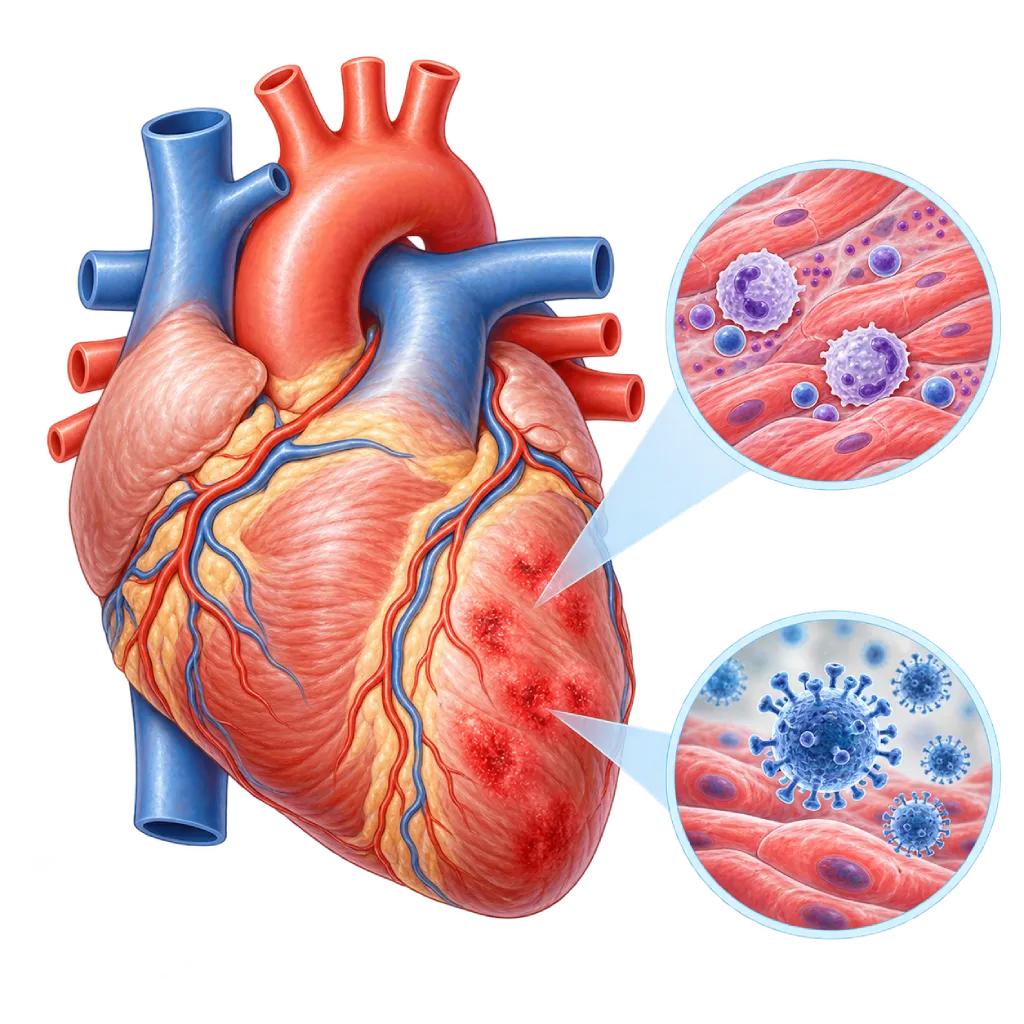
Myocarditis is inflammation of the heart muscle, often after a viral infection. Many cases are mild and recover, but some can weaken the heart's pumping or trigger rhythm problems, so chest pain and shortness of breath after an illness should be checked.
SourcesSigns That Need Urgent Help
- Chest pain that is severe or does not improve with rest
- Severe shortness of breath, especially when lying down
- Fainting or nearly fainting
- A very fast heartbeat with dizziness or weakness
- Cold, pale, or bluish skin with extreme weakness
- Confusion or reduced consciousness
If these signs appear, go to the nearest emergency department right away or call Heart Attack Center 1500 258.
01 / Understanding the condition
About Myocarditis
Myocarditis is inflammation of the myocardium, the muscle layer of the heart that pumps blood. The inflammation makes heart muscle cells swell, and some become damaged. As a result, the heart's pumping can weaken and its electrical system can be disrupted. Anyone can get myocarditis, but it is more common in teenagers and young adult men.
Many Different Causes
Common causes are viral infections, for example influenza, the COVID-19 virus, or viruses that affect the digestive tract. Inflammation can be caused by the virus itself or by the immune system also attacking the heart muscle. Other causes include autoimmune diseases, sarcoidosis, certain medicines including cancer immunotherapy drugs, and substances such as cocaine. Myocarditis has also been reported after mRNA COVID-19 vaccines, but this is rare, occurs mainly in young men, and is usually mild. In some people, no cause is found.
From Mild to Severe
Many people only have chest pain, fatigue, or palpitations for a few days to a few weeks after a fever or the flu, and then recover completely. Others develop shortness of breath and swelling because the heart's pumping weakens, or faint because of rhythm problems. In fulminant myocarditis, a severe form that comes on suddenly, blood pressure can drop sharply, so temporary heart support devices are needed. Chest pain from myocarditis can resemble a heart attack, so it needs to be checked in the emergency room. If the sac around the heart is also inflamed, this is covered on the Pericarditis page.
Treatment Based on Severity
In mild cases, monitoring and rest from strenuous exercise are often enough. If the pump weakens, heart failure medicines are given according to guidelines. Medicines that suppress inflammation or the immune system are only used for certain types confirmed by testing, such as giant cell myocarditis, eosinophilic myocarditis, or sarcoidosis. For several months after the illness, strenuous and competitive sports are usually postponed until follow-up tests show that the heart has recovered.
After Recovery
Most people with mild myocarditis recover without lasting effects. However, in a small number of people, the inflammation persists or leaves scar tissue that can trigger rhythm disorders or progress to dilated cardiomyopathy. For this reason, follow-up checkups are still recommended even after symptoms have gone.
02 / Understanding the condition
Symptoms to Recognize.
Common Symptoms
Symptoms often appear a few days to a few weeks after a fever, flu, or diarrhea.
- Chest pain, sometimes sharp or pressing
- Shortness of breath during activity or when lying down
- Palpitations or a heartbeat that feels irregular
- Unusual tiredness and weakness
- Swelling in the legs or ankles
- A recent fever, muscle aches, or sore throat
- Dizziness or nearly fainting
Symptoms in Children
In children, symptoms are often atypical and easily mistaken for an ordinary infection.
- Fast breathing or looking short of breath
- Difficulty eating or drinking and sweating easily
- Vomiting or abdominal pain without a clear cause
- Being very weak, fussy, or pale
- A very fast heartbeat
03 / Understanding the condition
What Causes This Condition?
- Viral infections, for example influenza, SARS-CoV-2, adenovirus, enterovirus, or parvovirus B19
- An immune reaction that also attacks the heart muscle after an infection
- Autoimmune diseases, such as lupus, or sarcoidosis
- Certain medicines, including cancer immunotherapy drugs known as immune checkpoint inhibitors
- Toxic substances, such as cocaine and other stimulants
- Certain bacterial or parasitic infections, for example diphtheria, which are now rare
- mRNA COVID-19 vaccines, rarely and usually mildly, mainly in young men
- Giant cell and eosinophilic myocarditis, rare types that need specific treatment
04 / Understanding the condition
Who Is at Higher Risk?
Medical
A recent viral infection, autoimmune disease, sarcoidosis, and cancer treatment with immunotherapy increase the likelihood of heart muscle inflammation.
Age
Myocarditis is more common in teenagers and young adults, but it can occur at any age, including in children and babies.
Lifestyle
Using cocaine or stimulants can damage the heart muscle. Strenuous exercise during a fever or soon after recovering from an infection can worsen inflammation that has not yet been noticed.
Genetic
A genetic susceptibility to cardiomyopathy can make myocarditis more likely to occur or recur; tell your doctor about any family history of cardiomyopathy.
Other
Men are affected more often than women. A previous episode of myocarditis increases the likelihood of it coming back.
Groups at Higher Risk
- Teenagers and Young Adult Men: Myocarditis is more often found in this group, including after viral infections.
- Athletes Who Exercise While Ill: Strenuous exercise during active inflammation can worsen heart muscle damage and trigger arrhythmias.
- Cancer Patients Receiving Immunotherapy: Immune checkpoint inhibitors can trigger myocarditis, usually within the first few months of treatment.
- People with Autoimmune Diseases: Lupus, sarcoidosis, and other autoimmune diseases can involve the heart muscle.
05 / Understanding the condition
How Is It Diagnosed?
Doctors suspect myocarditis when chest pain, shortness of breath, or palpitations appear after an infection, together with raised troponin or ECG changes. Because the symptoms can resemble a heart attack, the first step is to rule out a blockage in the coronary arteries, for example with coronary angiography or coronary CT, especially in people with risk factors for coronary artery disease.
Echocardiography assesses pumping strength and fluid in the sac around the heart. Cardiac MRI is now the main test to confirm inflammation, because it can show swelling and scar tissue in a typical pattern. In cases that are severe, do not improve with initial treatment, or come with serious rhythm disorders and heart block, your doctor may recommend an endomyocardial biopsy. The biopsy result determines the type of inflammation and whether medicines that suppress the immune system are needed. Other tests, such as autoimmune or viral tests, are chosen based on the suspected cause.
Electrocardiogram (ECG)
Looks for ST segment changes, conduction problems, or arrhythmias, and helps distinguish myocarditis from a heart attack.
Cardiac Troponin Test
Raised troponin indicates heart muscle damage and is monitored to follow the course of the inflammation.
NT-proBNP and BNP Test
Assesses the workload on the heart when there are signs of heart failure such as shortness of breath and swelling.
Echocardiography
Assesses pumping strength, wall movement, chamber size, and fluid in the sac around the heart.
Cardiac MRI
The main imaging test to see the swelling and scar tissue typical of inflammation in the heart muscle, without an invasive procedure.
Coronary Angiography
Coronary angiography, or coronary CT in certain situations, rules out a blockage in the coronary arteries when symptoms resemble a heart attack.
Endomyocardial Biopsy
Takes a small sample of heart muscle through a catheter in cases that are severe, not improving, or suspected of being a specific type, to guide treatment.
06 / Understanding the condition
Treatment Options.
Treatment is decided by a doctor after an assessment. The categories below can help you follow the conversation with your doctor.
Monitoring and Rest from Strenuous Exercise
In mild cases, your doctor monitors the heart rhythm, troponin, and pumping function. Strenuous exercise is postponed for several months, usually 3 to 6 months, until the heart is declared recovered.
Heart Failure Medicines
Guideline-recommended classes of heart failure medicines are given if the pump weakens, then adjusted by your doctor as you recover.
Treating Rhythm Disorders
Antiarrhythmic medicines, a temporary pacemaker for heart block, or an ICD in certain patients with severe ventricular arrhythmias that persist.
Anti-Inflammatory Medicines
Corticosteroids or other immune-suppressing medicines are given only for certain types, such as giant cell or eosinophilic myocarditis, sarcoidosis, or myocarditis related to cancer immunotherapy.
Intensive Care and Circulatory Support Devices
In fulminant myocarditis, temporary heart support devices sustain the circulation until the heart muscle recovers or a further plan is decided.
Treating the Cause
Stopping the triggering medicine or substance, treating autoimmune disease, or treating certain infections based on test results.
07 / Understanding the condition
Complications to Watch For.
Heart Failure
Inflammation can weaken the pump, causing shortness of breath and swelling. In many people, pumping function improves within a few weeks to months.
Rhythm Disorders and Heart Block
Inflammation and scar tissue can trigger ventricular arrhythmias or slow electrical conduction, so the rhythm needs to be monitored.
Sudden Cardiac Arrest
Rarely, dangerous arrhythmias from myocarditis cause cardiac arrest, including in young athletes who keep up strenuous exercise while ill.
Cardiogenic Shock
In fulminant myocarditis, the heart's pump suddenly weakens, so blood pressure drops and temporary circulatory support devices are needed.
Dilated Cardiomyopathy
Persistent inflammation can make the left ventricle widen and weaken over the long term.
Recurrent Myocarditis
A small number of people have repeated episodes of inflammation, especially if they have a genetic susceptibility or an autoimmune disease.
08 / Understanding the condition
What Can You Do?
- Avoid strenuous exercise when you have a fever or have just recovered from an infection
- Complete the vaccinations your doctor recommends to prevent infections such as influenza
- Keep your hands clean to reduce the spread of viral infections
- Stay away from cocaine and stimulant drugs
- If you are receiving cancer immunotherapy, report chest pain, shortness of breath, or palpitations right away
- After myocarditis, attend your scheduled checkups and postpone competitive sports until your doctor says it is safe
- Take your medicines on schedule and do not stop them on your own
09 / Understanding the condition
When Should You See a Doctor?
Go to the emergency room right away if you have chest pain, severe shortness of breath, fainting, or a very fast heartbeat, especially after a fever or the flu. Myocarditis symptoms can resemble a heart attack and need to be checked the same day.
Make an appointment with a cardiologist if:
- Mild chest pain, palpitations, or unusual tiredness persists after an infection
- You quickly become short of breath during activities that are usually light
- You have had myocarditis and want to return to exercise
- You are receiving cancer immunotherapy and have heart symptoms
- There is a family history of cardiomyopathy or sudden death
Don't Wait in an Emergency.
If symptoms are severe or come on suddenly, go to the nearest emergency department right away or call Heart Attack Center 1500 258, rather than waiting for an appointment.
10 / Common questions
Questions You May Have.
Frequently asked questions about myocarditis, or inflammation of the heart muscle.
Can myocarditis heal completely?
Many people with mild myocarditis recover fully within a few weeks to months, with pumping function returning to normal. In some people, the inflammation leaves small scars or the pump stays weak, so long-term medicine is needed. Because recovery does not always keep pace with the disappearance of symptoms, your doctor usually recommends follow-up tests, such as an ECG, echocardiography, Holter monitoring, or cardiac MRI, a few months later.
When can I exercise again after myocarditis?
Strenuous and competitive sports are usually postponed for about 3 to 6 months. Before you return, your doctor usually rechecks troponin, echocardiography, Holter monitoring, and an exercise test, plus cardiac MRI if needed. If the results are normal and there are no arrhythmias, exercise can be resumed gradually. Light daily activities are usually still allowed as long as they do not cause symptoms.
Does chest pain after the flu always mean myocarditis?
No. Chest pain after the flu more often comes from the chest muscles, coughing, or the lining of the lungs. However, chest pain with shortness of breath, palpitations, fainting, or a heavy, pressing feeling needs to be checked, because it can come from myocarditis or a heart attack. An ECG and a troponin test are simple first steps to tell them apart.
Can the COVID-19 vaccine cause myocarditis?
Myocarditis after mRNA COVID-19 vaccines has been reported, but it is rare. Cases occurred mainly in young men, usually within a few days after the second dose, and most cases were mild with a quick recovery. COVID-19 infection itself can also cause myocarditis. If you have a history of myocarditis, discuss your vaccination plans with your doctor.
Is myocarditis contagious?
The heart muscle inflammation itself is not contagious. However, the viruses that trigger it, such as influenza or viruses that affect the digestive tract, can spread to other people, and in most people they only cause an ordinary illness. Keeping your hands clean, covering your mouth when coughing, and recommended vaccinations help reduce the spread of infection.
Why does the doctor recommend cardiac MRI?
Cardiac MRI can show swelling and scar tissue in the heart muscle without an invasive procedure, so it helps confirm myocarditis and distinguish it from a heart attack. This test uses a magnetic field, not X-rays, and takes about 30 to 60 minutes. A repeat MRI a few months later helps assess whether the inflammation has settled before you return to strenuous exercise.
Sources and Medical Review
Translated from the Indonesian edition medically reviewed by Dr. dr. Dafsah A. Juzar, Sp.JP(K).
Sources as cited in the Indonesian edition.
- Schulz-Menger J, Collini V, Gröschel J, et al. 2025 ESC Guidelines for the management of myocarditis and pericarditis. Eur Heart J. 2025;46(40):3952-4041.
- Caforio ALP, Pankuweit S, Arbustini E, et al. Current state of knowledge on aetiology, diagnosis, management, and therapy of myocarditis: a position statement of the European Society of Cardiology Working Group on Myocardial and Pericardial Diseases. Eur Heart J. 2013;34(33):2636-2648.
- Drazner MH, Bozkurt B, Cooper LT, et al. 2024 ACC Expert Consensus Decision Pathway on Strategies and Criteria for the Diagnosis and Management of Myocarditis. J Am Coll Cardiol. 2025;85(4):391-431.
- Ammirati E, Frigerio M, Adler ED, et al. Management of Acute Myocarditis and Chronic Inflammatory Cardiomyopathy: An Expert Consensus Document. Circ Heart Fail. 2020;13(11):e007405.
- Ferreira VM, Schulz-Menger J, Holmvang G, et al. Cardiovascular Magnetic Resonance in Nonischemic Myocardial Inflammation: Expert Recommendations. J Am Coll Cardiol. 2018;72(24):3158-3176.
- Pelliccia A, Sharma S, Gati S, et al. 2020 ESC Guidelines on sports cardiology and exercise in patients with cardiovascular disease. Eur Heart J. 2021;42(1):17-96.
- Bozkurt B, Kamat I, Hotez PJ. Myocarditis With COVID-19 mRNA Vaccines. Circulation. 2021;144(6):471-484.
Doctors Who Treat This Condition

Dr. med. dr. Denio A. Ridjab, Sp.JP(K)
Interventional Cardiology
Coronary Intervention Procedures +2 centers
Clinical focusInterventional Cardiology · Coronary Artery Disease
View Profile
dr. Siska S. Danny, Sp.JP(K)
Interventional Cardiology
Coronary Intervention Procedures
Clinical focusPCI for Acute Coronary Syndrome · Primary Coronary Intervention
View Profile
Dr. dr. Dafsah A. Juzar, Sp.JP(K)
Interventional Cardiology
Coronary Intervention Procedures +1 center
Clinical focusComplex Coronary Intervention · Cardiac Catheterization
View Profile