
Quick answer
What Is Arrhythmia Management?
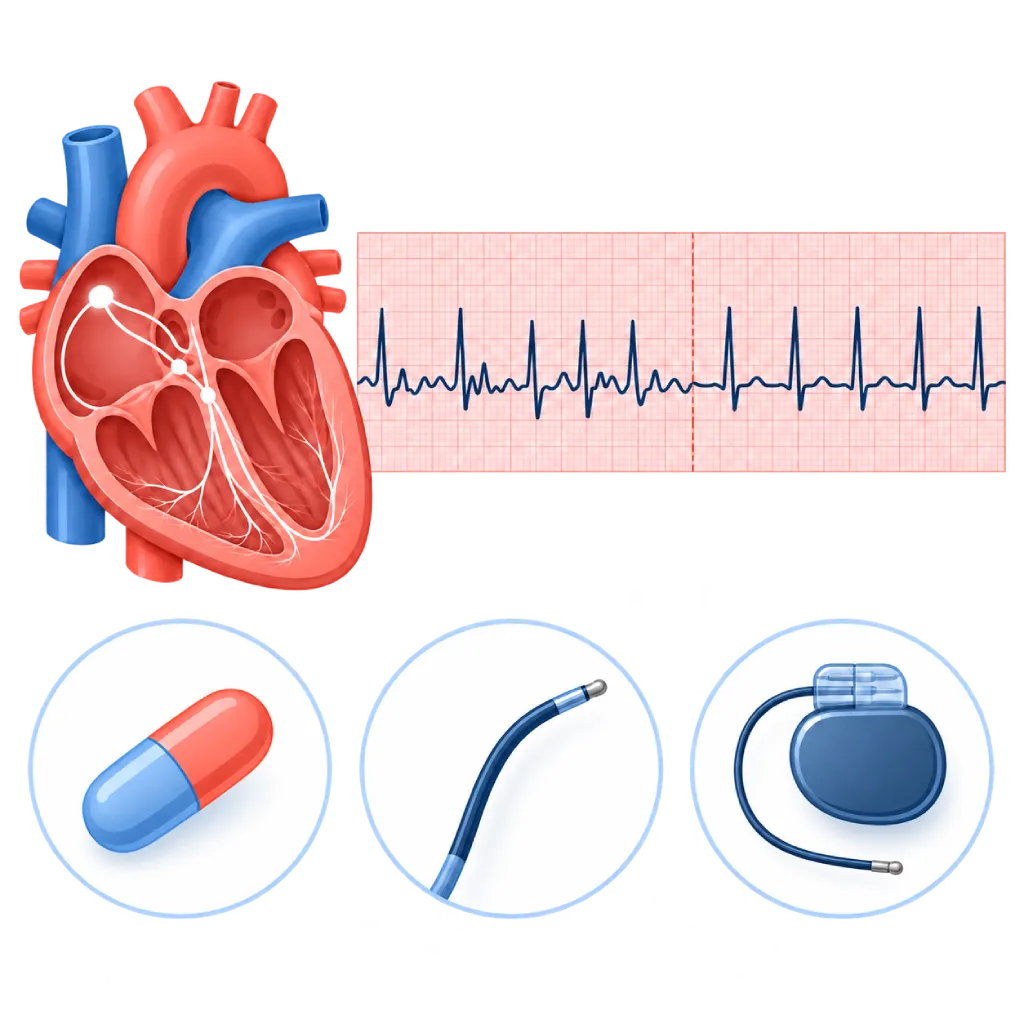
Arrhythmia management is the treatment of heart rhythm disorders in which the heart beats too fast, too slowly, or irregularly. Your doctor confirms the type of arrhythmia with an ECG or a longer recording, looks for its causes and triggers, then chooses suitable treatment, such as medicines, ablation, a pacemaker, or an ICD, plus stroke prevention if needed.
Sources01 / Understanding the procedure
About Arrhythmia Management
What Is Arrhythmia Management
An arrhythmia is a heart rhythm disorder, meaning a heartbeat that is too fast, too slow, or irregular. Some arrhythmias are harmless and only need monitoring, while others can cause fainting, heart failure, stroke, or cardiac arrest. Arrhythmia management means determining the type of arrhythmia, assessing its risk, then choosing the right treatment to relieve symptoms and prevent complications.
How It Works in Brief
Each heartbeat is triggered by an electrical signal that starts in the sinus node in the right atrium, then travels through the AV node to the ventricles. An arrhythmia occurs when a signal forms in the wrong place, circles around an extra pathway, or is blocked along the way. Because the causes differ, the treatments also differ: some are treated with medicines, some have their source or pathway eliminated with ablation, and some need a device to regulate or shock the heart.
Treatment Steps
- Confirming the type of arrhythmia: with an ECG, Holter monitoring, an implanted recorder, or an electrophysiology study. These are covered on the Electrocardiogram (ECG), Holter Monitoring, and Electrophysiology Study pages.
- Addressing causes and triggers: such as thyroid disorders, low potassium, sleep-disordered breathing, high blood pressure, alcohol, and certain medicines.
- Medicines: to slow the heart rate or keep the rhythm normal, chosen according to the type of arrhythmia and the condition of the heart.
- Stroke prevention: in atrial fibrillation with a risk of stroke. This is covered on the Anticoagulation Therapy and Stroke Prevention page.
- Ablation: eliminating the faulty electrical source or pathway using a catheter, especially in supraventricular tachycardia, atrial flutter, and atrial fibrillation. This is covered on the Cardiac Ablation page.
- Pacemaker or ICD: a pacemaker for a heartbeat that is too slow, and an ICD to prevent sudden death from dangerous ventricular arrhythmias. These are covered on the Pacemaker Implantation and Implantable Cardioverter Defibrillator (ICD) pages.
Common Types of Arrhythmia
- Atrial fibrillation: an irregular rhythm that is commonly found and increases the risk of stroke.
- Supraventricular tachycardia: a very fast heartbeat that starts and stops suddenly, often at a young age.
- Bradycardia and heart block: a heartbeat that is too slow, which can cause weakness, dizziness, or fainting.
- Extra beats: a sensation of the heart pounding or skipping, usually harmless if the heart is healthy.
- Ventricular tachycardia: a fast rhythm from the ventricles that can be dangerous, especially in a weak heart.
02 / Understanding the procedure
When Is This Procedure Considered?
A doctor may consider this procedure in the situations below. The decision is always made after a thorough assessment.
- Recurrent PalpitationsEspecially if they start and stop suddenly or feel irregular.
- Dizziness, Near Fainting, or FaintingMay be caused by a heartbeat that is too slow or too fast.
- Atrial Fibrillation or Atrial FlutterRequires heart rate or rhythm control and stroke prevention.
- Abnormal ECG or Holter ResultsFor example, heart block or frequent extra beats.
- Arrhythmia with Heart Disease or Heart FailureRequires assessment of the risk of sudden death.
- Family History of Sudden Death at a Young AgeTo look for inherited electrical disorders of the heart.
Situations to Consider First
- Palpitations with Chest Pain, Shortness of Breath, or FaintingThis is an emergency. Go to the emergency room right away, not to a scheduled consultation.
- Pregnant or Planning a PregnancySome arrhythmia medicines need to be replaced with safer ones.
- Thyroid, Kidney, or Liver DisordersThese affect the choice and dose of arrhythmia medicines.
- Taking Medicines That Affect Heart RhythmSuch as some antibiotics, allergy medicines, or psychiatric medicines. Tell your doctor about all your medicines.
- Pacemaker or ICD in PlaceTell the staff before an MRI or any procedure that uses electrical equipment.
03 / Before the procedure
How Should You Prepare?
The main preparation is bringing a record of your symptoms and test results.
Symptom record. Write down when the palpitations start, how long they last, what you were doing, and whether they came with dizziness or fainting.
Rhythm recordings. Bring ECG or Holter results, or smartwatch recordings taken during symptoms. A recording made during symptoms is very helpful for diagnosis.
Medicine list. Including over-the-counter medicines, supplements, and herbal remedies.
Family history. Note whether any family members died suddenly, fainted repeatedly, or had a pacemaker at a young age.
Unsure about the preparation instructions? Ask our team before the procedure.
04 / During the procedure
How Is the Procedure Done?
The consultation usually lasts about 30 minutes. Further tests and procedures are scheduled as needed.
Interview and Examination
Your doctor asks about your symptoms and history, feels your pulse, measures your blood pressure, and records an ECG.
Supporting Tests
If needed, Holter monitoring, echocardiography to assess the structure of the heart, blood tests such as thyroid and electrolytes, or a longer rhythm recording are done.
Treatment Plan
Your doctor explains the type of arrhythmia, its risks, and the treatment options with their advantages and disadvantages, then decides together with you.
Monitoring
The effects of medicines, your symptoms, and your heart rhythm are monitored at follow-up visits. People with a pacemaker or ICD have regular device checks.
05 / Benefits and risks
Benefits and Risks Should Be Discussed Together.
Every medical procedure has benefits and risks. Your doctor will explain both for your situation before the procedure.
Benefits You Can Expect
- Treatment Tailored to the Type of ArrhythmiaEach type of arrhythmia requires a different approach.
- Relieving SymptomsPalpitations, dizziness, and weakness may decrease.
- Preventing Stroke and Heart FailureEspecially in atrial fibrillation.
- Preventing Sudden DeathIn dangerous ventricular arrhythmias, with an ICD when needed.
- Options from Medicines to ProceduresDiscussed together based on your condition and preferences.
The benefits of a procedure are not a promise of a cure. Ask how the results will affect your care plan.
Risks You Should Know
- Side Effects of Arrhythmia MedicinesSuch as a heartbeat that is too slow, dizziness, or thyroid problems with certain medicines. These are monitored regularly.
- Medicines Can Trigger Other ArrhythmiasFor this reason, they are chosen and monitored carefully.
- Arrhythmias Can Come BackFurther treatment may be needed.
- Procedure RisksIf ablation or device implantation is done, the risks are explained beforehand.
Risks can differ from person to person. A full explanation and consent are given after an individual assessment.
06 / After the procedure
What Is Recovery Like?
There is no recovery period for a consultation. Recovery after ablation or device implantation is explained on the page for each procedure.
Know your triggers. Cut down on alcohol, get enough sleep, manage stress, and treat sleep-disordered breathing if you have it. Coffee in moderate amounts usually does not trigger arrhythmias.
Vagal maneuvers. People with supraventricular tachycardia may be taught simple maneuvers by their doctor, such as straining while half sitting and then lying down with the legs raised, to stop an episode.
Take medicines regularly. Do not stop arrhythmia medicines or blood thinners without your doctor's guidance.
Warning signs to watch for. Go to the emergency room right away if you experience:
- A very fast heartbeat with chest pain, shortness of breath, or severe dizziness
- Fainting, especially during activity
- A very slow heartbeat with weakness or near fainting
- More than one shock from your ICD
Know the Signs That Need Prompt Care.
Follow the team's guidance on warning signs. If severe or sudden symptoms appear after the procedure, go to the nearest emergency department right away or call Heart Attack Center 1500 258.
07 / Team and support
Doctors and Procedure Support
The doctors below are listed for this procedure. Listed by name, not by ranking.

Dr. dr. Dicky A. Hanafy, Sp.JP(K)
Arrhythmia and Electrophysiology
Arrhythmia and Device Center +1 center
Clinical focusElectrophysiology and Arrhythmia Ablation · Pacemaker and ICD Implantation
View Profile
Dr. dr. Faris Basalamah, Sp.JP(K)
Interventional Cardiology
Coronary Intervention Procedures +1 center
Clinical focusComplex Coronary Intervention · Cardiac Electrophysiology
View Profile
dr. Sri Diniharini, Sp.JP(K)
Echocardiography & Cardiovascular Imaging
Cardiovascular Diagnostic Center +1 center
Clinical focusAdvanced Echocardiography · Transesophageal Echocardiography
View ProfileTreadmill Test System
A testing system that records your ECG, heart rate, and blood pressure while you walk on a treadmill as the workload increases in…
Holter Monitoring System
A small ECG recorder that you wear during daily activities to monitor your heart rhythm continuously for 24 to 48 hours or…
HD Grid 3D Mapping System
A mapping catheter made by Abbott with electrodes arranged in a grid, recording the heart's electrical signals from many points…
FARAPULSE Pulsed Field Ablation (PFA)
A catheter ablation system made by Boston Scientific that uses pulsed electrical fields, rather than heat or cold, to isolate the…
The availability of technology and test support is confirmed with the team. Technology is chosen according to clinical need.
08 / Common questions
Before You Plan the Procedure.
Frequently asked questions about arrhythmia management. The right treatment for you is decided together with your doctor.
Are all arrhythmias dangerous?
No. Many arrhythmias, such as occasional extra beats in a healthy heart, are harmless and only need monitoring. An arrhythmia becomes more serious if it causes fainting, occurs in a weak heart, or increases the risk of stroke, as atrial fibrillation does. Your doctor assesses the risk based on the type of arrhythmia and the condition of your heart.
Does coffee trigger heart palpitations?
In the majority of people, coffee in moderate amounts does not trigger dangerous arrhythmias and does not need to be stopped completely. Energy drinks, alcohol, lack of sleep, and stress are more common triggers. If you notice symptoms after drinking coffee, cut down on the amount and tell your doctor.
When does an arrhythmia need ablation?
Ablation is considered when an arrhythmia recurs often, disrupts your activities, does not improve with medicines or the medicines do not suit you, or when you prefer a definitive treatment over taking medicines long term. In supraventricular tachycardia and atrial flutter, ablation is often curative. In atrial fibrillation, ablation reduces recurrences and symptoms.
What is the difference between a pacemaker and an ICD?
A pacemaker treats a heartbeat that is too slow by sending small electrical signals so the heart beats regularly. An ICD monitors the rhythm continuously and delivers an electrical shock if a dangerous ventricular arrhythmia occurs, to prevent sudden death. An ICD also has pacemaker functions.
What can I do when my heart suddenly starts racing?
Sit or lie down, stay calm, and if possible record your rhythm with an ECG or smartwatch. People with supraventricular tachycardia who have been taught by their doctor can try a vagal maneuver. Go to the emergency room right away if the palpitations come with chest pain, shortness of breath, severe dizziness, or fainting. Bring the recording to your follow-up visit.
Can an arrhythmia be cured?
Some can. Arrhythmias caused by triggers such as thyroid disorders may go away once the cause is treated, and some arrhythmias such as supraventricular tachycardia can be cured with ablation. Other arrhythmias, such as atrial fibrillation, often need long-term treatment to control symptoms and prevent stroke. Regular follow-up visits help maintain the results.
Sources and Medical Review
Translated from the Indonesian edition medically reviewed by Dr. dr. Dicky A. Hanafy, Sp.JP(K).
Sources as cited in the Indonesian edition.
- Van Gelder IC, Rienstra M, Bunting KV, et al. 2024 ESC Guidelines for the management of atrial fibrillation developed in collaboration with the European Association for Cardio-Thoracic Surgery (EACTS). Eur Heart J. 2024;45(36):3314-3414.
- Brugada J, Katritsis DG, Arbelo E, et al. 2019 ESC Guidelines for the management of patients with supraventricular tachycardia. Eur Heart J. 2020;41(5):655-720.
- Zeppenfeld K, Tfelt-Hansen J, de Riva M, et al. 2022 ESC Guidelines for the management of patients with ventricular arrhythmias and the prevention of sudden cardiac death. Eur Heart J. 2022;43(40):3997-4126.
- Glikson M, Nielsen JC, Kronborg MB, et al. 2021 ESC Guidelines on cardiac pacing and cardiac resynchronization therapy. Eur Heart J. 2021;42(35):3427-3520.
- Appelboam A, Reuben A, Mann C, et al. Postural modification to the standard Valsalva manoeuvre for emergency treatment of supraventricular tachycardias (REVERT): a randomised controlled trial. Lancet. 2015;386(10005):1747-1753.