
Quick answer
What Is Atrial Fibrillation?
Atrial fibrillation is a heart rhythm disorder in which the upper chambers of the heart (atria) quiver rapidly and irregularly. It can cause a pounding heart and fatigue, and it increases the risk of stroke and heart failure if left untreated.
SourcesSigns That Need Urgent Help
- Facial drooping, slurred speech, or weakness of the arm and leg on one side
- Sudden blurred vision or loss of vision
- Fainting or nearly fainting
- Chest pain that does not go away with rest
- Severe shortness of breath or being unable to lie flat
- Very fast palpitations with weakness, paleness, and cold sweats
If these signs appear, go to the nearest emergency department right away or call Heart Attack Center 1500 258.
01 / Understanding the condition
About Atrial Fibrillation
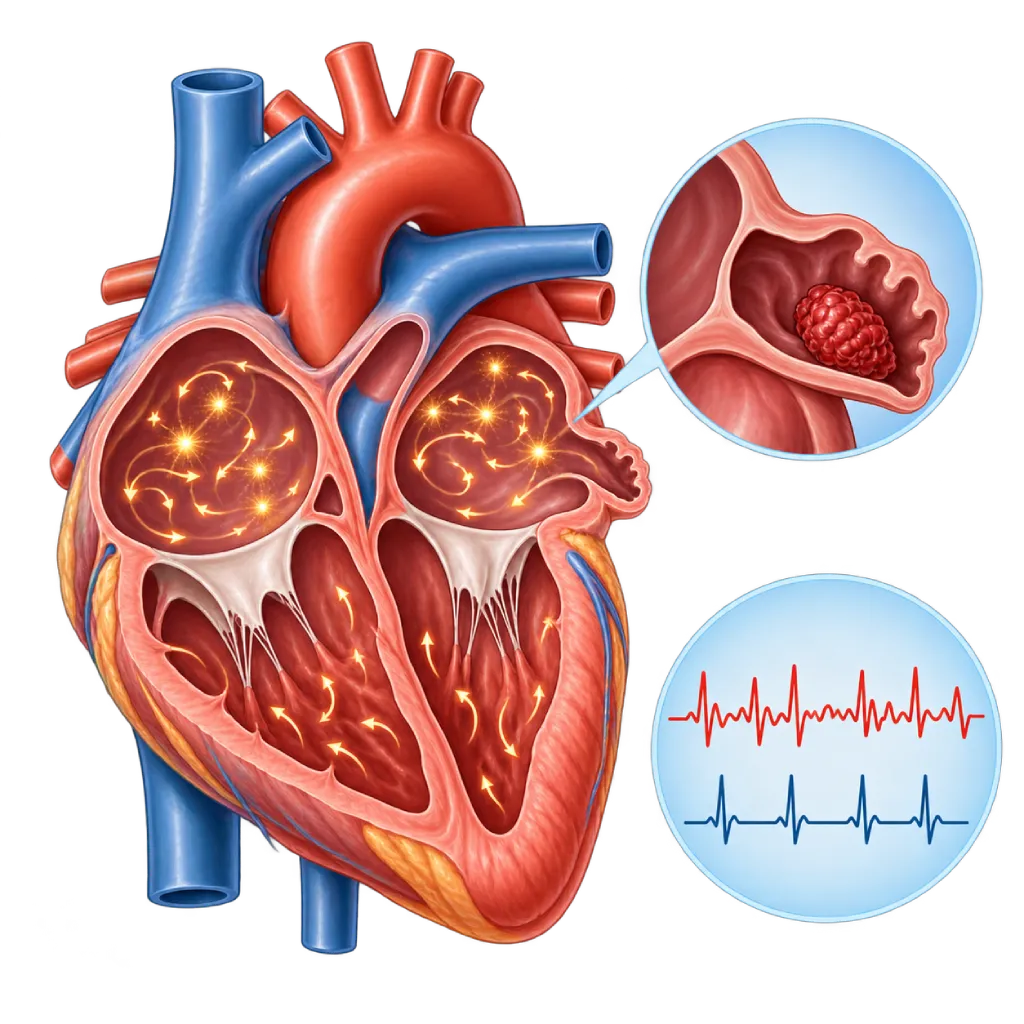
In a normal rhythm, the sinus node in the right atrium sends regular signals so that the upper chambers (atria) and lower chambers (ventricles) of the heart beat in turn. In atrial fibrillation, often shortened to AF, the atria receive hundreds of chaotic signals every minute. The atria no longer pump properly; instead, they quiver. Some of the signals pass to the ventricles at random, so the pulse becomes irregular and often fast.
Atrial fibrillation is a sustained rhythm disorder that is common in adults, and it becomes more common with age. Some people feel palpitations, shortness of breath, or fatigue. Others feel nothing at all and only find out during an ECG or after having a stroke.
Why Stroke Risk Increases
Because the atria do not pump well, blood flow in the left atrium slows down, especially in a small pouch called the auricle or left atrial appendage. Blood clots can form here, then travel to the brain and block a blood vessel. Doctors assess this risk with a score that takes into account age, high blood pressure, diabetes, heart failure, previous stroke, and blood vessel disease. The result determines whether you need a blood thinner.
Patterns of Atrial Fibrillation
Doctors classify atrial fibrillation by how long it lasts. Paroxysmal means it comes and goes, stopping within seven days on its own or with treatment. Persistent means it lasts longer than seven days. Permanent means you and your doctor agree to stop trying to restore a normal rhythm and focus on controlling the heart rate. These patterns can change over time, so regular reassessment is still needed.
Principles of Treatment
The 2024 ESC guidelines summarize treatment in the AF-CARE approach: managing coexisting conditions and risk factors, preventing stroke and blood clots, relieving symptoms by controlling the heart rate or rhythm, and reassessing regularly. Losing weight, limiting alcohol, controlling blood pressure, and treating sleep apnea have been shown to reduce recurrences. The choice between medicines, cardioversion, or ablation is discussed with your doctor based on your symptoms, how long you have had atrial fibrillation, and the condition of your heart.
Atrial fibrillation is closely related to atrial flutter, a more regular rhythm disorder of the atria that carries a similar stroke risk, covered on the Atrial Flutter page.
02 / Understanding the condition
Symptoms to Recognize.
Common Symptoms
- A fast, irregular pounding heartbeat
- An irregular pulse when felt at the wrist
- Tiring easily and reduced exercise capacity
- Shortness of breath during activity
- Dizziness or lightheadedness
- Chest discomfort or pressure
- No symptoms, discovered only from an ECG or a smartwatch alert
Symptoms in Older Adults
In older adults, atrial fibrillation more often occurs without noticeable palpitations, so it is only recognized after complications appear.
- Weakness and low energy without obvious palpitations
- Frequent falls or unsteadiness
- Confusion or difficulty concentrating
- Shortness of breath and swollen legs
03 / Understanding the condition
What Causes This Condition?
- Long-standing high blood pressure that makes the left atrium enlarged and stiff
- Heart valve disease, especially narrowing or leakage of the mitral valve
- Heart failure, coronary artery disease, or cardiomyopathy
- An overactive thyroid gland (hyperthyroidism)
- Pauses in breathing during sleep (obstructive sleep apnea)
- Excessive alcohol consumption, including heavy drinking on a single occasion
- Severe infection, heart surgery, or other major surgery
- Changes in atrial tissue due to aging
04 / Understanding the condition
Who Is at Higher Risk?
Age
The risk rises sharply after age 65, and most people with atrial fibrillation are older adults.
Medical
High blood pressure, diabetes, heart failure, valve disease, coronary artery disease, chronic kidney disease, sleep apnea, and thyroid disorders.
Lifestyle
Obesity, alcohol, smoking, and physical inactivity. Heavy endurance exercise over many years also slightly increases the risk in some people.
Genetic
A history of atrial fibrillation in a parent or sibling, especially when it started at a young age, slightly increases the risk.
Groups at Higher Risk
- Older Adults: Most cases occur in this age group. Occasional pulse checks or ECGs are recommended to find atrial fibrillation without symptoms.
- People with High Blood Pressure: Long-standing high blood pressure enlarges the left atrium, where atrial fibrillation readily develops.
- People with Heart Failure or Valve Disease: Pressure and stretch in the atria increase, so atrial fibrillation occurs more often and causes more severe symptoms.
- People with Diabetes and Obesity: Both change the atrial tissue and are associated with atrial fibrillation that recurs more often.
- People with Sleep Apnea: Repeated pauses in breathing during sleep strain the atria and can trigger episodes of atrial fibrillation.
05 / Understanding the condition
How Is It Diagnosed?
Atrial fibrillation is confirmed with an ECG recording, not just from an irregular pulse. If symptoms are present at the time, a 12-lead ECG is usually enough. A single-lead ECG recording from certain devices can also be used if it lasts at least 30 seconds and is read by a doctor.
After diagnosis, the doctor looks for causes and coexisting conditions with echocardiography, thyroid function tests, kidney function tests, and other tests. The doctor also calculates your stroke risk and bleeding risk to decide whether you need a blood thinner. If atrial fibrillation comes and goes, a Holter monitor or long-term recorder helps show how often and how long the episodes occur.
Electrocardiogram (ECG)
Confirms the diagnosis: an irregular rhythm without clear P waves, recorded on a 12-lead ECG or a single-lead ECG lasting at least 30 seconds.
Holter Monitoring
Captures atrial fibrillation that comes and goes and assesses the average heart rate after treatment.
Long-Term Heart Rhythm Monitoring
A patch recorder worn for several days or an implanted recorder for infrequent symptoms, or to look for atrial fibrillation after a stroke with no clear cause.
Echocardiography
Assesses the size of the left atrium, the valves, and pumping strength as a basis for choosing medicines and a rhythm strategy.
Thyroid Function Test
Looks for an overactive thyroid, a trigger of atrial fibrillation that needs to be treated first.
Laboratory Tests
Kidney function, liver function, and a complete blood count to choose a safe type of blood thinner.
Transesophageal echocardiography (an ultrasound from the esophagus) when it is necessary to confirm there is no clot in the left atrium before cardioversion or ablation.
06 / Understanding the condition
Treatment Options.
Treatment is decided by a doctor after an assessment. The categories below can help you follow the conversation with your doctor.
Stroke Prevention with Anticoagulants
Oral blood thinners, usually direct oral anticoagulants or warfarin, are given when your stroke risk calls for them. Your doctor determines the type.
Rate Control
Beta blockers, certain calcium channel blockers, or digoxin are used to slow the ventricular rate so symptoms ease.
Rhythm Control
Antiarrhythmic medicines or planned electrical cardioversion to restore a normal rhythm, especially when symptoms persist or atrial fibrillation has just been diagnosed.
Catheter Ablation
Pulmonary vein isolation using heat, cold, or pulsed electric fields to reduce recurrences, when medicines have not worked well enough or from the start in selected patients.
Left Atrial Appendage Closure
A plugging device is placed in the left atrial appendage through a catheter for patients who cannot take long-term blood thinners.
Risk Factor Management
Losing weight, limiting alcohol, controlling blood pressure and blood sugar, and treating sleep apnea reduce the burden of atrial fibrillation.
07 / Understanding the condition
Complications to Watch For.
Ischemic Stroke
A clot from the left atrium can block a blood vessel in the brain. The risk can be lowered with blood thinners when needed.
Heart Failure
A fast heart rate that lasts a long time can weaken the heart's pumping. This often improves once the rate or rhythm is under control.
Memory Decline
Atrial fibrillation is linked to impaired thinking and dementia, partly through small strokes that go unnoticed.
Embolism to Other Organs
Clots can also block arteries in the intestines, kidneys, or legs, although this is less common than in the brain.
Medication-Related Bleeding
Blood thinners lower the risk of stroke but increase the risk of bleeding, so their use needs regular monitoring.
08 / Understanding the condition
What Can You Do?
- Control your blood pressure to the target agreed with your doctor
- Lose weight if you are overweight; losing about 10% already brings benefits
- Avoid alcohol or limit it as much as possible
- Stay active with regular moderate-intensity exercise
- Get checked for loud snoring and pauses in breathing during sleep
- Check your pulse from time to time, especially if you are over 65
- If you have been diagnosed, take your blood thinner on schedule without missing doses
09 / Understanding the condition
When Should You See a Doctor?
See a doctor if you feel an irregular heartbeat, notice an irregular pulse, tire easily, or are short of breath for no clear reason. If your smartwatch or blood pressure monitor repeatedly warns of an irregular rhythm, bring the recordings to your appointment. People with atrial fibrillation who are already being treated should have regular checkups to reassess stroke risk, medicines, and kidney function.
Go to the emergency room right away if:
- You have signs of stroke: facial drooping, slurred speech, or arm weakness on one side
- Palpitations come with chest pain, severe shortness of breath, fainting, or near fainting
- Your heartbeat is very fast, with weakness, paleness, and cold sweats
- You have bleeding that is hard to stop, vomit blood, or pass black stools while taking blood thinners
Don't Wait in an Emergency.
If symptoms are severe or come on suddenly, go to the nearest emergency department right away or call Heart Attack Center 1500 258, rather than waiting for an appointment.
10 / Common questions
Questions You May Have.
Frequently asked questions about atrial fibrillation.
Is atrial fibrillation dangerous?
Atrial fibrillation is rarely immediately life-threatening, but it should not be ignored. Its main risk is stroke caused by a blood clot from the left atrium. A fast heart rate over a long period can also weaken the heart. With stroke risk assessment, blood thinners when needed, and control of the heart rate or rhythm, most people with atrial fibrillation can live active lives and lower their risk of these complications.
Do I have to take blood thinners for life?
It depends on your stroke risk, not on whether you have symptoms. Your doctor calculates the risk with a score that considers age, high blood pressure, diabetes, heart failure, previous stroke, and blood vessel disease. If the risk is significant, the medicine is usually continued long term, including after the rhythm returns to normal. Do not stop the medicine on your own; talk to your doctor if you have bleeding or a planned procedure.
Can ablation cure atrial fibrillation?
Catheter ablation can clearly reduce episodes and symptoms, especially in paroxysmal atrial fibrillation. Some patients remain free of recurrences over the long term, but others need a repeat ablation or additional medicines. Ablation also does not automatically remove the need for blood thinners. Your doctor will weigh the pattern of your atrial fibrillation, the size of your atria, and your condition before recommending it.
What is the difference between rate control and rhythm control?
Rate control means slowing the ventricular rate so it is not too fast, even though the rhythm remains atrial fibrillation. Rhythm control means trying to restore and maintain a normal rhythm with antiarrhythmic medicines, cardioversion, or ablation. The choice depends on your symptoms, how long you have had atrial fibrillation, and your heart condition. Many patients use both together, and stroke prevention is still needed.
Can I drink coffee if I have atrial fibrillation?
In most people, coffee in reasonable amounts has not been shown to trigger atrial fibrillation. Alcohol is more clearly linked to recurrences, so you should avoid it or limit it as much as possible. If you notice palpitations after coffee, strong tea, or energy drinks, cut back on them and tell your doctor about this observation at your next checkup.
Can atrial fibrillation go away on its own?
In the paroxysmal pattern, episodes can stop on their own within a few hours or days. However, the tendency often persists and can become more frequent over time, especially if triggers are not managed. Atrial fibrillation triggered by something temporary, such as a severe infection or an overactive thyroid, sometimes does not return after the trigger is treated. Still get checked, because the stroke risk remains even when episodes are brief.
Sources and Medical Review
Translated from the Indonesian edition medically reviewed by dr. Sunu B. Raharjo, Sp.JP(K), Ph.D..
Sources as cited in the Indonesian edition.
- Van Gelder IC, Rienstra M, Bunting KV, Casado-Arroyo R, Caso V, Crijns HJGM, et al. 2024 ESC Guidelines for the management of atrial fibrillation developed in collaboration with the European Association for Cardio-Thoracic Surgery (EACTS). Eur Heart J. 2024;45(36):3314-3414.
- Joglar JA, Chung MK, Armbruster AL, Benjamin EJ, Chyou JY, Cronin EM, et al. 2023 ACC/AHA/ACCP/HRS Guideline for the Diagnosis and Management of Atrial Fibrillation: A Report of the American College of Cardiology/American Heart Association Joint Committee on Clinical Practice Guidelines. Circulation. 2024;149(1):e1-e156.
- Tzeis S, Gerstenfeld EP, Kalman J, Saad EB, Sepehri Shamloo A, Andrade JG, et al. 2024 European Heart Rhythm Association/Heart Rhythm Society/Asia Pacific Heart Rhythm Society/Latin American Heart Rhythm Society expert consensus statement on catheter and surgical ablation of atrial fibrillation. Europace. 2024;26(4):euae043.
- Kirchhof P, Camm AJ, Goette A, Brandes A, Eckardt L, Elvan A, et al. Early Rhythm-Control Therapy in Patients with Atrial Fibrillation. N Engl J Med. 2020;383(14):1305-1316.
- Marrouche NF, Brachmann J, Andresen D, Siebels J, Boersma L, Jordaens L, et al. Catheter Ablation for Atrial Fibrillation with Heart Failure. N Engl J Med. 2018;378(5):417-427.
Doctors Who Treat This Condition

dr. Sunu B. Raharjo, Sp.JP(K), Ph.D.
Arrhythmia and Electrophysiology
Arrhythmia and Device Center
Clinical focusClinical and Interventional Electrophysiology · Cardiac Arrhythmia Ablation
View Profile
Dr. dr. Dicky A. Hanafy, Sp.JP(K)
Arrhythmia and Electrophysiology
Arrhythmia and Device Center +1 center
Clinical focusElectrophysiology and Arrhythmia Ablation · Pacemaker and ICD Implantation
View Profile
Dr. dr. Faris Basalamah, Sp.JP(K)
Interventional Cardiology
Coronary Intervention Procedures +1 center
Clinical focusComplex Coronary Intervention · Cardiac Electrophysiology
View Profile