
Quick answer
What Is Bradycardia?
Bradycardia is a heart rate slower than 60 beats per minute at rest. In fit people or during sleep, this is often normal. If it comes with dizziness, fatigue, shortness of breath, or fainting, the cause needs to be found and treated.
SourcesSigns That Need Urgent Help
- Fainting or nearly fainting
- Chest pain or severe shortness of breath
- Sudden confusion or being hard to wake
- A very slow pulse, for example below 40 beats per minute, with weakness
- Pale, cold, and sweaty skin
If these signs appear, go to the nearest emergency department right away or call Heart Attack Center 1500 258.
01 / Understanding the condition
About Bradycardia
An adult's resting heart rate is generally 60 to 100 beats per minute. Bradycardia means a heart rate slower than 60 beats per minute; American guidelines use a cutoff of 50 beats per minute for a slow heart rate that needs attention. A slow heart rate is not always a problem. Athletes, very fit people, and many people during sleep have a heart rate below 60 beats per minute without any symptoms.
Bradycardia becomes a problem when the heart can no longer pump enough blood or cannot speed up to meet the body's needs. As a result, the brain and muscles do not get enough blood flow. Symptoms can include fatigue, dizziness, shortness of breath during activity, difficulty concentrating, and even fainting.
Two Main Sources
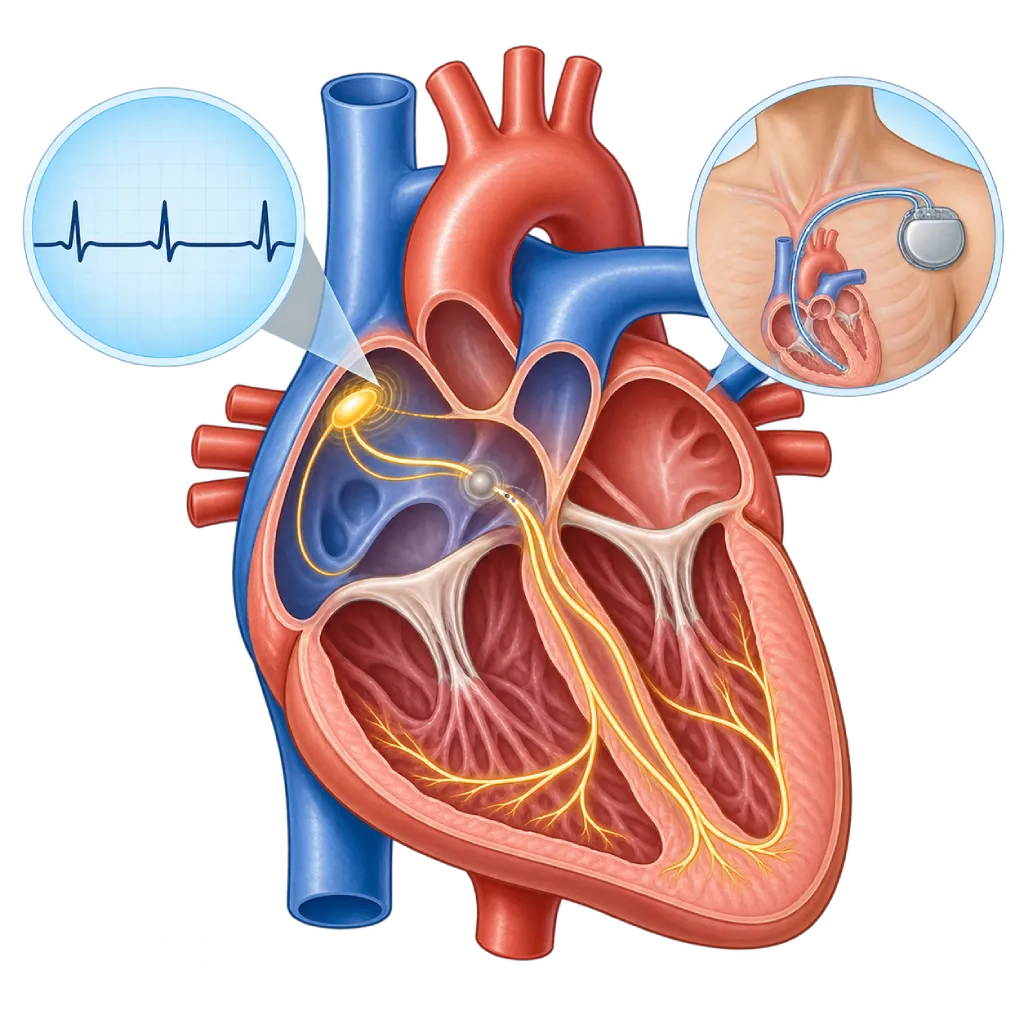
Bradycardia comes from two parts of the heart's electrical system. First, the sinus node, the heart's natural pacemaker, produces signals too slowly or occasionally pauses. This group includes sinus bradycardia, covered on the Sinus Bradycardia page, as well as sinus node dysfunction that can alternate with a fast heart rate, covered on the Tachycardia-Bradycardia Syndrome page. Second, signals from the upper chambers (atria) are blocked along the conduction pathway to the lower chambers (ventricles). This condition is called atrioventricular block, covered on the Atrioventricular Block page.
Causes That Can Be Corrected
Before deciding on a device, the doctor looks for causes that can be corrected. Examples include medications that slow the heart rate, such as beta blockers, certain calcium channel blockers, digoxin, and antiarrhythmic drugs; an underactive thyroid gland; a potassium level that is too high; a heart attack; and pauses in breathing during sleep. Bradycardia from these causes often improves once the cause is treated. Do not stop any medication on your own; discuss it with your doctor.
When a Pacemaker Is Needed
A pacemaker is considered when a slow heart rate persists, causes symptoms, and its cause cannot be corrected. Before that, the doctor makes sure the symptoms really come from the slow heart rate and not from something else, such as low blood pressure. In high-grade atrioventricular block, a pacemaker is generally recommended even before symptoms appear, because of the risk of sudden fainting. The device is placed under the skin of the chest under local anesthesia, and most people who have one return to their usual activities.
02 / Understanding the condition
Types and Related Conditions
The following conditions belong to the Bradycardia group. Open each one for a full explanation.
03 / Understanding the condition
Symptoms to Recognize.
Common Symptoms
- Tiring easily and feeling weak, especially during activity
- Dizziness or lightheadedness
- Shortness of breath when climbing stairs or walking quickly
- Difficulty concentrating or forgetfulness
- A pulse that feels slow when checked
- Reduced exercise capacity because the heart rate does not rise
Symptoms in Older Adults
In older adults, symptoms of bradycardia are often vague and attributed to aging.
- Frequent falls or unsteadiness
- Confusion or behavior changes that come and go
- Weakness and sleeping a lot during the day
- Brief fainting spells mistaken for slipping
04 / Understanding the condition
What Causes This Condition?
- Aging and hardening of the tissue in the heart's electrical system
- Sinus node dysfunction, including tachycardia-bradycardia syndrome
- Atrioventricular block due to a disorder of the pathway that carries signals to the ventricles
- Medications that slow the heart rate, such as beta blockers, digoxin, or antiarrhythmic drugs
- An underactive thyroid gland (hypothyroidism)
- A blood potassium level that is too high, for example in kidney disease
- A heart attack, inflammation of the heart muscle, or certain infections
- Pauses in breathing during sleep and strong stimulation of the vagus nerve
05 / Understanding the condition
Who Is at Higher Risk?
Age
Degeneration of the heart's electrical system is more common after age 65, so bradycardia and the need for a pacemaker increase with age.
Medical
Coronary artery disease, a history of heart attack, hypertension, hypothyroidism, chronic kidney disease, sleep apnea, and a history of heart surgery.
Genetic
A small share of heart conduction disorders run in families, and congenital heart block can occur in babies of mothers with lupus.
Other
Use of medications that slow the heart rate, especially when several are taken together or kidney function declines.
Groups at Higher Risk
- Older Adults: Aging of the sinus node and conduction pathways makes bradycardia and the need for a pacemaker more common after age 65.
- People Taking Medications That Slow the Heart Rate: Beta blockers, certain calcium channel blockers, digoxin, and antiarrhythmic drugs can slow the heart rate too much.
- People with Coronary Artery Disease: A heart attack, especially in the lower (inferior) wall of the heart, can disrupt the sinus node or the atrioventricular node.
- Patients After Heart Surgery: Valve surgery or transcatheter aortic valve replacement can disrupt the conduction pathway near the valve.
06 / Understanding the condition
How Is It Diagnosed?
The doctor first confirms whether the slow heart rate is actually causing symptoms, then looks for its source. You will be asked about your symptoms, exercise habits, sleep patterns, and all the medications you take, including beta-blocker eye drops for glaucoma.
An ECG shows the rate and type of bradycardia. Because a slow heart rate often comes and goes, a Holter monitor or long-term recorder is used to match symptoms with the rhythm recording. A treadmill test assesses whether the heart rate can rise during activity. Blood tests, especially thyroid function and potassium, look for causes that can be corrected. Echocardiography is done if structural heart disease is suspected. An electrophysiology study is rarely needed, only when the results of other tests are still unclear.
Physical Examination
The doctor checks your pulse, measures your blood pressure, and looks for signs of other diseases that slow the heart rate.
Electrocardiogram (ECG)
Shows a slow heart rate and distinguishes its origin: the sinus node or atrioventricular block.
Holter Monitoring
Records the heart rate day and night to capture long pauses or a slow rate that comes and goes, then matches it with your symptoms.
Treadmill Stress Test
Assesses whether the heart rate rises appropriately as the workload increases, to identify a heart that cannot speed up.
Implantable Loop Recorder (ILR)
An implanted recorder for rare fainting episodes that other recordings have not explained.
Thyroid Function Test
Looks for an underactive thyroid gland as a treatable cause.
Blood Electrolyte Test
Measures potassium and other electrolytes that can slow the heart rate.
07 / Understanding the condition
Treatment Options.
Treatment is decided by a doctor after an assessment. The categories below can help you follow the conversation with your doctor.
Monitoring Without Treatment
A slow heart rate without symptoms and without high-grade block generally only needs monitoring, especially in fit people.
Treating Correctable Causes
Adjusting medications that slow the heart rate, treating hypothyroidism, correcting potassium, or treating sleep apnea, as decided by the doctor.
Medication and Temporary Pacing
In an emergency, injectable medication or temporary pacing through the skin or a catheter is used to raise the heart rate while awaiting further treatment.
Permanent Pacemaker
Placed under the skin of the chest for persistent symptomatic bradycardia or high-grade atrioventricular block. There are types with leads and types without leads (leadless).
08 / Understanding the condition
Complications to Watch For.
Fainting and Injuries from Falls
A heart rate that is too slow or a long pause reduces blood flow to the brain, so you may faint without warning and get injured.
Heart Failure
A heart rate that stays too slow for a long time reduces the amount of blood pumped, which can lead to shortness of breath and swelling.
Reduced Ability to Stay Active
A heart that cannot speed up makes you tire quickly and struggle with daily activities.
Cardiac Arrest
In complete heart block or a very long sinus pause, the ventricles can stop beating and need immediate help.
09 / Understanding the condition
What Can You Do?
- Keep a list of all the medications and supplements you take, and show it to your doctor
- Do not add or double up on heart rate medications without your doctor's advice
- Have your thyroid function checked if you tire easily, feel cold easily, and gain weight
- Control your blood pressure, blood sugar, and cholesterol to protect your heart
- Get loud snoring and pauses in breathing during sleep checked
- If you have kidney disease, follow your doctor's advice on limiting potassium
10 / Understanding the condition
When Should You See a Doctor?
See a doctor if your pulse often feels slow and you tire easily, feel dizzy, get short of breath with light activity, or have trouble concentrating. A checkup is also needed if these symptoms appear after starting a new medication. A slow heart rate without symptoms in people who exercise regularly is generally not a cause for concern, but you can still discuss it with a doctor.
Go to the emergency room right away if:
- You faint or nearly faint
- A slow heart rate comes with chest pain or severe shortness of breath
- You develop sudden confusion, severe weakness, or pale, cold skin
- You have a pacemaker and again experience severe dizziness or fainting
Don't Wait in an Emergency.
If symptoms are severe or come on suddenly, go to the nearest emergency department right away or call Heart Attack Center 1500 258, rather than waiting for an appointment.
11 / Common questions
Questions You May Have.
Frequently asked questions about bradycardia, or a slow heart rate.
What heart rate is considered too slow?
In general, a resting heart rate below 60 beats per minute is called bradycardia, and American guidelines use a cutoff of 50 beats per minute. However, the number alone is not enough. A heart rate of 45 beats per minute in an athlete without symptoms can be normal, while a heart rate of 50 beats per minute that makes someone faint needs to be checked. Your doctor assesses the number together with your symptoms and the rhythm recording results.
Does bradycardia always require a pacemaker?
No. Many cases of bradycardia do not need a device, for example in fit people or when the cause can be corrected, such as a medication effect or hypothyroidism. A pacemaker is considered when a slow heart rate persists and causes symptoms, or when there is high-grade atrioventricular block. The decision is made after a rhythm recording shows that the symptoms are truly related to the slow heart rate.
Can medications cause bradycardia?
Yes. Beta blockers, certain calcium channel blockers, digoxin, and some antiarrhythmic drugs can slow the heart rate, especially when taken together or when kidney function declines. Beta-blocker eye drops for glaucoma can also have an effect. If you suspect your symptoms are caused by a medication, do not stop it on your own. Tell your doctor so the type or dose can be adjusted safely.
Can people with a pacemaker live a normal life?
Most people can. After the implant wound heals, usually within a few weeks, you can work, do light to moderate exercise, and travel. Avoid placing your phone directly over the device, and let the medical team know that you have a pacemaker before an MRI scan or any medical procedure. The device is checked regularly, at the clinic or from home, to monitor its battery and leads.
Is a slow heart rate during sleep dangerous?
A slower heart rate during sleep is normal because of nerve signals that calm the heart. Brief pauses at night can also be found in healthy people. However, a very slow heart rate or repeated long pauses during sleep can be related to pauses in breathing during sleep (sleep apnea). If you snore loudly and often wake up feeling tired, tell your doctor.
Sources and Medical Review
Translated from the Indonesian edition medically reviewed by Dr. dr. Faris Basalamah, Sp.JP(K).
Sources as cited in the Indonesian edition.
- Kusumoto FM, Schoenfeld MH, Barrett C, Edgerton JR, Ellenbogen KA, Gold MR, et al. 2018 ACC/AHA/HRS Guideline on the Evaluation and Management of Patients With Bradycardia and Cardiac Conduction Delay: A Report of the American College of Cardiology/American Heart Association Task Force on Clinical Practice Guidelines and the Heart Rhythm Society. Circulation. 2019;140(8):e382-e482.
- Glikson M, Nielsen JC, Kronborg MB, Michowitz Y, Auricchio A, Barbash IM, et al. 2021 ESC Guidelines on cardiac pacing and cardiac resynchronization therapy. Eur Heart J. 2021;42(35):3427-3520.
- Brignole M, Moya A, de Lange FJ, Deharo JC, Elliott PM, Fanciulli A, et al. 2018 ESC Guidelines for the diagnosis and management of syncope. Eur Heart J. 2018;39(21):1883-1948.
- Chung MK, Patton KK, Lau CP, Dal Forno ARJ, Al-Khatib SM, Arora V, et al. 2023 HRS/APHRS/LAHRS guideline on cardiac physiologic pacing for the avoidance and mitigation of heart failure. Heart Rhythm. 2023;20(9):e17-e91.
- Reynolds D, Duray GZ, Omar R, Soejima K, Neuzil P, Zhang S, et al. A Leadless Intracardiac Transcatheter Pacing System. N Engl J Med. 2016;374(6):533-541.
Doctors Who Treat This Condition

Dr. dr. Dicky A. Hanafy, Sp.JP(K)
Arrhythmia and Electrophysiology
Arrhythmia and Device Center +1 center
Clinical focusElectrophysiology and Arrhythmia Ablation · Pacemaker and ICD Implantation
View Profile
dr. Sunu B. Raharjo, Sp.JP(K), Ph.D.
Arrhythmia and Electrophysiology
Arrhythmia and Device Center
Clinical focusClinical and Interventional Electrophysiology · Cardiac Arrhythmia Ablation
View Profile
Dr. dr. Faris Basalamah, Sp.JP(K)
Interventional Cardiology
Coronary Intervention Procedures +1 center
Clinical focusComplex Coronary Intervention · Cardiac Electrophysiology
View Profile