
Quick answer
What Is Sinus Bradycardia?
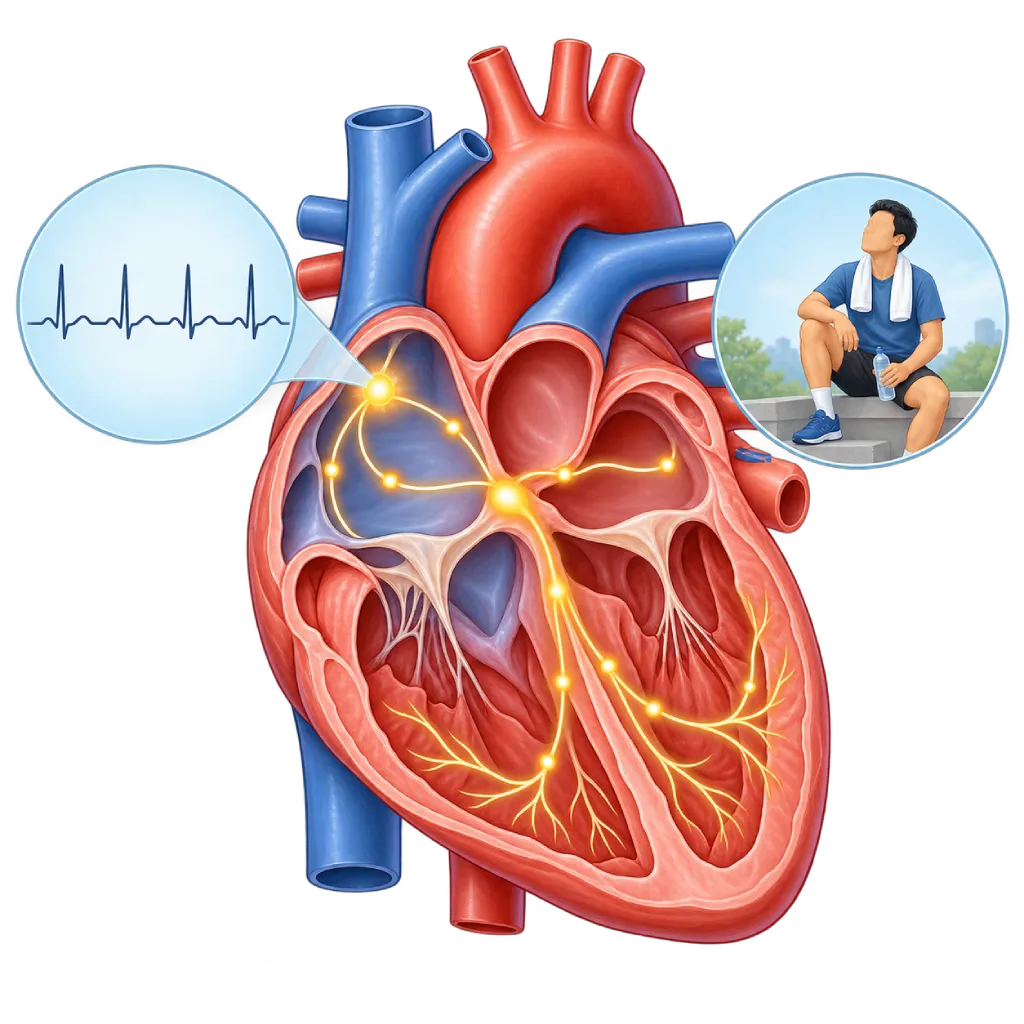
Sinus bradycardia is a slow heart rate that still starts in the sinus node, the heart's natural pacemaker, with a regular rhythm. It is often normal in fit people and during sleep. If it causes symptoms, the cause needs to be found.
SourcesSigns That Need Urgent Help
- Fainting or near-fainting
- Chest pain or severe shortness of breath
- Sudden confusion or difficulty waking up
- A pulse below 40 beats per minute with weakness, paleness, or a cold sweat
If these signs appear, go to the nearest emergency department right away or call Heart Attack Center 1500 258.
01 / Understanding the condition
About Sinus Bradycardia
Every normal heartbeat starts in the sinus node, a small group of cells in the wall of the right atrium that works as the heart's natural pacemaker. In sinus bradycardia, the signal still comes from the right place and travels normally to the ventricles, but the rate is slower than 60 beats per minute. The rhythm is regular. This is what sets it apart from atrioventricular block, in which the sinus node works normally but its signal is blocked along the way.
Often a Sign of a Fit Heart
Sinus bradycardia is common in healthy people. Regular endurance training, such as long-distance running, cycling, or swimming, makes the heart pump more blood with each beat, so its resting rate drops. In trained athletes, a resting heart rate below 50 beats per minute is not unusual. The heart rate also slows naturally during sleep. In these situations, the heart rate rises normally during activity and there are no symptoms, so no treatment is needed. How the heart adjusts in athletes is covered on the Athlete's Heart page.
When the Sinus Node Has a Problem
Sinus bradycardia needs attention if it comes with tiredness, dizziness, shortness of breath, or fainting, or if your heart rate does not rise when you are active. The latter is called chronotropic incompetence. Both can signal sinus node dysfunction, which is often related to aging of the heart's electrical tissue. In some people, a slow heart rate alternates with a fast rhythm such as atrial fibrillation, covered on the Tachycardia-Bradycardia Syndrome page.
Causes Outside the Sinus Node
The sinus node can also be slowed by outside factors. Examples include beta blockers or certain calcium channel blockers, an underactive thyroid gland, a very low body temperature, pauses in breathing during sleep, increased pressure inside the head, and stimulation of the vagus nerve during vomiting or straining. This type of bradycardia usually improves once the cause is treated.
An overview of slow heart rates from all sources, including when a pacemaker is needed, is covered on the Bradycardia page. This page focuses on slow heart rates that come from the sinus node and how to tell normal ones apart from those that need treatment.
02 / Understanding the condition
Symptoms to Recognize.
Common Symptoms
Many people with sinus bradycardia have no symptoms at all.
- No symptoms, especially in people who exercise regularly
- Tiring easily or feeling weak
- Dizziness or lightheadedness, especially when standing up
- Shortness of breath or tiring quickly during activity
- A pulse that feels slow but regular
- Difficulty concentrating
Symptoms in Older Adults
In older adults, a slow heart rate is more often related to sinus node dysfunction or medication effects.
- Frequent falls or unsteadiness
- Weakness and tiring quickly that are put down to age
- Confusion that comes and goes
03 / Understanding the condition
What Causes This Condition?
- High fitness from regular endurance training
- Natural slowing during sleep
- Aging and hardening of the sinus node tissue (sinus node dysfunction)
- Beta blockers, certain calcium channel blockers, digoxin, or antiarrhythmic drugs
- An underactive thyroid gland (hypothyroidism)
- Pauses in breathing during sleep (obstructive sleep apnea)
- A very low body temperature, increased pressure inside the head, or certain infections
- Vagus nerve stimulation, for example during vomiting, straining, or severe pain
04 / Understanding the condition
Who Is at Higher Risk?
Age
Sinus node dysfunction is more common after age 65 because the heart's electrical tissue ages.
Medical
Hypothyroidism, sleep apnea, coronary artery disease, a history of heart surgery, and diseases that affect the heart muscle, such as amyloidosis.
Lifestyle
Years of heavy endurance training slow the resting heart rate. This is generally normal, but in a small number of senior athletes it can come with symptoms.
Other
Use of medications that slow the heart rate, especially combinations of several medications, including beta blocker eye drops for glaucoma.
Groups at Higher Risk
- Athletes and People Who Exercise Regularly: A resting heart rate below 50 beats per minute is common and generally normal when there are no symptoms.
- Older Adults: Aging of the sinus node makes sinus node dysfunction more common, and it needs to be told apart from medication effects.
- People Taking Heart Rate Medications: Beta blockers, certain calcium channel blockers, and digoxin can slow the sinus node too much.
- People with Hypothyroidism or Sleep Apnea: Both conditions can slow the heart rate and often improve with treatment.
05 / Understanding the condition
How Is It Diagnosed?
The main question for your doctor is whether your slow heart rate is normal or a sign of a sinus node problem. For this reason, the doctor asks about your exercise habits, symptoms, sleep patterns, and all the medications you take.
An ECG confirms that the rhythm comes from the sinus node and that there is no conduction block. A Holter monitor shows how slow the heart rate gets during the day and night, and whether there are long pauses when symptoms occur. A treadmill test assesses whether the heart rate can rise during activity, which is an important way to tell a fit heart apart from a weak sinus node. Thyroid function and electrolyte tests look for causes that can be treated. In athletes without symptoms whose heart rate is above 30 beats per minute, this finding is generally considered normal and does not need further testing.
Electrocardiogram (ECG)
Confirms a regular sinus rhythm with a rate below 60 beats per minute and rules out atrioventricular block.
Holter Monitoring
Assesses the heart rate throughout the day and night, looks for long pauses, and matches symptoms with the recording.
Treadmill Stress Test
Assesses whether the heart rate rises normally as the workload increases. A heart rate that does not rise is called chronotropic incompetence.
Thyroid Function Test
Looks for an underactive thyroid gland, a cause that can slow the sinus node and can be treated.
Physical Examination
Checking the pulse, measuring blood pressure, and looking for signs of hypothyroidism or other heart disease.
Echocardiography
Done if structural heart disease is suspected, or to assess the heart of an athlete with a very slow heart rate.
06 / Understanding the condition
Treatment Options.
Treatment is decided by a doctor after an assessment. The categories below can help you follow the conversation with your doctor.
Monitoring Without Treatment
Sinus bradycardia without symptoms, including in athletes and during sleep, does not need medication or a device.
Treating the Cause
Your doctor may adjust the medication causing it, treat hypothyroidism, or manage sleep apnea. Do not change or stop your medications on your own.
Pacemaker
Considered if sinus bradycardia clearly causes symptoms, persists, and its cause cannot be corrected, for example in sinus node dysfunction.
Emergency Treatment
If a very slow heart rate comes with a drop in blood pressure, the doctor gives injectable medication or temporary pacing while looking for the cause.
07 / Understanding the condition
Complications to Watch For.
Fainting and Injuries from Falls
In sinus node dysfunction, long pauses or a very slow heart rate can reduce blood flow to the brain, causing you to faint and get injured.
Reduced Exercise Capacity
If your heart rate does not rise during activity, your muscles do not get enough blood flow, so you tire quickly and become short of breath.
Atrial Fibrillation in Sinus Node Dysfunction
Sinus node dysfunction is often accompanied by atrial fibrillation, which carries a risk of stroke and needs its own treatment.
08 / Understanding the condition
What Can You Do?
- Bring a list of all your medications and supplements to your doctor's appointments
- Do not add medications that control heart rate without your doctor's advice
- Have your thyroid function checked if you tire easily, feel cold easily, and gain weight
- Get loud snoring and pauses in breathing during sleep checked
- If you are an athlete, watch for new symptoms such as dizziness during training or a drop in performance
09 / Understanding the condition
When Should You See a Doctor?
Sinus bradycardia without symptoms in fit people is generally nothing to worry about. Make an appointment with your doctor if a slow heart rate comes with unusual tiredness, dizziness, shortness of breath during light activity, or difficulty concentrating, or if symptoms appear after starting a new medication. Athletes should get checked if their performance drops for no reason or they feel dizzy during training.
Go to the emergency room right away if:
- You faint or nearly faint
- A slow heart rate comes with chest pain or severe shortness of breath
- You suddenly become confused or are difficult to wake up
Don't Wait in an Emergency.
If symptoms are severe or come on suddenly, go to the nearest emergency department right away or call Heart Attack Center 1500 258, rather than waiting for an appointment.
10 / Common questions
Questions You May Have.
Frequently asked questions about sinus bradycardia.
Is a heart rate of 50 beats per minute dangerous?
Not necessarily. If you have no symptoms, exercise regularly, and your heart rate rises normally during activity, a heart rate of 50 beats per minute is generally normal. It should be checked if it comes with tiredness, dizziness, shortness of breath, or fainting, or if it appeared after you started a certain medication. Your doctor will review an ECG and, if needed, a longer rhythm recording.
Why do athletes have a slow heart rate?
Regular endurance training makes the heart muscle pump more blood with each beat, and the nerves that calm the heart become more dominant. As a result, the heart needs to beat less often at rest. As long as there are no symptoms and the heart rate rises during exercise, this is a normal adjustment. This adjustment is covered on the Athlete's Heart page.
What is the difference between sinus bradycardia and heart block?
In sinus bradycardia, the signal still comes from the sinus node and travels normally to the ventricles, only at a slow rate. In atrioventricular block, the sinus node works normally but its signal is blocked on the way to the ventricles, so some atrial beats are not followed by ventricular beats. The two are told apart with an ECG. High-degree block more often needs a pacemaker and is covered on the Atrioventricular Block page.
Can sinus bradycardia get worse?
In fit people without symptoms, sinus bradycardia usually stays the same without causing problems. In older adults, a slow heart rate can be an early sign of sinus node dysfunction, which slowly worsens and sometimes comes with atrial fibrillation. For this reason, new symptoms such as dizziness, tiring quickly, or fainting should be checked, even if your slow heart rate was previously declared normal.
Do I need to stop exercising if my heart rate is slow?
Not if you have no symptoms and tests show a healthy heart. Regular exercise is actually good for your heart. If a slow heart rate comes with dizziness, a clear drop in performance, or fainting during training, stop heavy training for now and get checked. Your doctor will assess whether there is a sinus node problem or another heart condition.
Sources and Medical Review
Translated from the Indonesian edition medically reviewed by Dr. dr. Dicky A. Hanafy, Sp.JP(K).
Sources as cited in the Indonesian edition.
- Kusumoto FM, Schoenfeld MH, Barrett C, Edgerton JR, Ellenbogen KA, Gold MR, et al. 2018 ACC/AHA/HRS Guideline on the Evaluation and Management of Patients With Bradycardia and Cardiac Conduction Delay: A Report of the American College of Cardiology/American Heart Association Task Force on Clinical Practice Guidelines and the Heart Rhythm Society. Circulation. 2019;140(8):e382-e482.
- Glikson M, Nielsen JC, Kronborg MB, Michowitz Y, Auricchio A, Barbash IM, et al. 2021 ESC Guidelines on cardiac pacing and cardiac resynchronization therapy. Eur Heart J. 2021;42(35):3427-3520.
- Sharma S, Drezner JA, Baggish A, Papadakis M, Wilson MG, Prutkin JM, et al. International Recommendations for Electrocardiographic Interpretation in Athletes. J Am Coll Cardiol. 2017;69(8):1057-1075.
- Brignole M, Moya A, de Lange FJ, Deharo JC, Elliott PM, Fanciulli A, et al. 2018 ESC Guidelines for the diagnosis and management of syncope. Eur Heart J. 2018;39(21):1883-1948.
Doctors Who Treat This Condition

dr. Sunu B. Raharjo, Sp.JP(K), Ph.D.
Arrhythmia and Electrophysiology
Arrhythmia and Device Center
Clinical focusClinical and Interventional Electrophysiology · Cardiac Arrhythmia Ablation
View Profile
Dr. dr. Dicky A. Hanafy, Sp.JP(K)
Arrhythmia and Electrophysiology
Arrhythmia and Device Center +1 center
Clinical focusElectrophysiology and Arrhythmia Ablation · Pacemaker and ICD Implantation
View Profile
Dr. med. dr. Denio A. Ridjab, Sp.JP(K)
Interventional Cardiology
Coronary Intervention Procedures +2 centers
Clinical focusInterventional Cardiology · Coronary Artery Disease
View Profile