
Quick answer
What Is Physical Examination?
A physical examination is a direct examination of your body by a doctor, including measuring blood pressure and pulse, looking for and feeling signs such as swelling in the legs, and listening to your heart and lungs with a stethoscope. It is painless, is done at every consultation, and helps the doctor decide on further tests.
Sources01 / Understanding the procedure
About Physical Examination
What Is a Physical Examination
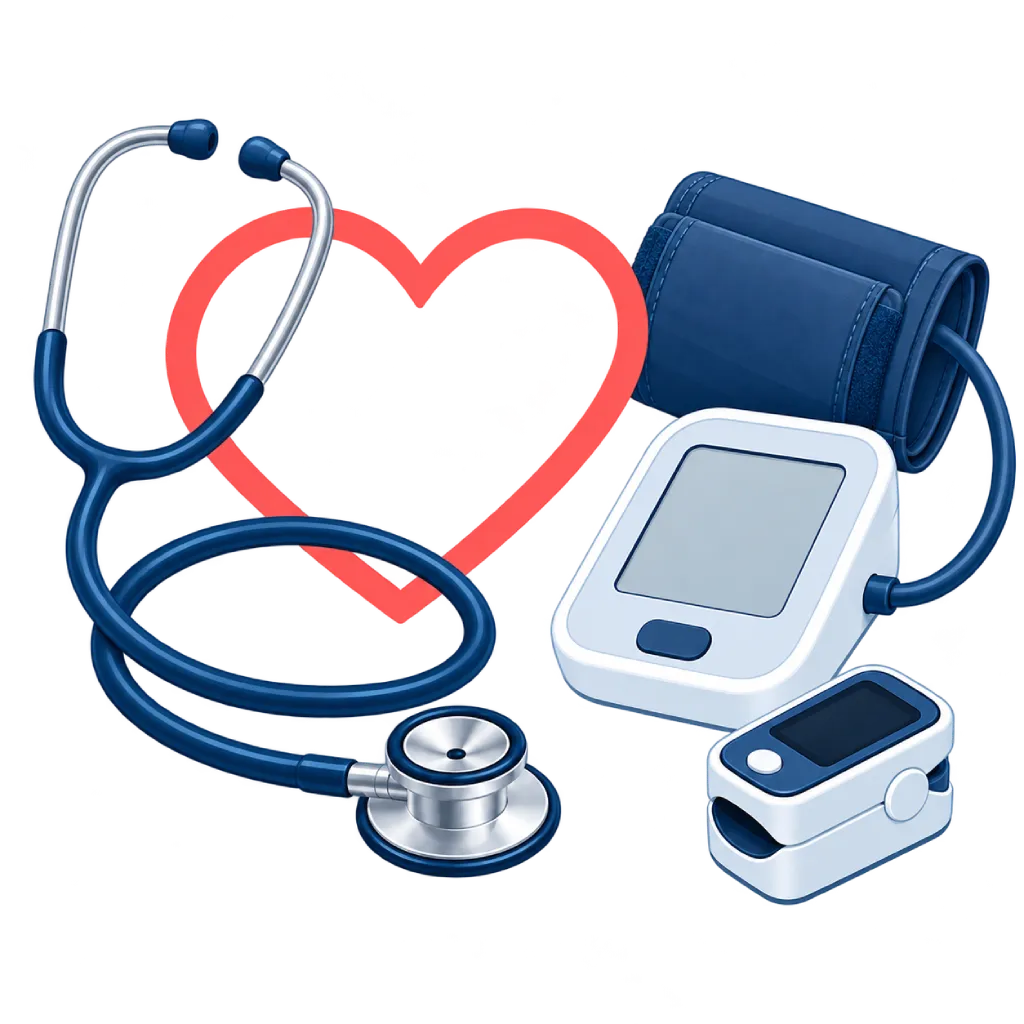
A physical examination is a direct examination of your body by a doctor. The doctor looks, feels, and listens with the help of simple tools such as a stethoscope, a blood pressure monitor, and a fingertip pulse oximeter. This examination is nearly always done together with an interview about your symptoms and health history, and it is part of every consultation with a cardiologist.
What Is Examined
The doctor examines the parts of the body that can show how your heart and blood vessels are working. Not every part is always examined; the doctor adjusts the examination to your symptoms and the purpose of your visit.
- Vital signs: blood pressure, pulse, breathing rate, body temperature, and blood oxygen level.
- Body measurements: weight, height, body mass index, and waist circumference.
- Skin, lips, and nails: for example a bluish or pale color, and changes in the shape of the fingertips.
- Neck: the pulse in the neck and the neck veins, which can reflect the pressure on the right side of the heart.
- Chest and heart: the position of the heartbeat on the chest wall, heart sounds, and whether there is a heart murmur.
- Lungs: breath sounds, including signs of fluid in the lungs.
- Abdomen: the size of the liver and the pulse of the large blood vessels in the abdomen.
- Legs and feet: swelling, pulses in the feet, and the condition of the skin.
Signs That Can Be Found
Some heart and blood vessel disorders leave signs that can be recognized during a physical examination, sometimes before they cause symptoms. Examples include high blood pressure, an irregular pulse such as in atrial fibrillation, a heart murmur that may come from a valve problem, leg swelling and the sound of fluid in the lungs in heart failure, and weakened foot pulses in peripheral artery disease.
Limitations and Further Tests
A normal physical examination does not always mean the heart is healthy. Narrowing of the coronary arteries, for example, often causes no signs while you are at rest. That is why the doctor uses the findings of the physical examination to choose useful further tests, such as an electrocardiogram (ECG), echocardiography, blood tests, or an exercise stress test.
02 / Understanding the procedure
When Is This Procedure Considered?
A doctor may consider this procedure in the situations below. The decision is always made after a thorough assessment.
- Consultation with a CardiologistThe physical examination is part of every consultation, both at your initial visit and at follow-up visits.
- Symptoms Suspected to Come from the HeartChest pain, shortness of breath, palpitations, dizziness or fainting, leg swelling, and tiring easily need to be evaluated, starting with a physical examination.
- Regular Health CheckupsMeasuring blood pressure, weight, and waist circumference, along with examining the heart and lungs, is part of a medical check-up to identify risk factors early.
- Monitoring Existing ConditionsIn hypertension, heart failure, valve disease, or after a heart attack, a physical examination helps assess treatment results and changes in your condition.
- Before and After ProceduresBefore and after heart surgery or a heart procedure, the doctor checks your general condition, wound sites, and signs of complications.
Situations to Consider First
- Arm with Dialysis Access or Previous Armpit SurgeryBlood pressure is not measured on an arm with dialysis access (a fistula), or on the side where lymph nodes in the armpit have been removed. Tell the staff before the measurement.
- IV Line, Wound, or Recent Surgery on the ArmBlood pressure is measured on the other arm so it does not disturb the IV line or wound.
- Severe Symptoms on ArrivalIf you arrive with severe chest pain, severe shortness of breath, or nearly fainting, emergency care takes priority and only a brief physical examination is done at the start.
- Feeling Uncomfortable Being ExaminedTell the doctor or nurse. You can ask for a chaperone, and only the part of the body being examined is uncovered.
03 / Before the procedure
How Should You Prepare?
A physical examination does not require any special preparation. The following tips help make the results, especially blood pressure, more accurate.
Avoid coffee, smoking, and exercise. Do so for at least 30 minutes before the examination, because all three can temporarily raise your blood pressure and pulse.
Arrive early. You need to sit quietly for about 5 minutes before your blood pressure is measured. Empty your bladder beforehand, because a full bladder can raise blood pressure.
Regular medicines. Generally, keep taking your medicines as usual unless your doctor gives other instructions. Bring a list of the medicines and supplements you are taking, or bring the medicines themselves.
Records and previous results. If you measure your blood pressure at home, bring your records. Also bring previous test results, such as an ECG, blood tests, or echocardiography.
Clothing. Wear clothes that are easy to open at the chest and easy to roll up on the upper arm. Dark nail polish or artificial nails can interfere with measuring the oxygen level at the fingertip.
Note your symptoms. Write down the symptoms you feel, when they started, what triggers them, and how long they last, so nothing is missed during the consultation.
Unsure about the preparation instructions? Ask our team before the procedure.
04 / During the procedure
How Is the Procedure Done?
A physical examination is done in an examination room, with no instruments inserted into the body. The order may differ depending on your symptoms and what needs to be examined.
Brief Interview
The doctor asks about your symptoms, how long you have had them, the medicines you are taking, and any history of disease in your family. Your answers help the doctor decide which parts need to be examined more closely.
Vital Signs and Body Measurements
After you have sat quietly for a few minutes, your blood pressure is measured with a cuff on your upper arm, usually two or more times. At the initial visit, blood pressure may be measured on both arms. The staff also count your pulse and breathing, take your temperature, place an oximeter on your fingertip, then weigh you and measure your height and waist circumference.
Looking and Feeling
You are asked to lie down with your back slightly raised. The doctor looks at the color of your skin, lips, and nails, as well as the veins in your neck. The doctor then feels your pulse in several places, such as the wrist, neck, and feet, feels the heartbeat on the chest wall, and presses lightly on your shins to check for swelling.
Listening to the Heart and Lungs
With the stethoscope placed directly on your skin, the doctor listens to your heart sounds at several points on the chest. You may be asked to lie on your left side or sit leaning forward so that certain sounds are clearer. The doctor then listens to your lungs from your back while asking you to take deep breaths through your mouth.
Additional Checks When Needed
Depending on your symptoms, the doctor may examine your abdomen, measure your blood pressure again after you stand up to look for a drop in blood pressure on standing, or compare the blood pressure in your arms with the blood pressure at your ankles.
Explaining the Results
The doctor explains the findings and, if needed, further tests and a treatment plan. This is the right time to ask about anything that is still unclear.
05 / Benefits and risks
Benefits and Risks Should Be Discussed Together.
Every medical procedure has benefits and risks. Your doctor will explain both for your situation before the procedure.
Benefits You Can Expect
- A Starting Point That Guides Further TestingFindings from the physical examination help the doctor choose the further tests that are truly needed.
- Finding Signs Before Symptoms AppearHigh blood pressure, heart murmurs, or an irregular pulse are often found during routine examinations, before they cause symptoms.
- Safe and NoninvasiveIt does not use needles, radiation, or medicines, so it can be repeated at every visit.
- Monitoring Changes Over TimeComparing results between visits helps assess whether treatment is working as expected.
- A Chance to Discuss DirectlyYou can ask the doctor about the findings and the testing plan right then and there.
The benefits of a procedure are not a promise of a cure. Ask how the results will affect your care plan.
Risks You Should Know
- Pressure on the ArmThe blood pressure cuff squeezes your arm for a few seconds. Any feeling of pressure or tingling goes away as soon as the cuff is deflated.
- Discomfort When PressedParts of the abdomen or legs that are painful or swollen may feel uncomfortable when examined. Tell the doctor if it hurts.
- Small Red Spots Under the CuffThis is rare, more likely in fragile skin or in people taking blood thinners, and goes away on its own within a few days.
- Results Affected by Your Condition During the ExamAnxiety, coffee, or being in a hurry can temporarily raise blood pressure. The measurement can be repeated, or supplemented with measurements at home.
- Not Every Abnormality Can Be DetectedSome heart diseases cause no signs during a physical examination, so further tests are still needed based on your symptoms and risk factors.
Risks can differ from person to person. A full explanation and consent are given after an individual assessment.
06 / After the procedure
What Is Recovery Like?
A physical examination does not require any recovery time. You can return to your activities right away.
Further tests. If the doctor finds signs that need to be confirmed, you may be asked to have tests such as an ECG, echocardiography, blood tests, or an exercise stress test. Ask about the purpose of each test.
Measuring blood pressure at home. If your blood pressure is high or variable, the doctor may ask you to measure it at home or to use a 24-hour blood pressure monitor, so the assessment does not depend only on measurements in the examination room.
Regular follow-up visits. In hypertension, heart failure, or valve disease, the physical examination is repeated at every visit to assess changes and treatment results.
When to go to the emergency room right away. Do not wait for your follow-up visit if you experience:
- Chest pain that is severe, feels like pressure, or lasts more than a few minutes
- Severe shortness of breath, or shortness of breath that gets worse quickly
- Fainting or nearly fainting
- A very fast heartbeat with dizziness, weakness, or chest pain
Know the Signs That Need Prompt Care.
Follow the team's guidance on warning signs. If severe or sudden symptoms appear after the procedure, go to the nearest emergency department right away or call Heart Attack Center 1500 258.
07 / Team and support
Doctors and Procedure Support
The doctors below are listed for this procedure. Listed by name, not by ranking.

dr. Ayu Amalia U. Putri, Sp.KFR
Physical Medicine & Rehabilitation
Clinical focusCardiac Rehabilitation · Postoperative Rehabilitation
View Profile
dr. Debby C. Soemitha, Sp.PD
Internal Medicine
Clinical focusDiabetes and Diabetes Complications · Obesity and Metabolic Disease
View Profile
Dr. med. dr. Denio A. Ridjab, Sp.JP(K)
Interventional Cardiology
Coronary Intervention Procedures +2 centers
Clinical focusInterventional Cardiology · Coronary Artery Disease
View Profile08 / Common questions
Before You Plan the Procedure.
Frequently asked questions about the physical examination by a cardiologist. Ask your doctor directly if there is anything else you would like to know.
Does a physical examination hurt?
No. The majority of the examination involves only looking, gentle feeling, and listening with a stethoscope. When your blood pressure is measured, the cuff squeezes your arm for a few seconds. If the doctor presses on a part of your abdomen or legs that is painful or swollen, it may feel uncomfortable. Tell the doctor if any part hurts so the examination can be adjusted.
Do I need to take off my clothes?
To listen to your heart and lungs, the stethoscope needs to touch your skin directly, so your chest and back need to be uncovered briefly. The staff provide a cover sheet or examination gown, and only the part being examined is uncovered. You may ask a nurse or a family member to accompany you during the examination.
Why is blood pressure measured more than once?
Blood pressure changes over time and can rise temporarily because of anxiety, talking, or having just walked. That is why it is measured two or more times, and the average value is used. At the initial visit, blood pressure may be measured on both arms, because a large difference can indicate a narrowed blood vessel. The arm with the higher reading is used for later measurements.
What does it mean if the doctor hears a heart murmur?
A heart murmur is an extra sound made by blood flowing inside the heart. A murmur can be harmless, for example in children, during pregnancy, or with a fever. A murmur can also indicate a valve problem or a hole in the wall that divides the heart. To confirm the cause, the doctor usually requests echocardiography, an examination of the heart using sound waves.
If my physical examination is normal, does that mean my heart is definitely healthy?
Not necessarily. Some heart diseases, especially narrowing of the coronary arteries, often cause no signs while you are at rest. That is why the doctor assesses the physical examination together with your symptoms, risk factors, and family history. If needed, the doctor requests further tests such as an ECG, echocardiography, blood tests, or an exercise stress test.
What is the difference between a physical examination and a medical check-up?
A physical examination is one part of a medical check-up. A medical check-up package usually also includes blood tests, an ECG, and other tests depending on what the package contains. Outside of a medical check-up, a physical examination is also done every time you consult a doctor, including at follow-up visits, to assess changes in your condition.
Sources and Medical Review
Translated from the Indonesian edition medically reviewed by dr. Debby C. Soemitha, Sp.PD.
Sources as cited in the Indonesian edition.
- Muntner P, Shimbo D, Carey RM, et al. Measurement of Blood Pressure in Humans: A Scientific Statement From the American Heart Association. Hypertension. 2019;73(5):e35-e66.
- McEvoy JW, McCarthy CP, Bruno RM, et al. 2024 ESC Guidelines for the management of elevated blood pressure and hypertension. Eur Heart J. 2024;45(38):3912-4018.
- Heidenreich PA, Bozkurt B, Aguilar D, et al. 2022 AHA/ACC/HFSA Guideline for the Management of Heart Failure. Circulation. 2022;145(18):e895-e1032.
- Otto CM, Nishimura RA, Bonow RO, et al. 2020 ACC/AHA Guideline for the Management of Patients With Valvular Heart Disease. Circulation. 2021;143(5):e72-e227.
- Gornik HL, Aronow HD, Goodney PP, et al. 2024 ACC/AHA Multisociety Guideline for the Management of Lower Extremity Peripheral Artery Disease. Circulation. 2024;149(24):e1313-e1410.