
Quick answer
What Is Loeys-Dietz Syndrome?
Loeys-Dietz syndrome is a genetic connective tissue disorder that weakens the walls of the aorta and other arteries. Blood vessels can widen or tear at a smaller size and a younger age than in Marfan syndrome.
SourcesSigns That Need Urgent Help
- Sudden, severe chest, back, or abdominal pain that feels like tearing
- A sudden severe headache that is different from usual
- A drooping face, slurred speech, or weakness on one side of the body
- Sudden neck pain with dizziness or vision problems
- Fainting, extreme paleness, or a sudden cold sweat
- Sudden shortness of breath
If these signs appear, go to the nearest emergency department right away or call Heart Attack Center 1500 258.
01 / Understanding the condition
About Loeys-Dietz Syndrome
Loeys-Dietz syndrome is a genetic connective tissue disorder first described in 2005 by Bart Loeys and Harry Dietz. It is caused by a change in one of the genes that control the TGF-beta signaling pathway, a system that regulates the growth and repair of blood vessel walls. Known genes include TGFBR1, TGFBR2, SMAD3, TGFB2, and TGFB3. The syndrome is inherited in an autosomal dominant pattern, but many cases arise from a new gene change with no family history.
Effects on the Blood Vessels
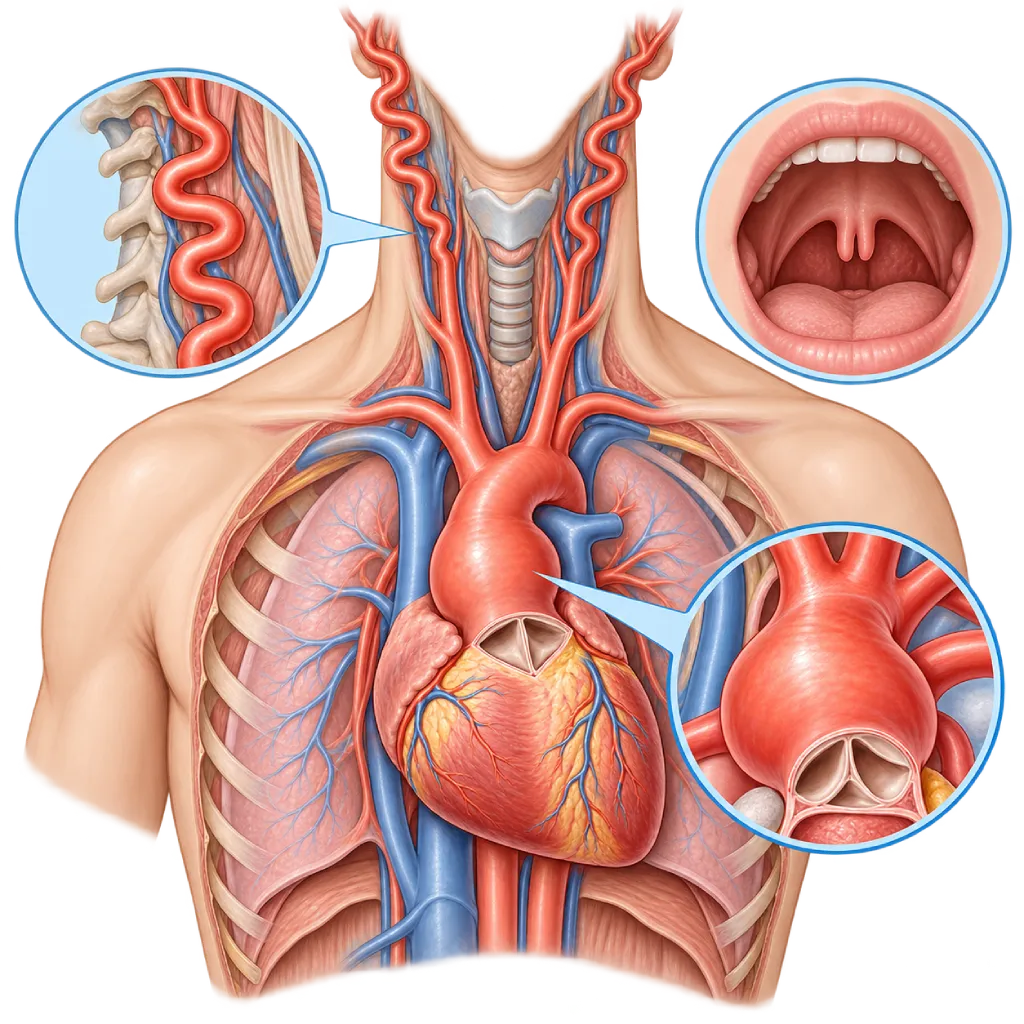
Like Marfan syndrome, Loeys-Dietz syndrome causes the aortic root to widen. The difference is that widening and tearing can occur at a smaller aortic size and a younger age. Widening can also appear in other arteries throughout the body, such as the arteries in the neck, brain, arms, abdomen, and pelvis. The arteries in the head and neck often look twisted, like a spiral. Widening of the aorta is covered on the Aortic Aneurysm page, tearing of the aorta is covered on the Aortic Dissection page, and widening of blood vessels in the brain is covered on the Cerebral Aneurysm page.
Features of the Face, Bones, and Skin
Characteristic features often found are widely spaced eyes, a split uvula (bifid uvula) or cleft palate, and twisted arteries. Other features include a sunken or protruding chest, a curved spine, clubfoot, flexible joints, a less stable neck spine, thin skin that bruises easily, and widened scars. Some people with the syndrome also have allergies, asthma, or digestive problems caused by food allergies. The severity of these features varies greatly from person to person, so some people with the syndrome look like anyone else.
Lifelong Care
The 2024 European Society of Cardiology (ESC) and 2022 American College of Cardiology/American Heart Association (ACC/AHA) guidelines recommend mapping the blood vessels from head to pelvis at diagnosis and at regular intervals, medicines to reduce the strain on blood vessel walls, blood pressure control, and surgery on the aortic root at a smaller size threshold than in Marfan syndrome. This threshold is adjusted for the causative gene, body size, rate of widening, and family history. Because the picture is similar, this condition is often compared with Marfan syndrome, covered on the Marfan Syndrome page. With regular monitoring and planned surgery, the risk of a sudden tear can be reduced.
02 / Understanding the condition
Symptoms to Recognize.
Common Symptoms
Widening of the aorta and other arteries usually causes no symptoms, so physical features are often the first clue.
- Eyes spaced wider apart than usual
- A split uvula (bifid uvula) or cleft palate
- An unusual head shape because the skull bones closed too early
- A sunken or protruding chest and a curved spine
- Clubfoot from birth or very flexible joints
- Thin, soft skin that bruises easily, and widened scars
- Allergies, asthma, or digestive problems caused by food allergies
- Joint pain or arthritis at a young age, especially with SMAD3 gene changes
03 / Understanding the condition
What Causes This Condition?
- Changes in genes of the TGF-beta signaling pathway, including TGFBR1, TGFBR2, SMAD3, TGFB2, and TGFB3
- The disrupted signaling weakens the connective tissue in the walls of the aorta, other arteries, bones, and skin
- Inherited in an autosomal dominant pattern, with a 50% chance for each child of an affected person
- Many cases arise from a new gene change with no family history
04 / Understanding the condition
Who Is at Higher Risk?
Genetic
Having a parent with Loeys-Dietz syndrome gives a 50% chance of inheriting it. A family history of aortic dissection or sudden death signals a higher blood vessel risk.
Medical
High blood pressure, pregnancy, and the period after giving birth add strain to already weak blood vessel walls. Rapid widening of the aorta also signals a higher risk.
Lifestyle
Contact sports, competitive sports, heavy weightlifting while holding your breath, smoking, and stimulant use can trigger surges in pressure on the blood vessels.
Groups at Higher Risk
- Children of People with Loeys-Dietz Syndrome: Each child has a 50% chance of inheriting the gene change, and the aorta can widen from childhood, so early checkups are recommended.
- Women Planning a Pregnancy: Pregnancy and the period after giving birth increase the risk of tears in the aorta and other arteries, so counseling before pregnancy is recommended.
- Families with a History of Aortic Dissection at a Young Age: Dissection or aneurysm at a young age in the family can point to inherited aortic disease, so genetic testing should be considered.
05 / Understanding the condition
How Is It Diagnosed?
The diagnosis of Loeys-Dietz syndrome is confirmed with genetic testing, usually with a gene panel for inherited aortic disease that also checks the genes for Marfan syndrome and vascular Ehlers-Danlos syndrome. Doctors suspect it when they find a widened aorta at a young age, twisted blood vessels, or characteristic facial and skeletal features.
After diagnosis, echocardiography measures the aortic root and is repeated in 6 months to assess the rate of widening, then scheduled at regular intervals. CT angiography or MR angiography maps all the blood vessels from head to pelvis, because widening can appear in any artery. MR angiography is often chosen for repeated monitoring because it uses no X-rays. The neck spine is checked before anesthesia or certain procedures. Close family members are advised to have the same gene test and blood vessel checks.
Physical Examination
The doctor looks for characteristic features such as widely spaced eyes, a split uvula, the shape of the chest and spine, clubfoot, and thin skin.
Echocardiography
Measures the aortic root and compares it with body size (Z-score), assesses the valves, and is then repeated to see the rate of widening.
CT angiography or MR angiography from head to pelvis to map twisted blood vessels and widening in the branch arteries.
Genetic testing with a gene panel for inherited aortic disease to confirm the diagnosis and distinguish it from Marfan syndrome.
X-ray or CT of the neck spine to assess the stability of the neck vertebrae, especially before anesthesia or a procedure.
06 / Understanding the condition
Treatment Options.
Treatment is decided by a doctor after an assessment. The categories below can help you follow the conversation with your doctor.
Beta Blockers or ARBs
Both types of medicine reduce the pressure and strain on blood vessel walls. Your doctor decides the type, dose, and possible combination.
Head-to-Pelvis Blood Vessel Monitoring
Regular echocardiography and CT angiography or MR angiography to follow widening of the aorta and branch arteries before it causes symptoms.
Earlier Aortic Root Surgery
Generally recommended at a diameter of about 40 to 45 mm, depending on the causative gene, body size, rate of widening, and family history. The valve is preserved when possible, or a Bentall procedure is done.
Treatment of Widening in Other Arteries
Widening in the arteries of the neck, brain, abdomen, or pelvis is treated with surgery or a catheter procedure, depending on its location and size.
Pregnancy Planning
Counseling before pregnancy to assess aortic size, safe medicines, and whether surgery should be done first, followed by monitoring during pregnancy.
Care for Bones, Joints, and Allergies
Orthopedic doctors, pediatricians, and allergists treat scoliosis, chest shape, clubfoot, the neck spine, and allergies as needed.
Genetic Counseling
Helps families understand the inheritance pattern and decide who needs gene testing and blood vessel checks.
07 / Understanding the condition
Complications to Watch For.
Aortic Dilation
The aortic root and other parts of the aorta can widen from childhood, usually without symptoms. Covered on the Aortic Aneurysm page.
Aortic Dissection
A tear in the aortic wall can occur at a smaller size than in Marfan syndrome and needs emergency care. Covered on the Aortic Dissection page.
Widening and Tearing of Other Arteries
Arteries in the neck, brain, abdomen, and pelvis can widen or tear. Widening of blood vessels in the brain is covered on the Cerebral Aneurysm page.
Leaking Heart Valves
Widening of the aortic root can make the aortic valve leak, and the mitral valve can prolapse, so the valves need regular monitoring.
Cervical Spine Instability
Less stable neck vertebrae can press on nerves, especially when the neck is bent forcefully, for example during anesthesia.
Pregnancy Complications
Pregnancy and the period after giving birth increase the risk of tears in the aorta and uterus, so pregnancy needs to be planned with a team of doctors.
08 / Understanding the condition
What Can You Do?
- Have blood vessel imaging from head to pelvis on schedule, even if you have no symptoms
- Take your blood vessel protecting medicine regularly and do not stop it without your doctor's guidance
- Keep your blood pressure within the target set by your doctor
- Choose light to moderate exercise and avoid contact sports and heavy weightlifting
- Tell your anesthesiologist about your diagnosis because your neck spine may be less stable
- Discuss pregnancy plans with a cardiologist before becoming pregnant
- Do not smoke, and avoid stimulants
- Encourage close family members to have gene testing and blood vessel checks
09 / Understanding the condition
When Should You See a Doctor?
See a cardiologist if you or your child has the following features, or if a family member has been diagnosed. If you have already been diagnosed and develop sudden, severe chest, back, abdominal, or head pain, go to the emergency room right away.
- A widened aortic root at a young age
- Widely spaced eyes along with a split uvula or cleft palate
- Twisted blood vessels on imaging results
- A family history of aortic dissection or aneurysm at a young age
- A parent, sibling, or child with Loeys-Dietz syndrome
- Pregnancy plans in a woman with the syndrome
Don't Wait in an Emergency.
If symptoms are severe or come on suddenly, go to the nearest emergency department right away or call Heart Attack Center 1500 258, rather than waiting for an appointment.
10 / Common questions
Questions You May Have.
Frequently asked questions about Loeys-Dietz syndrome.
What is the difference between Loeys-Dietz syndrome and Marfan syndrome?
Both are genetic connective tissue disorders that widen the aortic root, but the genes that cause them are different. In Loeys-Dietz syndrome, the aorta can tear at a smaller size and a younger age, and widening can occur in other arteries throughout the body. Features such as widely spaced eyes and a split uvula are more typical of Loeys-Dietz, while a shifted eye lens is typical of Marfan syndrome.
Why are blood vessels checked from head to pelvis?
In Loeys-Dietz syndrome, widening and tearing can occur in any artery, including those in the brain, neck, arms, abdomen, and pelvis. This widening usually causes no symptoms until it becomes large or tears. That is why guidelines recommend CT angiography or MR angiography from head to pelvis at diagnosis and regularly afterward, so that widening can be treated earlier in a planned way.
Why is surgery recommended when the aorta is not yet very wide?
In Loeys-Dietz syndrome, the aortic wall is more fragile, so a tear can happen at a smaller size than in Marfan syndrome. That is why guidelines recommend aortic root surgery at a threshold of about 40 to 45 mm, depending on the causative gene, body size, rate of widening, and family history. Planned surgery carries a much lower risk than emergency surgery after the aorta has torn.
Is Loeys-Dietz syndrome inherited?
Yes. It is inherited in an autosomal dominant pattern, so each child of an affected person has a 50% chance of inheriting it. However, in many people with the syndrome, the gene change is new, so neither parent has the syndrome. Once the gene change is found, parents, siblings, and children are advised to have the same gene test and echocardiography, so that those who carry the gene change can be monitored early.
Can women with Loeys-Dietz syndrome get pregnant?
Pregnancy is possible, but the risk is higher because the aorta and other arteries can tear during pregnancy and after giving birth. Counseling before pregnancy is recommended to assess aortic size, safe medicines, and whether surgery should be done first. During pregnancy, aortic size is monitored regularly by an experienced team of cardiologists and obstetricians, including planning the method of delivery.
Can people with Loeys-Dietz syndrome exercise?
Yes, with the right choices. Light to moderate aerobic activity such as walking, easy cycling, and relaxed swimming is generally recommended. Avoid contact sports, competitive sports, and heavy weightlifting that makes you hold your breath. Because the neck spine is less stable in some people with the syndrome, ask your doctor before doing exercise that puts strain on the neck, such as floor gymnastics or trampolining.
Sources and Medical Review
Translated from the Indonesian edition medically reviewed by dr. Radityo Prakoso, Sp.JP(K).
Sources as cited in the Indonesian edition.
- Loeys BL, Chen J, Neptune ER, Judge DP, Podowski M, Holm T, et al. A syndrome of altered cardiovascular, craniofacial, neurocognitive and skeletal development caused by mutations in TGFBR1 or TGFBR2. Nat Genet. 2005;37(3):275-81.
- MacCarrick G, Black JH 3rd, Bowdin S, El-Hamamsy I, Frischmeyer-Guerrerio PA, Guerrerio AL, et al. Loeys-Dietz syndrome: a primer for diagnosis and management. Genet Med. 2014;16(8):576-87.
- Jondeau G, Ropers J, Regalado E, Braverman A, Evangelista A, Teixedo G, et al. International Registry of Patients Carrying TGFBR1 or TGFBR2 Mutations: Results of the MAC (Montalcino Aortic Consortium). Circ Cardiovasc Genet. 2016;9(6):548-58.
- Meester JAN, Verstraeten A, Schepers D, Alaerts M, Van Laer L, Loeys BL. Differences in manifestations of Marfan syndrome, Ehlers-Danlos syndrome, and Loeys-Dietz syndrome. Ann Cardiothorac Surg. 2017;6(6):582-94.
- Mazzolai L, Teixido-Tura G, Lanzi S, Boc V, Bossone E, Brodmann M, et al. 2024 ESC Guidelines for the management of peripheral arterial and aortic diseases. Eur Heart J. 2024;45(36):3538-700.
- Isselbacher EM, Preventza O, Hamilton Black J 3rd, Augoustides JG, Beck AW, Bolen MA, et al. 2022 ACC/AHA Guideline for the Diagnosis and Management of Aortic Disease: A Report of the American Heart Association/American College of Cardiology Joint Committee on Clinical Practice Guidelines. Circulation. 2022;146(24):e334-482.
Doctors Who Treat This Condition
dr. Widya T. Suwatri, Sp.BTKV, Subsp. JD(K)
Adult Cardiac Surgery
Advanced Cardiovascular Surgical Care +1 center
Clinical focusMinimally Invasive Cardiac Surgery · Coronary Artery Bypass Surgery
View Profile
dr. Suko Adiarto, Sp.JP(K), Ph.D.
Interventional Cardiology
Vascular Diagnostic and Therapeutic Center +1 center
Clinical focusCoronary Intervention · Peripheral Vascular Intervention
View Profile
dr. Radityo Prakoso, Sp.JP(K)
Pediatrics & Congenital Heart Disease
Congenital and Structural Heart Center
Clinical focusPediatric Cardiology Consultation · Congenital Heart Disease Care
View Profile