
Quick answer
What Is Post-Thrombotic Syndrome?
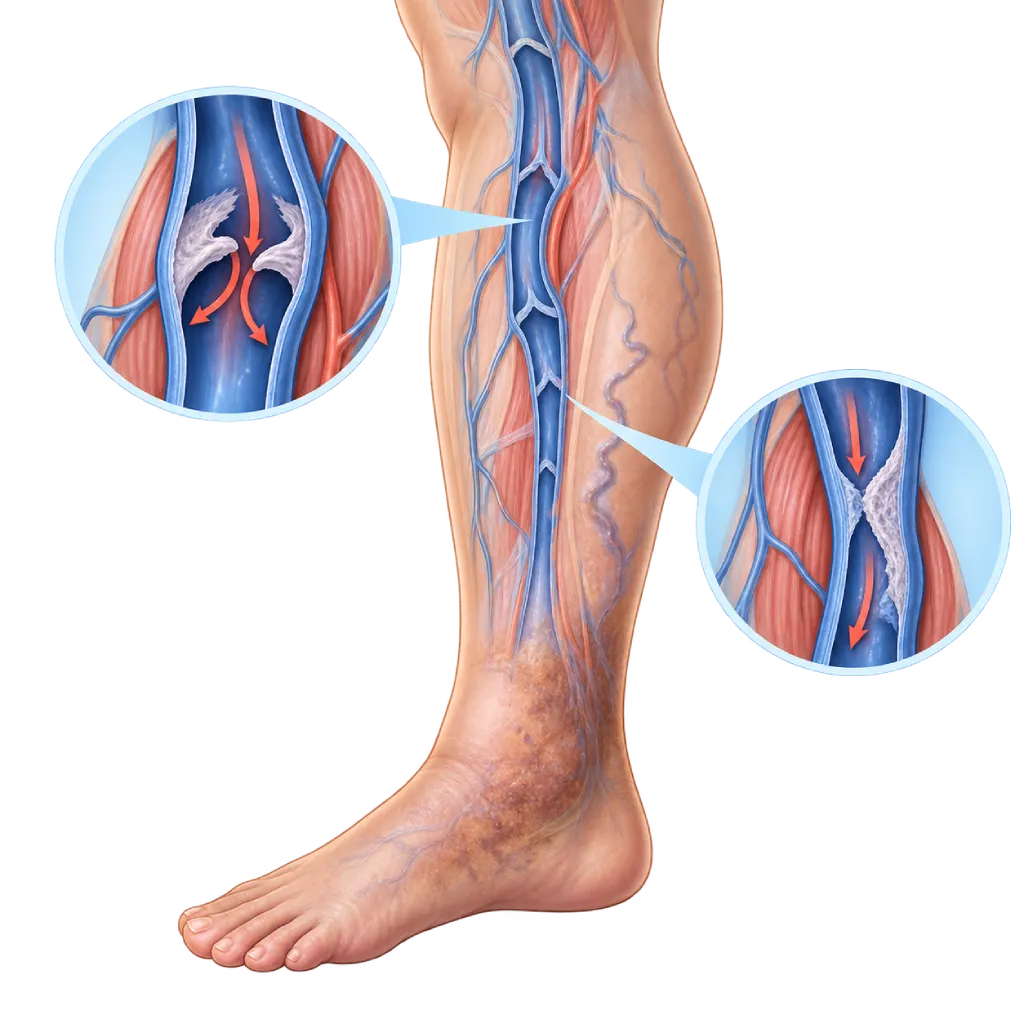
Post-thrombotic syndrome is a long-term leg problem after deep vein thrombosis, with heaviness, pain, swelling, and skin changes, caused by a clot that has damaged the vein valves or narrowed the vein.
SourcesSigns That Need Urgent Help
- Leg swelling and pain that appear or worsen suddenly
- Sudden shortness of breath or chest pain when breathing in
- Coughing up blood, a very fast heartbeat, or fainting
- An open wound on the leg that does not improve within two weeks
- A wound that becomes redder, swollen, smelly, or filled with pus, or comes with a fever
- Bleeding from a widened vein or from a wound
If these signs appear, go to the nearest emergency department right away or call Heart Attack Center 1500 258.
01 / Understanding the condition
About Post-Thrombotic Syndrome
Post-thrombotic syndrome is a long-term leg problem that develops after deep vein thrombosis, a blood clot in a large vein between the leg muscles. Symptoms include heaviness, pain, swelling, and skin changes in the leg that had the clot. According to a 2014 scientific statement from the American Heart Association (AHA), about 20 to 50 percent of people develop this syndrome after deep vein thrombosis, and about 5 to 10 percent develop a severe form. Deep vein thrombosis itself is covered on the Deep Vein Thrombosis page.
How the Syndrome Develops
A clot in a deep vein can damage the one-way valves inside the vein. Damaged valves let blood flow back down. In some people, leftover clot or scar tissue also narrows the vein, so blood flow is obstructed. As a result, pressure in the leg veins stays high, especially when standing and walking. Over time, fluid seeps into the tissues, the skin darkens and hardens, and in severe cases wounds form around the ankle (venous ulcers).
Symptoms That Come and Go
Symptoms usually get worse in the afternoon or after standing and walking for a long time, then ease with rest and the legs raised. Severity varies, from mild heaviness to swelling and wounds that limit activity. The diagnosis can only be made after the early phase of the clot has passed, usually three to six months, because swelling and pain in the first weeks are still part of the clot itself.
Part of Chronic Venous Disease
Post-thrombotic syndrome is a form of chronic venous disease with a secondary cause, namely a clot. Its skin changes and swelling resemble those of venous disease caused by weak valves without a history of clots, covered on the Chronic Venous Insufficiency page. In some people with a clot in the left leg, the blockage comes from a compressed pelvic vein, covered on the May-Thurner Syndrome page.
It Can Be Controlled
This syndrome usually does not go away completely, but its symptoms can be controlled with compression stockings, exercise, skin care, and in selected cases a procedure on the vein. The main preventive step is regular anticoagulant treatment from the time deep vein thrombosis is diagnosed, along with preventing repeat clots in the same leg. Other types of venous disease are covered on the Venous Disease page.
02 / Understanding the condition
Symptoms to Recognize.
Common Symptoms
- A heavy, aching, or painful leg on the side that had the clot
- Swelling that worsens after standing or walking and eases when the leg is raised
- Cramps, tingling, or itching in the calf
- Surface veins that look widened or twisted
- Darkened, reddish, or scaly skin around the ankle
- Skin and the tissue beneath it that feel hard and tight
- Bursting pain in the leg when walking, if a pelvic vein is blocked
03 / Understanding the condition
What Causes This Condition?
- Deep vein valves damaged by the clot, so blood flows back down
- Leftover clot or scar tissue that narrows the deep vein
- Persistently high blood pressure in the leg veins (venous hypertension)
- Inflammation of the vein wall during and after the clot
- Repeat deep vein thrombosis in the same leg
04 / Understanding the condition
Who Is at Higher Risk?
Medical
A clot in the thigh or pelvic veins, repeat clots in the same leg, symptoms that are still severe a month after the clot, varicose veins or venous disease before the clot, and irregular anticoagulant treatment in the first months.
Lifestyle
Excess weight adds pressure in the leg veins, and lack of movement weakens the calf muscle pump that helps blood move upward.
Age
Older age is linked to a higher risk of post-thrombotic syndrome after deep vein thrombosis.
Groups at Higher Risk
- Patients with a Clot in the Thigh or Pelvic Veins: Clots in the large veins of the thigh and pelvis damage the valves and leave blockages more often than clots in the calf.
- People with Repeat Clots: A clot that forms again in the same leg adds to the valve damage and makes symptoms worse.
- People with Obesity: Excess weight adds pressure in the leg veins and slows recovery after a clot.
- People with Varicose Veins or Venous Disease: Surface vein valves that were already leaking before the clot make pressure in the leg veins rise more easily.
05 / Understanding the condition
How Is It Diagnosed?
Post-thrombotic syndrome is diagnosed from symptoms and a physical examination in people who have had deep vein thrombosis. The assessment is done after the early phase has passed, usually three to six months after the clot, because swelling and pain in the early period are still part of the clot itself. Doctors use the Villalta scale, which adds up five symptoms, such as pain, cramps, and heaviness, and six signs in the leg, such as swelling, skin hardening, and color changes. A score of 5 or more indicates post-thrombotic syndrome, and the presence of a wound indicates a severe form.
Duplex ultrasound is used to look for leftover clot, narrowing, and leaking valves, and to rule out a new clot if symptoms suddenly get worse. If a long-standing blockage in a pelvic vein is suspected and a stent is being considered, the doctor may order CT or MR venography. Before strong compression stockings are used, blood flow in the leg arteries is assessed if the foot pulses are weak.
Physical Examination
Assesses symptoms and signs in the leg with the Villalta scale to grade the syndrome as mild, moderate, or severe.
Duplex Ultrasound
Looks for leftover clot, narrowing, and leaking vein valves, and rules out a new clot if symptoms suddenly get worse.
CT or MR venography to map the pelvic and abdominal veins when a long-standing blockage is suspected and a stent is being considered.
Ankle-Brachial Index (ABI) Test
Compares blood pressure at the ankle and the arm when the foot pulses are weak, before strong compression stockings are used.
06 / Understanding the condition
Treatment Options.
Treatment is decided by a doctor after an assessment. The categories below can help you follow the conversation with your doctor.
Compression Stockings
Help relieve heaviness and swelling. They are tried first and continued if they help. The size and pressure are fitted by a health professional.
Guided Exercise
Walking and calf-strengthening exercises over several months help the calf muscle pump work better and can reduce symptoms.
Leg Elevation and Skin Care
Raising your legs while resting reduces swelling. Regular moisturizing and skin care help prevent eczema and wounds.
Intermittent Pneumatic Compression
Cuffs on the leg that inflate and deflate in turn, for severe swelling that does not improve enough with stockings.
Venous Ulcer Care
Compression bandages and regular wound care. If there is a leaking surface vein, closing it may be considered so the wound heals faster.
Pelvic Vein Stenting
For a long-standing blockage in a pelvic vein that causes severe symptoms, in selected patients according to the ESVS 2022 guidelines.
Anticoagulants to Prevent Repeat Clots
Blood thinners are used for as long as your doctor decides, because repeat clots make the syndrome worse. Covered on the Anticoagulation Therapy and Stroke Prevention page.
07 / Understanding the condition
Complications to Watch For.
Venous Ulcers
Open wounds around the ankle that heal slowly and often come back. They need regular wound care and compression.
Skin Infection (Cellulitis)
Swollen, fragile skin gets infected easily, shown by spreading redness, warmth, pain, and sometimes fever.
Recurrent Thrombosis
A clot can form again in the same leg and make the syndrome worse. Clot symptoms are covered on the Deep Vein Thrombosis page.
Eczema and Skin Hardening
The skin around the ankle can become itchy, scaly, darker, and harder (lipodermatosclerosis) because of high venous pressure.
Limits on Activity and Work
Persistent pain and swelling can limit walking, standing for long periods, and working, so quality of life declines.
08 / Understanding the condition
What Can You Do?
- If you have deep vein thrombosis, take your anticoagulant regularly and do not stop it on your own.
- Start walking as soon as possible after clot treatment begins, as directed by your doctor.
- Wear compression stockings if your doctor recommends them to reduce pain and swelling.
- Maintain a healthy weight and stay active.
- Prevent repeat clots: move around during long trips and ask about clot prevention before surgery.
- Check the skin on your legs every day and use a moisturizer to prevent wounds.
09 / Understanding the condition
When Should You See a Doctor?
Make an appointment with a doctor if the leg that had deep vein thrombosis still feels heavy, painful, or swollen after several months, or if the skin starts to change. Get checked right away if swelling and pain appear suddenly, and go straight to the emergency room if you have sudden shortness of breath.
- A heavy, aching, or swollen leg that interferes with your activities
- Skin around the ankle that darkens, itches, or hardens
- A wound on the leg that does not improve within two weeks
- Bursting leg pain when walking
- Swelling and pain that appear suddenly, a possible sign of a new clot
- Compression stockings that feel too painful or cannot be worn
Don't Wait in an Emergency.
If symptoms are severe or come on suddenly, go to the nearest emergency department right away or call Heart Attack Center 1500 258, rather than waiting for an appointment.
10 / Common questions
Questions You May Have.
Frequently asked questions about post-thrombotic syndrome.
Will everyone who has had deep vein thrombosis develop this syndrome?
No. Post-thrombotic syndrome develops in about 20 to 50 percent of people after deep vein thrombosis, and the majority have a mild to moderate form. The risk is higher if the clot was in a thigh or pelvic vein, if clots recur in the same leg, if you are overweight, or if symptoms are still severe a month after the clot. Regular anticoagulant treatment helps lower the risk.
Can post-thrombotic syndrome be cured?
Damage to the vein valves is usually permanent, so this syndrome tends to last a long time. However, its symptoms can be controlled. Many people feel more comfortable with compression stockings, regular exercise, raising their legs, and skin care. For certain pelvic vein blockages, placing a stent can reduce symptoms. Regular checkups help your doctor adjust treatment and prevent wounds.
Do I have to wear compression stockings for life?
Not always. Compression stockings are used to relieve heaviness and swelling. The large SOX clinical trial showed that stockings worn routinely after deep vein thrombosis were not proven to prevent this syndrome, so stockings are now used mainly when they help symptoms. If stockings feel helpful, you can continue wearing them. Your doctor will assess the size, pressure level, and how long to wear them together with you.
Is exercise safe for people with post-thrombotic syndrome?
Yes, it is safe and recommended. Walking and calf-strengthening exercises help the muscles pump blood up from the legs. Small studies show that guided exercise over several months can reduce symptoms and improve quality of life. Start gradually, wear compression stockings if recommended, and raise your legs after exercise. Ask your doctor or a physical medicine and rehabilitation doctor about a suitable program.
How can I tell post-thrombotic syndrome apart from a new clot?
Symptoms of post-thrombotic syndrome usually come and go: they get worse after standing for a long time and improve with rest. A new clot is usually marked by swelling and pain that appear or worsen suddenly and persist even when the leg is raised. The two are hard to tell apart from symptoms alone, so the doctor uses duplex ultrasound and compares it with earlier results. If in doubt, get checked right away.
Can post-thrombotic syndrome be prevented?
The risk can be reduced. The main steps are regular anticoagulant treatment from the time deep vein thrombosis is diagnosed, walking early, and preventing repeat clots. For extensive clots in the thigh and pelvic veins, the doctor may consider removing the clot through a catheter in selected patients. The ATTRACT trial showed that this procedure can reduce the severity of the syndrome, although it does not prevent it in everyone.
Sources and Medical Review
Translated from the Indonesian edition medically reviewed by dr. Radityo Prakoso, Sp.JP(K).
Sources as cited in the Indonesian edition.
- Kahn SR, Comerota AJ, Cushman M, Evans NS, Ginsberg JS, Goldenberg NA, et al. The postthrombotic syndrome: evidence-based prevention, diagnosis, and treatment strategies: a scientific statement from the American Heart Association. Circulation. 2014;130(18):1636-61.
- Kahn SR, Partsch H, Vedantham S, Prandoni P, Kearon C. Definition of post-thrombotic syndrome of the leg for use in clinical investigations: a recommendation for standardization. J Thromb Haemost. 2009;7(5):879-83.
- Kakkos SK, Gohel M, Baekgaard N, Bauersachs R, Bellmunt-Montoya S, Black SA, et al. European Society for Vascular Surgery (ESVS) 2021 Clinical Practice Guidelines on the Management of Venous Thrombosis. Eur J Vasc Endovasc Surg. 2021;61(1):9-82.
- De Maeseneer MG, Kakkos SK, Aherne T, Baekgaard N, Black S, Blomgren L, et al. European Society for Vascular Surgery (ESVS) 2022 Clinical Practice Guidelines on the Management of Chronic Venous Disease of the Lower Limbs. Eur J Vasc Endovasc Surg. 2022;63(2):184-267.
- Kahn SR, Shapiro S, Wells PS, Rodger MA, Kovacs MJ, Anderson DR, et al. Compression stockings to prevent post-thrombotic syndrome: a randomised placebo-controlled trial. Lancet. 2014;383(9920):880-8.
- Vedantham S, Goldhaber SZ, Julian JA, Kahn SR, Jaff MR, Cohen DJ, et al. Pharmacomechanical Catheter-Directed Thrombolysis for Deep-Vein Thrombosis. N Engl J Med. 2017;377(23):2240-52.
Doctors Who Treat This Condition

dr. Suko Adiarto, Sp.JP(K), Ph.D.
Interventional Cardiology
Vascular Diagnostic and Therapeutic Center +1 center
Clinical focusCoronary Intervention · Peripheral Vascular Intervention
View Profile
dr. Emanoel Oepangat, Sp.JP(K)
Interventional Cardiology
Vascular Diagnostic and Therapeutic Center +1 center
Clinical focusCoronary Intervention · Peripheral Vascular Intervention
View Profile
dr. Radityo Prakoso, Sp.JP(K)
Pediatrics & Congenital Heart Disease
Congenital and Structural Heart Center
Clinical focusPediatric Cardiology Consultation · Congenital Heart Disease Care
View Profile