
Quick answer
What Is Lymphoscintigraphy?
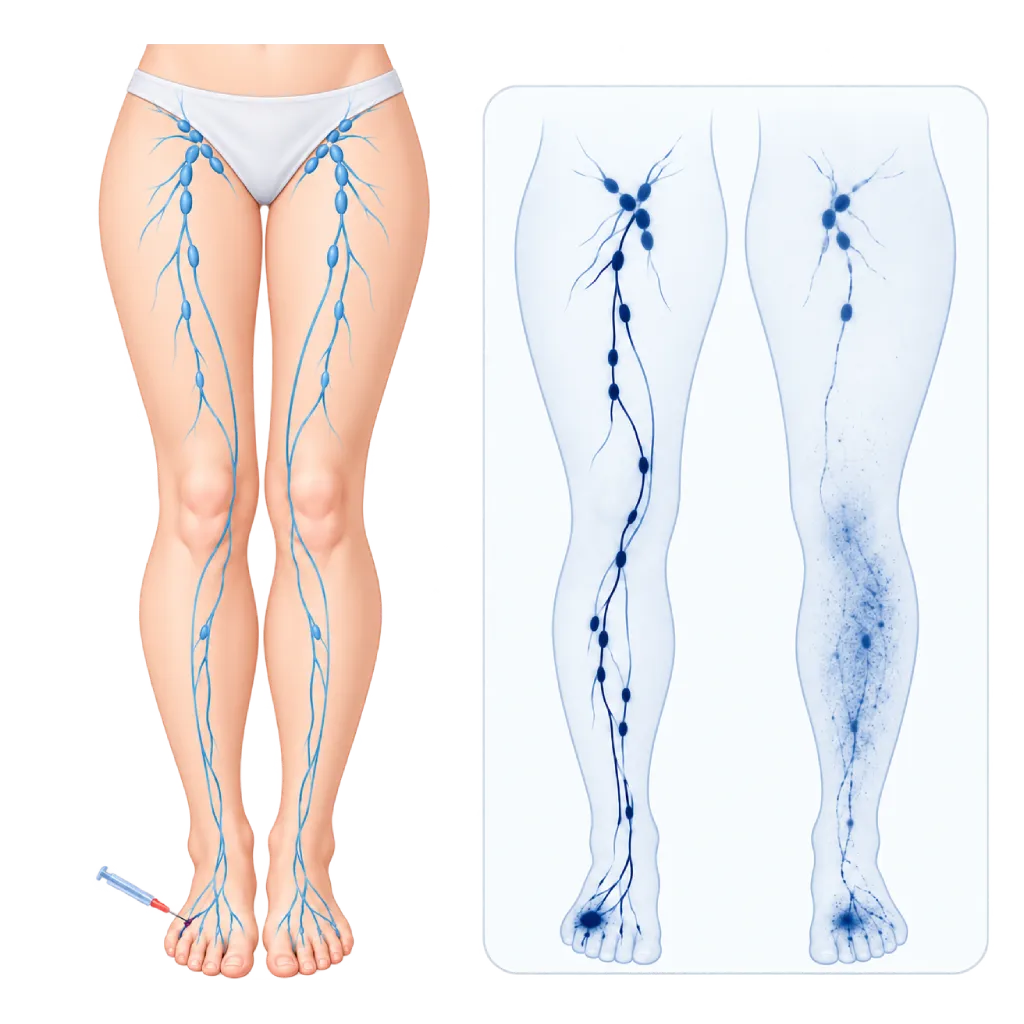
Lymphoscintigraphy is a nuclear medicine test that maps the flow of lymph fluid. A small amount of tracer is injected between the toes or fingers, and a gamma camera records its movement toward the lymph nodes. The results help confirm lymphedema, assess its severity, and distinguish it from swelling caused by vein problems, the heart, or other causes.
Sources01 / Understanding the procedure
About Lymphoscintigraphy
What Is Lymphoscintigraphy
Lymph is fluid collected from the tissues and returned to the bloodstream through the lymphatic vessels and lymph nodes. When these vessels are damaged or not fully formed, fluid builds up and lymphedema develops. Lymphoscintigraphy, or a lymphatic scan, shows how well lymph flows from the ends of the legs or arms to the nodes in the groin or armpit.
How It Works in Brief
A small amount of radioactive tracer is injected under the skin between the toes or fingers. The tracer enters the lymphatic vessels and moves along with the fluid. A gamma camera picks up signals from the tracer and records its path several times over a few hours.
What Can Be Seen
- Flow speed: whether the tracer reaches the lymph nodes within a normal amount of time.
- Lymphatic vessels: whether the main vessels are visible, interrupted, or branching unusually.
- Backflow into the skin: tracer spreading in the skin indicates that the vessels are blocked.
- Lymph nodes: the number of nodes in the groin or armpit that take up the tracer.
When This Test Is Needed
Lymphedema can often be recognized from a physical examination. Lymphoscintigraphy is useful when the cause of swelling is not clear, for example to distinguish lymphedema from swelling caused by vein problems, fat buildup (lipedema), or medications, to assess congenital lymphedema, or before lymphatic surgery. A normal result does not always rule out very early-stage lymphedema, so the doctor interprets it together with your symptoms and other tests.
About Radiation
The amount of tracer is very small and the radiation dose is low, usually lower than a CT scan. The tracer decays on its own, and the majority of it leaves the body within one to two days.
02 / Understanding the procedure
When Is This Procedure Considered?
A doctor may consider this procedure in the situations below. The decision is always made after a thorough assessment.
- Leg or Arm Swelling with an Unclear CauseTo confirm whether the swelling comes from a problem with lymph flow.
- Suspected Congenital LymphedemaSwelling present from birth or appearing at a young age with no other cause.
- Swelling After Cancer TreatmentAfter lymph node surgery or radiation, when the diagnosis needs to be confirmed.
- Distinguishing Vein Swelling from Lymphatic SwellingIn chronic vein disorders, swelling can come from both.
- Planning Lymphatic SurgeryBefore connecting lymphatic vessels to veins or transferring lymph nodes.
- Assessing Treatment ResultsTo see changes in flow after therapy or surgery, when needed.
Situations to Consider First
- PregnancyTests using radioactive substances are postponed unless truly necessary.
- BreastfeedingThe test can usually still be done. The team will tell you if you need to pause breastfeeding temporarily.
- Active Skin Infection at the Injection SiteThe test is postponed until cellulitis or the skin infection has been treated.
- History of Reaction to the TracerVery rare. Tell the team if you have ever reacted to a tracer or albumin products.
- Difficulty Lying StillMovement makes the images blurry. Tell the team if you find it hard to lie still for a long time.
03 / Before the procedure
How Should You Prepare?
This test is done in a nuclear medicine unit. The team will give you instructions beforehand.
Food and medications. No fasting is needed. Keep taking your regular medications.
Compression and massage. The team may ask you not to wear compression bandages or stockings and not to have drainage massage on the day of the test, so that lymph flow can be seen as it is.
Clothing and footwear. Wear loose clothing and comfortable footwear, because you may be asked to walk between imaging sessions.
Time. Set aside a few hours. Sometimes additional images are needed the next day.
Important information. Tell the team if you are pregnant or might be pregnant, are breastfeeding, or have a wound or infection on your feet or hands. Bring the results of previous tests, such as a vein ultrasound.
Unsure about the preparation instructions? Ask our team before the procedure.
04 / During the procedure
How Is the Procedure Done?
The entire test usually takes 2 to 4 hours, including waiting time between imaging sessions.
Tracer Injection
You lie down, and a small amount of tracer is injected under the skin between the toes of both feet, or between the fingers if the arms are being examined. The injection feels like an ant bite or a brief sting.
Initial Imaging
A gamma camera is placed close to your legs or arms to record the flow of the tracer. This camera only detects signals and does not emit radiation. You will be asked to lie still during recording.
Moving and Waiting
Between imaging sessions, you may be asked to walk or move your feet and hands so the lymph flows. Images are then taken again, usually about 1 to 3 hours after the injection.
Reading the Results
A nuclear medicine doctor reads the flow pattern, and the results are then discussed by the doctor who requested the test together with your symptoms and other tests.
05 / Benefits and risks
Benefits and Risks Should Be Discussed Together.
Every medical procedure has benefits and risks. Your doctor will explain both for your situation before the procedure.
Benefits You Can Expect
- Confirms the Cause of SwellingDistinguishes lymphedema from swelling caused by vein problems, the heart, or other causes.
- Assesses SeverityShows blocked vessels and lymph nodes that are still working.
- No IncisionOnly small injections under the skin are needed.
- A Basis for Planning TreatmentHelps the doctor choose treatment, including when lymphatic surgery is being considered.
- Low RadiationThe amount of tracer is very small and it decays quickly.
The benefits of a procedure are not a promise of a cure. Ask how the results will affect your care plan.
Risks You Should Know
- Brief Pain or StingingDuring the injection between the toes or fingers, usually gone within a few minutes.
- Small Bruise at the Injection SiteUsually mild and goes away on its own.
- Low Radiation ExposureThe dose is small, but the test is still avoided during pregnancy.
- Allergic ReactionVery rare, and treated right away by the team if it occurs.
- Normal Results in Very Early StagesMild problems sometimes cannot be seen yet, so the results are read together with other tests.
Risks can differ from person to person. A full explanation and consent are given after an individual assessment.
06 / After the procedure
What Is Recovery Like?
There is no special recovery period. You can go home right away and carry on with your usual activities.
Drink water. Drink enough plain water and urinate as usual to help your body clear the remaining tracer.
Close contact. The radiation dose is low. If you care for a baby or live with a pregnant woman, ask the team whether you should keep some distance for the rest of the day.
Injection site. Mild bruising or pain between the toes or fingers is normal and goes away within a few days.
Results. The doctor explains the results and the next steps, for example lymphedema therapy, treatment of vein problems, or further tests.
Warning signs to watch for. Go to the emergency room right away or contact the medical team if you experience:
- Red, warm, painful skin around the injection site, with fever
- A rash, itching, or shortness of breath after the test
- Swelling that increases quickly, especially with calf pain
Know the Signs That Need Prompt Care.
Follow the team's guidance on warning signs. If severe or sudden symptoms appear after the procedure, go to the nearest emergency department right away or call Heart Attack Center 1500 258.
07 / Team and support
Doctors and Procedure Support
The doctors below are listed for this procedure. Listed by name, not by ranking.

dr. Ayu Amalia U. Putri, Sp.KFR
Physical Medicine & Rehabilitation
Clinical focusCardiac Rehabilitation · Postoperative Rehabilitation
View Profile
dr. Emanoel Oepangat, Sp.JP(K)
Interventional Cardiology
Vascular Diagnostic and Therapeutic Center +1 center
Clinical focusCoronary Intervention · Peripheral Vascular Intervention
View Profile
dr. Suko Adiarto, Sp.JP(K), Ph.D.
Interventional Cardiology
Vascular Diagnostic and Therapeutic Center +1 center
Clinical focusCoronary Intervention · Peripheral Vascular Intervention
View Profile08 / Common questions
Before You Plan the Procedure.
Frequently asked questions about lymphoscintigraphy. Whether you need this test is decided together with your doctor.
Is the radioactive substance dangerous?
The amount of tracer used is very small and the radiation dose is low, usually lower than a CT scan. The tracer decays on its own, and the majority of it leaves the body within one to two days. The test is still avoided during pregnancy, so tell the team if you are pregnant or might be pregnant.
Does the injection hurt?
The injection uses a very small needle and feels like an ant bite or a brief sting between the toes or fingers. This feeling usually goes away within a few minutes. A small bruise may appear at the injection site and fade on its own. Tell the team if you are very afraid of needles so they can help you.
Why am I asked to walk between imaging sessions?
Lymph flow is helped by muscle movement. Walking or moving your feet and hands helps the tracer travel through the lymphatic vessels, so the images are clearer and better reflect your everyday lymph flow. Follow the team's instructions on when to move and when to lie still.
Do I need to take off my compression stockings?
The team may ask you not to wear compression bandages or stockings and not to have drainage massage on the day of the test, so that lymph flow can be seen as it is. Follow the instructions given, and ask the team when you can wear compression again after the test is finished.
Is lymphoscintigraphy always needed for lymphedema?
Not always. Lymphedema can often be recognized from symptoms and a physical examination. Lymphoscintigraphy is used when the cause of swelling is not clear, to assess congenital lymphedema, or before lymphatic surgery. The doctor will explain whether the results of this test will change your treatment plan.
Are there other tests besides lymphoscintigraphy?
Yes. A vein ultrasound is used to rule out vein problems and blood clots. Lymphography with a fluorescent dye (ICG) can show the lymphatic vessels under the skin, especially for surgical planning. MRI can also help in certain situations. The doctor chooses the test based on the question that needs to be answered.
Sources and Medical Review
Translated from the Indonesian edition medically reviewed by dr. Emanoel Oepangat, Sp.JP(K).
Sources as cited in the Indonesian edition.
- International Society of Lymphology. The Diagnosis and Treatment of Peripheral Lymphedema: 2023 Consensus Document of the International Society of Lymphology. Lymphology. 2023;56(4).
- Villa G, Campisi CC, Ryan M, et al. Procedural Recommendations for Lymphoscintigraphy in the Diagnosis of Peripheral Lymphedema: the Genoa Protocol. Nucl Med Mol Imaging. 2019;53(1):47-56.
- Hassanein AH, Maclellan RA, Grant FD, et al. Diagnostic Accuracy of Lymphoscintigraphy for Lymphedema and Analysis of False-Negative Tests. Plast Reconstr Surg Glob Open. 2017;5(7):e1396.
- Grada AA, Phillips TJ. Lymphedema: Diagnostic workup and management. J Am Acad Dermatol. 2017;77(6):995-1006.