
Quick answer
What Is Peripheral Edema?
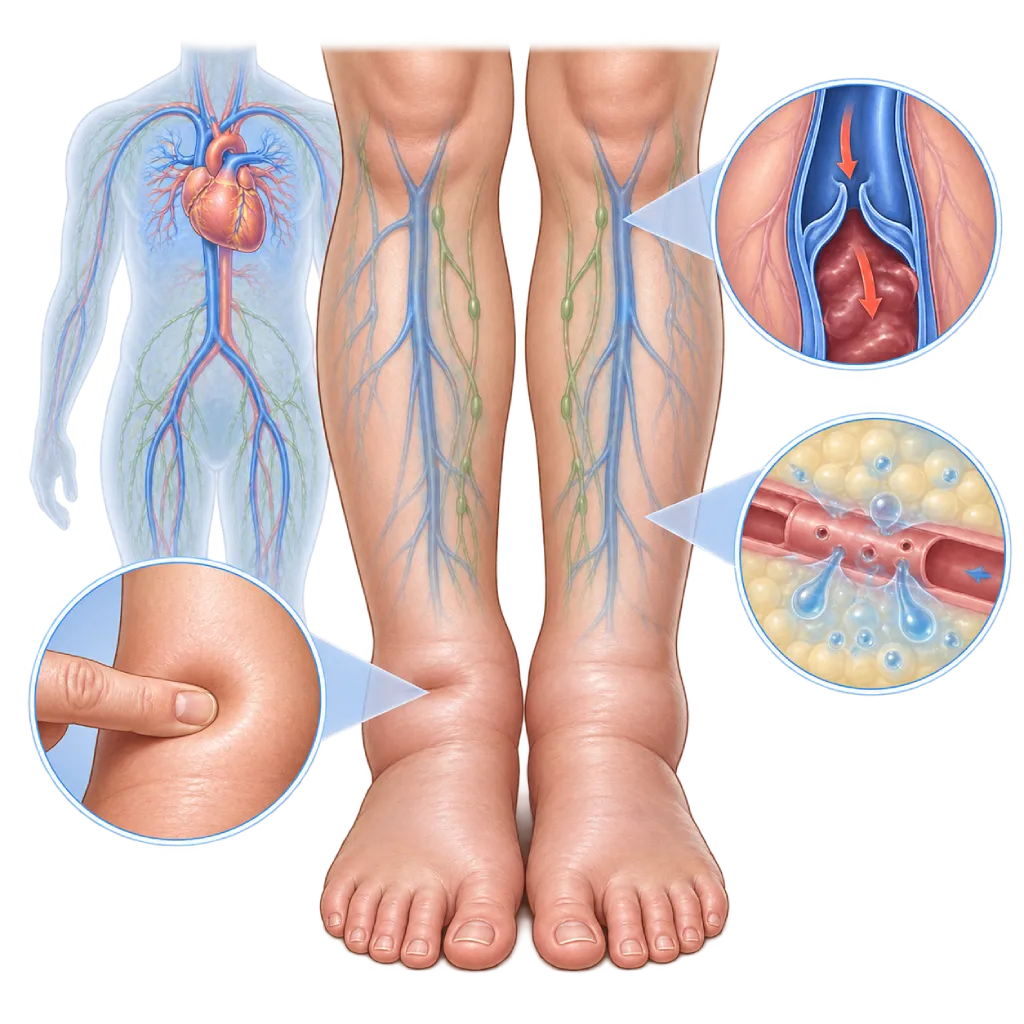
Peripheral edema is a buildup of fluid in the tissues of the legs, feet, hands, or arms. It has many possible causes, ranging from sitting for long periods and medication side effects to vein, heart, kidney, or liver problems.
SourcesSigns That Need Urgent Help
- Sudden swelling of one leg that is painful, warm, or red
- Sudden shortness of breath, chest pain, or coughing up blood
- Shortness of breath when lying down, or waking up at night short of breath
- Red, hot, painful skin that is spreading, with a fever
- Sudden swelling of the face, lips, or tongue with difficulty breathing
- Rapidly increasing swelling with a sharp drop in how much you urinate
If these signs appear, go to the nearest emergency department right away or call Heart Attack Center 1500 258.
01 / Understanding the condition
About Peripheral Edema
Peripheral swelling, or peripheral edema, happens when fluid leaks out of small blood vessels and builds up in the tissue under the skin. Because of gravity, the swelling is more often seen in the ankles and lower legs, especially later in the day, and it can also appear in the hands, arms, or lower back in people who lie down for long periods. If pressing the skin for a few seconds leaves a dent, the swelling is called pitting edema. This page helps you recognize possible causes and warning signs; it is not meant for working out the cause on your own. Swelling that is limited to the legs is also covered on the Leg Swelling page.
One Side or Both Sides
The pattern of swelling gives an early clue. Swelling in one leg or one arm, especially if it appears suddenly, is painful, or feels warm, needs to be checked for a blood clot in a deep vein, a skin infection, or an injury. Clots in the deep veins are covered on the Deep Vein Thrombosis page. Swelling on both sides is more often linked to causes that affect the whole body or both legs at once.
Possible Causes
A common cause is leg vein valves that do not close tightly, so blood pools in the legs, covered on the Chronic Venous Insufficiency page. Medicines can also cause swelling, especially blood pressure medicines in the calcium channel blocker class, anti-inflammatory drugs, hormone medicines, and some diabetes medicines. Causes from other organs include heart failure, kidney disease, liver disease, a low level of the protein albumin, an underactive thyroid gland, and high pressure in the blood vessels of the lungs. Problems with lymph flow cause lymphedema, a firm swelling that does not improve easily when the legs are raised. Mild swelling can also appear during pregnancy, before a menstrual period, in hot weather, or after sitting for a long time while traveling.
The Connection to the Heart
In heart failure, the heart cannot pump blood smoothly, so the body holds on to salt and water. The swelling is usually in both legs and comes with shortness of breath during activity or when lying down, tiring easily, and rapid weight gain over a few days. Heart failure is covered on the Heart Failure page. Because swelling has many causes, diuretic medicines should not be used without a diagnosis: they do not fix causes in the veins, the lymphatic system, or other medicines, and they can affect the kidneys and electrolyte levels.
02 / Understanding the condition
Symptoms to Recognize.
Common Symptoms
- Ankles, legs, hands, or fingers look larger than usual
- Shoes, socks, or rings feel tighter
- Skin keeps a dent after being pressed for a few seconds
- Swelling gets worse later in the day and eases after sleep or raising the legs
- Legs feel heavy, tight, or achy
- Weight gain without any change in eating habits
Symptoms in Adult Women
Sudden swelling of the face and hands during pregnancy needs to be checked right away because it can be a sign of preeclampsia.
- Mild swelling in both feet late in pregnancy
- Sudden swelling of the face and hands during pregnancy
- Swelling during pregnancy with a headache, blurred vision, or upper abdominal pain
- Mild swelling before a menstrual period that goes away afterward
03 / Understanding the condition
What Causes This Condition?
- Sitting or standing for long periods, hot weather, and high salt intake
- Leaky leg vein valves (chronic venous insufficiency) or varicose veins
- A blood clot in a deep vein, which usually makes one leg swell suddenly
- Certain medicines, such as calcium channel blockers, anti-inflammatory drugs, hormones, and some diabetes medicines
- Heart failure, or high pressure in the blood vessels of the lungs that strains the right side of the heart
- Kidney disease, liver disease, or a low blood albumin level
- Impaired lymph flow (lymphedema), for example after cancer surgery or radiation
- Skin infection (cellulitis), injury, pregnancy, or an underactive thyroid gland
04 / Understanding the condition
Who Is at Higher Risk?
Lifestyle
Sitting or standing for long periods without moving, too little physical activity, excess body weight, and high salt intake make fluid buildup worse.
Medical
Heart failure, kidney disease, liver disease, vein problems, a history of blood clots, pulmonary hypertension, and use of medicines that can cause fluid retention.
Genetic
A family history of varicose veins, blood clotting disorders, or congenital lymphedema increases the tendency toward leg swelling.
Age
Older adults have swelling more often because vein valves weaken, calf muscle mass decreases, chronic illnesses are more common, and they take more medicines.
Other
Pregnancy, major surgery, long-distance travel, prolonged bed rest, cancer and its treatment, and a history of surgery or radiation to the lymph nodes.
Groups at Higher Risk
- People with Heart Failure: Increasing swelling and rapid weight gain can mean fluid is building up, so talk to your doctor promptly so your medicines can be adjusted.
- Older Adults: More often have several causes at once, including medication effects, and swollen skin is more easily injured.
- Pregnant Women: Mild swelling in the feet is common, but sudden swelling of the face and hands needs to be checked right away.
- People Taking Calcium Channel Blockers: This class of blood pressure medicine can cause ankle swelling; your doctor can adjust the medicine, so do not stop it on your own.
- People with Kidney or Liver Disease: Reduced function of these organs can cause the body to retain salt and water or lower albumin levels, so swelling develops easily.
05 / Understanding the condition
How Is It Diagnosed?
Your doctor will ask when the swelling started, whether it affects one or both sides, whether it hurts, and whether it improves when you raise your legs. Other symptoms such as shortness of breath, changes in how much you urinate, an enlarging abdomen, or yellowing skin help point toward the heart, kidneys, or liver. A list of all your medicines and supplements is also reviewed, because medicines are often the cause. During the physical exam, the doctor presses on the skin to look for a dent, checks the skin and leg veins, listens to the heart and lungs, and looks at the veins in the neck.
If one leg swells suddenly, the doctor may order a D-dimer test and a vein ultrasound to look for a blood clot. If the swelling is on both sides, blood and urine tests assess kidney function, liver function, albumin, protein in the urine, and thyroid function. If heart failure is suspected, the doctor checks NT-proBNP or BNP and orders an ECG and an echocardiogram. Duplex ultrasound also assesses leaky vein valves, while lymphoscintigraphy is used if a lymph flow problem is suspected.
Physical Examination
Pressing the skin to look for a dent, and checking the swelling pattern, skin, leg veins, neck veins, and heart and lung sounds.
Duplex Ultrasound
A sound-wave scan of the leg veins to look for blood clots or leaky vein valves.
D-Dimer Test
A blood test that helps rule out a blood clot when one leg swells suddenly.
NT-proBNP and BNP Test
A blood test that helps identify or rule out heart failure as the cause of swelling.
Echocardiography
A heart ultrasound to assess pumping, the valves, and estimated pressure in the blood vessels of the lungs if a heart cause is suspected.
Kidney Function Test
Creatinine and eGFR tests, along with tests for urine protein, blood albumin, liver function, and thyroid function, to look for causes in other organs.
Lymphoscintigraphy (Lymphatic Scan)
A scan of lymph flow when firm, persistent swelling suggests lymphedema.
06 / Understanding the condition
Treatment Options.
Treatment is decided by a doctor after an assessment. The categories below can help you follow the conversation with your doctor.
Raising the Legs and Moving
Raising your legs above the level of your heart while resting and moving your ankles regularly helps fluid return to the blood vessels.
Compression Stockings
Compression stockings help with vein problems and lymphedema. Their size and pressure are adjusted to you, and they are not used without a doctor's examination if blood flow in the leg arteries is impaired.
Medication Review
If swelling is caused by a medicine, your doctor may switch or adjust it. Do not stop blood pressure medicines or other medicines on your own.
Diuretics Based on the Cause
Diuretic medicines are used when swelling is caused by excess body fluid, as in heart failure, kidney disease, or liver disease, with monitoring of kidney function and electrolytes.
Treating the Underlying Disease
Blood clots are treated with blood thinners, heart failure with medicines and long-term care, and vein problems with procedures on the veins when needed.
Lymphedema Therapy
Lymphatic drainage massage, compression bandages and stockings, exercise, and skin care to control swelling caused by lymphatic problems.
07 / Understanding the condition
Complications to Watch For.
Skin Changes and Sores
Long-lasting swelling makes the skin tight, darker, thicker, and easily injured, especially around the ankle bones; sores can be slow to heal.
Skin Infection (Cellulitis)
Swollen, cracked skin lets germs in more easily, causing redness, warmth, pain, and fever.
Stiffness and Difficulty Walking
Heavy, stiff legs make it hard to move and raise the risk of falls, especially in older adults.
Blood Clot Traveling to the Lungs
If the swelling is caused by an untreated clot in a deep vein, the clot can break loose and travel to the lungs, causing sudden shortness of breath.
Worsening of the Underlying Disease
Increasing swelling can be an early sign that heart failure, kidney disease, or liver disease is getting worse and needs prompt treatment.
08 / Understanding the condition
What Can You Do?
- Move around or walk every 1 to 2 hours when sitting for long periods or on long trips.
- Cut back on salt and on processed foods that are high in sodium.
- Raise your legs a few times a day while resting.
- Keep a healthy weight and walk regularly to work your calf muscles.
- If you have heart failure, weigh yourself every morning and report rapid weight gain to your doctor.
- Keep the skin on your legs moisturized, and check it for wounds or cracks every day.
- Tell your doctor if swelling appears after you start a new medicine.
09 / Understanding the condition
When Should You See a Doctor?
Mild swelling in both feet after sitting or standing for a long time that goes away after sleep is usually not dangerous. If swelling comes with sudden shortness of breath, chest pain, or coughing up blood, go to the emergency room right away. Make an appointment with a doctor if you have any of the following.
- Swelling that lasts more than a few days or keeps getting worse
- Swelling in one leg or one arm, especially if it is painful or warm
- Swelling with shortness of breath during activity or when lying down, or rapid weight gain
- Swelling that appears after starting a new medicine
- Swelling with less urine, foamy urine, or an enlarging abdomen
- Skin on the legs that changes color, thickens, or develops sores
Don't Wait in an Emergency.
If symptoms are severe or come on suddenly, go to the nearest emergency department right away or call Heart Attack Center 1500 258, rather than waiting for an appointment.
10 / Common questions
Questions You May Have.
Common questions about swelling in the legs, feet, hands, or arms.
Is leg swelling always a sign of heart disease?
No. More common causes are leg vein problems, sitting or standing for long periods, and medication side effects. However, swelling in both legs with shortness of breath, tiring easily, or rapid weight gain can be a sign of heart failure. Kidney and liver disease can also cause swelling. That is why swelling that does not go away needs to be checked so the cause is clear.
Can I take water pills to reduce swelling?
Do not use diuretics without a prescription. They only help when swelling is caused by excess body fluid, as in heart failure or certain kidney diseases. When swelling is due to vein problems, lymphatic problems, or medication effects, diuretics do not fix the cause and can lead to dehydration, kidney problems, and abnormal potassium levels.
Why can blood pressure medicine make my legs swell?
Calcium channel blockers widen small arteries, which raises the pressure in the tiny blood vessels (capillaries) of the legs and pushes fluid out into the tissue. This swelling is usually around the ankles and does not improve much with diuretics. If this happens to you, tell your doctor, who can adjust or change your medicine combination. Do not stop your medicine on your own.
How can I tell ordinary swelling from a blood clot in the leg?
A blood clot in a deep vein usually makes one leg swell over a short time, with pain or tightness in the calf, warmth, and sometimes redness. Ordinary swelling more often affects both legs, comes on gradually, and improves when the legs are raised. However, these signs are not always clear, so new swelling in one leg should be checked promptly with a vein ultrasound.
Are compression stockings safe for everyone?
Not for everyone. Compression stockings help with vein problems and lymphedema, but they can be dangerous if the leg arteries are severely blocked or in heart failure that is not yet under control. Doctors usually check the pulses in your feet, and sometimes do an ABI test, before recommending them. The size and pressure of the stockings also need to suit your condition.
Is swelling in the feet during pregnancy normal?
Mild swelling in both feet late in pregnancy is common because the uterus presses on the pelvic veins and the body retains more fluid. Raising your feet and lying on your left side can help. However, sudden swelling of the face and hands, especially with a headache, blurred vision, or upper abdominal pain, can be a sign of preeclampsia and needs to be checked right away.
Sources and Medical Review
Translated from the Indonesian edition medically reviewed by dr. Emanoel Oepangat, Sp.JP(K).
Sources as cited in the Indonesian edition.
- McDonagh TA, Metra M, Adamo M, Gardner RS, Baumbach A, Bohm M, et al. 2021 ESC Guidelines for the diagnosis and treatment of acute and chronic heart failure. Eur Heart J. 2021;42(36):3599-3726.
- De Maeseneer MG, Kakkos SK, Aherne T, Baekgaard N, Black S, Blomgren L, et al. Editor's Choice - European Society for Vascular Surgery (ESVS) 2022 Clinical Practice Guidelines on the Management of Chronic Venous Disease of the Lower Limbs. Eur J Vasc Endovasc Surg. 2022;63(2):184-267.
- Kakkos SK, Gohel M, Baekgaard N, Bauersachs R, Bellmunt-Montoya S, Black SA, et al. Editor's Choice - European Society for Vascular Surgery (ESVS) 2021 Clinical Practice Guidelines on the Management of Venous Thrombosis. Eur J Vasc Endovasc Surg. 2021;61(1):9-82.
- Mullens W, Damman K, Harjola VP, Mebazaa A, Brunner-La Rocca HP, Martens P, et al. The use of diuretics in heart failure with congestion: a position statement from the Heart Failure Association of the European Society of Cardiology. Eur J Heart Fail. 2019;21(2):137-155.
- Ely JW, Osheroff JA, Chambliss ML, Ebell MH. Approach to leg edema of unclear etiology. J Am Board Fam Med. 2006;19(2):148-160.
- Makani H, Bangalore S, Romero J, Htyte N, Berrios RS, Makwana H, et al. Peripheral edema associated with calcium channel blockers: incidence and withdrawal rate: a meta-analysis of randomized trials. J Hypertens. 2011;29(7):1270-1280.
Doctors Who Treat This Condition

dr. Suko Adiarto, Sp.JP(K), Ph.D.
Interventional Cardiology
Vascular Diagnostic and Therapeutic Center +1 center
Clinical focusCoronary Intervention · Peripheral Vascular Intervention
View Profile
dr. Debby C. Soemitha, Sp.PD
Internal Medicine
Clinical focusDiabetes and Diabetes Complications · Obesity and Metabolic Disease
View Profile
dr. Emanoel Oepangat, Sp.JP(K)
Interventional Cardiology
Vascular Diagnostic and Therapeutic Center +1 center
Clinical focusCoronary Intervention · Peripheral Vascular Intervention
View Profile