
Quick answer
What Is Varicose Vein Ablation?
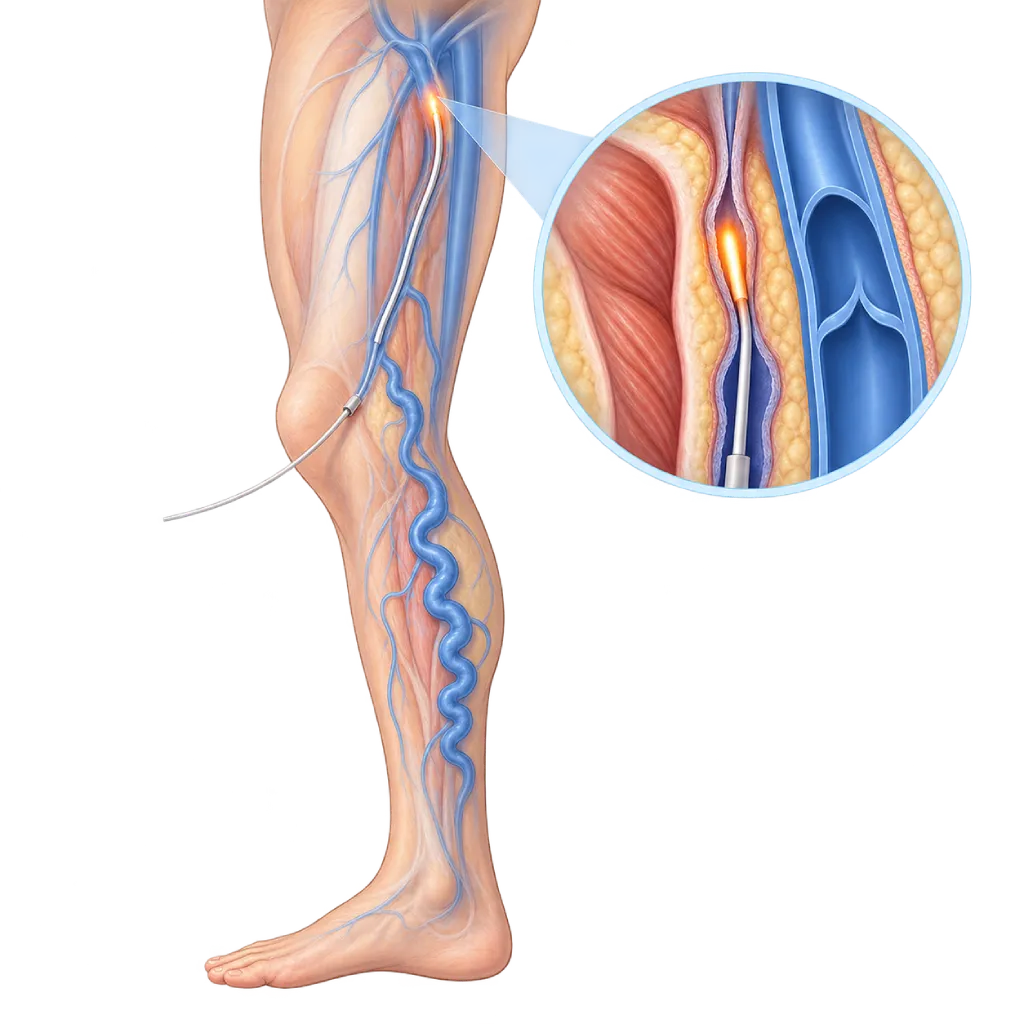
Varicose vein ablation closes a main leg vein with leaky valves, the main source of varicose veins, using heat from a laser or radio waves through a thin catheter. The catheter enters through a small puncture with ultrasound guidance and local anesthesia. The procedure takes about 1 hour, and the majority of patients go home the same day.
Sources01 / Understanding the procedure
About Varicose Vein Ablation
What Is Varicose Vein Ablation
Varicose veins in the calf and thigh often come from leaky valves in a main vein under the skin, either the great saphenous vein along the inner side of the leg or the small saphenous vein at the back of the calf. Blood that should flow up to the heart flows backward instead and pools, so the branch veins near the surface widen. Varicose vein ablation closes this leaky main vein from the inside with heat, without a large incision.
How It Works in Brief
Using ultrasound guidance, the doctor inserts a very thin catheter or laser fiber into the vein through a small puncture, usually near the knee. A diluted anesthetic fluid is injected along the vein to numb the area and protect the surrounding tissue. As the catheter is slowly pulled back, the heat makes the vein wall shrink and close. Blood then flows through the deep veins and other healthy veins.
Laser or Radio Waves
Ablation can use laser energy (EVLA or EVLT) or radio waves (radiofrequency). Both work in a similar way and give comparable results. The doctor chooses the device based on the shape of the vein and the equipment available.
Why It Is Chosen
Vein disease guidelines recommend heat ablation as the preferred initial option for saphenous vein reflux, rather than surgery to remove the vein, because recovery is faster with good results. If the shape of the vein is not suitable for a catheter, the doctor may choose another method, such as surgery or foam injections.
Branch Veins Near the Surface
After the main vein is closed, the branch varicose veins often shrink. Varicose veins that remain visible can be treated at the same time or in a later session, for example with injections, covered on the Sclerotherapy page. The test used to find leaky veins is covered on the Duplex Ultrasound page.
02 / Understanding the procedure
When Is This Procedure Considered?
A doctor may consider this procedure in the situations below. The decision is always made after a thorough assessment.
- Varicose Veins with a Leaky Main VeinLeakage in the great or small saphenous vein confirmed by ultrasound.
- Heavy, Aching, or Cramping LegsSymptoms related to varicose veins that interfere with daily activities.
- Leg Swelling Due to Vein ProblemsEspecially around the ankles in the afternoon or evening.
- Skin Changes in the Lower LegSkin that darkens, thickens, or itches because of vein problems.
- Venous Ulcers That Are Slow to HealEarly ablation helps ulcers heal faster.
- Varicose Veins That Come BackAfter previous surgery or treatment, if there is a new leak.
Situations to Consider First
- Blood Clot in a Deep VeinA clot that is recent or still being treated; the procedure is postponed.
- PregnancyThe procedure is usually postponed until after giving birth.
- Unable to Walk or Needing Prolonged Bed RestWalking after the procedure is important to prevent clots.
- Severe Leg Artery BlockageArterial blood flow is assessed beforehand, especially before compression.
- Unsuitable Vein ShapeThe vein is too twisted, too close to the skin, or blocked by an old clot.
- Infection in the Treatment AreaThe infection is treated beforehand.
03 / Before the procedure
How Should You Prepare?
Preparation is discussed during your consultation, after an ultrasound confirms which vein is leaking.
Ultrasound scan. A leg vein ultrasound is done beforehand to map the leaky vein, then briefly repeated before the procedure to mark its path.
Eating and drinking. Because local anesthesia is used, you can usually still have a light meal. Follow the team's instructions if a sedative is planned.
Medication list and health history. Tell your doctor if you take blood thinners, birth control pills, or hormone therapy, have had a blood clot before, are allergic to anesthetic drugs, or are pregnant.
Compression stockings. Get compression stockings in the recommended size, or ask the team whether stockings are provided.
Clothing and companion. Wear loose clothing, do not apply lotion to your legs, and bring someone to accompany you home.
Unsure about the preparation instructions? Ask our team before the procedure.
04 / During the procedure
How Is the Procedure Done?
The procedure takes about 1 hour per leg in a procedure room, under local anesthesia. You stay awake during the procedure and usually go home the same day.
Ultrasound Mapping
The doctor uses ultrasound to mark the path of the leaky vein and the catheter entry point.
Inserting the Catheter
After a local anesthetic is given at the entry point, a small needle is inserted into the vein, then the catheter or laser fiber is advanced until it is near the junction with the deep vein in the groin or behind the knee.
Anesthesia Around the Vein
A diluted anesthetic fluid is injected along the vein with ultrasound guidance. This fluid numbs the area, compresses the vein, and protects the skin and nerves from the heat.
Closing the Vein
The device is switched on and the catheter is slowly pulled back, so the vein wall shrinks and closes along its path. If needed, branch varicose veins are treated at the same time.
After the Procedure
Your leg is bandaged or fitted with a compression stocking, and you are asked to walk before going home.
05 / Benefits and risks
Benefits and Risks Should Be Discussed Together.
Every medical procedure has benefits and risks. Your doctor will explain both for your situation before the procedure.
Benefits You Can Expect
- Source of the Leak ClosedThe leaky main vein is closed, so pressure on the branch veins decreases.
- Fewer Leg SymptomsHeaviness, aching, and swelling usually improve.
- No Large IncisionOnly a small puncture under local anesthesia is needed.
- Faster RecoveryYou usually go home the same day and return to your activities soon.
- Helps Venous Ulcers HealFor ulcers caused by vein problems, early ablation speeds up healing.
The benefits of a procedure are not a promise of a cure. Ask how the results will affect your care plan.
Risks You Should Know
- Bruising and Pulling SensationCommon along the vein, and improves within one to two weeks.
- Tingling or NumbnessCaused by heat affecting nerves near the vein; usually temporary.
- Superficial Vein InflammationRedness and pain in the branch veins; usually improves with medication and compression.
- Skin DiscolorationBrownish streaks over the vein, which usually fade.
- Clot in a Deep VeinRare; this is why a follow-up ultrasound is done and plenty of walking is recommended.
- Skin Burns or InfectionVery rare.
Risks can differ from person to person. A full explanation and consent are given after an individual assessment.
06 / After the procedure
What Is Recovery Like?
The majority of people can walk right away and return to work within a few days.
Pulling sensation and bruising. Tightness, bruising, or pain along the closed vein is normal for one to two weeks and usually eases with walking and pain medication as recommended.
Walk every day. Walking helps blood flow in the deep veins. Avoid sitting or standing still for too long, including long trips, during the early weeks.
Wear stockings as recommended. Usually for a few days to about two weeks.
Postpone strenuous exercise. Avoid strenuous exercise, heavy lifting, hot baths, and saunas for about one to two weeks.
Follow-up ultrasound. A repeat ultrasound is done on the schedule your doctor sets to confirm that the vein has closed and there is no clot in the deep veins.
Warning signs. Go to the emergency room right away if you have:
- A swollen, painful, and warm calf or thigh
- Sudden shortness of breath or chest pain
Contact your doctor if you develop blisters or sores on the skin, spreading redness with fever, or tingling and numbness that does not improve.
Know the Signs That Need Prompt Care.
Follow the team's guidance on warning signs. If severe or sudden symptoms appear after the procedure, go to the nearest emergency department right away or call Heart Attack Center 1500 258.
07 / Team and support
Doctors and Procedure Support
The doctors below are listed for this procedure. Listed by name, not by ranking.

dr. Emanoel Oepangat, Sp.JP(K)
Interventional Cardiology
Vascular Diagnostic and Therapeutic Center +1 center
Clinical focusCoronary Intervention · Peripheral Vascular Intervention
View Profile
dr. Suko Adiarto, Sp.JP(K), Ph.D.
Interventional Cardiology
Vascular Diagnostic and Therapeutic Center +1 center
Clinical focusCoronary Intervention · Peripheral Vascular Intervention
View ProfileDoppler Vascular Ultrasound
An ultrasound test of the blood vessels that shows the vessel wall and the blood flow at the same time. Doctors use it to look…
The availability of technology and test support is confirmed with the team. Technology is chosen according to clinical need.
08 / Common questions
Before You Plan the Procedure.
Questions people often ask about varicose vein ablation. Your treatment plan is decided by the doctor after an ultrasound examination.
Is varicose vein ablation painful?
The procedure uses local anesthesia, so you stay awake but do not feel the heat. What you usually feel are the needle punctures and the injections of anesthetic fluid along the vein. After the anesthesia wears off, your leg may feel tight, bruised, or sore like a pulled muscle for one to two weeks. These symptoms are usually mild and improve with walking and pain medication as recommended.
Doesn't my body need the vein that gets closed?
A leaky vein actually carries blood in the wrong direction, so closing it helps blood flow in the leg. The majority of blood from the leg returns to the heart through the deep veins, and after ablation blood is rerouted to other healthy veins. A leaky, widened vein is also generally less suitable as a replacement vessel in bypass surgery; if one is ever needed, the doctor can use another vessel.
Laser or radio waves: which one is better?
Studies show that laser and radiofrequency ablation give comparable results, both in closing the vein and in reducing symptoms. The differences are mainly in the equipment and the discomfort after the procedure, which is usually mild with newer devices. Your doctor chooses the method that suits the size and shape of your vein and the equipment available.
When can I go back to work?
The majority of people can return to work within one to three days, especially if their job is not physically demanding. You are encouraged to walk starting on the day of the procedure. Strenuous exercise, heavy lifting, and hot baths should be postponed for about one to two weeks. If your job involves heavy physical work, ask your doctor when it is right to return.
Can varicose veins come back after ablation?
Yes. A vein that has been closed rarely reopens, but over time leaks can develop in other veins, especially if you have a family history, have been pregnant, or have a job that involves a lot of standing. This is why regular follow-up visits are still recommended. Varicose veins that come back can usually be treated with minor procedures such as injections or repeat ablation.
Do I still need sclerotherapy?
Not always. After the main vein is closed, many branch varicose veins shrink on their own. Varicose veins or fine vessels that remain visible can be treated with sclerotherapy or removal of small veins, either at the same time or a few weeks after ablation. Your doctor will assess at the follow-up visit whether an additional procedure is needed.
Sources and Medical Review
Translated from the Indonesian edition medically reviewed by dr. Emanoel Oepangat, Sp.JP(K).
Sources as cited in the Indonesian edition.
- De Maeseneer MG, Kakkos SK, Aherne T, et al. European Society for Vascular Surgery (ESVS) 2022 Clinical Practice Guidelines on the Management of Chronic Venous Disease of the Lower Limbs. Eur J Vasc Endovasc Surg. 2022;63(2):184-267.
- Gloviczki P, Lawrence PF, Wasan SM, et al. The 2022 Society for Vascular Surgery, American Venous Forum, and American Vein and Lymphatic Society clinical practice guidelines for the management of varicose veins of the lower extremities. Part I. Duplex scanning and treatment of superficial truncal reflux. J Vasc Surg Venous Lymphat Disord. 2023;11(2):231-261.e6.
- National Institute for Health and Care Excellence. Varicose veins: diagnosis and management (CG168). London: NICE; 2013.
- Whing J, Nandhra S, Nesbitt C, Stansby G. Interventions for great saphenous vein incompetence. Cochrane Database Syst Rev. 2021;8:CD005624.
- Brittenden J, Cooper D, Dimitrova M, et al. Five-year outcomes of a randomized trial of treatments for varicose veins. N Engl J Med. 2019;381(10):912-922.
- Gohel MS, Heatley F, Liu X, et al. A randomized trial of early endovenous ablation in venous ulceration. N Engl J Med. 2018;378(22):2105-2114.
- Kabnick LS, Sadek M, Bjarnason H, et al. Classification and treatment of endothermal heat-induced thrombosis: Recommendations from the American Venous Forum and the Society for Vascular Surgery. J Vasc Surg Venous Lymphat Disord. 2021;9(1):6-22.