
Quick answer
What Is Chronic Venous Insufficiency?
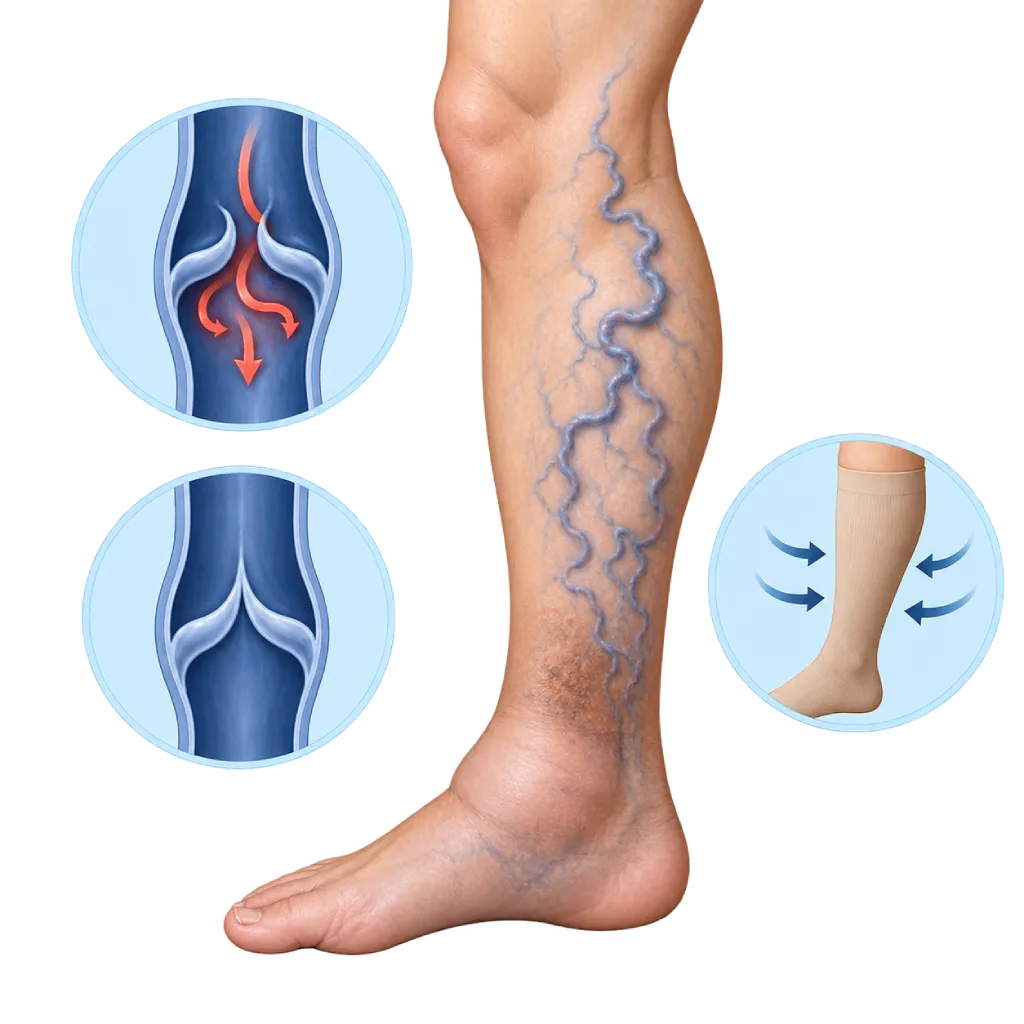
Chronic venous insufficiency is a condition in which the leg veins cannot return blood to the heart properly over a long period, causing swelling, changes in skin color and texture, and even wounds around the ankle.
SourcesSigns That Need Urgent Help
- Skin redness that spreads quickly, feels hot, and comes with fever
- A leg wound that oozes pus, smells bad, or is getting deeper
- A varicose vein or wound that bleeds and is hard to stop
- One leg that suddenly becomes more swollen and painful than usual
- Sudden shortness of breath or chest pain
If these signs appear, go to the nearest emergency department right away or call Heart Attack Center 1500 258.
01 / Understanding the condition
About Chronic Venous Insufficiency
Chronic venous insufficiency is an advanced stage of chronic venous disease in the legs. Normally, one-way valves inside the veins and the calf muscle pump push blood up to the heart. If the valves leak or a vein is blocked, blood pools in the legs and the pressure inside the veins stays high, even when you walk. This is called venous hypertension, and it is different from the high blood pressure measured on your arm.
From Swelling to Ulcers
High venous pressure over a long period causes fluid to seep into the tissues, so the ankles swell. Over time, red blood cells that leak out of small vessels leave a brownish color in the skin, and inflammation makes the skin thicken and harden. In severe stages, the skin becomes fragile and easily injured, and a slow-healing venous wound (venous ulcer) forms, usually above the inner ankle.
Doctors classify the stages using the CEAP system. Fine vessels in the skin (C1) and varicose veins (C2) are part of chronic venous disease, and varicose veins are covered on the Varicose Veins page. The term chronic venous insufficiency is used when there is already swelling (C3), skin changes (C4), a healed ulcer (C5), or an active ulcer (C6).
Underlying Causes
The majority of cases are caused by leaking valves in the superficial or deep veins, often together with varicose veins. Another cause is valve damage after a blood clot in a deep vein, covered on the Post-Thrombotic Syndrome page. Compression or narrowing of the pelvic veins can also obstruct flow from the legs, covered on the May-Thurner Syndrome page. Excess weight and calf muscles that are weak or rarely used also make the condition worse.
It Can Be Controlled
Chronic venous insufficiency is generally long-lasting, but its progression can be slowed and ulcers can be healed. The ESVS 2022 guidelines recommend compression, staying active, and skin care as the foundation of treatment. If a superficial vein is leaking, closing that vein with a catheter helps ulcers heal faster and reduces recurrence. The EVRA clinical trial in 2018 supports doing this procedure earlier in people with venous ulcers, together with compression. After an ulcer heals, compression and staying active are continued to prevent it from coming back.
02 / Understanding the condition
Symptoms to Recognize.
Common Symptoms
- Legs that feel heavy, achy, or tight, getting worse after standing for a long time
- Ankle swelling that gets worse toward the evening
- Calf cramps or restless legs at night
- Itching, dry skin, or eczema around the ankle
- Brownish or blackish discoloration of the skin above the ankle
- Skin on the lower leg that thickens, hardens, and is painful when pressed
- Small white scarred patches around the ankle
- Fan-shaped clusters of dilated fine vessels around the ankle
Symptoms in Older Adults
In older age, venous ulcers are found more often and may occur together with narrowed arteries, so the symptoms are sometimes atypical.
- Leg wounds that appear after a minor bump and heal slowly
- Stiff ankles that shorten your stride
- Thin, dry skin on the legs that chafes easily
- Persistent swelling from sitting more
03 / Understanding the condition
What Causes This Condition?
- Leaking valves in the superficial veins, especially the great and small saphenous veins, often with varicose veins
- Damage to the deep vein valves after deep vein thrombosis
- Narrowing or blockage of the pelvic veins, for example compression of the left iliac vein
- A weak calf muscle pump due to rarely walking, paralysis, or stiff ankles
- Long-term high pressure in the abdomen, for example with obesity
- Vein valves that are absent or very weak from birth, in rare cases
04 / Understanding the condition
Who Is at Higher Risk?
Age
Risk rises after age 50 because the valves and vein walls change and activity decreases. Venous ulcers are found more often in older age.
Genetic
A history of varicose veins or venous ulcers in a parent or sibling increases susceptibility to weak valves and vein walls.
Lifestyle
Jobs that involve long periods of standing or sitting, lack of movement, excess weight, and smoking weaken venous flow from the legs.
Medical
A history of deep vein thrombosis, varicose veins left untreated for a long time, severe injury or surgery on the leg, and right heart failure, which increases venous pressure.
Other
Pregnancy (especially repeated pregnancies) and being female are linked to varicose veins, which can progress to chronic venous insufficiency.
Groups at Higher Risk
- People with Long-Standing Varicose Veins: Varicose veins left untreated for years can progress to swelling, skin changes, and ulcers, especially when the valve leakage is large.
- People with a History of Leg Vein Clots: A clot in a deep vein can damage the valves, so swelling and skin changes appear months to years later.
- People with Obesity: Excess weight increases pressure in the abdomen and leg veins and makes the calf pump work harder.
- Workers Who Stand or Sit for Long Periods: Shop assistants, nurses, drivers, and office workers spend longer periods with blood pooling in their legs without help from the calf pump.
- Older Adults with Limited Mobility: Walking rarely and having stiff ankles weaken the calf pump, so more blood pools in the legs.
05 / Understanding the condition
How Is It Diagnosed?
Your doctor asks about your symptoms, any history of varicose veins, blood clots, or pregnancy, and your job, then examines both legs while you are standing. From this examination, the doctor determines the CEAP stage and looks for typical signs such as swelling, brownish skin, thickened skin, white scarred patches, or wounds.
Duplex ultrasound is the main test recommended by guidelines. It shows which veins have leaking valves, how long the backward flow lasts, and whether there is a blockage or leftover clot in the deep veins. Before starting strong compression or a procedure, the doctor checks arterial flow with the Ankle-Brachial Index (ABI), because narrowed arteries can occur at the same time and change the treatment options.
If narrowing of the pelvic veins is suspected, for example because of severe swelling in one leg or a history of clots in the thigh and pelvic veins, the doctor may order CT venography or MR venography. A wound that looks atypical or does not improve despite good care may be biopsied to rule out other causes.
Physical Examination
Examination of the legs while standing to assess swelling, skin changes, varicose veins, and wounds, and then determine the CEAP stage.
Duplex Ultrasound
Shows which veins have leaking valves, how long the backward flow lasts, and any blockage or leftover clot in the deep veins, without radiation or needles.
Ankle-Brachial Index (ABI) Test
Assesses arterial flow in the legs before strong compression or a procedure, because narrowed arteries can occur together with venous insufficiency.
CT venography or MR venography to assess narrowing or blockage of the veins in the pelvis and abdomen.
Skin Biopsy
Considered when a wound looks atypical or does not improve despite good care, to rule out other causes.
Laboratory Tests
Blood tests to look for other causes of swelling, such as kidney problems, liver problems, or low albumin levels.
06 / Understanding the condition
Treatment Options.
Treatment is decided by a doctor after an assessment. The categories below can help you follow the conversation with your doctor.
Compression Therapy
Stockings, bandages, or compression wraps apply graduated pressure to the leg so swelling goes down and ulcers heal faster. The type and pressure are chosen after arterial flow has been assessed.
Staying Active and Calf Exercises
Walking regularly, ankle-flexing exercises, and raising the legs while resting strengthen the calf pump and reduce swelling.
Skin and Wound Care
Moisturizer for dry skin, eczema treatment, and suitable wound dressings, combined with compression and carried out together with the wound care team.
Venoactive Medicines
A class of medicines that can reduce aching, heaviness, and swelling, and in some patients helps ulcers heal together with compression. Your doctor decides whether they are needed.
Closing Leaking Superficial Veins
Catheter-based heat ablation, medical glue, or foam sclerotherapy to close veins with leaking valves. For venous ulcers, an earlier procedure helps the ulcer heal faster.
Procedures on the Pelvic Veins
If narrowing or blockage of the iliac vein causes severe symptoms, the vein can be widened with a balloon and fitted with a stent through a catheter in selected patients.
07 / Understanding the condition
Complications to Watch For.
Venous Leg Ulcer
An open wound around the ankle that can last for months and easily comes back after healing, especially if compression is stopped.
Cellulitis and Wound Infection
Bacteria enter through fragile skin or a wound, causing spreading redness, pain, warmth, and fever. It needs prompt treatment.
Lipodermatosclerosis
Long-term inflammation makes the skin and the fatty tissue beneath it harden and shrink, so the lower leg looks like an upside-down bottle.
Venous Eczema
Dry, itchy, and scaly skin around the ankle. Scratching can open new wounds and become an entry point for infection.
Bleeding from Varicose Veins
A widened vein just beneath thin skin can burst. Raise the leg, press firmly, and seek help right away.
Clots in the Leg Veins
Slow flow increases the risk of clots in both the superficial and deep veins. Covered on the Deep Vein Thrombosis page.
08 / Understanding the condition
What Can You Do?
- Walk every day and do ankle-flexing exercises when sitting for long periods.
- Raise your legs higher than your heart when resting if your feet are swollen.
- Wear compression stockings as recommended by your doctor, especially after an ulcer has healed, to prevent it from coming back.
- Maintain a healthy weight and stop smoking.
- Apply moisturizer every day and avoid scratching the skin around your ankles.
- Protect your legs from bumps and check the skin on your legs and feet regularly.
- Have varicose veins with swelling or skin changes checked early.
09 / Understanding the condition
When Should You See a Doctor?
Make an appointment with a doctor if ankle swelling does not go away after rest, the skin on your lower leg starts to change color or thicken, or a wound appears on your leg. Earlier treatment helps prevent ulcers and recurrence. Go to the emergency room right away if one leg suddenly becomes swollen and painful, or you suddenly become short of breath.
- Ankle swelling that persists or spreads
- Brownish, itchy, or scaly skin above the ankle
- Skin on the lower leg that hardens and feels painful
- A leg wound that does not improve within two weeks
- A wound that comes back after it had healed
- Spreading redness, warmth, or fever around a wound
Don't Wait in an Emergency.
If symptoms are severe or come on suddenly, go to the nearest emergency department right away or call Heart Attack Center 1500 258, rather than waiting for an appointment.
10 / Common questions
Questions You May Have.
Frequently asked questions about chronic venous insufficiency.
What is the difference between chronic venous insufficiency and varicose veins?
Varicose veins are superficial veins that are widened and twisted. Chronic venous insufficiency is the stage at which impaired venous flow has already caused swelling, skin changes, or ulcers. Many people with chronic venous insufficiency also have varicose veins, but some do not, for example when the cause is deep vein damage after a blood clot. A duplex ultrasound helps your doctor tell them apart.
Can venous ulcers heal?
Yes. The majority of venous ulcers heal with proper compression, wound care, and staying active, although this can take weeks to months. If a superficial vein is leaking, closing it early helps the ulcer heal faster. After healing, the ulcer can easily come back, so compression stockings and regular checkups are still recommended.
Why has the skin above my ankle turned brown?
High venous pressure causes red blood cells to leak out of small vessels into the skin tissue. Iron from these blood cells leaves a brownish color that can be permanent. In the CEAP system, this discoloration is stage C4, a sign that the skin is starting to be affected. Treating the source of the leak and using compression can keep the skin changes from getting worse and reduce the risk of ulcers.
How long do I need to wear compression stockings?
Compression stockings are usually worn long term, every day from when you get up until the evening, and taken off when you sleep. In people whose venous ulcers have healed, regular use helps prevent the ulcer from coming back. Stockings usually need to be replaced every few months because their pressure decreases. If the stockings feel painful, rub your skin raw, or make your toes numb, take them off and ask your doctor.
Is exercise safe with chronic venous insufficiency?
It is safe and recommended. Walking, leisurely cycling, swimming, and ankle-flexing exercises strengthen the calf muscles that pump blood upward. Avoid standing still for too long. If you have an ulcer, keep exercising while wearing compression as advised by your doctor or wound care nurse. If your ankles are stiff, joint mobility exercises also help restore the work of the calf pump.
Is chronic venous insufficiency dangerous for the heart?
Chronic venous insufficiency does not damage the heart directly. However, leg swelling can also come from heart failure, kidney disease, or the effects of certain medicines, so your doctor will look for other causes. If you have heart disease and need to wear compression stockings, ask what pressure level is safe, because strong compression in heart failure that is not yet under control can add to the heart's workload.
Sources and Medical Review
Translated from the Indonesian edition medically reviewed by dr. Emanoel Oepangat, Sp.JP(K).
Sources as cited in the Indonesian edition.
- De Maeseneer MG, Kakkos SK, Aherne T, Baekgaard N, Black S, Blomgren L, et al. European Society for Vascular Surgery (ESVS) 2022 Clinical Practice Guidelines on the Management of Chronic Venous Disease of the Lower Limbs. Eur J Vasc Endovasc Surg. 2022;63(2):184-267.
- Lurie F, Passman M, Meisner M, Dalsing M, Masuda E, Welch H, et al. The 2020 update of the CEAP classification system and reporting standards. J Vasc Surg Venous Lymphat Disord. 2020;8(3):342-52.
- Gloviczki P, Lawrence PF, Wasan SM, Meissner MH, Almeida J, Brown KR, et al. The 2022 Society for Vascular Surgery, American Venous Forum, and American Vein and Lymphatic Society clinical practice guidelines for the management of varicose veins of the lower extremities. Part I. Duplex Scanning and Treatment of Superficial Truncal Reflux. J Vasc Surg Venous Lymphat Disord. 2023;11(2):231-61.e6.
- Gohel MS, Heatley F, Liu X, Bradbury A, Bulbulia R, Cullum N, et al. A Randomized Trial of Early Endovenous Ablation in Venous Ulceration. N Engl J Med. 2018;378(22):2105-14.
- Davies AH. The Seriousness of Chronic Venous Disease: A Review of Real-World Evidence. Adv Ther. 2019;36(Suppl 1):5-12.
- Youn YJ, Lee J. Chronic venous insufficiency and varicose veins of the lower extremities. Korean J Intern Med. 2019;34(2):269-83.
Doctors Who Treat This Condition

dr. Suko Adiarto, Sp.JP(K), Ph.D.
Interventional Cardiology
Vascular Diagnostic and Therapeutic Center +1 center
Clinical focusCoronary Intervention · Peripheral Vascular Intervention
View Profile
dr. Emanoel Oepangat, Sp.JP(K)
Interventional Cardiology
Vascular Diagnostic and Therapeutic Center +1 center
Clinical focusCoronary Intervention · Peripheral Vascular Intervention
View Profile
dr. Ayu Amalia U. Putri, Sp.KFR
Physical Medicine & Rehabilitation
Clinical focusCardiac Rehabilitation · Postoperative Rehabilitation
View Profile