
Quick answer
What Is Cardiac Device Infection?
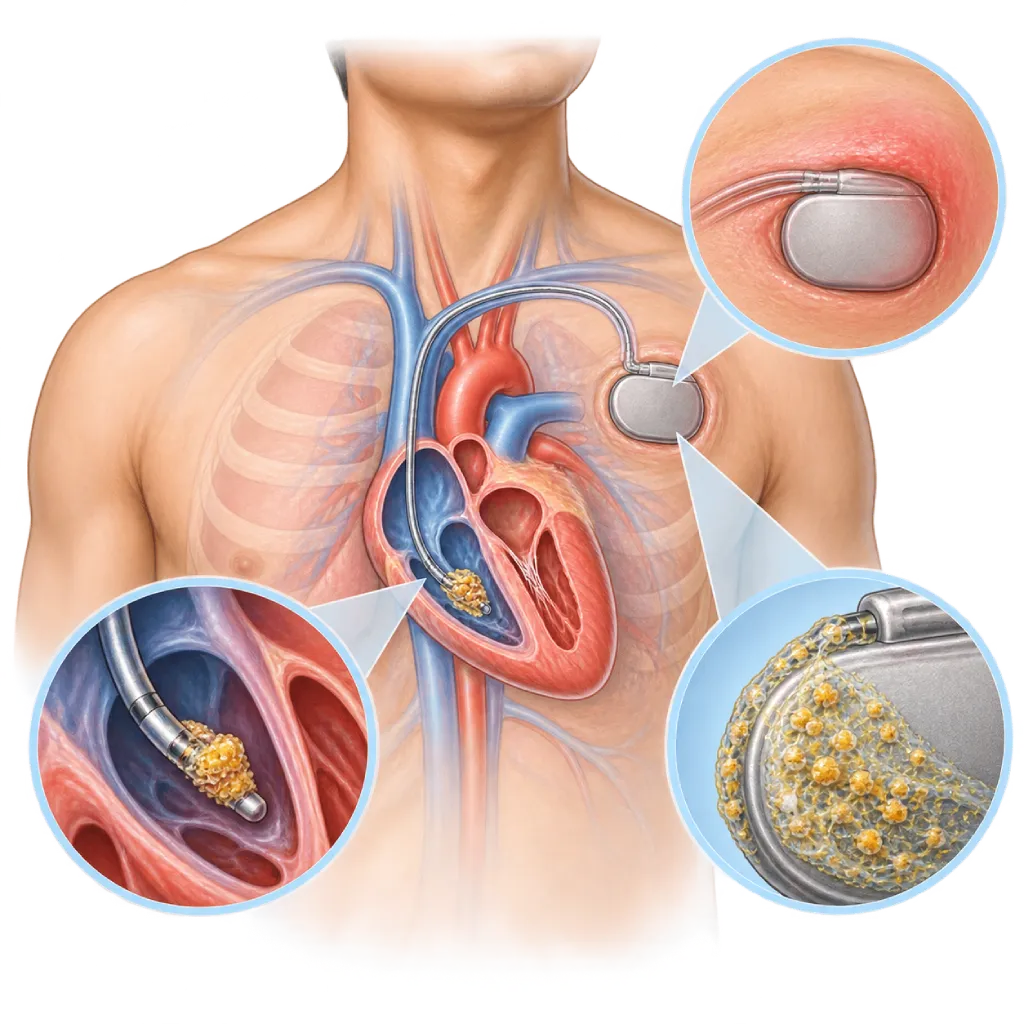
A cardiac device infection is an infection of a pacemaker, ICD, CRT device, or its wires (leads). The infection may stay in the device pocket under the skin or spread to the bloodstream, the leads inside the heart, and the valves.
SourcesSigns That Need Urgent Help
- High fever with severe chills
- Low blood pressure, cold skin, or severe weakness
- Shortness of breath or sharp chest pain when breathing in
- Confusion or reduced consciousness
- Part of the device or a lead is visible through the skin
If these signs appear, go to the nearest emergency department right away or call Heart Attack Center 1500 258.
01 / Understanding the condition
About Cardiac Device Infection
Cardiac electronic devices, such as a pacemaker, an implantable defibrillator (ICD), and a cardiac resynchronization therapy device (CRT), consist of a generator placed in a pocket under the skin of the chest and wires (leads) that pass through blood vessels into the heart. A cardiac device infection occurs when germs, usually staphylococcus bacteria from the skin, attach to the device or its leads. The germs form a protective layer (biofilm) on the device surface, making them hard to eliminate with antibiotics alone.
Two Forms of Infection
The 2020 EHRA consensus distinguishes between pocket infection and systemic infection. In a pocket infection, the skin over the generator is red, swollen, warm, painful, or draining fluid, or the device begins to push through the skin. In a systemic infection, germs enter the bloodstream and can attach to the leads inside the heart or to the valves, which is called device-related endocarditis. Its symptoms can be vague, such as recurrent fever, chills, and weakness, sometimes with no skin changes at all. A wound infection on the skin surface that has not reached the device pocket is distinguished from both, because it can still be treated with antibiotics and close monitoring. Endocarditis is covered on the Infective Endocarditis page.
When It Can Happen
Infection can appear in the first weeks after implantation, but it may also show up only months to years later. The risk is higher after a generator replacement or the addition of a lead, when a large bruise (hematoma) forms in the pocket, and in people with chronic kidney disease, diabetes, or a weakened immune system.
Principles of Treatment
The 2023 ESC guidelines on endocarditis and the 2020 EHRA consensus agree: when a device infection is confirmed, the entire system, meaning the generator and all leads, needs to be removed without delay, along with antibiotics. Lead removal is usually done through the blood vessels and is covered on the Lead Extraction page. A new device is implanted again only if it is still needed, after the infection is under control, and usually on the other side of the body. For some people, a device without leads inside the blood vessels, such as a leadless pacemaker or a subcutaneous ICD, may be an option.
This page covers infections of cardiac electronic devices. Pacemaker placement itself is covered on the Pacemaker Implantation page.
02 / Understanding the condition
Symptoms to Recognize.
Common Symptoms
- Red, warm, or swollen skin over the device
- Pain around the device pocket
- Fluid or pus draining from the wound or device pocket
- The implantation wound does not close
- Thinning skin over the device, or the device appearing to push through the skin
- Fever, chills, or night sweats without a clear cause
- Weakness, loss of appetite, or weight loss
Symptoms in Older Adults
In older adults, a bloodstream infection often comes without a high fever, so vague symptoms need attention.
- New weakness or confusion
- Falling or nearly fainting
- Loss of appetite for several days
- Low-grade fever that comes and goes
03 / Understanding the condition
What Causes This Condition?
- Germs from the skin entering during device implantation or replacement
- A large bruise (hematoma) in the device pocket where germs can grow
- A surgical wound that reopens or becomes infected
- Germs from an infection elsewhere in the body spreading through the bloodstream
- Pressure from the device underneath that makes the skin thin and break open (erosion)
04 / Understanding the condition
Who Is at Higher Risk?
Medical
Chronic kidney disease, especially in people on dialysis, diabetes, heart failure, use of corticosteroids or immune-suppressing medicines, and blood thinners that raise the risk of hematoma.
Other
Generator replacement, adding or revising leads, CRT or ICD implantation, a long procedure, fever within 24 hours before the procedure, and a previous device infection.
Lifestyle
Smoking and poor wound care can slow healing after device implantation.
Age
Older age often comes with thinner skin and other health conditions. In younger people, devices are used for longer, so generator replacements are more frequent.
Groups at Higher Risk
- Patients After Generator Replacement: Reopening the device pocket increases the risk of infection compared with the first implantation.
- People with Chronic Kidney Disease: Especially those on dialysis, because their immune defenses are weaker and their blood vessels are often accessed for procedures.
- People with Diabetes: High blood sugar slows wound healing and weakens the body's defenses against germs.
- People Taking Blood Thinners: They are more likely to develop a hematoma in the device pocket, which raises the risk of infection.
- People with a Previous Device Infection: A history of infection raises the risk of repeat infection in a new device.
05 / Understanding the condition
How Is It Diagnosed?
Diagnosis starts with examining the device pocket. Redness, swelling, fluid, or a wound that does not close points to a pocket infection. If part of the device or a lead is already visible from the outside, the device is considered infected without waiting for laboratory results. The device pocket is not punctured with a needle to draw fluid, because this can introduce germs.
After that, usually three sets of blood cultures are taken before antibiotics are started. Transthoracic and transesophageal echocardiography look for vegetations on the leads or valves. If the results are still unclear, FDG PET-CT or labeled white blood cell imaging can help show infection in the pocket or along the leads. A chest X-ray or CT can show small blockages in the lungs caused by clumps of germs that have broken off from the leads. The team uses the 2023 ESC endocarditis criteria and the 2020 EHRA consensus to decide whether the infection is confirmed and the entire system needs to be removed.
Physical Examination
The doctor examines the device pocket for redness, swelling, fluid, an open wound, or a device visible from the outside. A device that has pushed through the skin is considered infected.
Blood cultures: usually three sets are taken before antibiotics are started to look for germs in the bloodstream.
Echocardiography
TTE, and TEE through the esophagus, to look for vegetations, which are clumps of germs, on the leads or valves.
Cardiac PET Scan
FDG PET-CT helps show infection in the device pocket or along the leads when other test results are still unclear.
C-Reactive Protein (CRP) Test
A marker of inflammation to assess how severe the infection is and to monitor the response to treatment.
Complete Blood Count (CBC)
Checks the white blood cell count and other signs of infection; together with kidney function, it helps the doctor choose antibiotics.
Pocket tissue and lead tip cultures: during removal, samples are sent to the laboratory to confirm the germ causing the infection.
06 / Understanding the condition
Treatment Options.
Treatment is decided by a doctor after an assessment. The categories below can help you follow the conversation with your doctor.
Complete System Removal
The generator and all leads are removed without delay when infection is confirmed, including infection limited to the pocket, because antibiotics cannot clear germs from the device.
Intravenous Antibiotics
Started after blood cultures are taken, then adjusted to the germ causing the infection. Treatment lasts several weeks, depending on whether the infection is limited to the pocket or has reached the leads and valves.
Device Reimplantation
If a device is still needed, a new one is implanted after blood cultures are negative, usually on the other side of the body.
Alternative Devices
A leadless pacemaker or a subcutaneous ICD may be considered in certain people to reduce the risk of repeat infection.
Long-Term Suppressive Antibiotics
Considered only when device removal is not possible because the procedural risk is very high; the aim is to suppress the infection, not cure it.
Wound and Pocket Care
Cleaning the pocket and caring for the wound after device removal, with monitoring until the wound heals.
07 / Understanding the condition
Complications to Watch For.
Device-Related Endocarditis
Germs attach to the leads or the tricuspid valve and form vegetations that can damage the valve.
Sepsis
The infection spreads to the bloodstream and disrupts blood pressure and organ function, so intensive care is needed.
Septic Pulmonary Embolism
Clumps of germs from the leads can break off and travel to the lungs, causing shortness of breath, chest pain, or cough.
Pocket Abscess and Skin Erosion
Pus collects in the device pocket or the device pushes through the skin, so the device must be removed.
Recurrent Infection
If only part of the system is removed, germs left on the leads can trigger the infection again.
Need for Temporary Pacing
After removal, people who depend on a pacemaker need temporary pacing until a new device can be implanted safely.
08 / Understanding the condition
What Can You Do?
- Keep the wound dry and clean as instructed after implantation
- Do not press, scratch, or twist the device under your skin
- Check the wound every day during the first few weeks
- Report fever or skin changes over the device before taking antibiotics
- Attend device checkups as scheduled
- Control your blood sugar and manage other health conditions
- Tell your doctor about skin infections or other infections before a device replacement
09 / Understanding the condition
When Should You See a Doctor?
Contact the doctor who implanted your device, or come in earlier than planned, if the skin over the device is red, swollen, painful, warm, draining fluid, or looks thin. A fever without a clear cause also needs to be checked, even if the device pocket looks normal. Blood cultures should ideally be taken before you take antibiotics, so do not start antibiotics on your own. Do not cover the wound, squeeze out pus, or apply medicine yourself to the device area.
Go to the emergency room right away if you have:
- High fever with severe chills
- Severe weakness, low blood pressure, or confusion
- Shortness of breath or chest pain when breathing in
- Part of the device or a lead visible through the skin
Don't Wait in an Emergency.
If symptoms are severe or come on suddenly, go to the nearest emergency department right away or call Heart Attack Center 1500 258, rather than waiting for an appointment.
10 / Common questions
Questions You May Have.
Frequently asked questions about infections of pacemakers, ICDs, CRT devices, and their leads.
Can a cardiac device infection be cured with antibiotics alone?
In a confirmed infection, usually not. Germs form a protective layer on the surface of the device and leads that antibiotics struggle to reach, and the infection often comes back. That is why guidelines recommend removing the entire system along with antibiotics. The exception is a wound infection on the skin surface that has not reached the pocket, which can be treated with antibiotics and close monitoring.
Is lead removal dangerous?
Lead removal is a major procedure, especially when the leads have been in place for a long time and have attached to the blood vessels or heart wall. There is a risk of serious complications, but it is small when the procedure is done by an experienced team with heart surgery backup. Your doctor weighs this risk against the danger of leaving the infection in place, which can spread to the valves and bloodstream.
When can a new device be implanted?
A new device is implanted only if it is still needed. The EHRA consensus recommends waiting until blood cultures have been negative for at least 72 hours after removal, and longer, about two weeks, if there are vegetations on a valve. The new device is usually placed on the other side of the body. While waiting, people who depend heavily on a pacemaker can use temporary pacing.
How can I tell signs of infection from normal pain after implantation?
Mild pain, slight bruising, and minor swelling in the first few days after implantation are usually normal and gradually improve. Watch out if the pain gets worse instead, the redness spreads, the skin feels warm, fluid or pus drains, the wound opens, or a fever appears. Signs that appear weeks or months later also need to be checked. If in doubt, contact the team that implanted your device.
What is done to prevent infection during device implantation?
Prevention starts before the procedure: treating any existing infection, adjusting blood thinners to reduce the risk of a large bruise, and giving preventive antibiotics shortly before the incision. In people at high risk, the doctor may use an antibacterial envelope that wraps around the generator. After you go home, good wound care and timely follow-up visits also help lower the risk of infection.
Can an infection appear years after implantation?
Yes. Some infections appear only months to years later, for example because the skin over the device has thinned, or germs from another infection have spread through the bloodstream and attached to the leads. That is why recurrent fever without a clear cause in people with a pacemaker, ICD, or CRT device needs to be checked, including blood cultures before antibiotics are started.
Sources and Medical Review
Translated from the Indonesian edition medically reviewed by Dr. dr. Dicky A. Hanafy, Sp.JP(K).
Sources as cited in the Indonesian edition.
- Blomstrom-Lundqvist C, Traykov V, Erba PA, et al. European Heart Rhythm Association (EHRA) international consensus document on how to prevent, diagnose, and treat cardiac implantable electronic device infections, endorsed by the Heart Rhythm Society (HRS), the Asia Pacific Heart Rhythm Society (APHRS), the Latin American Heart Rhythm Society (LAHRS), International Society for Cardiovascular Infectious Diseases (ISCVID) and the European Society of Clinical Microbiology and Infectious Diseases (ESCMID) in collaboration with the European Association for Cardio-Thoracic Surgery (EACTS). Europace. 2020;22(4):515-549.
- Delgado V, Ajmone Marsan N, de Waha S, et al. 2023 ESC Guidelines for the management of endocarditis. Eur Heart J. 2023;44(39):3948-4042.
- Baddour LM, Esquer Garrigos Z, Rizwan Sohail M, et al. Update on Cardiovascular Implantable Electronic Device Infections and Their Prevention, Diagnosis, and Management: A Scientific Statement From the American Heart Association. Circulation. 2024;149(2):e201-e216.
- Kusumoto FM, Schoenfeld MH, Wilkoff BL, et al. 2017 HRS expert consensus statement on cardiovascular implantable electronic device lead management and extraction. Heart Rhythm. 2017;14(12):e503-e551.
- Tarakji KG, Mittal S, Kennergren C, et al. Antibacterial Envelope to Prevent Cardiac Implantable Device Infection. N Engl J Med. 2019;380(20):1895-1905.
- Glikson M, Nielsen JC, Kronborg MB, et al. 2021 ESC Guidelines on cardiac pacing and cardiac resynchronization therapy. Eur Heart J. 2021;42(35):3427-3520.
Doctors Who Treat This Condition

dr. Sunu B. Raharjo, Sp.JP(K), Ph.D.
Arrhythmia and Electrophysiology
Arrhythmia and Device Center
Clinical focusClinical and Interventional Electrophysiology · Cardiac Arrhythmia Ablation
View Profile
Dr. dr. Dicky A. Hanafy, Sp.JP(K)
Arrhythmia and Electrophysiology
Arrhythmia and Device Center +1 center
Clinical focusElectrophysiology and Arrhythmia Ablation · Pacemaker and ICD Implantation
View Profile
Dr. dr. Faris Basalamah, Sp.JP(K)
Interventional Cardiology
Coronary Intervention Procedures +1 center
Clinical focusComplex Coronary Intervention · Cardiac Electrophysiology
View Profile