
Quick answer
What Is Acute Heart Failure?
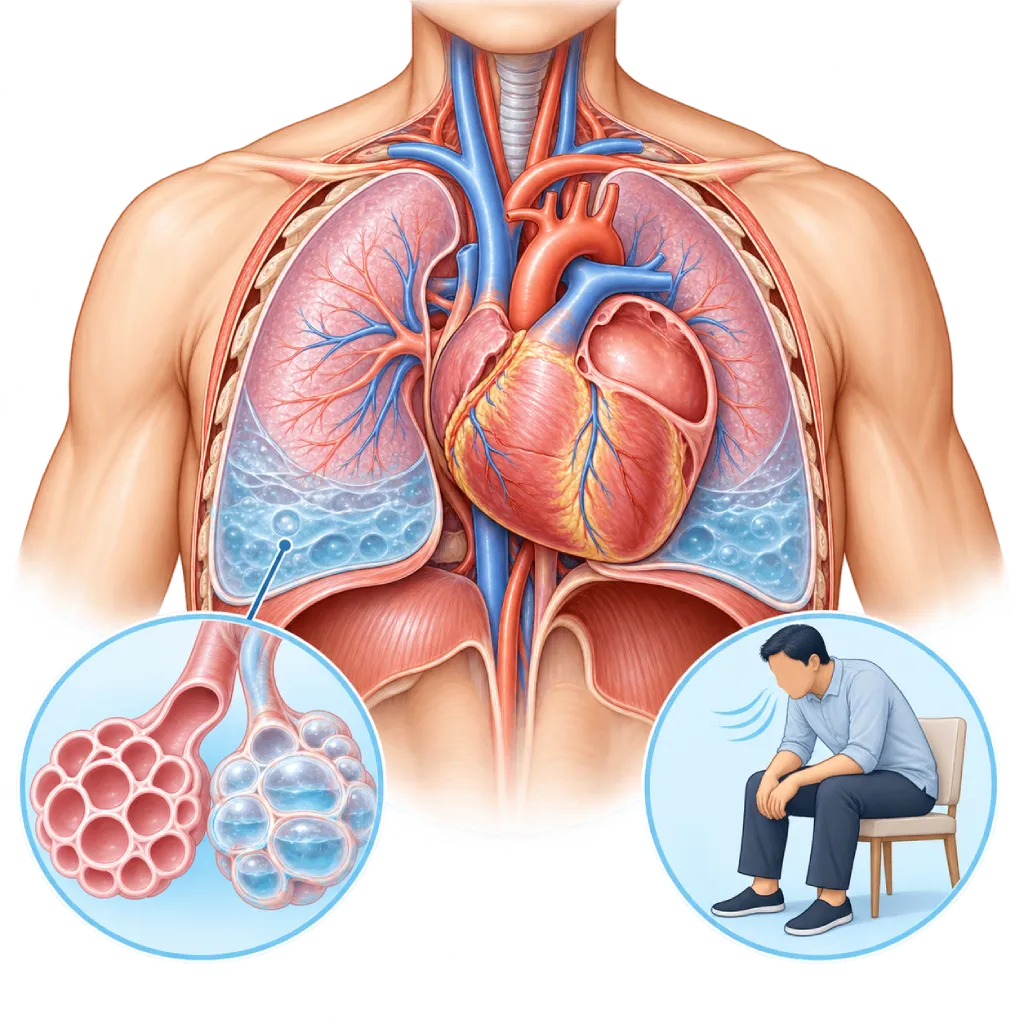
Acute heart failure means heart failure symptoms that are new or worsen quickly, over hours to days, so they need prompt treatment in the emergency room. The main symptoms are severe shortness of breath, especially when lying down, and increasing swelling.
Sources01 / Understanding the condition
About Acute Heart Failure
Acute heart failure is a condition in which heart failure symptoms appear for the first time or worsen quickly, so you need medical help right away. The majority of cases are a worsening of existing chronic heart failure, called decompensated heart failure. In other cases, acute heart failure appears for the first time, for example because of a heart attack or inflammation of the heart muscle.
The main problem is pressure inside the heart that rises quickly. Fluid then seeps into the air sacs of the lungs, making it hard for oxygen to enter the blood. In more severe cases, the heart cannot deliver enough blood to the brain, kidneys, and other organs.
Four Forms of Acute Heart Failure
The 2021 ESC guidelines distinguish four forms. First, acute decompensated heart failure: fluid builds up gradually over several days, with increasing shortness of breath and swelling. Second, acute pulmonary edema: severe shortness of breath that comes on within minutes to hours, often with high blood pressure, which is covered on the Cardiogenic Pulmonary Edema page. Third, right heart failure, when the right ventricle is unable to pump, for example because of a pulmonary embolism. Fourth, cardiogenic shock, when blood flow to the organs is severely reduced, which is covered on the Cardiogenic Shock page.
Triggers to Look For
Doctors always look for a trigger because its treatment differs. Common triggers are acute coronary syndrome, a surge in blood pressure, rhythm disorders such as fast atrial fibrillation, infections such as pneumonia, pulmonary embolism, sudden valve damage, and missed heart failure medicines or excess salt and fluid intake. NSAID pain relievers and declining kidney function can also trigger it.
After the Acute Phase
With prompt treatment, many patients improve within a few days. The first months after leaving the hospital are a vulnerable period for relapse. For this reason, the 2023 ESC guideline update recommends that long-term heart failure medicines be started and increased before discharge, then monitored with close follow-up during the first six weeks. The first follow-up visit should take place within one to two weeks after discharge.
02 / Understanding the condition
Symptoms to Recognize.
Common Symptoms
- Shortness of breath that becomes more severe over a few hours or days
- Shortness of breath when lying down, so you have to sleep sitting up
- Waking at night because of shortness of breath
- Swelling in the feet, legs, or abdomen that increases quickly
- Weight gain of 2 kg or more within a few days
- Coughing, wheezing, or a chest that feels full of fluid
- Extreme tiredness and being unable to do your usual activities
Symptoms in Older Adults
In older adults, acute heart failure sometimes appears without obvious shortness of breath.
- Sudden confusion or restlessness
- Severe weakness and spending more time lying down
- Not wanting to eat or drink
- Unusual drowsiness
- Falling or being unable to stand
03 / Understanding the condition
What Causes This Condition?
- Acute coronary syndrome or a heart attack that suddenly damages the heart muscle
- A surge to very high blood pressure
- Heart rhythm disorders, especially fast atrial fibrillation, or a very slow heartbeat
- Infections, such as pneumonia or a serious infection elsewhere in the body
- Missed heart failure medicines, or excess salt and fluid intake
- Pulmonary embolism, a blood clot that blocks a blood vessel in the lungs
- Sudden valve damage or inflammation of the heart muscle (myocarditis)
- Certain medicines, such as NSAID pain relievers, and declining kidney function
04 / Understanding the condition
Who Is at Higher Risk?
Medical
A history of heart failure, especially with a previous hospital stay, coronary artery disease, hypertension, diabetes, atrial fibrillation, valve disease, and chronic kidney disease increase the likelihood of acute heart failure.
Lifestyle
A high-salt diet, excessive alcohol, smoking, and taking heart medicines irregularly are triggers that can often be prevented.
Age
Acute heart failure is more common in older age, when people generally have more coexisting illnesses.
Other
Respiratory infections, major surgery, pregnancy in women with heart disease, and medicines that cause fluid retention can trigger worsening.
Groups at Higher Risk
- People with Chronic Heart Failure: The majority of acute heart failure cases are a worsening of existing heart failure, especially in the months after a hospital stay.
- Patients After a Heart Attack: Damage to the heart muscle can cause acute heart failure immediately or later on.
- Older Adults with Multiple Coexisting Illnesses: Aging kidneys, lungs, and heart make the body's fluid balance more easily disrupted.
- People with Severe Valve Disease: A very narrow or leaking valve can suddenly overwhelm the heart, for example during an infection or an irregular rhythm.
05 / Understanding the condition
How Is It Diagnosed?
In the emergency room, assessment and treatment happen at the same time. The team checks your blood pressure, pulse, breathing rate, and oxygen level, then assesses two things: whether your body is overloaded with fluid and whether blood flow to the organs is adequate. From this, the doctor decides whether you need breathing support, medicines to remove fluid, or treatment for shock.
Initial tests include an ECG to look for a heart attack or rhythm disorder, an NT-proBNP or BNP blood test to confirm that the shortness of breath comes from the heart, troponin, kidney function, electrolytes, a complete blood count, and a chest X-ray. Echocardiography is done immediately if your condition is unstable, and in other patients generally within the first two days of the hospital stay. If a heart attack is the trigger, coronary angiography is done as soon as possible.
Physical Examination
Assesses signs of fluid overload, such as swelling, crackling sounds in the lungs, and bulging neck veins, as well as signs of poor blood flow such as cold skin and confusion.
Electrocardiogram (ECG)
Done immediately to look for a heart attack and rhythm disorders that trigger the worsening.
NT-proBNP and BNP Test
Helps distinguish shortness of breath caused by the heart from shortness of breath caused by the lungs. A normal level makes acute heart failure unlikely.
Cardiac Troponin Test
Looks for heart muscle damage, especially when a heart attack is suspected as the trigger.
Chest X-Ray
Shows congestion and fluid in the lungs, fluid in the pleural space, heart size, and lung infection.
Echocardiography
Done immediately if blood pressure drops or sudden valve damage is suspected; in other patients within the first days of the hospital stay, to assess pumping and valve function.
Coronary Angiography
Done as soon as possible if acute heart failure is triggered by a heart attack, as the basis for opening the blocked artery.
06 / Understanding the condition
Treatment Options.
Treatment is decided by a doctor after an assessment. The categories below can help you follow the conversation with your doctor.
Oxygen and Breathing Support
Oxygen is given if the blood oxygen level is low. If shortness of breath is severe, a pressurized mask (noninvasive ventilation) helps push fluid out of the lungs; some patients need a breathing machine.
Medicines to Remove Fluid
Diuretics given through an IV to reduce fluid congestion. The doctor monitors urine output, body weight, electrolytes, and kidney function to adjust the dose.
Vasodilator Medicines
Used when blood pressure is high, to reduce the strain on the heart and relieve pulmonary edema.
Treating the Trigger
Opening a blocked coronary artery, controlling the heart rhythm, treating infection, lowering a blood pressure surge, or addressing a damaged valve.
Shock Treatment
Medicines that strengthen heart contractions (inotropes), medicines that raise blood pressure, and in certain cases a mechanical circulatory support device in the intensive care unit.
Starting Long-Term Medicines
Once you are stable, guideline-recommended heart failure medicines are started or increased before discharge, then adjusted during close follow-up in the first six weeks.
07 / Understanding the condition
Complications to Watch For.
Respiratory Failure
Fluid in the lungs can cause oxygen levels to drop severely, so breathing support is needed, from a pressurized mask to a breathing machine.
Cardiogenic Shock
Blood flow to the organs is severely reduced, requiring intensive care, which is covered on the Cardiogenic Shock page.
Kidney Function Problems
The kidneys receive too little blood flow and become congested with fluid, so kidney function and electrolytes are closely monitored while diuretics are given.
Heart Rhythm Disorders
Atrial fibrillation and dangerous ventricular rhythms can appear or worsen when the heart is under strain, so the rhythm is monitored continuously during the hospital stay.
Hospital Readmission
The risk of relapse is high in the first months after discharge, so early follow-up and gradual medicine adjustment are strongly recommended.
08 / Understanding the condition
What Can You Do?
- Take your heart failure medicines on schedule and do not stop them on your own.
- Weigh yourself every morning and record the result.
- Contact your doctor if your weight increases by 2 kg or more within 3 days.
- Limit salt and follow a fluid limit if your doctor recommends one.
- Ask your doctor before using pain relievers, herbal remedies, or supplements.
- Get influenza and pneumococcal vaccines as your doctor advises.
- Attend a follow-up visit one to two weeks after leaving the hospital.
09 / Understanding the condition
When Should You See a Doctor?
Acute heart failure is a medical emergency. Call 119 or go to the nearest emergency room right away if any of the signs below appear, and do not drive yourself. If shortness of breath increases slowly over a few days without severe signs, contact your doctor and get checked the same day.
- Severe shortness of breath at rest or being unable to lie down.
- White or pink frothy sputum.
- Pain or pressure in the chest.
- Bluish lips, or cold and sweaty skin.
- Confusion, extreme drowsiness, or fainting.
10 / Common questions
Questions You May Have.
Frequently asked questions about acute heart failure.
What is the difference between acute and chronic heart failure?
Chronic heart failure is a long-term condition whose symptoms are relatively stable with treatment. Acute heart failure is when symptoms appear for the first time or worsen quickly and need prompt treatment, usually in the hospital. Many people with chronic heart failure have had an acute episode, and once that episode is treated, care continues as chronic heart failure.
Does shortness of breath that increases slowly also need the emergency room?
If shortness of breath increases slowly, swelling increases, or your weight goes up quickly but you can still breathe comfortably at rest, contact your doctor and get checked the same day. Do not wait until the shortness of breath becomes severe. If it keeps you from lying down or makes it hard to speak, or comes with chest pain, bluish lips, or fainting, go to the emergency room right away or call 119.
What does the doctor do in the emergency room?
The team assesses breathing, blood pressure, and blood flow to the organs, then gives oxygen if levels are low, a pressurized mask if shortness of breath is severe, and medicines to remove fluid through an IV. If blood pressure is high, vasodilator medicines may be added. At the same time, the doctor looks for the trigger with an ECG, blood tests, a chest X-ray, and echocardiography, because triggers such as a heart attack require specific treatment.
How long is the hospital stay?
The length differs for each person, depending on the severity of symptoms, the trigger, and the response to medicines. It is generally a few days, but patients with cardiogenic shock or respiratory failure need a longer stay in intensive care. Before discharge, the team makes sure excess fluid has been reduced, long-term medicines have been started, and you and your family understand how to monitor yourself at home.
How can I prevent acute heart failure from coming back?
Take your medicines on schedule, weigh yourself every morning, limit salt, and learn the signs of worsening. The first follow-up visit should be within one to two weeks after discharge, because during this period medicine doses are usually increased step by step. The STRONG-HF study showed that rapidly increasing heart failure medicines with close follow-up reduced the combined rate of death and hospital readmission within six months.
Can acute heart failure happen to people with no history of heart disease?
Yes. Some cases are heart failure appearing for the first time, for example because of a large heart attack, inflammation of the heart muscle from a viral infection, sudden valve damage, or a surge to very high blood pressure. Peripartum cardiomyopathy can also appear in late pregnancy or after giving birth. For this reason, new severe shortness of breath always needs to be checked right away.
Sources and Medical Review
Translated from the Indonesian edition medically reviewed by dr. Puti S. Saus, Sp.JP(K).
Sources as cited in the Indonesian edition.
- McDonagh TA, Metra M, Adamo M, Gardner RS, Baumbach A, Böhm M, et al. 2021 ESC Guidelines for the diagnosis and treatment of acute and chronic heart failure. Eur Heart J. 2021;42(36):3599-3726.
- McDonagh TA, Metra M, Adamo M, Gardner RS, Baumbach A, Böhm M, et al. 2023 Focused Update of the 2021 ESC Guidelines for the diagnosis and treatment of acute and chronic heart failure. Eur Heart J. 2023;44(37):3627-3639.
- Heidenreich PA, Bozkurt B, Aguilar D, Allen LA, Byun JJ, Colvin MM, et al. 2022 AHA/ACC/HFSA Guideline for the Management of Heart Failure: A Report of the American College of Cardiology/American Heart Association Joint Committee on Clinical Practice Guidelines. Circulation. 2022;145(18):e895-e1032.
- Arrigo M, Jessup M, Mullens W, Reza N, Shah AM, Sliwa K, et al. Acute heart failure. Nat Rev Dis Primers. 2020;6(1):16.
- Mebazaa A, Davison B, Chioncel O, Cohen-Solal A, Diaz R, Filippatos G, et al. Safety, tolerability and efficacy of up-titration of guideline-directed medical therapies for acute heart failure (STRONG-HF): a multinational, open-label, randomised, trial. Lancet. 2022;400(10367):1938-1952.
- Mullens W, Damman K, Harjola VP, Mebazaa A, Brunner-La Rocca HP, Martens P, et al. The use of diuretics in heart failure with congestion: a position statement from the Heart Failure Association of the European Society of Cardiology. Eur J Heart Fail. 2019;21(2):137-155.
- Chioncel O, Parissis J, Mebazaa A, Thiele H, Desch S, Bauersachs J, et al. Epidemiology, pathophysiology and contemporary management of cardiogenic shock: a position statement from the Heart Failure Association of the European Society of Cardiology. Eur J Heart Fail. 2020;22(8):1315-1341.
Doctors Who Treat This Condition

dr. Siska S. Danny, Sp.JP(K)
Interventional Cardiology
Coronary Intervention Procedures
Clinical focusPCI for Acute Coronary Syndrome · Primary Coronary Intervention
View Profile
Dr. dr. Jajang Sinardja, Sp.JP(K)
Interventional Cardiology
Coronary Intervention Procedures
Clinical focusAcute Coronary Syndrome · Primary Coronary Intervention
View Profile
dr. Puti S. Saus, Sp.JP(K)
Interventional Cardiology
Coronary Intervention Procedures
Clinical focusAcute Coronary Syndrome · Primary Coronary Intervention
View Profile