
Quick answer
What Is Orthostatic Hypotension?
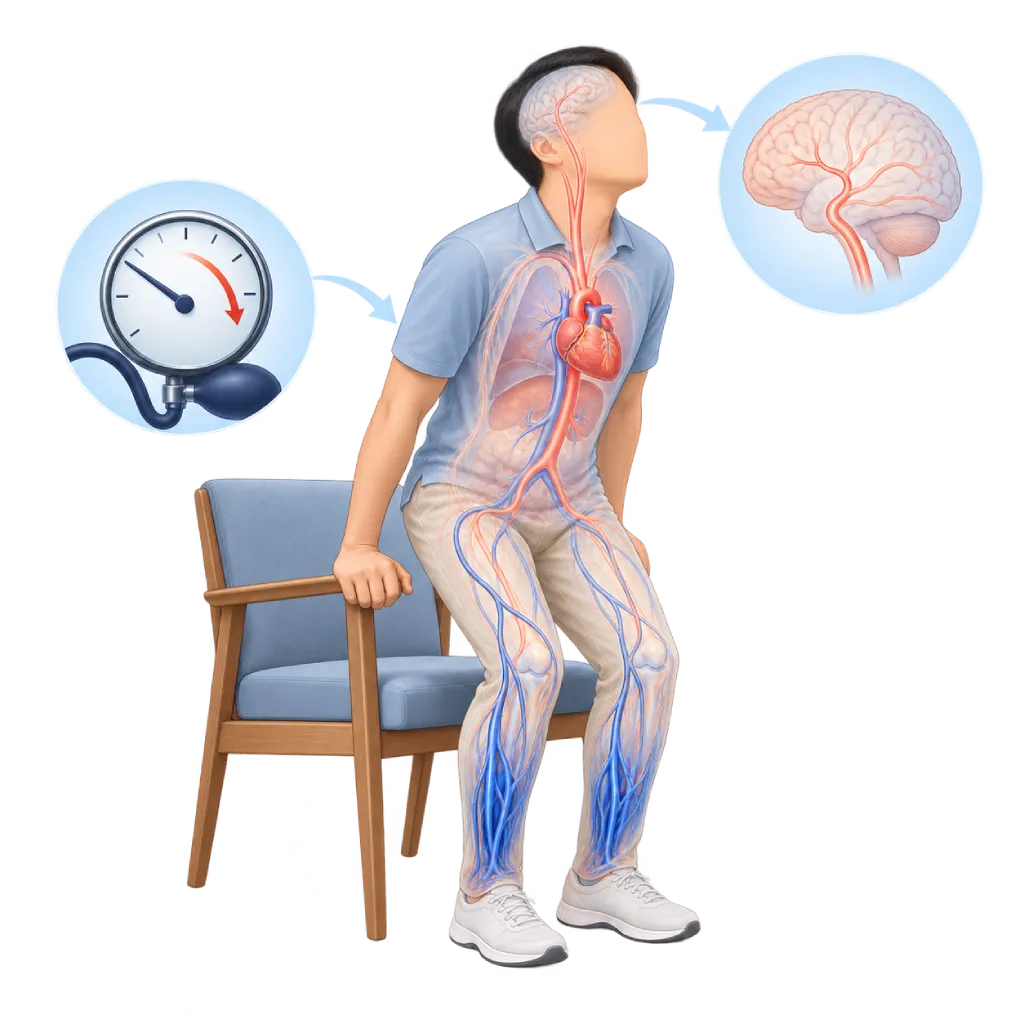
Orthostatic hypotension is a drop in blood pressure when you stand up: the top number falls by 20 mmHg or more, or the bottom number falls by 10 mmHg or more, within three minutes. As a result, you may feel lightheaded or even faint.
SourcesSigns That Need Urgent Help
- Fainting with chest pain, shortness of breath, or a pounding heart
- Fainting that causes a head injury or from which you do not wake up quickly
- Slurred speech, facial drooping, or weakness in the arm and leg on one side
- Black stools, vomiting blood, or other bleeding
- Persistent vomiting or diarrhea that keeps you from drinking
If these signs appear, go to the nearest emergency department right away or call Heart Attack Center 1500 258.
01 / Understanding the condition
About Orthostatic Hypotension
When you stand up, about half a liter to one liter of blood shifts down into your legs and abdomen because of gravity. In healthy people, the autonomic nerves quickly narrow the blood vessels and slightly speed up the heart rate, so blood pressure is maintained and the brain still gets enough blood. In orthostatic hypotension, this adjustment is delayed or insufficient. Blood pressure drops and blood flow to the brain is briefly reduced.
Doctors call it orthostatic hypotension when, within three minutes of standing, the systolic pressure drops by 20 mmHg or more, or the diastolic pressure drops by 10 mmHg or more. In some people the drop only appears after more than three minutes. In others, the pressure falls very quickly in the first few seconds after standing and then recovers on its own.
Two Groups of Causes
The first group is non-neurogenic orthostatic hypotension: the autonomic nerves are still healthy, but the body is short of fluid, has lost blood, or is affected by medicines that widen the blood vessels and remove fluid. This type often improves once the cause is corrected. The second group is neurogenic orthostatic hypotension, in which the autonomic nerves themselves are damaged, for example in long-standing diabetes, Parkinson's disease, multiple system atrophy, or amyloidosis. In this type, the heart rate barely rises on standing, and some people with it actually have high blood pressure when lying down.
Why It Matters
Orthostatic hypotension is common in older adults. Symptoms tend to be worse in the morning, after meals, in hot weather, after a warm bath, and after lying down for a long time. Studies show that orthostatic hypotension is linked to the risk of falls, fainting, and heart disease and stroke later in life. For this reason, dizziness on standing that happens repeatedly is worth telling your doctor about, rather than being dismissed as a normal part of aging.
The symptoms are not always dizziness. Some people feel aching in the back of the neck and shoulders, weakness, blurred vision, or difficulty thinking when standing for a long time, which then improves after sitting down. A pattern of symptoms that appear when standing and ease when sitting or lying down is an important clue for your doctor.
Treatment is step by step: finding and correcting the cause, reviewing medicines, changing daily habits, and, if still needed, medicines from your doctor. Orthostatic hypotension is one type of hypotension, covered on the Hypotension page.
02 / Understanding the condition
Symptoms to Recognize.
Common Symptoms
- Dizziness or lightheadedness within a few seconds to minutes after standing up
- Blurred or darkened vision, or seeing spots, when getting up
- Weakness, unsteadiness, or feeling as if you are about to fall
- Symptoms that ease after sitting or lying down again
- Pain or aching in the back of the neck and shoulders when standing
- Difficulty concentrating when standing for a long time
- Nearly fainting or fainting briefly
Symptoms in Older Adults
In older adults, symptoms can be vague and are often mistaken for normal aging.
- Falling without remembering why
- Weakness or brief confusion after getting out of bed
- Symptoms that are worse in the morning and after meals
- Legs that feel weak or heavy when starting to walk
- Blurred vision when standing up from the toilet or a chair
03 / Understanding the condition
What Causes This Condition?
- Dehydration due to diarrhea, vomiting, fever, heavy sweating, or not drinking enough
- Blood pressure medicines, diuretics, nitrates, alpha-blocker prostate medicines, and some antidepressants
- Damage to the autonomic nerves from long-standing diabetes (autonomic neuropathy)
- Nervous system diseases such as Parkinson's disease, multiple system atrophy, and Lewy body dementia
- Prolonged bed rest, which weakens the reflexes that regulate blood pressure
- Anemia, bleeding, or adrenal gland hormone disorders
- Heart disease that limits blood flow, such as severe narrowing of the aortic valve
04 / Understanding the condition
Who Is at Higher Risk?
Age
The risk increases after age 65 because the baroreceptor reflex, which relies on pressure sensors in the neck and chest, slows down and the blood vessels become stiffer.
Medical
Diabetes, Parkinson's disease, treated hypertension, heart failure, chronic kidney disease, and anemia increase the likelihood of blood pressure dropping when you stand.
Lifestyle
Not drinking enough, drinking alcohol, spending long periods in hot places, and rarely moving make it harder for the body to adjust blood pressure on standing.
Other
Taking several medicines at once, especially blood pressure medicines, diuretics, prostate medicines, sleeping pills, and certain antidepressants.
Groups at Higher Risk
- Older Adults: Weaker blood pressure reflexes and the use of many medicines make older adults more likely to experience it and more prone to falls.
- People with Long-Standing Diabetes: Years of high blood sugar can damage the autonomic nerves that narrow the blood vessels when you stand.
- People with Parkinson's Disease: The disease can affect the autonomic nerves, and its medicines can also lower blood pressure.
- People Taking Blood Pressure Medicines: A combination of several medicines, especially with diuretics, can make blood pressure drop too far on standing.
- Patients After Prolonged Bed Rest: After a serious illness, surgery, or a long hospital stay, the body needs time to readjust blood pressure on standing.
05 / Understanding the condition
How Is It Diagnosed?
The main step is measuring your blood pressure and pulse while lying down and then while standing. You are asked to lie down for about five minutes, then stand up, and your blood pressure is measured at the first and third minutes. Your doctor will also ask about your symptoms, when they appear, and all the medicines you take. The change in pulse on standing helps distinguish the non-neurogenic type, which usually comes with a rise in pulse, from the neurogenic type, in which the pulse barely changes.
Blood tests look for anemia, dehydration, blood sugar problems, and electrolyte imbalances. An ECG and, if needed, echocardiography assess the heart. If the standing measurements are inconclusive, a tilt table test may be done. Blood pressure monitoring over 24 hours helps detect drops in the morning and after meals, as well as high blood pressure during sleep.
Physical Examination
Blood pressure and pulse are measured after lying down for about five minutes, then at the first and third minutes after standing up.
Tilt table test: you lie on a table that is tilted to a nearly upright position while your blood pressure and pulse are monitored continuously.
Ambulatory Blood Pressure Monitoring
Monitoring over 24 hours to see drops in blood pressure throughout the day and high blood pressure when lying down at night.
Electrocardiogram (ECG)
A recording of the heart's rhythm to look for rhythm disorders or signs of heart disease that may also lower blood pressure.
Laboratory Tests
Blood tests to look for anemia, dehydration, and electrolyte imbalances, and to check blood sugar and kidney function.
Echocardiography
A heart ultrasound if narrowing of the aortic valve, a weakened heart pump, or heart muscle disease is suspected.
06 / Understanding the condition
Treatment Options.
Treatment is decided by a doctor after an assessment. The categories below can help you follow the conversation with your doctor.
Correcting the Cause
Replacing lost fluids, treating anemia or bleeding, and treating the underlying disease. In the non-neurogenic type, this step is often enough.
Medication Review
Your doctor reviews medicines that can lower blood pressure and, if needed, switches them, reduces them, or changes when you take them. Do not stop your medicines on your own.
Daily Habits and Counterpressure Maneuvers
Getting up gradually, crossing your legs while tightening your thigh and buttock muscles when standing, and avoiding standing still for long periods and very hot baths.
Fluids, Salt, and Support Aids
Drinking enough, adding salt if your doctor approves, sleeping with the head of the bed slightly raised, and wearing compression stockings or an abdominal binder.
Medicines from Your Doctor
If symptoms remain bothersome, your doctor may prescribe a medicine that narrows blood vessels or helps the body retain fluid, with monitoring of blood pressure while lying down.
07 / Understanding the condition
Complications to Watch For.
Falls and Injuries
Sudden dizziness on standing can cause falls, hip fractures, or head injuries, especially in older adults.
Fainting
Reduced blood flow to the brain can make you lose consciousness briefly, covered on the Syncope page.
High Blood Pressure When Lying Down
Some people with the neurogenic type have high blood pressure when lying down, so medicine adjustments and sleeping position need to be planned with your doctor.
Heart Disease and Stroke
Studies link orthostatic hypotension with the risk of coronary artery disease, heart failure, and stroke later in life.
08 / Understanding the condition
What Can You Do?
- Sit on the edge of the bed for one to two minutes before standing up.
- Drink enough water, especially in the morning, in hot weather, and when you are sick.
- When you start to feel dizzy, sit down right away or cross your legs while tightening your muscles.
- Avoid standing still for long periods, very hot baths, and drinking alcohol.
- Eat smaller meals, especially if symptoms also appear after eating.
- Bring a list of your medicines to checkups and ask which ones can lower your blood pressure.
- Stay active as much as you are able so your leg muscles help return blood to the heart.
09 / Understanding the condition
When Should You See a Doctor?
Anyone can feel dizzy now and then when standing up too quickly. See a doctor if it happens often or interferes with your activities, so the cause can be found.
- Dizziness or darkened vision almost every time you stand up
- Having fallen or fainted after standing up
- Symptoms that started after beginning a new medicine or after a medicine was added
- Accompanied by difficulty urinating, severe constipation, reduced sweating, or erectile problems
- Accompanied by tremor, slowed movements, or tingling and numbness in the feet
- Go to the emergency room right away if fainting comes with chest pain, shortness of breath, or a pounding heart
Don't Wait in an Emergency.
If symptoms are severe or come on suddenly, go to the nearest emergency department right away or call Heart Attack Center 1500 258, rather than waiting for an appointment.
10 / Common questions
Questions You May Have.
Frequently asked questions about orthostatic hypotension.
What is the difference between ordinary dizziness and orthostatic hypotension?
Dizziness can occur in many positions and for many reasons. In orthostatic hypotension, the typical symptoms appear within a few seconds to minutes after standing up and ease when you sit or lie down again. Spinning dizziness, where the room feels like it is turning, usually comes from the inner ear. Measuring your blood pressure while lying down and then standing helps your doctor tell them apart.
How can you measure your standing blood pressure at home?
Lie down for about five minutes, then measure your blood pressure and pulse. After that, stand up and measure again at the first and third minutes. Do this with someone nearby and close to a chair or bed, because you may feel dizzy when you stand. Write down the numbers and any symptoms, then show the notes to your doctor at your checkup.
Should you stop your blood pressure medicines if you have orthostatic hypotension?
Do not stop them on your own. Stopping medicines suddenly can cause your blood pressure to spike or worsen heart disease. Your doctor will assess which medicines are contributing, and may then switch the type, lower the dose, or change the time you take them. Many people with hypertension can still be treated safely while keeping their standing blood pressure in check.
Why are symptoms worse in the morning?
During the night, your body passes fluid in urine and goes without drinking for hours, so the amount of fluid in your blood vessels is lower in the morning. Some medicines also have a strong effect in the morning. Drinking one to two glasses of water before getting out of bed, then getting up gradually, often helps, unless your doctor has limited your fluids.
What are counterpressure maneuvers?
Counterpressure maneuvers are simple movements that keep blood from pooling in your legs. Examples include crossing your legs while tightening your thigh and buttock muscles, rising up on your toes repeatedly, or squatting. These movements are done when you start to feel dizzy. If the symptoms do not ease within a few seconds, sit or lie down right away so you do not fall.
Can orthostatic hypotension be cured?
It depends on the cause. The type caused by dehydration, medicines, or prolonged bed rest often improves once the cause is corrected. The neurogenic type caused by damage to the autonomic nerves usually persists, but its symptoms can be controlled with daily habits, aids such as compression stockings, and medicines from your doctor, which lowers the risk of falls.
Sources and Medical Review
Translated from the Indonesian edition medically reviewed by dr. Debby C. Soemitha, Sp.PD.
Sources as cited in the Indonesian edition.
- Freeman R, Wieling W, Axelrod FB, Benditt DG, Benarroch E, Biaggioni I, et al. Consensus statement on the definition of orthostatic hypotension, neurally mediated syncope and the postural tachycardia syndrome. Clin Auton Res. 2011;21(2):69-72.
- Gibbons CH, Schmidt P, Biaggioni I, Frazier-Mills C, Freeman R, Isaacson S, et al. The recommendations of a consensus panel for the screening, diagnosis, and treatment of neurogenic orthostatic hypotension and associated supine hypertension. J Neurol. 2017;264(8):1567-1582.
- Brignole M, Moya A, de Lange FJ, Deharo JC, Elliott PM, Fanciulli A, et al. 2018 ESC Guidelines for the diagnosis and management of syncope. Eur Heart J. 2018;39(21):1883-1948.
- Ricci F, De Caterina R, Fedorowski A. Orthostatic hypotension: epidemiology, prognosis, and treatment. J Am Coll Cardiol. 2015;66(7):848-860.
- Wieling W, Kaufmann H, Claydon VE, van Wijnen VK, Harms MPM, Juraschek SP, et al. Diagnosis and treatment of orthostatic hypotension. Lancet Neurol. 2022;21(8):735-746.
- Fanciulli A, Jordan J, Biaggioni I, Calandra-Buonaura G, Cheshire WP, Cortelli P, et al. Consensus statement on the definition of neurogenic supine hypertension in cardiovascular autonomic failure by the American Autonomic Society (AAS) and the European Federation of Autonomic Societies (EFAS). Clin Auton Res. 2018;28(4):355-362.
Doctors Who Treat This Condition

dr. Debby C. Soemitha, Sp.PD
Internal Medicine
Clinical focusDiabetes and Diabetes Complications · Obesity and Metabolic Disease
View Profile
dr. Siska S. Danny, Sp.JP(K)
Interventional Cardiology
Coronary Intervention Procedures
Clinical focusPCI for Acute Coronary Syndrome · Primary Coronary Intervention
View Profile
dr. Emanoel Oepangat, Sp.JP(K)
Interventional Cardiology
Vascular Diagnostic and Therapeutic Center +1 center
Clinical focusCoronary Intervention · Peripheral Vascular Intervention
View Profile