
Quick answer
What Is Ambulatory Blood Pressure Monitoring?
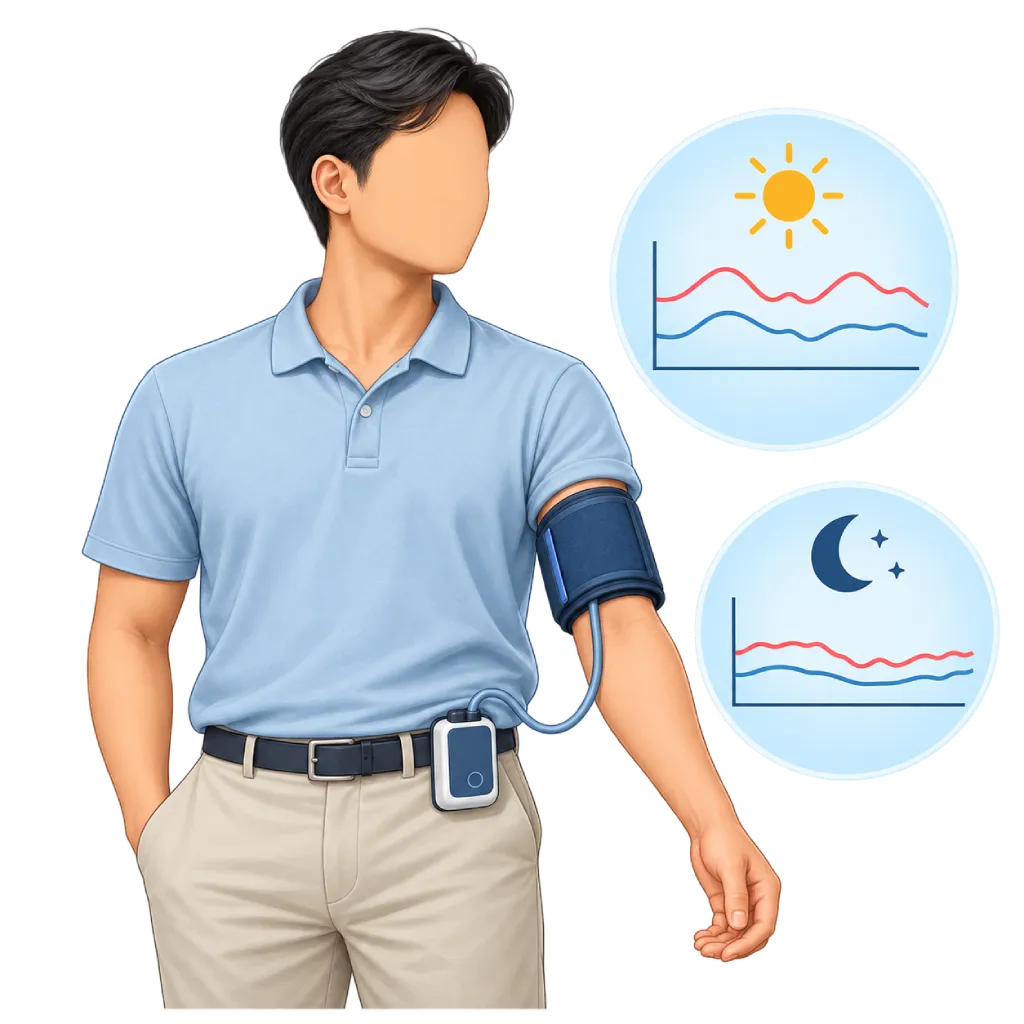
Ambulatory blood pressure monitoring (ABPM) is automatic blood pressure measurement every 15 to 30 minutes for 24 hours, including during sleep, with a cuff on the upper arm and a small device at the waist. Fitting takes about 15 to 20 minutes. The results help confirm hypertension, recognize white coat or masked hypertension, and assess nighttime blood pressure.
Sources01 / Understanding the procedure
About Ambulatory Blood Pressure Monitoring
What Is Ambulatory Blood Pressure Monitoring
Blood pressure rises and falls throughout the day, following your activities, emotions, and sleep. A single measurement in the doctor's office captures only one moment and can be affected by feeling tense. Ambulatory blood pressure monitoring, abbreviated ABPM, measures blood pressure automatically many times over 24 hours while you go about your usual activities, so your doctor gets a picture of your blood pressure during the day and at night.
How It Works in Brief
A cuff is placed on the upper arm and connected by a tube to a small device worn at the waist. The device inflates the cuff automatically, usually every 15 to 30 minutes during the day and every 30 to 60 minutes at night, and stores the results. After the device is returned, a computer calculates the average blood pressure over 24 hours, during the day, and at night.
What Is Assessed
- 24-hour average: 130/80 mmHg or higher points to hypertension.
- Daytime average: 135/85 mmHg or higher points to hypertension.
- Nighttime average: 120/70 mmHg or higher points to nighttime hypertension.
- Drop during sleep: normally, nighttime blood pressure drops about 10 to 20 percent from daytime levels. A smaller drop is linked to a higher heart risk.
White Coat and Masked Hypertension
In white coat hypertension, blood pressure is high when checked at the clinic but normal outside the clinic. In masked hypertension, the opposite happens: blood pressure is normal at the clinic but high in daily life or during sleep. ABPM helps tell the two apart so that treatment is neither excessive nor missed. Both conditions are covered on the White Coat Hypertension and Masked Hypertension pages.
How It Differs from Home Measurement
Home blood pressure measurement is something you do yourself with an upper arm device, in the morning and evening for several days, and it is suitable for long-term monitoring. ABPM is fitted at the clinic, measures automatically for 24 hours, and also records blood pressure while you work and sleep, which is generally not measured at home. Guidelines recommend one or both to confirm hypertension. Home measurement is covered on the Home Blood Pressure Monitoring page.
02 / Understanding the procedure
When Is This Procedure Considered?
A doctor may consider this procedure in the situations below. The decision is always made after a thorough assessment.
- Confirming a Hypertension DiagnosisWhen blood pressure at the clinic is high, before long-term treatment is started.
- Suspected White Coat HypertensionBlood pressure is high when checked at the clinic but normal when measured at home.
- Suspected Masked HypertensionBlood pressure is normal at the clinic, but there is organ damage or a high heart risk.
- Suspected Nighttime HypertensionFor example in sleep apnea, chronic kidney disease, or diabetes.
- Hypertension That Is Hard to ControlTo confirm that blood pressure is truly not yet controlled before more medicine is added.
- Suspected Blood Pressure That Is Too LowFor example dizziness or weakness thought to be caused by blood pressure medicines.
Situations to Consider First
- Atrial Fibrillation or an Irregular HeartbeatSome measurements may fail or be less accurate; your doctor interprets the results with care.
- Severe Bleeding DisorderRepeated cuff inflation can cause bruising; your doctor weighs the benefits.
- Arm with Dialysis Access or LymphedemaThe cuff is placed on the other arm to protect the blood vessels and tissue.
- Very Large or Very Small ArmA cuff of the right size is needed for accurate results.
03 / Before the procedure
How Should You Prepare?
ABPM is fitted at the clinic on a typical day, then you take it home for 24 hours.
Shower before you come. The device must not get wet, so you cannot shower during the recording.
Clothing. Wear a top with loose sleeves or no sleeves so the cuff sits comfortably on your upper arm. The cuff is placed directly on the skin.
Medicines. Take your blood pressure medicines as usual, unless your doctor tells you otherwise. Note the times you take your medicines during the recording.
Choose a typical day. Schedule it on a workday or a day with your usual activities, not a day with activities very different from your daily routine.
Unsure about the preparation instructions? Ask our team before the procedure.
04 / During the procedure
How Is the Procedure Done?
Fitting the ABPM device is done in an examination room without anesthesia and takes about 15 to 20 minutes. The recording lasts 24 hours, then the device is returned to the clinic.
Fitting the Cuff and Device
Your arm circumference is measured to choose the right cuff. The cuff is placed on the upper arm, usually the nondominant arm, then connected to a small device worn on a belt or shoulder strap. The staff takes a test measurement to make sure the device is working.
During Measurements
When the cuff starts to inflate, stop moving, keep your arm straight at your side, and hold still until the measurement is finished. At night, the device keeps measuring, usually at longer intervals.
Recording Your Activities
Write down in a diary the times you go to sleep and wake up, the times you take medicines, strenuous activities, and symptoms such as dizziness. These notes help your doctor read the results.
Removal and Reading
After 24 hours, the device is removed and the data is processed by computer. Your doctor reads the daytime and nighttime averages together with your notes, then discusses them at your next visit.
05 / Benefits and risks
Benefits and Risks Should Be Discussed Together.
Every medical procedure has benefits and risks. Your doctor will explain both for your situation before the procedure.
Benefits You Can Expect
- A Picture of Daytime and Nighttime Blood PressureDozens of measurements over 24 hours reflect daily life better than a single number at the clinic.
- Recognizes White Coat and Masked HypertensionHelps prevent unnecessary medicines as well as missed hypertension.
- Assesses Blood Pressure During SleepHigh nighttime blood pressure is linked to a higher risk of heart problems and stroke.
- Assesses Treatment ResultsShows whether medicines control blood pressure throughout the 24 hours.
The benefits of a procedure are not a promise of a cure. Ask how the results will affect your care plan.
Risks You Should Know
- Arm DiscomfortThe repeatedly inflating cuff can feel tight or cause brief tingling.
- Disturbed SleepNighttime measurements can wake you up and slightly affect the nighttime results.
- Bruising or Small Red SpotsMore likely in people taking blood thinners; usually goes away on its own.
- Failed MeasurementsArm movement or an irregular heartbeat can make some measurements unreadable.
Risks can differ from person to person. A full explanation and consent are given after an individual assessment.
06 / After the procedure
What Is Recovery Like?
There is no recovery period. You can return to your usual activities right away after the device is removed.
Arm. Pressure marks, mild tingling, or small red spots under the cuff may appear and usually go away within a few days.
Sleep. It is normal if your sleep feels less restful. Tell your doctor if your sleep was very disturbed, because this can affect the nighttime results.
Results and follow-up visit. The results are discussed at your next visit. Do not change your medicine doses yourself before the results are discussed with your doctor.
Warning signs to watch for. Go to the emergency room right away if you experience:
- Chest pain or shortness of breath
- Severe headache, blurred vision, or confusion
- Weakness or numbness on one side of the body, or difficulty speaking
- Severe pain, marked swelling, or a bluish color in the arm under the cuff
Know the Signs That Need Prompt Care.
Follow the team's guidance on warning signs. If severe or sudden symptoms appear after the procedure, go to the nearest emergency department right away or call Heart Attack Center 1500 258.
07 / Team and support
Doctors and Procedure Support
The doctors below are listed for this procedure. Listed by name, not by ranking.

Dr. med. dr. Denio A. Ridjab, Sp.JP(K)
Interventional Cardiology
Coronary Intervention Procedures +2 centers
Clinical focusInterventional Cardiology · Coronary Artery Disease
View Profile
Dr. dr. Faris Basalamah, Sp.JP(K)
Interventional Cardiology
Coronary Intervention Procedures +1 center
Clinical focusComplex Coronary Intervention · Cardiac Electrophysiology
View Profile
dr. Siska S. Danny, Sp.JP(K)
Interventional Cardiology
Coronary Intervention Procedures
Clinical focusPCI for Acute Coronary Syndrome · Primary Coronary Intervention
View Profile08 / Common questions
Before You Plan the Procedure.
Frequently asked questions about ambulatory blood pressure monitoring (ABPM).
Is this device painful or bothersome?
It is not painful. When the cuff inflates, your arm feels squeezed for less than a minute, just like a regular blood pressure check. Because it happens repeatedly, some people find it bothersome, especially during sleep. The sound of the device and the inflating cuff at night may wake you briefly. This discomfort goes away once the device is removed.
What should I do when the cuff inflates?
Stop moving, especially the arm with the cuff. If you are walking, stop; if you are sitting, rest your arm straight and relaxed at your side or on a table. Do not talk until the cuff deflates. Movement can cause the measurement to fail, and the device then usually repeats the measurement a few minutes later.
Can I shower, work, and exercise?
Work and usual activities are actually encouraged, because the aim of the test is to see your blood pressure in your daily life. The device must not get wet, so you cannot shower or swim for 24 hours. Avoid strenuous exercise that involves a lot of arm movement, because measurements may fail and the cuff can shift.
How is this different from measuring blood pressure at home?
Both measure blood pressure outside the clinic. Home measurement is something you do yourself in the morning and evening for several days, suitable for long-term monitoring. ABPM measures automatically for 24 hours, including while you work and sleep, so it can detect nighttime hypertension. Your doctor chooses one or both based on your needs.
Why is nighttime blood pressure important?
During sleep, blood pressure normally drops by about 10 to 20 percent. If it does not drop or even rises, the risk of heart attack, stroke, and kidney problems tends to be higher, even if daytime blood pressure is normal. This is often found in sleep apnea, kidney disease, and diabetes, and can only be detected by measuring blood pressure during sleep.
What are the normal limits for ABPM results?
The limits are lower than at the clinic. According to European guidelines, the results point to hypertension if the 24-hour average is 130/80 mmHg or higher, the daytime average is 135/85 mmHg or higher, or the nighttime average is 120/70 mmHg or higher. Your target is set by your doctor based on your age, other diseases, and heart risk.
Sources and Medical Review
Translated from the Indonesian edition medically reviewed by Dr. dr. Faris Basalamah, Sp.JP(K).
Sources as cited in the Indonesian edition.
- McEvoy JW, McCarthy CP, Bruno RM, et al. 2024 ESC Guidelines for the management of elevated blood pressure and hypertension. Eur Heart J. 2024;45(38):3912-4018.
- Mancia G, Kreutz R, Brunstrom M, et al. 2023 ESH Guidelines for the management of arterial hypertension The Task Force for the management of arterial hypertension of the European Society of Hypertension. J Hypertens. 2023;41(12):1874-2071.
- Stergiou GS, Palatini P, Parati G, et al. 2021 European Society of Hypertension practice guidelines for office and out-of-office blood pressure measurement. J Hypertens. 2021;39(7):1293-1302.
- O'Brien E, Parati G, Stergiou G, et al. European Society of Hypertension position paper on ambulatory blood pressure monitoring. J Hypertens. 2013;31(9):1731-1768.
- Banegas JR, Ruilope LM, de la Sierra A, et al. Relationship between Clinic and Ambulatory Blood-Pressure Measurements and Mortality. N Engl J Med. 2018;378(16):1509-1520.
- Unger T, Borghi C, Charchar F, et al. 2020 International Society of Hypertension Global Hypertension Practice Guidelines. Hypertension. 2020;75(6):1334-1357.