
Quick answer
What Is White Coat Hypertension?
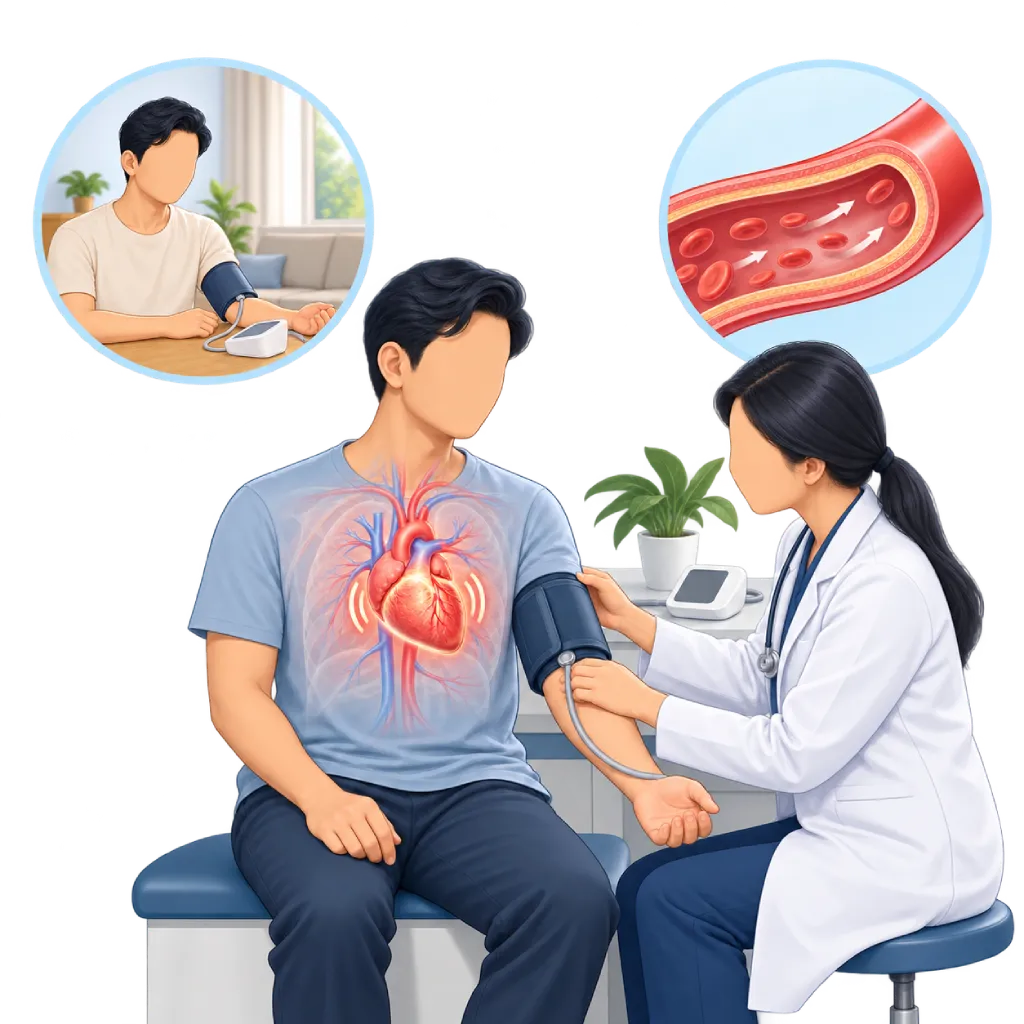
White coat hypertension is blood pressure that is high when measured at the clinic but normal at home and during 24-hour monitoring. It needs to be confirmed so that it is not overtreated, but it should still be monitored because it can develop into sustained hypertension.
SourcesSigns That Need Urgent Help
- Chest pain or a feeling of pressure in the chest
- Severe shortness of breath
- Facial drooping, weakness of an arm or leg on one side, or slurred speech
- Severe dizziness, fainting, or nearly falling, especially after a medicine dose has been increased
- Home blood pressure of 180/120 mmHg or higher with symptoms
If these signs appear, go to the nearest emergency department right away or call Heart Attack Center 1500 258.
01 / Understanding the condition
About White Coat Hypertension
White coat hypertension is when blood pressure at the clinic is 140/90 mmHg or higher, while the average at home is below 135/85 mmHg and the 24-hour average is below 130/80 mmHg. The term refers to the white coats worn by health workers, because the rise is triggered by the setting of the examination. This condition is fairly common, especially in older adults, women, and people who do not smoke.
Why It Happens
During an examination, the body can react as if it were facing a stressful situation. The nervous system releases hormones that speed up the heart rate and narrow the blood vessels, so blood pressure rises temporarily. This reaction often goes unnoticed; many people feel calm, but their readings are still high when measured by a health worker. After leaving the clinic, blood pressure returns to its usual level. Small things before the examination can also raise the reading, for example arriving in a rush, having just had coffee or a cigarette, holding in urine, or talking while the cuff inflates. That is why measuring correctly is an important part of telling a temporary rise apart from true hypertension.
White Coat Effect in People on Treatment
In people with hypertension who already take medicine, a similar rise is called the white coat effect. Clinic readings appear not to have reached the target, even though blood pressure at home is already controlled. Without measurements outside the clinic, the medicine dose may be raised beyond what is needed, causing dizziness or weakness when standing, especially in older adults. The opposite, normal blood pressure at the clinic but high blood pressure outside it, is covered on the Masked Hypertension page.
Is It Dangerous?
White coat hypertension still carries risk, although less than sustained hypertension. Compared with people who have normal blood pressure, people with this condition are more likely to develop sustained hypertension and slightly more often have thickening of the heart muscle. A pooled analysis of studies found an increased risk of heart and blood vessel events in untreated white coat hypertension. For this reason, guidelines recommend lifestyle changes and regular blood pressure monitoring outside the clinic, while medicine is considered in certain situations. An overview of hypertension is covered on the Hypertension page.
02 / Understanding the condition
Symptoms to Recognize.
Common Symptoms
White coat hypertension usually causes no symptoms. The clue is the difference between measurement results.
- No symptoms in daily life
- High blood pressure every time it is measured at a clinic or hospital
- Readings at home or over 24 hours that are within the normal range
- A faster heart rate or feeling tense just before an examination
- Readings that drop when measured again after sitting quietly for longer
03 / Understanding the condition
What Causes This Condition?
- The body's reaction to the examination setting, which triggers the release of stress hormones
- Anxiety, including anxiety you are not aware of, when meeting health workers
- Rushing to arrive, walking a long way, or holding in urine before the measurement
- Coffee or smoking within 30 minutes before the examination
- Measurement without enough rest, while talking, or with a cuff that does not fit the arm size
04 / Understanding the condition
Who Is at Higher Risk?
Age
More common in older adults, and in older age the difference between clinic and home readings can be larger.
Medical
Grade 1 clinic blood pressure, that is 140 to 159 or 90 to 99 mmHg, more often turns out to be white coat hypertension than higher grades.
Other
Women, people who do not smoke, and people who easily become anxious during examinations have it more often.
Groups at Higher Risk
- Older Adults: The rise at the clinic can be fairly large in older adults, so confirming readings outside the clinic helps avoid excess medicine and the risk of falls.
- People with Grade 1 Hypertension at the Clinic: Clinic readings of 140 to 159 or 90 to 99 mmHg more often turn out to be normal when measured at home.
- People Who Get Anxious During Examinations: Tension, including tension you are not aware of, can raise blood pressure temporarily.
- People with Hypertension Already on Treatment: The white coat effect can make blood pressure look uncontrolled, so the medicine dose is raised beyond what is needed.
05 / Understanding the condition
How Is It Diagnosed?
White coat hypertension can only be confirmed by comparing readings at the clinic and outside the clinic. If clinic blood pressure is 140/90 mmHg or higher, guidelines recommend confirming it with home measurements over 7 days or 24-hour monitoring, especially in grade 1 hypertension and in older adults.
The diagnosis is made if readings outside the clinic are normal: a home average below 135/85 mmHg and a 24-hour average below 130/80 mmHg. The doctor also checks an ECG, a urine test, blood sugar, and cholesterol to assess your overall risk. Because some people with this condition later develop sustained hypertension, measurements outside the clinic should be repeated regularly, for example once a year or as your doctor advises.
Home Blood Pressure Monitoring
Measurements in the morning and evening for 7 days; an average below 135/85 mmHg with high clinic readings supports white coat hypertension.
Ambulatory Blood Pressure Monitoring
A 24-hour average below 130/80 mmHg, a daytime average below 135/85 mmHg, and a nighttime average below 120/70 mmHg confirm normal blood pressure outside the clinic.
Physical Examination
The measurement is repeated after sitting quietly for 5 minutes with a cuff that fits the arm, and when possible with an automated device with no staff in the room.
Electrocardiogram (ECG)
Looks for signs of heart muscle thickening to assess whether high blood pressure has already affected the organs.
Urine Protein Test
Looks for albumin in the urine as a sign of damage to the kidneys and blood vessels.
06 / Understanding the condition
Treatment Options.
Treatment is decided by a doctor after an assessment. The categories below can help you follow the conversation with your doctor.
Lifestyle Changes
Reducing salt, eating more vegetables and fruit, staying active, maintaining a healthy weight, quitting smoking, and limiting alcohol to prevent sustained hypertension.
Regular Monitoring Outside the Clinic
Home measurements or 24-hour monitoring are repeated regularly to detect when blood pressure starts to stay high.
Control of Other Risk Factors
Cholesterol, blood sugar, weight, and smoking are assessed and controlled because they determine your overall risk.
Medicines in Certain Situations
Your doctor may consider medicine if there is organ damage or a high cardiovascular risk. For people already on treatment, the target is judged from home readings.
Calmer Measurement
Sitting quietly for 5 minutes, not talking during the measurement, and automated measurement with no staff in the room can reduce the white coat effect.
07 / Understanding the condition
Complications to Watch For.
Progression to Sustained Hypertension
People with white coat hypertension are more likely to develop sustained hypertension within a few years than people with normal blood pressure.
Mild Thickening of the Heart Muscle
Some studies have found slightly thicker heart walls than in people with normal blood pressure.
Heart and Blood Vessel Risk
The risk of heart events and stroke is slightly higher than with normal blood pressure, especially if untreated and other risk factors are present.
Overtreatment
If decisions rely only on clinic readings, medicine may be given or increased beyond what is needed, causing dizziness, weakness, or falls.
08 / Understanding the condition
What Can You Do?
- Arrive early so you can rest before your blood pressure is measured
- Avoid coffee, smoking, and exercise within 30 minutes before the examination
- Empty your bladder and sit quietly with your back supported before the measurement
- Do not talk while your blood pressure is being measured
- Measure your blood pressure at home regularly and bring your records to follow-up visits
- Keep a healthy lifestyle to prevent progression to sustained hypertension
09 / Understanding the condition
When Should You See a Doctor?
High readings at the clinic still need follow-up and should not be ignored. Make an appointment if:
- Your blood pressure is 140/90 mmHg or higher at the clinic but normal when measured at home
- You are already on treatment and clinic readings are always high, but home readings are often low or you easily feel dizzy when standing
- Your average home blood pressure starts to reach 135/85 mmHg or higher during regular monitoring
- You have diabetes, kidney disease, or a family history of heart disease
Go to the emergency room right away if you develop chest pain, severe shortness of breath, weakness on one side of the body, slurred speech, or fainting.
Don't Wait in an Emergency.
If symptoms are severe or come on suddenly, go to the nearest emergency department right away or call Heart Attack Center 1500 258, rather than waiting for an appointment.
10 / Common questions
Questions You May Have.
Frequently asked questions about white coat hypertension, also known as white coat syndrome.
Is white coat hypertension dangerous?
Its risk is lower than that of sustained hypertension, but it is not the same as for people with normal blood pressure. People with this condition are more likely to develop sustained hypertension later on, and the risk of heart disease and stroke is slightly increased, especially if it is not monitored and other risk factors are present. That is why this condition needs regular monitoring rather than being ignored.
Do I need to take medicine?
Not always. If your blood pressure at home and over 24 hours is normal, the main steps are lifestyle changes and regular monitoring. Your doctor may consider medicine if there are signs of organ damage, such as thickening of the heart muscle or protein in the urine, or if your cardiovascular risk is high. The decision is based on measurements outside the clinic and supporting tests.
How is white coat hypertension confirmed?
By comparing readings at the clinic and outside the clinic. Measure your blood pressure at home twice in the morning and twice in the evening for 7 days with a validated upper arm device, or have 24-hour monitoring. If clinic readings are 140/90 mmHg or higher while the home average is below 135/85 mmHg and the 24-hour average is below 130/80 mmHg, the diagnosis is white coat hypertension.
Does the white coat effect also happen in people already on treatment?
Yes. In people with hypertension who already take medicine, clinic readings can appear not to have reached the target even though blood pressure at home is controlled. If the dose is increased based only on clinic readings, home blood pressure can drop too low and cause dizziness or falls. That is why you should bring your home blood pressure records to every follow-up visit so your doctor can assess accurately.
How can I reduce the white coat effect during an examination?
Arrive early and rest before the measurement. Avoid coffee, smoking, and exercise for 30 minutes beforehand, empty your bladder, then sit with your back supported and your feet flat on the floor. Do not talk during the measurement. The measurement is repeated two to three times and averaged. Some clinics use automated devices with no staff in the room, which can help reduce the rise caused by tension.
Sources and Medical Review
Translated from the Indonesian edition medically reviewed by Dr. med. dr. Denio A. Ridjab, Sp.JP(K).
Sources as cited in the Indonesian edition.
- McEvoy JW, McCarthy CP, Bruno RM, et al. 2024 ESC Guidelines for the management of elevated blood pressure and hypertension. Eur Heart J. 2024;45(38):3912-4018.
- Mancia G, Kreutz R, Brunström M, et al. 2023 ESH Guidelines for the management of arterial hypertension The Task Force for the management of arterial hypertension of the European Society of Hypertension: Endorsed by the International Society of Hypertension (ISH) and the European Renal Association (ERA). J Hypertens. 2023;41(12):1874-2071.
- Stergiou GS, Palatini P, Parati G, et al. 2021 European Society of Hypertension practice guidelines for office and out-of-office blood pressure measurement. J Hypertens. 2021;39(7):1293-1302.
- Cohen JB, Lotito MJ, Trivedi UK, Denker MG, Cohen DL, Townsend RR. Cardiovascular Events and Mortality in White Coat Hypertension: A Systematic Review and Meta-analysis. Ann Intern Med. 2019;170(12):853-862.
- Banegas JR, Ruilope LM, de la Sierra A, et al. Relationship between Clinic and Ambulatory Blood-Pressure Measurements and Mortality. N Engl J Med. 2018;378(16):1509-1520.
Doctors Who Treat This Condition

dr. Siska S. Danny, Sp.JP(K)
Interventional Cardiology
Coronary Intervention Procedures
Clinical focusPCI for Acute Coronary Syndrome · Primary Coronary Intervention
View Profile
Dr. med. dr. Denio A. Ridjab, Sp.JP(K)
Interventional Cardiology
Coronary Intervention Procedures +2 centers
Clinical focusInterventional Cardiology · Coronary Artery Disease
View Profile
Dr. dr. Faris Basalamah, Sp.JP(K)
Interventional Cardiology
Coronary Intervention Procedures +1 center
Clinical focusComplex Coronary Intervention · Cardiac Electrophysiology
View Profile