
Quick answer
What Is Hypertension Management?
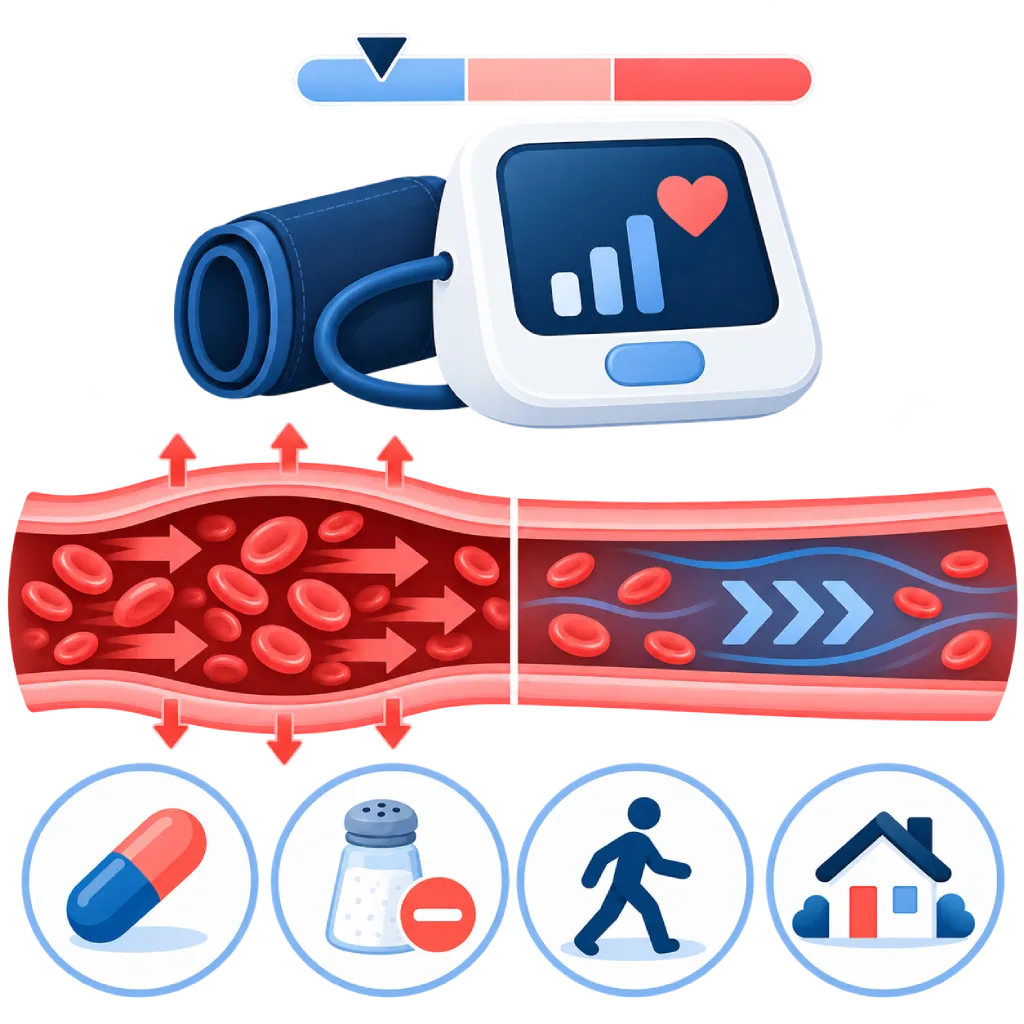
Hypertension management is long-term care for high blood pressure to prevent heart attack, stroke, heart failure, and kidney disease. Your doctor confirms the diagnosis, assesses organ damage, then combines salt reduction, physical activity, and medicines. The target for the upper number is usually 120 to 129 mmHg if tolerated.
Sources01 / Understanding the procedure
About Hypertension Management
What Is Hypertension Management
Hypertension, or high blood pressure, is blood pressure that stays at 140/90 mmHg or higher. It usually causes no symptoms, but over the long term it strains the heart and damages the blood vessels in the brain, kidneys, and eyes. Hypertension management is long-term care to lower blood pressure to the target and keep it stable.
How It Works in Brief
High blood pressure forces the heart to pump harder and makes the walls of the blood vessels thicker and stiffer. Salt reduction, physical activity, and medicines work by widening the vessels, reducing excess fluid, and blocking hormones that narrow the vessels. A combined analysis of many studies shows that every drop of about 10 mmHg in the upper number reduces major cardiovascular events by roughly one fifth.
Confirming the Diagnosis and Assessing the Organs
Before treatment is started or changed, your blood pressure is confirmed with home measurements or 24-hour monitoring. These are covered on the Hypertension and Blood Pressure Screening, Home Blood Pressure Monitoring, and Ambulatory Blood Pressure Monitoring pages. Your doctor also checks kidney function, potassium, protein in the urine, blood sugar, cholesterol, and an ECG to assess organ damage and, in certain people, to look for causes of secondary hypertension. These are covered on the Kidney Function Test and Urine Protein-to-Creatinine Ratio (UPCR) pages.
Treatment Steps
- Reduce salt: limit salt to about 5 grams, or one teaspoon, per day, including hidden salt in processed foods, soy sauce, and flavor enhancers. Potassium-containing salt substitutes can help if your doctor allows them.
- Other lifestyle changes: moderate-intensity physical activity for at least 150 minutes per week, losing weight if you are overweight, limiting alcohol, and quitting smoking. This is covered on the Lifestyle Counseling and Risk Management page.
- Combination medicines: the majority of patients start with two low-dose medicines in one tablet, for example an ACE inhibitor or ARB together with a calcium antagonist or a diuretic, then the dose is increased or a third medicine is added if needed. This is covered on the Integrated Medication Therapy page.
- Resistant hypertension: if blood pressure is not controlled with three medicines, your doctor makes sure the medicines are taken regularly, looks for secondary causes, then adds a medicine such as spironolactone. Renal denervation may be considered in certain patients. This is covered on the Renal Denervation page.
- Coexisting conditions: diabetes, cholesterol, and kidney disease are also controlled because their risks add to each other. This is covered on the Dyslipidemia Management page.
Blood Pressure Target
The 2024 European guidelines recommend an upper number of 120 to 129 mmHg for the majority of treated patients, if tolerated. In frail older adults, or if dizziness occurs on standing, the target can be less strict. The aim is to reach the target within about 3 months.
02 / Understanding the procedure
When Is This Procedure Considered?
A doctor may consider this procedure in the situations below. The decision is always made after a thorough assessment.
- Newly Diagnosed HypertensionTo confirm the diagnosis, assess the organs, and start treatment.
- Blood Pressure Not Yet at TargetEven after taking medicines or changing your lifestyle.
- Elevated Blood Pressure with High RiskFor example, together with diabetes, kidney disease, or heart disease.
- Resistant HypertensionNot controlled with three or more medicines.
- After a Hypertensive Crisis or StrokeTo plan long-term treatment.
- Suspected Secondary HypertensionFor example, hypertension at a young age, low potassium, or a sudden rise in blood pressure.
Situations to Consider First
- Blood Pressure of 180/120 mmHg or Higher with SymptomsChest pain, shortness of breath, weakness on one side of the body, or vision problems; go to the emergency room right away.
- Pregnant or Planning a PregnancyACE inhibitors and ARBs must not be used during pregnancy; the medicine needs to be changed.
- Kidney Disease or High PotassiumThe choice of medicine, the dose, and the use of potassium-containing salt substitutes need to be adjusted.
- High Uric Acid or GoutSome diuretics can raise uric acid.
- Dizziness on Standing or a Tendency to FallTargets and medicine doses are adjusted, especially in older adults.
03 / Before the procedure
How Should You Prepare?
The main preparation is bringing your blood pressure records and health data.
Home blood pressure records. Measure twice in the morning and twice in the evening for 7 days before your follow-up visit, then bring the records.
Measuring device. If you use a device at home, bring it so it can be compared with the clinic device.
Medication list. Bring all your medicines, including cold medicines, painkillers, birth control pills, supplements, and herbal remedies, because some can raise blood pressure.
Before the measurement. Avoid coffee, smoking, and exercise within 30 minutes before the examination.
Unsure about the preparation instructions? Ask our team before the procedure.
04 / During the procedure
How Is the Procedure Done?
Each consultation visit usually lasts about 30 minutes. At the start of treatment, follow-up visits are usually more frequent until the target is reached.
Correct Measurement
Blood pressure is measured after you sit quietly for a few minutes, with a cuff that fits your arm, two to three times, and the readings are then averaged.
Organ and Risk Assessment
Your doctor reviews laboratory results, the ECG, and, if needed, echocardiography to look for thickening of the heart muscle.
Treatment Plan
Your doctor explains the target, gives lifestyle advice, and starts or adjusts medicines. Potassium and kidney function are rechecked a few weeks after certain medicines are started.
Ongoing Follow-Up
Your home blood pressure records are discussed at every follow-up visit. Once the target is reached and stable, follow-up visits can be spaced further apart.
05 / Benefits and risks
Benefits and Risks Should Be Discussed Together.
Every medical procedure has benefits and risks. Your doctor will explain both for your situation before the procedure.
Benefits You Can Expect
- Lower Risk of Stroke and Heart AttackEvery drop of about 10 mmHg in the upper number brings a large benefit.
- Protected Kidneys and EyesOrgan damage from high blood pressure can be prevented or slowed.
- Simpler MedicationTwo medicines in one tablet make daily use easier.
- More Accurate ResultsHome measurements help avoid a misdiagnosis caused by feeling tense at the clinic.
- Long-Term SupportTargets and medicines are reviewed regularly.
The benefits of a procedure are not a promise of a cure. Ask how the results will affect your care plan.
Risks You Should Know
- Dizziness or WeaknessIf blood pressure drops too quickly or too low; the dose is adjusted.
- Dry CoughCan occur with ACE inhibitors; the medicine can be changed.
- Ankle SwellingCan occur with calcium antagonists.
- Changes in Potassium and Kidney FunctionMonitored through blood tests, especially with diuretics and ACE inhibitors or ARBs.
Risks can differ from person to person. A full explanation and consent are given after an individual assessment.
06 / After the procedure
What Is Recovery Like?
There is no recovery period for a consultation. What matters is following your treatment plan consistently.
Take your medicines every day. Blood pressure rises again if medicines are stopped. Do not stop on your own even if your readings are normal or you have no symptoms.
Measure at home. Record the results regularly as advised by your doctor.
Reduce salt. Watch for hidden salt in instant noodles, canned foods, salted fish, soy sauce, and other sauces.
Stay active. Regular brisk walking, cycling, or swimming helps lower blood pressure.
Warning signs. Go to the emergency room right away if your blood pressure is 180/120 mmHg or higher with:
- Chest pain or shortness of breath
- Severe headache, confusion, or seizures
- A drooping face, arm weakness, or slurred speech
- Sudden vision problems
Know the Signs That Need Prompt Care.
Follow the team's guidance on warning signs. If severe or sudden symptoms appear after the procedure, go to the nearest emergency department right away or call Heart Attack Center 1500 258.
07 / Team and support
Doctors and Procedure Support
The doctors below are listed for this procedure. Listed by name, not by ranking.

Dr. dr. Dafsah A. Juzar, Sp.JP(K)
Interventional Cardiology
Coronary Intervention Procedures +1 center
Clinical focusComplex Coronary Intervention · Cardiac Catheterization
View Profile
Dr. med. dr. Denio A. Ridjab, Sp.JP(K)
Interventional Cardiology
Coronary Intervention Procedures +2 centers
Clinical focusInterventional Cardiology · Coronary Artery Disease
View Profile
Dr. dr. Faris Basalamah, Sp.JP(K)
Interventional Cardiology
Coronary Intervention Procedures +1 center
Clinical focusComplex Coronary Intervention · Cardiac Electrophysiology
View Profile08 / Common questions
Before You Plan the Procedure.
Frequently asked questions about hypertension management. Your target and medicine choices are decided together with your doctor.
Do I have to take blood pressure medicine for life?
For the majority of people with hypertension, yes. Medicines control blood pressure but do not remove its cause, so blood pressure usually rises again when medicines are stopped. In some people who manage to lose weight, reduce salt, and exercise regularly, the dose can be reduced. Dose changes are always decided together with your doctor based on your blood pressure records.
Do blood pressure medicines damage the kidneys?
No. In fact, uncontrolled high blood pressure is one of the main causes of kidney damage. Some medicines, such as ACE inhibitors and ARBs, actually help protect the kidneys, especially in diabetes or when there is protein in the urine. When you start taking them, your kidney function and potassium are checked to make sure the medicines are safe for you.
Why was I given two medicines in one tablet?
The 2024 ESC guidelines recommend that the majority of people with hypertension start with two low-dose medicines in one tablet. This combination lowers blood pressure faster with fewer side effects than one high-dose medicine. One tablet a day also makes it easier for you to take your medicines regularly, which plays a big role in the success of treatment.
What is my blood pressure target?
The 2024 European guidelines recommend an upper number of 120 to 129 mmHg for the majority of treated people with hypertension, if tolerated. In frail older adults or people who easily feel dizzy on standing, the target can be less strict. Your doctor sets your target based on your age, coexisting conditions, and how your body responds to treatment.
Can I stop taking my medicines if I have no symptoms?
It is better not to. Hypertension usually causes no symptoms, even when blood pressure is very high, so having no symptoms is not a sign that your blood pressure is controlled. Stopping your medicines can make blood pressure rise again and increase the risk of stroke and heart attack. Talk with your doctor if you want to change your treatment.
Are salt substitutes safe?
Potassium-containing salt substitutes have been shown in a large study to help lower blood pressure and the risk of stroke. However, they are not suitable for people with kidney disease or those taking medicines that raise potassium, because blood potassium levels can become too high. Ask your doctor before switching.
Sources and Medical Review
Translated from the Indonesian edition medically reviewed by Dr. dr. Faris Basalamah, Sp.JP(K).
Sources as cited in the Indonesian edition.
- McEvoy JW, McCarthy CP, Bruno RM, et al. 2024 ESC Guidelines for the management of elevated blood pressure and hypertension. Eur Heart J. 2024;45(38):3912-4018.
- Mancia G, Kreutz R, Brunström M, et al. 2023 ESH Guidelines for the management of arterial hypertension. J Hypertens. 2023;41(12):1874-2071.
- Ettehad D, Emdin CA, Kiran A, et al. Blood pressure lowering for prevention of cardiovascular disease and death: a systematic review and meta-analysis. Lancet. 2016;387(10022):957-967.
- Blood Pressure Lowering Treatment Trialists' Collaboration. Pharmacological blood pressure lowering for primary and secondary prevention of cardiovascular disease across different levels of blood pressure: an individual participant-level data meta-analysis. Lancet. 2021;397(10285):1625-1636.
- Neal B, Wu Y, Feng X, et al. Effect of Salt Substitution on Cardiovascular Events and Death. N Engl J Med. 2021;385(12):1067-1077.