
Quick answer
What Is Chronic Kidney Disease?
Chronic kidney disease is kidney damage or reduced kidney function that lasts more than 3 months. It usually develops slowly without symptoms, but it raises the risk of heart disease, stroke, and kidney failure requiring dialysis.
SourcesSigns That Need Urgent Help
- Severe shortness of breath, especially when lying down
- Chest pain or a feeling of pressure in the chest
- Irregular heart palpitations with severe weakness
- Very little urine or none at all
- Confusion, extreme drowsiness, or seizures
- Persistent vomiting to the point of being unable to eat or drink
- Sudden facial drooping, arm weakness, or slurred speech
If these signs appear, go to the nearest emergency department right away or call Heart Attack Center 1500 258.
01 / Understanding the condition
About Chronic Kidney Disease
Chronic kidney disease is a condition in which the kidneys are damaged or lose function for more than 3 months. The kidneys filter metabolic waste and excess fluid from the blood, keep salt and potassium in balance, help regulate blood pressure, and make hormones for red blood cell production and bone health. When their function declines, waste products and fluid build up in the body.
The disease develops slowly and causes almost no symptoms in the early stages, so many people only find out from blood and urine tests. An estimated more than 10 percent of adults worldwide live with chronic kidney disease. Its main causes are diabetes and high blood pressure.
The Kidneys and Heart Affect Each Other
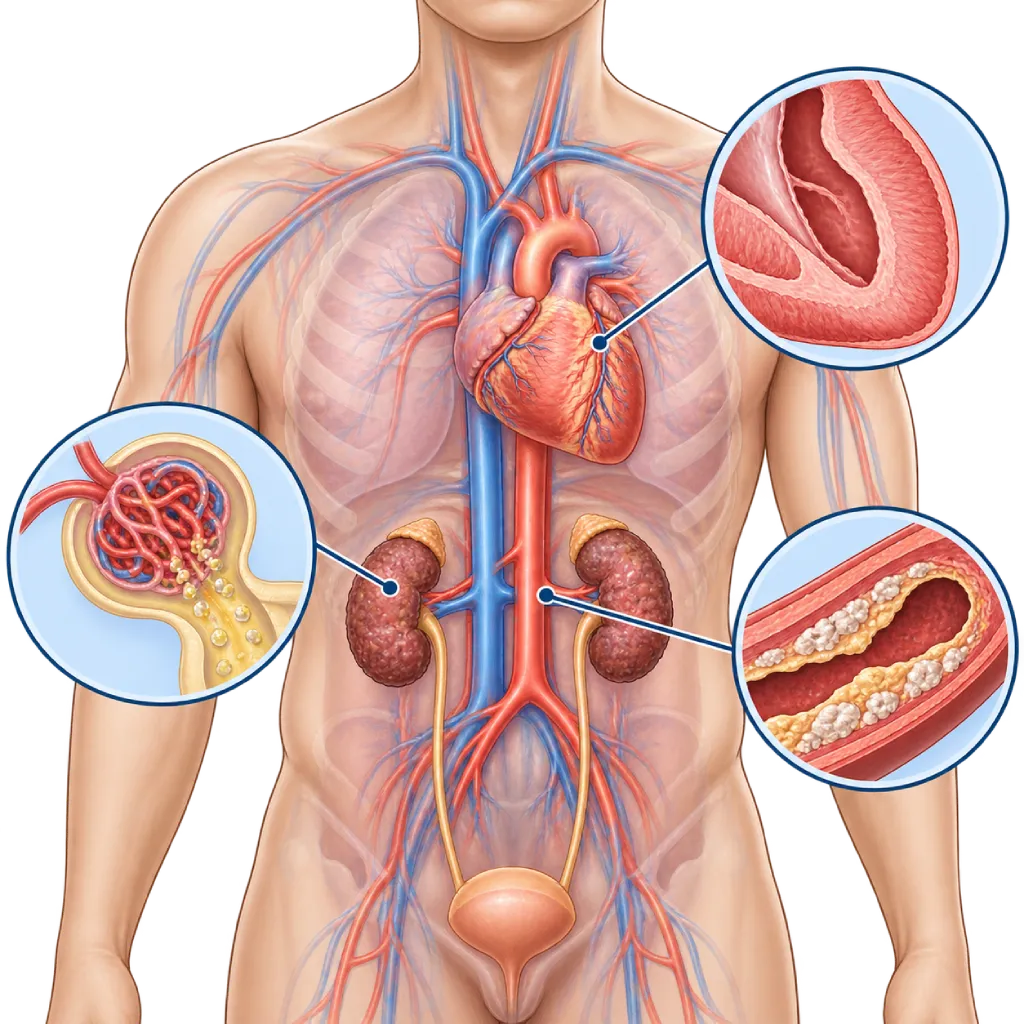
Chronic kidney disease raises the risk of coronary artery disease, heart failure, heart rhythm disorders, and stroke, even in its early stages. Impaired kidneys cause blood pressure to rise, fluid to build up, a shortage of red blood cells (anemia), and the blood vessels to harden because of calcium and phosphate imbalances. In turn, a weak heart reduces blood flow to the kidneys. For many people with chronic kidney disease, the risk of developing heart disease is greater than the risk of eventually needing dialysis. That is why protecting the heart is an important part of kidney care.
Stages
Doctors classify chronic kidney disease by eGFR, an estimate of how well the kidneys filter blood, from G1 to G5, and by the amount of albumin leaking into the urine, from A1 to A3. The lower the eGFR and the more albumin that leaks, the higher the risk of both kidney failure and heart disease. Stage G5, with an eGFR below 15, is called kidney failure. At this stage, some people need dialysis or a kidney transplant.
Progression Can Be Slowed
Kidney damage usually cannot be reversed, but its decline can be slowed. The KDIGO 2024 guideline recommends controlling blood pressure and blood sugar, taking medications that protect the kidneys and heart as appropriate for your condition, quitting smoking, and avoiding medications that strain the kidneys. Regular checkups also help your doctor adjust the doses of other medications that are cleared by the kidneys. The earlier it is found, the greater the chance of preserving kidney function.
02 / Understanding the condition
Symptoms to Recognize.
Common Symptoms
There are usually no symptoms in the early stages. Symptoms tend to appear only once kidney function has declined considerably.
- Usually no symptoms in the early stages
- Foamy urine or urine the color of tea
- Swelling in the legs, ankles, or around the eyes
- Frequent urination at night
- Tiring easily, weakness, or paleness due to anemia
- Nausea, loss of appetite, or a metallic taste in the mouth
- Persistent itchy, dry skin
- Muscle cramps, especially at night
03 / Understanding the condition
What Causes This Condition?
- Diabetes damaging the tiny filters in the kidneys (diabetic kidney disease)
- Long-term high blood pressure damaging the blood vessels of the kidneys
- Inflammation of the kidney filters (glomerulonephritis), including from autoimmune diseases such as lupus
- Polycystic kidney disease and other inherited kidney disorders
- Long-term blockage of the urinary tract, for example from kidney stones or an enlarged prostate
- Repeated kidney infections
- Long-term use of medications that strain the kidneys, such as NSAID pain relievers
- Narrowing of the kidney arteries or heart failure reducing blood flow to the kidneys
04 / Understanding the condition
Who Is at Higher Risk?
Lifestyle
Smoking, a diet high in salt and processed foods, too little physical activity, obesity, and using pain relievers or herbal remedies without a doctor's supervision.
Medical
Diabetes, hypertension, heart disease and heart failure, recurrent kidney stones, lupus, and a history of acute kidney injury.
Genetic
A family history of kidney disease, kidney failure, or polycystic kidney disease.
Age
Kidney function declines slowly with age, and the risk of chronic kidney disease increases after age 60.
Other
Low birth weight or premature birth, a history of preeclampsia during pregnancy, and repeated exposure to substances that strain the kidneys.
Groups at Higher Risk
- People with Diabetes: Diabetes is a main cause of chronic kidney disease. Checking eGFR and urine albumin is recommended at least once a year.
- People with Hypertension: High blood pressure damages the kidneys, and damaged kidneys worsen blood pressure, so both need to be monitored together.
- People with Heart Disease or Heart Failure: The heart and kidneys affect each other, so kidney function needs to be monitored, especially when taking heart medications.
- Family Members of People with Kidney Disease: A family history, including polycystic kidney disease, increases your chance of developing a similar condition.
- Older Adults: Kidney function declines with age, and older adults more often take several medications whose doses need to be adjusted to kidney function.
05 / Understanding the condition
How Is It Diagnosed?
Chronic kidney disease is diagnosed when reduced function or signs of kidney damage last for more than 3 months. The two basic tests are eGFR, calculated from a blood creatinine test, and the albumin-to-creatinine ratio from a urine sample. Because results can change temporarily from not drinking enough, an infection, or medications, abnormal results are usually repeated.
The KDIGO 2024 guideline classifies chronic kidney disease by cause, eGFR category (G1 to G5), and albuminuria category (A1 to A3). Together, these three determine the risk of kidney failure and heart disease, how often you need checkups, and when you should be referred to a kidney specialist. Your doctor also looks for the cause through urine tests, a kidney ultrasound, and, if needed, a kidney biopsy.
Because the kidneys and heart affect each other, testing usually also includes blood pressure, blood sugar, a lipid profile, and an ECG. If you have shortness of breath, swelling, or blood pressure that is hard to control, your doctor may add echocardiography to assess the heart muscle and its pumping function.
Kidney Function Test
Blood creatinine is used to calculate eGFR, an estimate of how well the kidneys filter blood. An eGFR below 60 for more than 3 months indicates chronic kidney disease. Cystatin C may be added if needed.
Urine Protein Test
The urine albumin-to-creatinine ratio (UACR) detects albumin leakage, an early sign of damage to the kidneys and blood vessels, and also determines the category from A1 to A3.
Urinalysis
Looks for blood, cells, or sediment in the urine that indicate inflammation or kidney damage.
Complete Blood Count (CBC)
Assesses anemia, which often develops as kidney function declines.
Blood Electrolyte Test
Monitors potassium, sodium, and bicarbonate, especially high potassium, which can disturb the heart's rhythm.
A kidney ultrasound to look at size, shape, cysts, stones, or blockage of the urinary tract.
Kidney Biopsy
Removal of a small sample of kidney tissue when the cause is unclear, for example suspected glomerulonephritis or lupus nephritis.
06 / Understanding the condition
Treatment Options.
Treatment is decided by a doctor after an assessment. The categories below can help you follow the conversation with your doctor.
Blood Pressure Control
Your doctor sets the target; KDIGO recommends a systolic pressure below 120 mmHg if tolerated. ACE inhibitors or ARBs are chosen if albuminuria is present.
Medications to Protect the Kidneys and Heart
SGLT2 inhibitors are recommended for many people with chronic kidney disease, with or without diabetes. In type 2 diabetes with albuminuria, your doctor may add finerenone or a GLP-1 receptor agonist.
Cholesterol-Lowering Medications
Statins, with or without ezetimibe, are recommended for people with chronic kidney disease aged 50 and over who are not yet on dialysis, to lower the risk of heart attack and stroke.
Blood Sugar Control
For people with diabetes, blood sugar targets are adjusted to kidney function and the risk of low blood sugar, and medications are chosen according to eGFR.
Kidney-Friendly Diet
Limiting salt and adjusting protein, potassium, phosphate, and fluid intake according to the stage of the disease, with guidance from your doctor and a dietitian.
Managing Complications
Anemia, high potassium, excess acid in the blood, and calcium-phosphate disorders are treated based on test results; the doses of other medications are also adjusted to kidney function.
Kidney Replacement Therapy
In kidney failure, the options are hemodialysis, peritoneal dialysis, a kidney transplant, or conservative care without dialysis, decided together with your doctor and family.
07 / Understanding the condition
Complications to Watch For.
Coronary Artery Disease
Kidney disease speeds up plaque formation and calcification in the coronary arteries, raising the risk of heart attack. Covered on the Coronary Artery Disease page.
Heart Failure
Excess fluid, high blood pressure, and anemia strain the heart, so over time the heart muscle thickens and weakens. Covered on the Heart Failure page.
Heart Rhythm Disorders
Potassium that is too high and changes in the structure of the heart can trigger atrial fibrillation or other dangerous rhythms. Covered on the Heart Rhythm Disorders / Arrhythmia page.
Hard-to-Control Hypertension
Damaged kidneys retain salt and water, so blood pressure becomes harder to bring down even with several medications. Covered on the Resistant Hypertension page.
Anemia and Mineral Bone Disorder
The kidneys make less of the hormone that produces red blood cells, and the balance of calcium, phosphate, and parathyroid hormone is disrupted, leading to fragile bones and calcified blood vessels.
High Blood Potassium
Built-up potassium can cause weakness and dangerous heart rhythm disorders, so its level needs to be monitored, especially when taking certain medications.
Kidney Failure
In advanced stages, the kidneys can no longer filter blood adequately, so dialysis or a kidney transplant is needed.
08 / Understanding the condition
What Can You Do?
- Control your blood sugar and blood pressure according to the targets set by your doctor
- Limit salt and processed foods
- Avoid long-term use of NSAID pain relievers and herbal remedies without your doctor's knowledge
- Quit smoking and maintain a healthy weight
- Stay active for about 150 minutes per week, within your ability
- Have your eGFR and urine albumin checked every year if you have diabetes or hypertension
- Drink enough fluids during diarrhea, vomiting, or fever so your kidneys do not run short of fluid
09 / Understanding the condition
When Should You See a Doctor?
Have your kidney function checked regularly if you have risk factors, even if you feel well, because the early stages of this disease cause no symptoms. If you have already been diagnosed, keep your follow-up appointments so the decline in kidney function and its effect on your heart can be monitored. Go to the emergency room right away if you have severe shortness of breath, chest pain, almost no urine, or confusion.
- You have diabetes, hypertension, heart disease, or family members with kidney disease
- Your urine is foamy, the color of tea, or changes in amount
- You have swelling in your legs or around your eyes that does not go away
- Your blood pressure is becoming harder to control
- You tire easily or have nausea, itching, or muscle cramps without a clear cause
- You are about to have a test with contrast dye or start a new medication
Don't Wait in an Emergency.
If symptoms are severe or come on suddenly, go to the nearest emergency department right away or call Heart Attack Center 1500 258, rather than waiting for an appointment.
10 / Common questions
Questions You May Have.
Frequently asked questions about chronic kidney disease and heart health.
Is chronic kidney disease the same as kidney failure?
No. Chronic kidney disease covers all stages of lasting kidney damage, from very mild to severe. Kidney failure is the final stage, G5, with an eGFR below 15, when the kidneys can no longer filter blood adequately. Most people with chronic kidney disease are in the early stages and can preserve their kidney function with treatment and regular checkups.
Why do people with chronic kidney disease need to have their heart checked?
Chronic kidney disease raises the risk of heart attack, heart failure, rhythm disorders, and stroke, even from the early stages. High blood pressure, excess fluid, anemia, and calcification of the blood vessels also strain the heart. Checking blood pressure and cholesterol, an ECG, and echocardiography if needed help your doctor find heart problems earlier and choose medications that protect both the kidneys and the heart.
Does chronic kidney disease always lead to dialysis?
No. Many people with chronic kidney disease never need dialysis, especially when it is found early. Controlling blood pressure and blood sugar, taking kidney-protective medications such as SGLT2 inhibitors, quitting smoking, and avoiding medications that strain the kidneys can slow the decline in kidney function. Your doctor monitors eGFR and urine albumin to track the course of the disease and to prepare a plan if kidney function keeps declining.
Can people with chronic kidney disease take pain relievers or herbal remedies?
Caution is needed. NSAID pain relievers, such as ibuprofen, can worsen kidney function if used often or for a long time. Some herbal remedies and supplements can also strain the kidneys or interact with medications. Ask your doctor or pharmacist before taking any medication, herbal remedy, or supplement, and tell every doctor you see that you have chronic kidney disease.
Does foamy urine always mean leaky kidneys?
Not always. Urine can be foamy from urinating forcefully, from concentrated urine when you have not had enough to drink, or from soap left in the toilet. However, foam that persists every day can be a sign of protein leaking into the urine, one of the signs of kidney damage. The way to confirm this is a urine test, such as the albumin-to-creatinine ratio. If you have diabetes or hypertension, this test is recommended every year.
How much water should people with chronic kidney disease drink?
There is no single amount for everyone. In the early stages, it is usually enough to drink according to thirst without overdoing it. In advanced stages, or with heart failure and swelling, your doctor may limit your fluid intake so fluid does not build up in the lungs and legs. Drinking very large amounts of water does not improve kidney function. Follow your doctor's advice on how much fluid to drink.
Sources and Medical Review
Translated from the Indonesian edition medically reviewed by dr. Debby C. Soemitha, Sp.PD.
Sources as cited in the Indonesian edition.
- Kidney Disease: Improving Global Outcomes (KDIGO) CKD Work Group. KDIGO 2024 Clinical Practice Guideline for the Evaluation and Management of Chronic Kidney Disease. Kidney Int. 2024;105(4S):S117-S314.
- Kidney Disease: Improving Global Outcomes (KDIGO) Blood Pressure Work Group. KDIGO 2021 Clinical Practice Guideline for the Management of Blood Pressure in Chronic Kidney Disease. Kidney Int. 2021;99(3S):S1-S87.
- Kidney Disease: Improving Global Outcomes (KDIGO) Diabetes Work Group. KDIGO 2022 Clinical Practice Guideline for Diabetes Management in Chronic Kidney Disease. Kidney Int. 2022;102(5S):S1-S127.
- Jankowski J, Floege J, Fliser D, Böhm M, Marx N. Cardiovascular Disease in Chronic Kidney Disease: Pathophysiological Insights and Therapeutic Options. Circulation. 2021;143(11):1157-1172.
- Ndumele CE, Rangaswami J, Chow SL, Neeland IJ, Tuttle KR, Khan SS, et al. Cardiovascular-Kidney-Metabolic Health: A Presidential Advisory From the American Heart Association. Circulation. 2023;148(20):1606-1635.
- Kovesdy CP. Epidemiology of chronic kidney disease: an update 2022. Kidney Int Suppl. 2022;12(1):7-11.
Doctors Who Treat This Condition

dr. Debby C. Soemitha, Sp.PD
Internal Medicine
Clinical focusDiabetes and Diabetes Complications · Obesity and Metabolic Disease
View Profile
dr. Siska S. Danny, Sp.JP(K)
Interventional Cardiology
Coronary Intervention Procedures
Clinical focusPCI for Acute Coronary Syndrome · Primary Coronary Intervention
View Profile
dr. Juweni Joe, Sp.GK
Clinical Nutrition
Clinical focusMedical Nutrition Intervention · Nutrition for Cardiovascular Patients
View Profile