
Quick answer
What Is Kidney Biopsy?
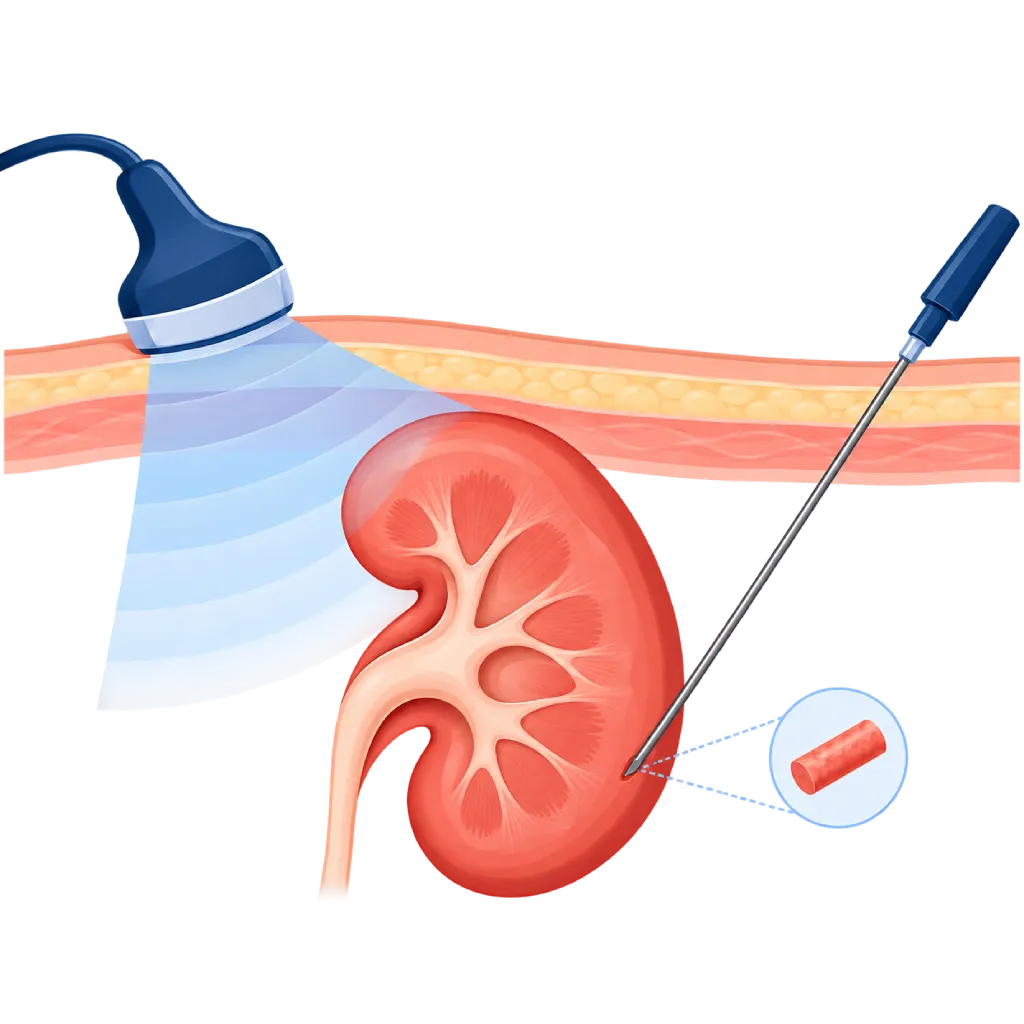
A kidney biopsy removes a small amount of kidney tissue using a thin, ultrasound-guided needle under local anesthesia. The tissue is examined under a microscope to find the cause of protein or blood in the urine and declining kidney function. Because of the risk of bleeding, blood thinners and blood pressure need to be managed beforehand.
Sources01 / Understanding the procedure
About Kidney Biopsy
What Is a Kidney Biopsy
A kidney biopsy is the removal of a few small pieces of kidney tissue, each about as thin as a pencil tip, with a special needle through the skin of the back. The tissue is examined with a standard microscope, special stains, and sometimes an electron microscope. A kidney biopsy is one of the definitive ways to determine the type and severity of kidney damage.
How It Works in Brief
The patient lies face down, and the doctor locates the kidney with ultrasound. After the skin is numbed, the biopsy needle is inserted toward the lower part of the kidney while the patient briefly holds their breath. The needle takes the tissue in a matter of seconds. Usually two to three samples are taken so there is enough tissue to examine.
The Kidneys and the Heart
The kidneys and the heart affect each other. Chronic kidney disease increases the risk of heart disease, and heart failure can reduce kidney function. Some diseases also affect both at the same time, so the results of a kidney biopsy also help determine heart care.
- Amyloidosis: abnormal protein deposits in the kidney can be a clue to amyloidosis that also affects the heart.
- Fabry disease: an inherited disease that can damage the kidneys and thicken the heart muscle.
- Lupus and vasculitis: inflammation in the kidneys is often accompanied by involvement of the heart or blood vessels.
In many people with diabetes or high blood pressure, the cause of kidney disease is already clear without a biopsy. A biopsy is usually considered when the pattern of test results does not match what is expected.
Important Points for Heart Patients
A kidney biopsy carries a higher risk of bleeding than a skin biopsy. For this reason, blood thinners are usually stopped temporarily as directed by your cardiologist, and blood pressure must be under control. In patients who recently had a stent placed and cannot stop their medication, the biopsy may be postponed or another approach may be considered, for example through a blood vessel in the neck.
02 / Understanding the procedure
When Is This Procedure Considered?
A doctor may consider this procedure in the situations below. The decision is always made after a thorough assessment.
- Protein or Blood in the Urine with an Unclear CauseTo find out which part of the kidney is damaged and why.
- Rapidly Declining Kidney FunctionHelps find causes that can still be treated.
- Nephrotic SyndromeSwelling with a very high level of protein in the urine.
- Suspected Lupus or Vasculitis Affecting the KidneysDetermines the type and severity of inflammation to guide the choice of medication.
- Suspected Amyloidosis or Fabry DiseaseDiseases that can affect the kidneys and the heart at the same time.
- Kidney Disease That Does Not Match ExpectationsFor example, in diabetes or hypertension with an unusual pattern of results.
Situations to Consider First
- Uncontrolled Blood Clotting DisorderThe risk of bleeding is too high until the disorder is corrected.
- Blood Thinners That Cannot Be StoppedFor example, after a recent stent placement. The biopsy is postponed or another approach is chosen.
- Uncontrolled High Blood PressureIt needs to be lowered first to reduce the risk of bleeding.
- A Single Kidney or a Shrunken KidneyThe benefit is small and the risk is higher, so special consideration is needed.
- Kidney Infection or Skin Infection at the Puncture SiteThe infection is treated before the biopsy.
- Unable to Lie Face Down or Hold Your BreathThe doctor will assess another approach or position that is safer.
03 / Before the procedure
How Should You Prepare?
Preparation for a kidney biopsy starts a few days beforehand.
Blood thinners. Aspirin, clopidogrel, warfarin, and other blood thinners are usually stopped a few days beforehand. Do not stop them on your own. The schedule for stopping and restarting them is arranged with your cardiologist.
Blood pressure. Your blood pressure needs to be under control. Take your blood pressure medication as usual, including on the day of the procedure, unless told otherwise.
Initial tests. You will have a complete blood count, clotting factor tests, kidney function tests, and a kidney ultrasound.
Eating and drinking. You usually fast for a few hours before the procedure. Follow the written instructions from the team.
Important information. Tell the team if you are allergic to anesthetics or latex, are pregnant, or have a pacemaker.
Companion. Arrange for someone to accompany you, and do not drive yourself after the procedure.
Unsure about the preparation instructions? Ask our team before the procedure.
04 / During the procedure
How Is the Procedure Done?
The biopsy itself usually takes about 30 minutes. Afterward, you are monitored for at least a few hours, and some patients stay overnight.
Preparation and Positioning
An IV line is placed and your blood pressure is checked. You lie face down with a pillow under your abdomen to bring the kidney closer to the surface.
Ultrasound and Local Anesthesia
The doctor marks the location of the kidney with ultrasound, cleans the skin of your back, and then injects a local anesthetic.
Taking the Tissue
While you briefly hold your breath, the needle is inserted toward the lower part of the kidney. The device makes a clicking sound as it takes the tissue. This step is usually repeated two to three times.
Monitoring After the Procedure
The puncture site is pressed and covered with a bandage. You lie down for several hours while your blood pressure, pulse, urine color, and hemoglobin level are monitored.
05 / Benefits and risks
Benefits and Risks Should Be Discussed Together.
Every medical procedure has benefits and risks. Your doctor will explain both for your situation before the procedure.
Benefits You Can Expect
- Confirms the Cause of Kidney DiseaseThe tissue provides answers that cannot be obtained from blood or urine tests alone.
- Guides the Right TreatmentSome kidney diseases require specific medications chosen based on the biopsy results.
- Assesses the Extent of DamageHelps predict the course of the disease and the benefit of treatment.
- Detects Diseases That Also Affect the HeartFor example, amyloidosis or Fabry disease, so the heart can be checked earlier.
- No Large IncisionOnly a small needle puncture under local anesthesia is needed.
The benefits of a procedure are not a promise of a cure. Ask how the results will affect your care plan.
Risks You Should Know
- Blood in the UrineVisibly reddish urine occurs in about 3 out of 100 people and usually improves on its own.
- Bleeding Around the KidneyUsually minor and resolves on its own, which is why patients are monitored for several hours.
- Need for a Transfusion or a Procedure to Stop BleedingA transfusion is needed in about 1 to 2 out of 100 people, and a special procedure is needed even less often.
- Flank PainMild and usually goes away within one to two days.
- Abnormal Connection Between Blood VesselsThis is rare and usually closes on its own.
- InfectionVery rare because the procedure is done with sterile equipment.
Risks can differ from person to person. A full explanation and consent are given after an individual assessment.
06 / After the procedure
What Is Recovery Like?
The majority of patients recover without problems within a few days.
Rest. Lie on your back for a few hours after the procedure, then do light activities.
Urine. Your first urine may be slightly reddish. Drink enough water as advised by the team.
Activity. Avoid lifting heavy objects and strenuous exercise for about 2 weeks.
Blood thinners. Restart them only according to the schedule from your doctor.
Results. Biopsy results are usually available in about 1 week, or longer if an electron microscope examination is needed.
Warning signs to watch for. Go to the emergency room right away if you experience:
- Dark red urine or urine with blood clots
- Severe pain in the flank, abdomen, or shoulder
- Severe dizziness, weakness, or fainting
- Fever or chills
- Inability to urinate
Know the Signs That Need Prompt Care.
Follow the team's guidance on warning signs. If severe or sudden symptoms appear after the procedure, go to the nearest emergency department right away or call Heart Attack Center 1500 258.
07 / Team and support
Doctors and Procedure Support
The doctors below are listed for this procedure. Listed by name, not by ranking.

dr. Debby C. Soemitha, Sp.PD
Internal Medicine
Clinical focusDiabetes and Diabetes Complications · Obesity and Metabolic Disease
View Profile
dr. Siska S. Danny, Sp.JP(K)
Interventional Cardiology
Coronary Intervention Procedures
Clinical focusPCI for Acute Coronary Syndrome · Primary Coronary Intervention
View Profile
dr. Sunu B. Raharjo, Sp.JP(K), Ph.D.
Arrhythmia and Electrophysiology
Arrhythmia and Device Center
Clinical focusClinical and Interventional Electrophysiology · Cardiac Arrhythmia Ablation
View Profile08 / Common questions
Before You Plan the Procedure.
Frequently asked questions about kidney biopsy. The decision to have a biopsy and how to prepare for it are discussed with your doctor.
Does a kidney biopsy hurt?
You will feel a sting when the anesthetic is injected. After that, you usually only feel pressure when the needle goes in and hear a click when the tissue is taken. Once the anesthetic wears off, your flank may feel sore or mildly painful for one to two days, which can usually be managed with pain relievers.
Do blood thinners need to be stopped?
Usually yes, because a kidney biopsy carries a risk of bleeding. However, do not stop them on your own. Your cardiologist and the doctor performing the biopsy will arrange when to stop and restart the medication. If you recently had a stent placed, the biopsy may be postponed or another, safer approach may be chosen.
How long do I need to stay in the hospital after a kidney biopsy?
After the biopsy, you lie down and are monitored for at least a few hours to make sure there is no bleeding. Some patients can go home on the same day, while others stay overnight, especially if they have a higher risk of bleeding. The team makes this decision based on your condition.
Why might a heart patient need a kidney biopsy?
Some diseases, such as amyloidosis, Fabry disease, lupus, and vasculitis, can affect the kidneys and the heart at the same time. A kidney biopsy helps confirm these diseases so that treatment and heart tests can be planned more precisely. In addition, kidney function affects the choice and dose of heart medications.
When will the kidney biopsy results be ready?
Initial results are usually available in about 1 week. If the tissue needs to be examined with an electron microscope or special stains, for example to look for amyloid, the complete results may take longer. The doctor will discuss the results, treatment, and any further tests needed with you.
When can I return to my usual activities?
Light activities such as walking and office work are usually allowed a few days after the biopsy. Avoid lifting heavy objects, strenuous exercise, and activities that jolt the body for about 2 weeks to give the puncture site in the kidney time to heal. Follow the team's advice if you have special circumstances.
Sources and Medical Review
Translated from the Indonesian edition medically reviewed by dr. Debby C. Soemitha, Sp.PD.
Sources as cited in the Indonesian edition.
- Hogan JJ, Mocanu M, Berns JS. The native kidney biopsy: update and evidence for best practice. Clin J Am Soc Nephrol. 2016;11(2):354-362.
- Poggio ED, McClelland RL, Blank KN, et al. Systematic review and meta-analysis of native kidney biopsy complications. Clin J Am Soc Nephrol. 2020;15(11):1595-1602.
- Luciano RL, Moeckel GW. Update on the native kidney biopsy: core curriculum 2019. Am J Kidney Dis. 2019;73(3):404-415.
- Douketis JD, Spyropoulos AC, Murad MH, et al. Perioperative management of antithrombotic therapy: an American College of Chest Physicians clinical practice guideline. Chest. 2022;162(5):e207-e243.
- Rangaswami J, Bhalla V, Blair JEA, et al. Cardiorenal syndrome: classification, pathophysiology, diagnosis, and treatment strategies: a scientific statement from the American Heart Association. Circulation. 2019;139(16):e840-e878.