
Quick answer
What Is Systemic Vasculitis?
Systemic vasculitis is a group of diseases that cause inflammation of the blood vessel walls. The inflammation can make vessels narrow, become blocked, or widen, disrupting blood flow to organs such as the kidneys, lungs, heart, and brain.
SourcesSigns That Need Urgent Help
- Coughing up blood or severe shortness of breath
- Sudden vision problems, such as double or blurred vision
- Chest pain, especially with a cold sweat
- A drooping face, slurred speech, or weakness on one side of the body
- A clear drop in urine output or reddish-brown urine
- Severe abdominal pain
If these signs appear, go to the nearest emergency department right away or call Heart Attack Center 1500 258.
01 / Understanding the condition
About Systemic Vasculitis
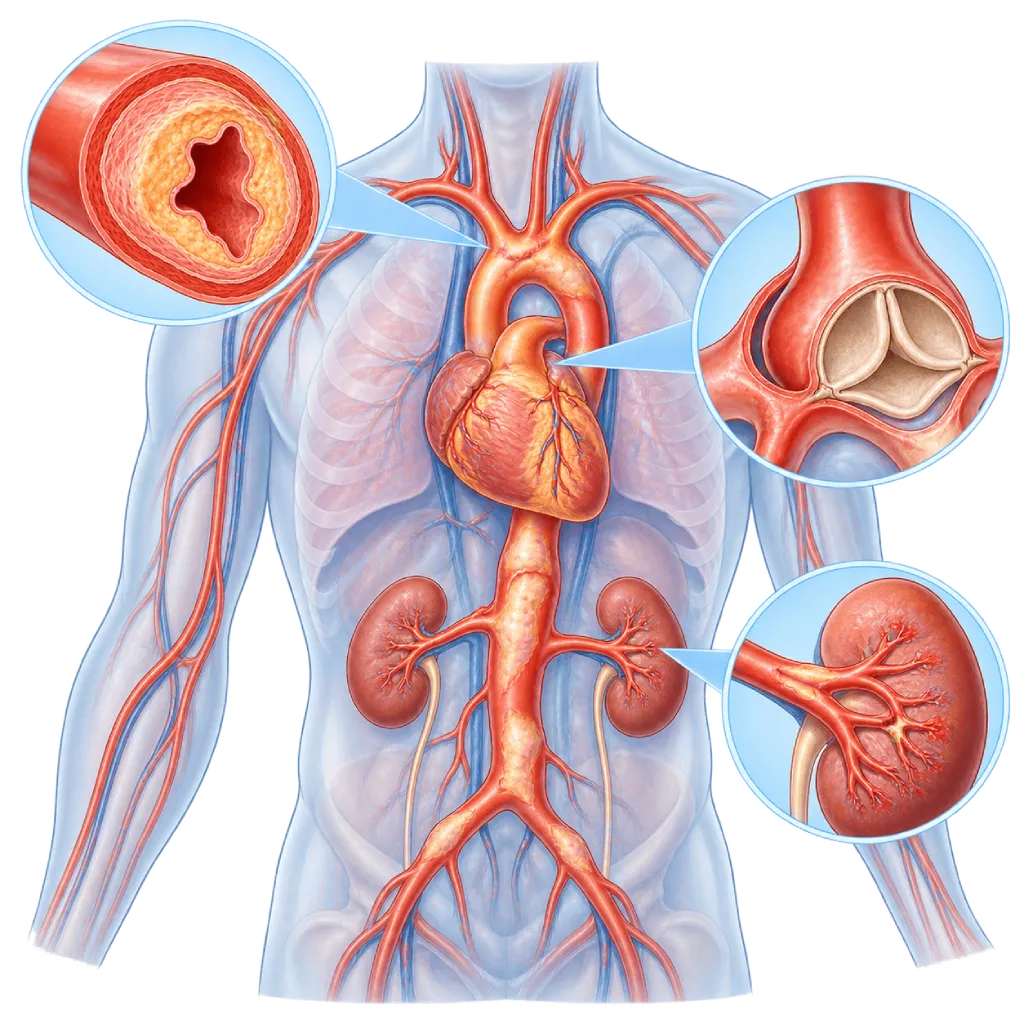
Vasculitis means inflammation of the blood vessel walls. In systemic vasculitis, inflammation appears in many parts of the body because the immune system mistakenly attacks the body's own blood vessels. An inflamed vessel wall can thicken, causing the vessel to narrow or become blocked, or weaken, causing it to widen into an aneurysm. As a result, the organs supplied by those vessels do not get enough blood.
Types by Vessel Size
Doctors group vasculitis by the size of the vessels affected. Large-vessel vasculitis affects the aorta and its main branches, for example Takayasu arteritis in young women and giant cell arteritis in people over 50. Medium-vessel vasculitis includes polyarteritis nodosa and Kawasaki disease in children, covered on the Kawasaki Disease page. Small-vessel vasculitis includes ANCA-associated vasculitis, such as granulomatosis with polyangiitis, which often affects the kidneys and lungs. There is also vasculitis that accompanies other diseases, such as lupus, or that is triggered by infections and medications.
Effects on the Heart, Lungs, and Blood Vessels
In large-vessel vasculitis, the aorta and its branches can narrow, so the pulse in the arms weakens, blood pressure differs between the two arms, or the arms tire quickly with use. Narrowing of the kidney arteries can cause hypertension, while widening of the aortic root can make the aortic valve leak. The coronary arteries can also be affected and cause chest pain. In small-vessel vasculitis, the lungs can develop inflammation or small bleeds that cause coughing up blood, while the heart muscle and the membrane around the heart can become inflamed. The risk of heart attack and stroke is also higher while the disease is active.
Course of the Disease
Systemic vasculitis usually begins with general symptoms such as fever, fatigue, weight loss, and muscle or joint pain, so it is often mistaken for an ordinary infection. The pace varies: ANCA-associated vasculitis can damage the kidneys within weeks, while Takayasu arteritis often develops slowly over years before it is diagnosed. With the right treatment, many people achieve remission, a state in which the inflammation is not active. However, the disease can come back, so routine checkups and regular blood vessel imaging are still needed. Care usually involves an internal medicine specialist or rheumatologist, a cardiologist and vascular specialist, and doctors for the affected organs.
02 / Understanding the condition
Symptoms to Recognize.
Common Symptoms
- Fever, fatigue, and weight loss with no clear cause
- Muscle and joint pain
- Purplish-red patches or lumps on the skin, especially on the legs
- Tingling, numbness, or weakness in the hands or feet
- Long-term nasal congestion, nosebleeds, or recurrent sinusitis
- A weak pulse in the arm or a difference in blood pressure between the two arms
- An arm that tires quickly or hurts when used for activities
Symptoms in Older Adults
Giant cell arteritis almost always appears after age 50 and needs to be recognized quickly because it can affect vision.
- A new headache, often at the temples
- A tender scalp when combing your hair
- An aching jaw when chewing
- Brief blurred or double vision
- Stiff and painful shoulders and hips in the morning
03 / Understanding the condition
What Causes This Condition?
- The immune system attacks the blood vessel walls; the trigger is often unknown
- ANCA antibodies that activate white blood cells, which then damage small blood vessels
- Certain infections, such as hepatitis B or C, that trigger blood vessel inflammation
- A reaction to certain medications
- Other autoimmune diseases, such as lupus or rheumatoid arthritis
- A genetic tendency that makes the immune system react more easily
04 / Understanding the condition
Who Is at Higher Risk?
Age
Giant cell arteritis almost only affects people over 50, Takayasu arteritis usually starts before age 40, and Kawasaki disease mainly affects children under five.
Genetic
Certain immune system gene variants are linked to vasculitis. Takayasu arteritis is more common in people of Asian descent, while giant cell arteritis is more common in people of Northern European descent.
Medical
Other autoimmune diseases, hepatitis B or C infection, and a previous history of vasculitis increase the likelihood of blood vessel inflammation or relapse.
Lifestyle
Smoking speeds up blood vessel damage and increases the risk of heart attack and stroke in people with vasculitis.
Other
Takayasu arteritis is much more common in women. Exposure to silica dust and certain medications is linked to ANCA-associated vasculitis.
Groups at Higher Risk
- Young Women: The group more often affected by Takayasu arteritis, especially in Asia. A weak arm pulse or hypertension at a young age should be checked.
- People Over Age 50: The group affected by giant cell arteritis; a new headache or vision problems should be checked right away.
- People with Autoimmune Diseases: Lupus and rheumatoid arthritis can be accompanied by vasculitis that affects the skin, nerves, or internal organs.
- People with Vasculitis in Remission: The disease can come back, so checkups, blood tests, and blood vessel imaging are still needed even when you feel well.
05 / Understanding the condition
How Is It Diagnosed?
No single test can confirm all types of vasculitis. Doctors combine your symptoms, a physical examination, blood and urine tests, imaging, and if needed a biopsy. The physical examination includes feeling the pulses in both arms and legs, measuring blood pressure in both arms, and listening for a whooshing sound of blood flow (bruit) in the neck or abdomen.
Blood tests assess inflammation (CRP and ESR), kidney function, and antibodies such as ANCA. Urine is tested for blood and protein. When large-vessel vasculitis is suspected, duplex ultrasound, CT or MR angiography, and PET-CT show vessel walls that are thickened, narrowed, or widened. In small-vessel vasculitis, a biopsy of the kidney, skin, or airways often confirms the diagnosis. An ECG, echocardiogram, or cardiac MRI is used if the heart, aortic valve, or coronary arteries are suspected to be involved. Doctors also rule out infections and other diseases with similar symptoms.
C-Reactive Protein (CRP) Test
A marker of inflammation that is usually raised when vasculitis is active; together with ESR, it is also used to monitor the response to treatment.
ANCA test (anti-PR3 and anti-MPO): a blood test that helps confirm ANCA-associated small-vessel vasculitis.
Urinalysis
Looks for blood and protein in the urine as a sign that the kidneys are involved, even before symptoms appear.
Duplex Ultrasound
Shows thickening of the artery walls at the temples, armpits, or neck; recommended as a first test when giant cell arteritis is suspected.
CT or MR angiography: maps narrowing, blockage, or widening of the aorta and its branches in large-vessel vasculitis.
FDG PET-CT: nuclear imaging that shows active inflammation in the wall of the aorta and its branches.
Kidney Biopsy
Takes a small piece of kidney tissue to confirm small-vessel inflammation; a skin or airway biopsy can also be used depending on the organ affected.
06 / Understanding the condition
Treatment Options.
Treatment is decided by a doctor after an assessment. The categories below can help you follow the conversation with your doctor.
Corticosteroids
Anti-inflammatory medications that form the basis of initial treatment to calm the inflammation; your doctor lowers the dose gradually based on your response.
Immunosuppressants
Medications that suppress the immune system to achieve and maintain remission and reduce the need for corticosteroids. Your doctor chooses the type based on the type of vasculitis.
Biologic Therapy
Certain biologic medications, such as rituximab for ANCA-associated vasculitis or tocilizumab for giant cell arteritis, are chosen by your doctor based on the type of vasculitis.
Blood Vessel Revascularization
Angioplasty, stent placement, or bypass surgery is considered if the narrowing causes severe symptoms, preferably once the inflammation has settled.
Heart Risk Control
Control of blood pressure, cholesterol, and blood sugar, plus antiplatelet medication in certain situations as your doctor decides.
Preventing Side Effects
Vaccination, infection prevention, and bone protection while taking immunosuppressive medications long term.
07 / Understanding the condition
Complications to Watch For.
Arterial Narrowing and Blockage
Arteries to the arms, kidneys, brain, or intestines can narrow so that organs do not get enough blood, causing pain, hypertension, or stroke.
Aneurysm and Aortic Valve Leakage
An inflamed aortic wall can widen and stretch the aortic valve so that the valve leaks. The widening is monitored with regular imaging.
Kidney Damage
Inflammation of the small vessels in the kidneys can rapidly reduce kidney function if it is not treated promptly.
Bleeding in the Lungs
Inflammation of the lung capillaries can cause coughing up blood and shortness of breath, a condition that needs urgent care.
Heart Attack and Stroke
Inflammation of the coronary or brain arteries, along with long-term inflammation, increases the risk of both.
Vision Problems
In giant cell arteritis, blockage of the eye arteries can permanently impair vision if treatment is delayed.
Long-Term Medication Side Effects
Corticosteroids and immunosuppressants can cause infections, high blood sugar, or bone loss, so your doctor tapers them gradually.
08 / Understanding the condition
What Can You Do?
- Take your medications on schedule and do not stop corticosteroids suddenly
- Attend routine checkups, including blood tests, urine tests, and blood vessel imaging
- Quit smoking to protect your blood vessels
- Ask your doctor which vaccinations are appropriate while you are taking immunosuppressive medications
- Control your blood pressure, blood sugar, and cholesterol
- Report fever, coughing up blood, or vision problems right away
09 / Understanding the condition
When Should You See a Doctor?
Get checked if you have fever, fatigue, and weight loss that last for weeks with no clear cause, especially if they come with a purplish rash, joint pain, tingling, or sinusitis that does not go away. A weak pulse in the arm, a difference in blood pressure between the two arms, or hypertension at a young age also needs to be checked. If you are over 50 and have a new headache, see a doctor the same day.
Go to the emergency room right away if you have:
- Sudden blurred or double vision, or partial loss of vision
- Coughing up blood or severe shortness of breath
- Chest pain or signs of stroke, such as a drooping face and slurred speech
- Very little urine, or urine that is reddish brown
Don't Wait in an Emergency.
If symptoms are severe or come on suddenly, go to the nearest emergency department right away or call Heart Attack Center 1500 258, rather than waiting for an appointment.
10 / Common questions
Questions You May Have.
Frequently asked questions about systemic vasculitis and its effects on the heart and blood vessels.
Is systemic vasculitis contagious?
No. Systemic vasculitis happens because the immune system attacks the body's own blood vessels, not because of germs that can spread to other people. Some vasculitis is triggered by infection, such as hepatitis B, but the blood vessel inflammation itself is not contagious. If you take immunosuppressive medications, you are actually more likely to catch infections, so hand hygiene and vaccinations become important.
How does vasculitis affect the heart?
In large-vessel vasculitis, inflammation of the aorta can widen the aortic root so that the aortic valve leaks, and the coronary arteries can narrow and cause chest pain. Narrowing of the kidney arteries causes hypertension that puts strain on the heart. In small-vessel vasculitis, the heart muscle or the membrane around the heart can become inflamed. That is why your doctor may recommend an ECG, echocardiogram, or cardiac MRI as part of monitoring.
Why is my blood pressure different in my two arms?
In Takayasu arteritis and other large-vessel vasculitis, the arteries to one or both arms can narrow. As a result, the pulse weakens and the blood pressure measured in that arm is lower than the actual pressure. A difference of more than 10 mmHg between the two arms should be checked. Your doctor may measure blood pressure in your legs or use the arm with the stronger pulse as the reference.
Can systemic vasculitis be cured?
Many types of vasculitis can be controlled until they reach remission, a state in which the inflammation is no longer active. Some people can stop their medications gradually under a doctor's supervision. However, vasculitis can come back, especially ANCA-associated vasculitis and Takayasu arteritis. Routine checkups, blood tests, and regular imaging help detect a relapse early, before organs are damaged.
Are corticosteroids safe for long-term use?
Corticosteroids are very helpful for calming inflammation, but long-term use can cause side effects such as higher blood sugar, higher blood pressure, weight gain, infections, and bone loss. That is why your doctor lowers the dose gradually and often adds an immunosuppressant or biologic medication so the corticosteroid can be reduced. Do not stop corticosteroids suddenly without your doctor's guidance.
When does a narrowed blood vessel need surgery or a stent?
A procedure is considered if the narrowing or widening causes severe symptoms or threatens an organ, for example hypertension due to narrowing of a kidney artery, reduced blood flow to the brain, or severe aortic valve leakage. When possible, the procedure is done once the inflammation has settled so the results last longer. The decision is made together with an internal medicine specialist, a cardiologist and vascular specialist, and a surgeon.
Sources and Medical Review
Translated from the Indonesian edition medically reviewed by dr. Emanoel Oepangat, Sp.JP(K).
Sources as cited in the Indonesian edition.
- Jennette JC, Falk RJ, Bacon PA, et al. 2012 Revised International Chapel Hill Consensus Conference Nomenclature of Vasculitides. Arthritis Rheum. 2013;65(1):1-11.
- Hellmich B, Sanchez-Alamo B, Schirmer JH, et al. EULAR recommendations for the management of ANCA-associated vasculitis: 2022 update. Ann Rheum Dis. 2024;83(1):30-47.
- Hellmich B, Agueda A, Monti S, et al. 2018 Update of the EULAR recommendations for the management of large vessel vasculitis. Ann Rheum Dis. 2020;79(1):19-30.
- Maz M, Chung SA, Abril A, et al. 2021 American College of Rheumatology/Vasculitis Foundation Guideline for the Management of Giant Cell Arteritis and Takayasu Arteritis. Arthritis Rheumatol. 2021;73(8):1349-1365.
- Dejaco C, Ramiro S, Bond M, et al. EULAR recommendations for the use of imaging in large vessel vasculitis in clinical practice: 2023 update. Ann Rheum Dis. 2024;83(6):741-751.
- Isobe M, Amano K, Arimura Y, et al. JCS 2017 Guideline on Management of Vasculitis Syndrome: Digest Version. Circ J. 2020;84(2):299-359.
Doctors Who Treat This Condition

dr. Debby C. Soemitha, Sp.PD
Internal Medicine
Clinical focusDiabetes and Diabetes Complications · Obesity and Metabolic Disease
View Profile
dr. Suko Adiarto, Sp.JP(K), Ph.D.
Interventional Cardiology
Vascular Diagnostic and Therapeutic Center +1 center
Clinical focusCoronary Intervention · Peripheral Vascular Intervention
View Profile
dr. Emanoel Oepangat, Sp.JP(K)
Interventional Cardiology
Vascular Diagnostic and Therapeutic Center +1 center
Clinical focusCoronary Intervention · Peripheral Vascular Intervention
View Profile