
Quick answer
What Is Systemic Lupus Erythematosus?
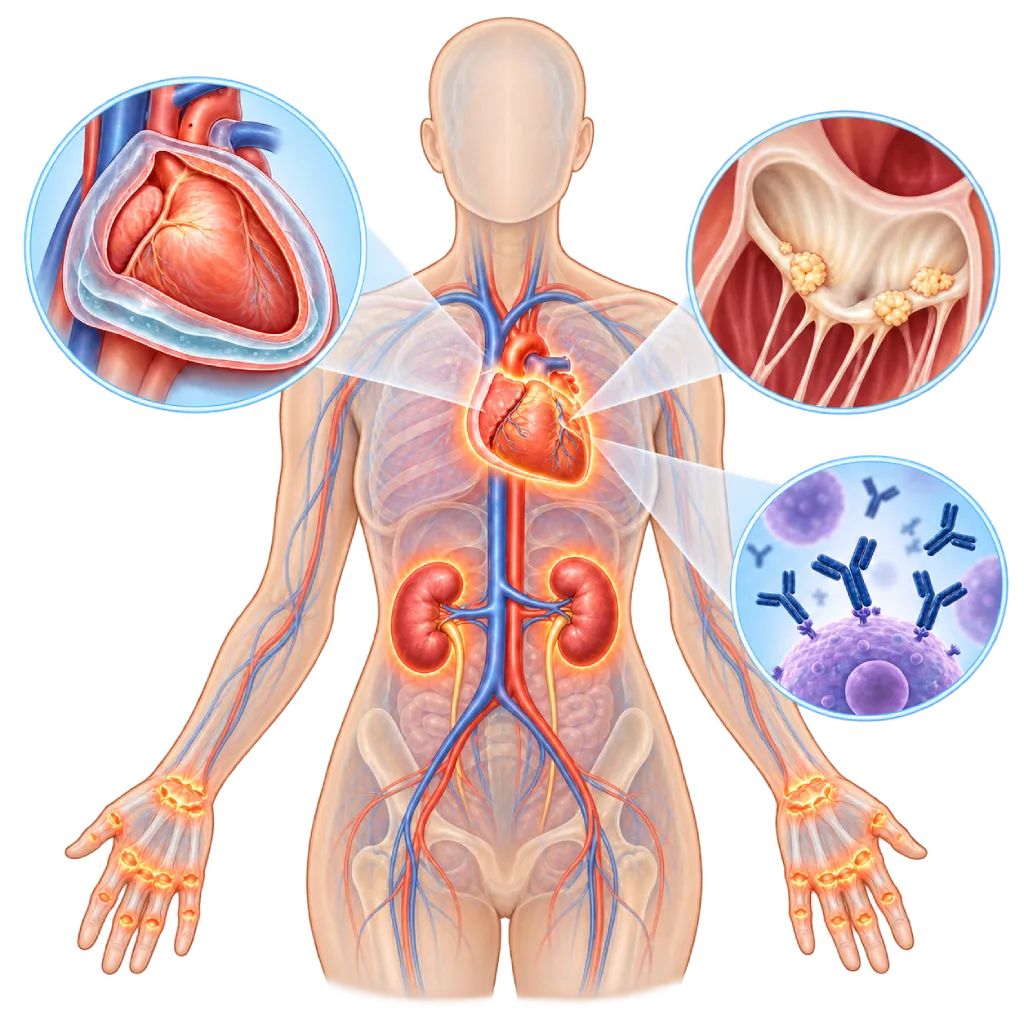
Systemic lupus erythematosus is a long-term autoimmune disease in which the immune system attacks the body's own tissues. Lupus can affect the skin, joints, kidneys, blood, and brain, as well as the heart and blood vessels, with periods of flares and periods of calm.
SourcesSigns That Need Urgent Help
- Severe chest pain or shortness of breath that comes on suddenly
- Shortness of breath that worsens when lying down, with leg swelling
- Seizures, confusion, or a very severe headache
- Sudden facial drooping, arm weakness, or slurred speech
- Very little or dark urine, or swelling all over the body
- Widespread bruising, nosebleeds, or bleeding gums that are hard to stop
- High fever while taking immunosuppressive medicines
- One leg that is swollen, painful, and red
If these signs appear, go to the nearest emergency department right away or call Heart Attack Center 1500 258.
01 / Understanding the condition
About Systemic Lupus Erythematosus
Systemic lupus erythematosus, often called lupus or SLE, is a long-term autoimmune disease. In this disease, the immune system mistakenly attacks the body's own tissues, causing inflammation in many organs, such as the skin, joints, kidneys, blood cells, lungs, brain, heart, and blood vessels. Symptoms come and go: there are periods when the disease flares up (flares) and periods of calm. Because its symptoms vary so widely and can resemble other diseases, lupus is often called the disease of a thousand faces.
About 9 in 10 people with lupus are women, usually between the ages of 15 and 45. Its exact cause is not yet known; experts suspect a combination of inherited factors, hormones, and environmental triggers such as sunlight and infections.
Lupus and the Heart
Lupus can affect almost every part of the heart. Inflammation of the lining around the heart (pericarditis) is a common form of heart involvement, with sharp chest pain that worsens when breathing in. Lupus can also cause sterile deposits on the heart valves, called Libman-Sacks endocarditis, inflammation of the heart muscle (myocarditis), and high pressure in the blood vessels of the lungs. In a small number of babies carried by women with anti-Ro antibodies, congenital heart block, a disorder of the heart's electrical conduction, can occur.
Over the long term, chronic inflammation, high blood pressure from kidney problems, and the effects of steroids speed up the buildup of plaque in the arteries. As a result, young women with lupus have a risk of coronary artery disease and stroke several times higher than women of the same age. Some people with lupus also have antiphospholipid antibodies, which make the blood clot easily.
It Can Be Controlled
Lupus cannot yet be cured, but it can be controlled. The EULAR 2023 guidelines recommend the antimalarial medicine hydroxychloroquine for almost everyone with lupus, steroids for as short a time and at as low a dose as possible, and immunosuppressive or biologic medicines depending on the organs affected. Care usually involves several doctors, such as an internist, a cardiologist, and a nephrologist, depending on the organs affected. Routine checkups help detect flares, assess the kidneys and heart, and reduce the side effects of medicines. With proper treatment, many people with lupus can work, raise a family, and carry on with their usual activities.
02 / Understanding the condition
Symptoms to Recognize.
Common Symptoms
Lupus symptoms differ from person to person and often come and go in turns. A combination of several recurring complaints should be checked.
- Severe fatigue that does not improve with rest
- Fever without a clear cause
- Pain and swelling in several joints, especially the joints of the hands
- A butterfly-shaped red rash across the cheeks and the bridge of the nose
- A rash or other symptoms that flare after sun exposure
- Recurring mouth sores or more hair loss than usual
- Fingers that turn pale or bluish in the cold
- Sharp chest pain that worsens when breathing in or lying down
03 / Understanding the condition
What Causes This Condition?
- The immune system mistakenly makes antibodies that attack the body's own tissues
- Genetic susceptibility that runs in families
- The influence of the hormone estrogen, which explains why lupus is more common in women
- Ultraviolet light from the sun, which can trigger or worsen symptoms
- Certain viral infections, such as Epstein-Barr virus, in susceptible people
- Certain medicines that can trigger drug-induced lupus, such as hydralazine and procainamide
- Smoking and exposure to silica dust
04 / Understanding the condition
Who Is at Higher Risk?
Lifestyle
Smoking, unprotected sun exposure, and lack of sleep can trigger flares. Smoking also reduces the benefit of antimalarial medicines.
Medical
Having another autoimmune disease, such as autoimmune thyroid disease or Sjogren's syndrome, as well as infections that trigger flares.
Genetic
A parent, sibling, or close relative with lupus or another autoimmune disease.
Age
Lupus usually appears between the ages of 15 and 45, but it can also occur in children and older adults.
Other
Female sex: about 9 in 10 people with lupus are women. Lupus is also more common in people of Asian and African descent.
Groups at Higher Risk
- Women of Childbearing Age: The majority of people with lupus are women aged 15 to 45, so recurring symptoms should be checked.
- Family Members of People with Lupus or Autoimmune Disease: A family history points to a genetic susceptibility to immune system disorders.
- Pregnant Women with Lupus: Pregnancy can trigger flares and raise the risk of preeclampsia, so it should be planned while the disease is quiet and closely monitored.
- People with Lupus and Antiphospholipid Antibodies: These antibodies raise the risk of blood clots, stroke, and miscarriage. Covered on the Antiphospholipid Syndrome page.
05 / Understanding the condition
How Is It Diagnosed?
No single test can confirm lupus. Your doctor combines your symptoms, a physical examination, and laboratory results. The 2019 EULAR/ACR classification criteria use a positive ANA as the entry requirement, then assign points to clinical features, such as fever, rash, joint inflammation, inflammation of the lining of the heart or lungs, blood abnormalities, and kidney problems, as well as to characteristic antibodies such as anti-dsDNA and anti-Sm.
Because lupus can affect many organs, after diagnosis your doctor checks the kidneys through urine tests and kidney function, as well as a complete blood count. A kidney biopsy is considered if urine protein rises. Antiphospholipid antibodies are also tested because they raise the risk of blood clots.
Heart tests, such as an ECG and echocardiography, are done if there is chest pain, shortness of breath, palpitations, or abnormal heart sounds. EULAR guidelines also recommend regular cardiovascular risk assessment, including blood pressure, cholesterol, and blood sugar, because people with lupus are more prone to coronary artery disease at a young age.
Antinuclear Antibody Test (ANA Test)
An initial screening test. Almost everyone with lupus has a positive ANA, but a positive result can also be found in healthy people, so it needs to be interpreted together with symptoms.
Anti-dsDNA Test
An antibody that is fairly specific to lupus; its level often rises when the disease is active, especially when lupus affects the kidneys.
Anti-Sm/RNP Test
Anti-Sm antibodies are highly specific to lupus and help confirm the diagnosis after a positive ANA.
Complement C3 and C4 Test
Low complement levels indicate that lupus is active and are used to monitor treatment results.
Complete Blood Count (CBC)
Looks for anemia, low white blood cells, or low platelets, which often accompany lupus.
Urine Protein-to-Creatinine Ratio (UPCR)
Measures protein leaking into the urine as a sign of lupus nephritis, checked together with urinalysis and kidney function.
Echocardiography
Heart ultrasound to look for fluid in the lining around the heart, valve abnormalities, impaired pumping, or signs of high pressure in the blood vessels of the lungs.
06 / Understanding the condition
Treatment Options.
Treatment is decided by a doctor after an assessment. The categories below can help you follow the conversation with your doctor.
Hydroxychloroquine
An antimalarial medicine recommended for almost everyone with lupus to reduce flares and protect the organs. Regular eye exams are needed during long-term use.
Corticosteroids
Used to calm inflammation during a flare. Your doctor lowers the dose gradually to as low as possible or stops it, because long-term use raises the risk of heart problems, bone problems, and infection.
Immunosuppressive Medicines
Medicines such as methotrexate, azathioprine, or mycophenolate are used when lupus affects vital organs or steroids are hard to taper.
Biologic Medicines
Belimumab or anifrolumab may be considered if lupus remains active despite standard medicines.
Heart Risk Control
Blood pressure, cholesterol, and blood sugar are kept on target, and smoking is stopped. If you have high-risk antiphospholipid antibodies, your doctor may consider aspirin.
Sun Protection
Sunscreen, covering clothing, and avoiding the midday sun help prevent flares of the rash and other symptoms.
Treatment of Affected Organs
Lupus nephritis, pericarditis, or other heart involvement are treated specifically with a nephrologist or cardiologist, including blood thinners if there are clots.
07 / Understanding the condition
Complications to Watch For.
Pericarditis and Pericardial Effusion
Inflammation of the lining around the heart causes sharp chest pain and may come with fluid buildup around the heart. Covered on the Pericarditis page.
Heart Valve Abnormalities
Sterile deposits on the valves (Libman-Sacks endocarditis) can make a valve leak and become a source of clots that travel to the brain. Covered on the Heart Valve Disease page.
Early Coronary Artery Disease
Chronic inflammation speeds up atherosclerosis, so a heart attack can occur at a young age. Covered on the Coronary Artery Disease page.
Myocarditis
Inflammation of the heart muscle can weaken the heart's pumping and trigger heart failure or rhythm disorders. Covered on the Myocarditis page.
Blood Clots and Stroke
Antiphospholipid antibodies and blood vessel inflammation raise the risk of deep vein thrombosis, pulmonary embolism, and stroke. Covered on the Antiphospholipid Syndrome page.
Lupus Nephritis
Kidney inflammation causes protein and blood in the urine, swelling, and high blood pressure, and can progress to chronic kidney disease. Covered on the Chronic Kidney Disease page.
Pulmonary Hypertension
High pressure in the blood vessels of the lungs causes shortness of breath during activity and strains the right side of the heart. Covered on the Pulmonary Hypertension page.
08 / Understanding the condition
What Can You Do?
- Lupus cannot yet be prevented, but flares and complications can be reduced
- Use sunscreen and protective clothing when you are outdoors
- Take your medicines on schedule and do not stop steroids suddenly
- Stop smoking
- Check your blood pressure, cholesterol, and blood sugar regularly
- Plan any pregnancy with your doctor while the disease is quiet
- Keep your vaccinations up to date as advised by your doctor and get checked promptly if you have an infection
- Attend routine checkups, including urine tests, even when you feel well
09 / Understanding the condition
When Should You See a Doctor?
Get checked if several typical lupus symptoms keep recurring without a clear cause. If you have already been diagnosed with lupus, attend checkups as scheduled and contact your doctor promptly during a flare. Go to the emergency room right away if you have severe chest pain, sudden shortness of breath, seizures, or signs of stroke.
- Severe fatigue, fever, and joint pain that come and go
- A rash on the face or a rash that appears after sun exposure
- Sharp chest pain when breathing in or lying down
- Swelling in the feet or eyelids, or foamy urine
- Repeated miscarriages or blood clots at a young age
- Planning a pregnancy while living with lupus
Don't Wait in an Emergency.
If symptoms are severe or come on suddenly, go to the nearest emergency department right away or call Heart Attack Center 1500 258, rather than waiting for an appointment.
10 / Common questions
Questions You May Have.
Frequently asked questions about lupus and its effects on the heart.
Is lupus contagious?
No. Lupus occurs because of a disorder in the person's own immune system, not because of germs that can pass to other people. You cannot catch lupus through touch, food, or sexual contact. Inherited factors do play a role, so family members of people with lupus are at slightly higher risk, but the majority of children of people with lupus do not develop lupus.
How can lupus affect the heart?
Lupus can cause inflammation of the lining around the heart with sharp chest pain, deposits on the heart valves, inflammation of the heart muscle, and high pressure in the blood vessels of the lungs. Over the long term, inflammation and the effects of steroids speed up plaque buildup in the arteries, so a heart attack and stroke can occur at a young age. For this reason, blood pressure, cholesterol, and heart symptoms need to be checked regularly.
Can women with lupus become pregnant?
Many people with lupus can become pregnant and give birth successfully when the pregnancy is planned. Pregnancy is recommended once lupus has been quiet for at least several months, using medicines that are safe for the baby. Your doctor also checks for antiphospholipid and anti-Ro antibodies, because they can affect the pregnancy and the baby's heart rhythm. The pregnancy needs to be monitored together with an internist and an obstetrician.
Can lupus be cured?
Lupus cannot be cured at present, but it can be controlled to the point of long quiet periods. The goals of treatment are to suppress inflammation, prevent organ damage, and reduce the need for steroids. With regular medication, routine checkups, and a healthy lifestyle, many people with lupus can work, raise a family, and carry on with their usual activities. Checkups are still needed even if symptoms have not appeared for a long time.
Why do people with lupus need to avoid sunlight?
Ultraviolet light from the sun can trigger skin rashes and, in some people, an overall lupus flare, such as fatigue and joint pain. Use broad-spectrum sunscreen every day, wear long-sleeved clothing and a hat or use an umbrella, and spend less time outdoors when the sun is strong. Certain lamps that give off ultraviolet light can also be a trigger.
Do lupus medicines need to be continued even without symptoms?
Generally yes, especially hydroxychloroquine, which helps prevent flares and protects the organs even when you feel well. Stopping medicines on your own can trigger a flare, and stopping steroids suddenly can be dangerous. If you have side effects or want to reduce your medicines, talk with your doctor. Your doctor can lower your medicines gradually if lupus has been quiet for a long time.
Sources and Medical Review
Translated from the Indonesian edition medically reviewed by dr. Debby C. Soemitha, Sp.PD.
Sources as cited in the Indonesian edition.
- Fanouriakis A, Kostopoulou M, Andersen J, Aringer M, Arnaud L, Bae SC, et al. EULAR recommendations for the management of systemic lupus erythematosus: 2023 update. Ann Rheum Dis. 2024;83(1):15-29.
- Aringer M, Costenbader K, Daikh D, Brinks R, Mosca M, Ramsey-Goldman R, et al. 2019 European League Against Rheumatism/American College of Rheumatology Classification Criteria for Systemic Lupus Erythematosus. Arthritis Rheumatol. 2019;71(9):1400-1412.
- Drosos GC, Vedder D, Houben E, Boekel L, Atzeni F, Badreh S, et al. EULAR recommendations for cardiovascular risk management in rheumatic and musculoskeletal diseases, including systemic lupus erythematosus and antiphospholipid syndrome. Ann Rheum Dis. 2022;81(6):768-779.
- Kidney Disease: Improving Global Outcomes (KDIGO) Lupus Nephritis Work Group. KDIGO 2024 Clinical Practice Guideline for the management of LUPUS NEPHRITIS. Kidney Int. 2024;105(1S):S1-S69.
- Siegel CH, Sammaritano LR. Systemic Lupus Erythematosus: A Review. JAMA. 2024;331(17):1480-1491.
- Sammaritano LR, Bermas BL, Chakravarty EE, Chambers C, Clowse MEB, Lockshin MD, et al. 2020 American College of Rheumatology Guideline for the Management of Reproductive Health in Rheumatic and Musculoskeletal Diseases. Arthritis Rheumatol. 2020;72(4):529-556.
Doctors Who Treat This Condition

dr. Debby C. Soemitha, Sp.PD
Internal Medicine
Clinical focusDiabetes and Diabetes Complications · Obesity and Metabolic Disease
View Profile
dr. Sri Diniharini, Sp.JP(K)
Echocardiography & Cardiovascular Imaging
Cardiovascular Diagnostic Center +1 center
Clinical focusAdvanced Echocardiography · Transesophageal Echocardiography
View Profile
Dr. med. dr. Denio A. Ridjab, Sp.JP(K)
Interventional Cardiology
Coronary Intervention Procedures +2 centers
Clinical focusInterventional Cardiology · Coronary Artery Disease
View Profile