
Quick answer
What Is Complement C3 and C4 Test?
A complement test measures the levels of C3 and C4, immune system proteins that are used up during inflammation caused by antibody complexes. Low levels can signal active lupus, kidney inflammation, or an inherited deficiency. This test helps your doctor monitor autoimmune diseases that can also affect the heart.
Sources01 / Understanding the procedure
About Complement C3 and C4 Test
What Is the Complement C3 and C4 Test
Complement is a group of proteins in the blood that work together with antibodies to fight germs and clear away debris from damaged cells. C3 and C4 are two complement proteins that are commonly measured. In autoimmune diseases such as lupus, complement is continuously used up, so its level in the blood falls.
How It Works in Brief
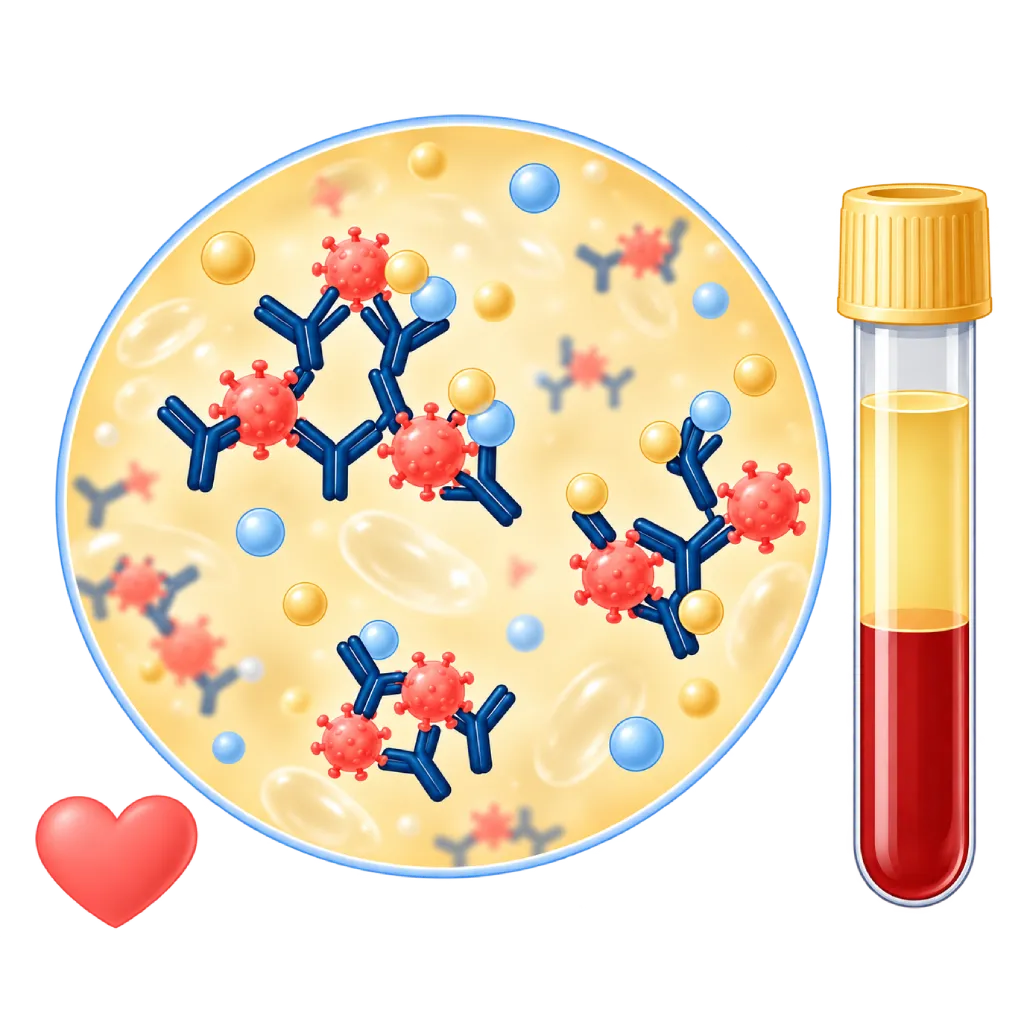
When antibodies attach to their targets and form small clumps called immune complexes, complement also attaches and is used up. The more active the inflammation, the more C3 and C4 are consumed. The laboratory measures the remaining C3 and C4 in the serum and compares them with the normal range.
Reading the Result Pattern
The normal range depends on the laboratory method. The pattern matters more:
- Low C3 and C4: often found in active lupus, especially when the kidneys are also inflamed.
- Low C3 only: can be found in some types of kidney inflammation, for example after an infection, and in endocarditis with kidney inflammation.
- Low C4 only: can be found in hereditary angioedema, cryoglobulinemia, or inherited C4 deficiency.
- High C3 and C4: both rise during inflammation or infection, so this is usually nonspecific.
In lupus, changes over time are more meaningful than a single result. Falling complement together with rising anti-dsDNA can signal a flare.
Complement and the Heart
Lupus can affect the heart, for example inflammation of the lining around the heart (pericarditis), inflammation of the heart muscle (myocarditis), and thickening of the valves. In these situations, complement helps assess whether the disease is active. In heart valve infection (endocarditis), low complement can signal that the kidneys are also affected.
The C4 test also helps evaluate recurrent swelling of the face, lips, or throat. Heart and blood pressure medicines in the ACE inhibitor class can cause this type of swelling, but C4 is usually normal. Low C4 points to hereditary or acquired angioedema, which is treated differently.
02 / Understanding the procedure
When Is This Procedure Considered?
A doctor may consider this procedure in the situations below. The decision is always made after a thorough assessment.
- Suspected Lupus or Lupus MonitoringTo assess whether the disease is active or improving with treatment.
- Kidney InflammationBlood or protein in the urine along with swelling, to look for the cause.
- Pericarditis or Myocarditis Without a Clear CauseAs part of the search for an autoimmune disease.
- Endocarditis with Kidney ProblemsLow complement can signal kidney inflammation caused by a valve infection.
- Recurrent Swelling of the Face, Lips, or ThroatIncluding while taking ACE inhibitor medicines, to look for hereditary angioedema.
- Unusual Recurrent InfectionsTo look for an inherited complement deficiency.
Situations to Consider First
- Delayed Sample ProcessingComplement can break down and appear low. The staff process the sample promptly.
- Acute Infection or InflammationC3 and C4 rise and can mask a decrease caused by autoimmune disease.
- PregnancyComplement levels tend to rise, so changes are interpreted more carefully.
- Recent Transfusion or PlasmaComplement from donor blood can change the results.
- Inherited Low LevelsSome people have low C4 from birth, so changes over time are more meaningful.
03 / Before the procedure
How Should You Prepare?
The complement test uses a blood sample and does not require fasting.
Eating and drinking. Eat and drink as usual, unless another test done at the same time requires fasting.
Medicines. Take your medicines as usual, including lupus medicines or immunosuppressants, unless your doctor tells you otherwise. Bring a list of your medicines.
Important information. Tell the staff if you are pregnant, have a fever or infection, have recently received a transfusion, or currently have swelling of the face or lips.
Previous results. Bring previous complement, anti-dsDNA, or urine test results, because changes over time are very important.
Unsure about the preparation instructions? Ask our team before the procedure.
04 / During the procedure
How Is the Procedure Done?
The blood draw usually takes 10 minutes, and results are usually available within one to several days.
Identity Check
The staff match your identity with the test request and ask about medicines and conditions that may affect the results.
Blood Draw
Blood is drawn from a vein in the crook of your elbow into a serum tube.
Laboratory Testing
The sample is processed promptly so the complement does not break down. An analyzer measures the levels of C3 and C4 in the serum.
Reading the Results
The doctor interprets the results together with your symptoms, ANA or anti-dsDNA tests, urine tests, and previous complement results.
05 / Benefits and risks
Benefits and Risks Should Be Discussed Together.
Every medical procedure has benefits and risks. Your doctor will explain both for your situation before the procedure.
Benefits You Can Expect
- Assesses Lupus ActivityHelps your doctor know whether the disease is active or quiet.
- Helps Distinguish Causes of Kidney InflammationThe C3 and C4 pattern guides the next tests.
- Finds the Cause of Recurrent SwellingC4 helps distinguish hereditary angioedema from swelling caused by medicines.
- Monitors Treatment ResultsComplement returning to normal can signal that treatment is working.
- Only a Blood Sample Is NeededNo procedure is required other than a blood draw.
The benefits of a procedure are not a promise of a cure. Ask how the results will affect your care plan.
Risks You Should Know
- Minor Pain or BruisingAt the needle site, usually mild and quick to fade.
- Brief Dizziness or FaintingSome people feel dizzy when blood is drawn. Tell the staff so you can lie down.
- Results Affected by Temporary ConditionsInfection, pregnancy, or a sample that is processed late can change the results.
- Infection at the Puncture SiteVery rare, because the skin is cleaned and the equipment used is sterile and single-use.
Risks can differ from person to person. A full explanation and consent are given after an individual assessment.
06 / After the procedure
What Is Recovery Like?
There is no recovery period. You can return to your activities right away.
Puncture site. A small bruise is normal and fades within a few days.
If complement is low. Your doctor looks for the cause, for example with an ANA test, anti-dsDNA, urine tests, kidney function tests, or echocardiography if you have heart symptoms.
Lupus monitoring. Complement is usually checked regularly together with anti-dsDNA and urine tests to assess the response to treatment.
Warning signs. Go to the emergency room right away or contact the medical team if you have:
- Swelling of the tongue or throat, a hoarse voice, or difficulty breathing
- Sharp chest pain that gets worse when you breathe in or lie down
- Shortness of breath or palpitations
- Reduced urine, or red tea-colored urine, along with swelling
Know the Signs That Need Prompt Care.
Follow the team's guidance on warning signs. If severe or sudden symptoms appear after the procedure, go to the nearest emergency department right away or call Heart Attack Center 1500 258.
07 / Team and support
Doctors and Procedure Support
The doctors below are listed for this procedure. Listed by name, not by ranking.

dr. Debby C. Soemitha, Sp.PD
Internal Medicine
Clinical focusDiabetes and Diabetes Complications · Obesity and Metabolic Disease
View Profile
dr. Khaira U. Yusrie, Sp.PD-KGEH
Gastroenterology & Hepatology
Clinical focusInternal Medicine · Gastroenterology and Hepatology
View Profile
dr. Sri Diniharini, Sp.JP(K)
Echocardiography & Cardiovascular Imaging
Cardiovascular Diagnostic Center +1 center
Clinical focusAdvanced Echocardiography · Transesophageal Echocardiography
View Profile08 / Common questions
Before You Plan the Procedure.
Frequently asked questions about the complement C3 and C4 test. Your doctor explains what the results mean for your condition.
What are complement C3 and C4?
Complement is a group of proteins in the blood that help antibodies fight germs and clear away debris from damaged cells. C3 and C4 are two of its main components. Their levels can fall when large amounts are used up, for example in active lupus, or can be low from birth in some people.
What do low C3 and C4 mean?
Low C3 and C4 together often signal active lupus, especially when the kidneys are also inflamed. Low C3 alone can be found in some types of kidney inflammation and in endocarditis. Low C4 alone can point to hereditary angioedema. Your doctor interprets the results together with your symptoms and other tests.
Why is complement checked together with anti-dsDNA in lupus?
Both reflect lupus activity from different angles. Anti-dsDNA is an antibody that often rises when lupus flares, while complement falls because it is used up by immune complexes. When anti-dsDNA rises and complement falls at the same time, your doctor watches more closely for a flare, especially in the kidneys.
Can C3 and C4 be high?
Yes. C3 and C4 rise when the body has inflammation or infection, and also during pregnancy. High levels usually do not point to a specific disease. However, this rise can mask a decrease caused by lupus, so the results need to be interpreted together with your condition at the time of the test.
My lips swelled after taking blood pressure medicine. Do I need a C4 test?
If the swelling affects your tongue or throat and you have difficulty breathing, go to the emergency room right away. ACE inhibitor medicines can cause this type of swelling with a normal C4. If the swelling keeps coming back or similar episodes run in your family, your doctor may check C4 to look for hereditary angioedema.
How is complement related to heart disease?
Lupus can affect the lining around the heart, the heart muscle, and the valves, and it can also speed up narrowing of the heart's blood vessels. Complement helps assess whether lupus is active when heart symptoms appear. In heart valve infection, low complement can signal that the kidneys are also affected, so kidney tests need to be completed.
Sources and Medical Review
Translated from the Indonesian edition medically reviewed by dr. Debby C. Soemitha, Sp.PD.
Sources as cited in the Indonesian edition.
- Ricklin D, Hajishengallis G, Yang K, Lambris JD. Complement: a key system for immune surveillance and homeostasis. Nat Immunol. 2010;11(9):785-797.
- Aringer M, Costenbader K, Daikh D, et al. 2019 European League Against Rheumatism/American College of Rheumatology classification criteria for systemic lupus erythematosus. Arthritis Rheumatol. 2019;71(9):1400-1412.
- Fanouriakis A, Kostopoulou M, Andersen J, et al. EULAR recommendations for the management of systemic lupus erythematosus: 2023 update. Ann Rheum Dis. 2024;83(1):15-29.
- Kidney Disease: Improving Global Outcomes (KDIGO) Lupus Nephritis Work Group. KDIGO 2024 Clinical Practice Guideline for the management of lupus nephritis. Kidney Int. 2024;105(1S):S1-S69.
- Maurer M, Magerl M, Betschel S, et al. The international WAO/EAACI guideline for the management of hereditary angioedema: the 2021 revision and update. Allergy. 2022;77(7):1961-1990.
- Delgado V, Ajmone Marsan N, de Waha S, et al. 2023 ESC Guidelines for the management of endocarditis. Eur Heart J. 2023;44(39):3948-4042.