
Quick answer
What Is Hypothyroidism?
Hypothyroidism is a condition in which the thyroid gland makes too little hormone, so the body's processes slow down. Symptoms include tiring easily, feeling cold, weight gain, and a slow heart rate, and cholesterol can also rise.
SourcesSigns That Need Urgent Help
- Extreme sleepiness, confusion, or being hard to wake
- Body feels very cold and body temperature is low
- Slow, shallow breathing
- Very slow heart rate with dizziness or fainting
- Severe shortness of breath or being unable to lie flat
- Chest pain after starting thyroid hormone
If these signs appear, go to the nearest emergency department right away or call Heart Attack Center 1500 258.
01 / Understanding the condition
About Hypothyroidism
Hypothyroidism is a condition in which the thyroid gland does not make enough thyroid hormone. This hormone sets the pace at which nearly every cell works, so a shortage makes the body seem to run slowly: tiring easily, feeling cold, constipation, dry skin, slight weight gain, and sluggish thinking. Symptoms develop gradually over months to years, so they are often blamed on tiredness or aging. In some people, the first clue actually comes from the heart, such as a slow heart rate, getting short of breath easily during activity, or cholesterol that is suddenly high on a routine checkup. Hypothyroidism belongs to the group of thyroid disorders, covered on the Thyroid Disorders page.
Common Causes
In areas with adequate iodine intake, a frequent cause is Hashimoto's thyroiditis, an autoimmune inflammation that slowly damages the thyroid gland. Other causes include surgery to remove the thyroid, radioactive iodine therapy, radiation to the neck, iodine deficiency, and certain medicines such as amiodarone, lithium, and some cancer drugs. In babies, hypothyroidism can be present from birth (congenital hypothyroidism) and is detected through heel-prick blood spot screening a few days after birth.
Effects on the Heart and Blood Vessels
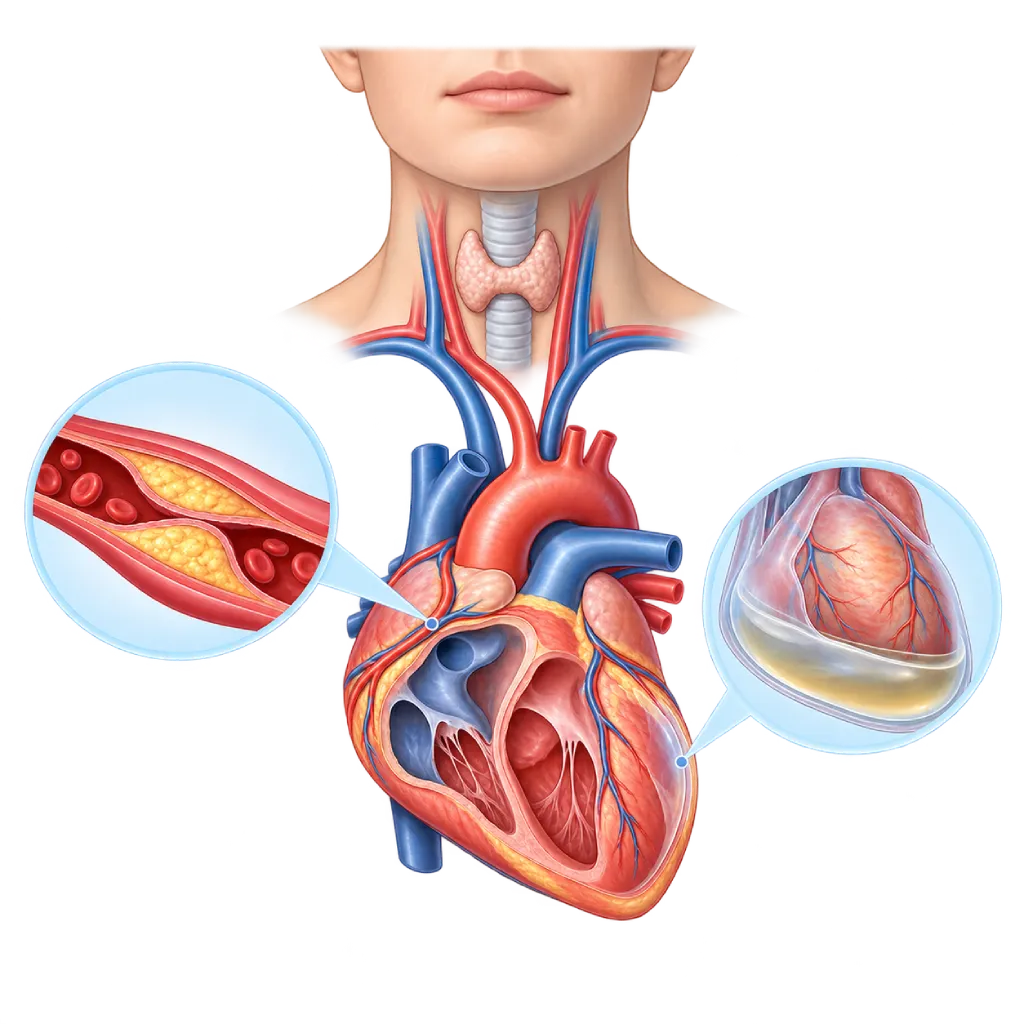
A shortage of thyroid hormone weakens the contractions of the heart muscle and slows the heart rate. Blood vessels become stiffer, so the lower (diastolic) blood pressure number can rise. LDL cholesterol and triglycerides tend to increase, which over time speeds up plaque buildup, as covered on the Dyslipidemia page. In severe, long-standing hypothyroidism, fluid can collect in the sac around the heart, covered on the Pericardial Effusion page. People with heart failure can also get worse when their thyroid hormone levels are low.
Subclinical Hypothyroidism
Sometimes a blood test shows a slightly high TSH with a still-normal FT4. This is called subclinical hypothyroidism. Not everyone needs treatment right away: your doctor weighs the TSH level, symptoms, age, the presence of thyroid antibodies, heart disease, and pregnancy plans. In overt hypothyroidism, a replacement hormone taken every day usually restores hormone levels, and many of the changes in the heart and cholesterol improve as well. In older adults and people with coronary artery disease, the starting dose is usually kept small and then raised slowly so the heart is not overloaded.
02 / Understanding the condition
Symptoms to Recognize.
Common Symptoms
- Tiring easily, feeling weak, and often sleepy
- Feeling cold more easily than other people
- Slight weight gain even without eating more
- Dry skin, dry hair and hair loss, brittle nails
- Constipation
- Puffy face and eyelids, hoarse voice
- Forgetfulness, trouble concentrating, or low mood
- Slow heart rate, muscle aches or cramps
Symptoms in Adult Women
- Heavier, longer, or irregular periods
- Difficulty getting pregnant or repeated miscarriages
- Prolonged tiredness and low mood after giving birth
Symptoms in Older Adults
In older adults, symptoms are often vague and easily mistaken for signs of aging.
- Forgetfulness or appearing confused
- Sluggishness, moving less, and getting sleepy easily
- Constipation and reduced appetite
- Slow heart rate or getting short of breath easily during activity
- Heart failure that worsens for no clear reason
Symptoms in Newborns
The majority of babies with congenital hypothyroidism look normal at birth, so heel-prick blood spot screening is still needed.
- Jaundice (yellowing) that lasts longer than usual
- Poor feeding and sleeping a lot
- Constipation
- Floppy body and hoarse cry
- Large tongue and protruding belly button (umbilical hernia)
03 / Understanding the condition
What Causes This Condition?
- Hashimoto's thyroiditis, an autoimmune inflammation that slowly damages the thyroid gland
- Surgery to remove part or all of the thyroid gland
- Radioactive iodine therapy for hyperthyroidism, or radiation to the head and neck area
- Lack of iodine in the diet
- Certain medicines, such as amiodarone, lithium, and some cancer immunotherapy drugs
- Thyroiditis after giving birth or after a viral infection, which can be temporary
- A congenital abnormality of the thyroid gland in babies (congenital hypothyroidism)
- A pituitary gland disorder that leads to too little TSH (rare)
04 / Understanding the condition
Who Is at Higher Risk?
Medical
Other autoimmune diseases such as type 1 diabetes, vitiligo, rheumatoid arthritis, or celiac disease; a history of thyroid surgery, radioactive iodine, or radiation to the neck; and use of amiodarone or lithium.
Genetic
A family history of Hashimoto's thyroiditis or other thyroid disorders. Down syndrome and Turner syndrome also increase the risk.
Lifestyle
Low iodine intake, for example not using iodized salt, increases the risk of hypothyroidism and goiter.
Age
The risk increases after age 60. TSH levels in older adults also tend to be slightly higher, so test results are interpreted according to age.
Other
Women are several times more likely to have hypothyroidism. Pregnancy and the first year after giving birth can bring on or worsen hypothyroidism.
Groups at Higher Risk
- Pregnant and Postpartum Women: Thyroid hormone needs rise during pregnancy. Untreated hypothyroidism is linked to miscarriage and problems with fetal brain development.
- Older Adults: Symptoms are often vague, and a hormone shortage can worsen heart failure and high cholesterol. Treatment is started carefully in people with heart disease.
- People with Autoimmune Diseases: Type 1 diabetes, vitiligo, and other autoimmune diseases often occur together with Hashimoto's thyroiditis.
- People Taking Amiodarone or Lithium: Both medicines can suppress thyroid function, so TSH needs to be checked before and during treatment.
- Newborns: Congenital hypothyroidism has no clear symptoms early on, but if treatment is delayed it can impair growth and intellectual development. Screening is done two to three days after birth.
05 / Understanding the condition
How Is It Diagnosed?
Your doctor asks about your symptoms, any history of thyroid surgery or treatment, the medicines you take, pregnancy plans, and family history, then examines your neck, skin, pulse, blood pressure, and reflexes. The diagnosis is confirmed with TSH and FT4 blood tests. Because the symptoms are not specific, these tests are also recommended for people with newly found high cholesterol, heart failure, or a slow heart rate with no clear cause.
If the results are only slightly outside the normal range, your doctor usually repeats the test in a few weeks to months, because TSH levels can change temporarily, for example during a serious illness. An anti-TPO antibody test helps confirm Hashimoto's. Heart tests such as an ECG, echocardiography, and a lipid profile assess the effect on the heart and also serve as a baseline for follow-up once treatment is under way.
Thyroid Function Test
TSH and FT4 blood tests. A high TSH with a low FT4 confirms hypothyroidism; a high TSH with a normal FT4 is called subclinical hypothyroidism.
Anti-TPO antibody test to look for Hashimoto's thyroiditis and to estimate the likelihood that subclinical hypothyroidism will progress.
Cholesterol and Lipid Profile Screening
Lipid profile, because a thyroid hormone shortage raises LDL cholesterol. Conversely, newly found high cholesterol should prompt a TSH check.
Electrocardiogram (ECG)
ECG to look for a slow heart rate, low electrical voltage of the heart, or rhythm changes.
Echocardiography
Echocardiography if there is shortness of breath, swelling, or suspected fluid in the sac around the heart.
Creatine Kinase (CK) Test
Creatine kinase test if there is muscle pain or weakness, especially before or while taking a cholesterol-lowering statin.
Congenital hypothyroidism screening from a heel-prick blood spot in newborns, to find babies who need treatment before symptoms appear.
06 / Understanding the condition
Treatment Options.
Treatment is decided by a doctor after an assessment. The categories below can help you follow the conversation with your doctor.
Thyroid Hormone Replacement
Synthetic thyroid hormone tablets (levothyroxine) are taken every day, usually for life. Your doctor sets the dose based on body weight, age, and heart condition, then adjusts it according to TSH results.
Gradual Adjustment in Heart Disease
In older adults and people with coronary artery disease, doctors usually start with a small dose and raise it slowly so the heart is not suddenly overloaded.
Regular TSH Monitoring
The TSH test is repeated a few weeks after treatment starts or the dose is changed, then at regular intervals once stable. During pregnancy, testing is done more often because hormone needs increase.
Taking the Medicine Correctly
Thyroid hormone is absorbed better on an empty stomach and at the same time every day. Space it apart from calcium supplements, iron, and stomach medicines such as antacids, as your doctor advises.
Managing Heart Risk Factors
If cholesterol or blood pressure stays high after hormone levels are normal, your doctor adds treatment according to guidelines, for example a cholesterol-lowering statin.
07 / Understanding the condition
Complications to Watch For.
High Cholesterol and Atherosclerosis
LDL cholesterol that stays high for a long time speeds up plaque buildup in the arteries, including the coronary arteries. Cholesterol usually falls once hormone levels return to normal.
Heart Failure
A hormone shortage weakens the heart's contraction and filling. In people who already have heart failure, shortness of breath and swelling can get worse.
Pericardial Effusion
Fluid collects in the sac that surrounds the heart in severe hypothyroidism. It usually builds up slowly and decreases after hormone treatment.
High Blood Pressure
Stiffer blood vessels raise blood pressure, especially the lower (diastolic) pressure.
Myxedema Coma
A rare emergency caused by a severe hormone shortage, often triggered by infection, cold weather, or sedatives in older adults. It is marked by reduced consciousness, low body temperature, and slow breathing.
Pregnancy Complications and Developmental Problems
Untreated hypothyroidism during pregnancy is linked to miscarriage, preeclampsia, and problems with fetal brain development. In babies, delayed treatment holds back growth and intellectual development.
08 / Understanding the condition
What Can You Do?
- Use iodized salt for cooking, in reasonable amounts
- Make sure your newborn has congenital hypothyroidism screening
- Have your TSH checked before and during pregnancy if you have a history of thyroid problems
- Ask for regular thyroid checks if you take amiodarone or lithium, or after radioactive iodine therapy
- Take thyroid hormone every day as directed, and do not stop or change the dose on your own
- Have follow-up blood tests on the schedule your doctor sets
09 / Understanding the condition
When Should You See a Doctor?
See a doctor if several of the following symptoms persist for a few weeks. Hypothyroidism symptoms come on slowly, so they are easy to miss.
- Constant tiredness and sleepiness even with enough sleep
- Feeling cold easily, dry skin, hair loss, and constipation
- Weight gain without a change in eating habits
- Slow heart rate or getting short of breath easily during activity
- Newly found high cholesterol
- Heavy periods, difficulty getting pregnant, or planning a pregnancy with a history of thyroid problems
- A baby with prolonged jaundice, poor feeding, and a lot of sleeping
Go to the emergency room right away if you become so sleepy that you are hard to wake, your body feels very cold, your breathing is slow, or you have chest pain after starting thyroid hormone.
Don't Wait in an Emergency.
If symptoms are severe or come on suddenly, go to the nearest emergency department right away or call Heart Attack Center 1500 258, rather than waiting for an appointment.
10 / Common questions
Questions You May Have.
Frequently asked questions about hypothyroidism and its effects on the heart.
Can hypothyroidism raise cholesterol?
Yes. Thyroid hormone helps the liver clear LDL cholesterol from the blood. When hormone levels are low, LDL and triglycerides tend to rise. That is why cholesterol guidelines recommend a TSH test when high cholesterol is newly found. After replacement hormone is started, cholesterol often comes down as well. If it stays high, your doctor adds cholesterol treatment based on your level of heart risk.
Do I have to take thyroid hormone medicine for life?
In Hashimoto's thyroiditis, after thyroid surgery, or after radioactive iodine, usually yes, because the gland no longer makes enough hormone. In temporary hypothyroidism, for example after giving birth or due to inflammation, the medicine can sometimes be stopped after evaluation. Do not stop the medicine on your own: that decision is made by your doctor based on the cause and your blood test results.
Is thyroid hormone harmful to the heart?
At a dose that matches your needs, replacement hormone actually helps improve the heart rate, the heart's pumping, and cholesterol. What needs to be avoided is too high a dose, because it can trigger palpitations, atrial fibrillation, and bone loss. In older adults and people with coronary artery disease, doctors start with a small dose and raise it slowly while monitoring TSH and any chest symptoms.
Does subclinical hypothyroidism need treatment?
Not always. If your TSH is only slightly high and you have no symptoms, doctors often choose to monitor with regular repeat tests. Research in older adults shows that treating this mild condition does little to improve symptoms. Treatment is considered more often when TSH is fairly high, or when there are symptoms, positive antibodies, heart failure, or plans for pregnancy. The decision is made together with your doctor.
Does hypothyroidism cause a lot of weight gain?
Usually the gain is not large, partly because the body retains fluid. Hypothyroidism is rarely the sole cause of obesity. After treatment, weight may go down a little, but losing weight still requires a balanced diet and regular physical activity. Thyroid hormone must not be used as a weight-loss drug because it can harm the heart.
What if I am pregnant and have hypothyroidism?
Tell your doctor as soon as you know you are pregnant, because thyroid hormone needs usually rise in early pregnancy and the dose often needs to be increased. TSH is checked more often during pregnancy. Adequate hormone levels are important for fetal brain development and lower the risk of miscarriage. After giving birth, the dose is usually returned to what it was before pregnancy.
Sources and Medical Review
Translated from the Indonesian edition medically reviewed by dr. Debby C. Soemitha, Sp.PD.
Sources as cited in the Indonesian edition.
- Jonklaas J, Bianco AC, Bauer AJ, Burman KD, Cappola AR, Celi FS, et al. Guidelines for the treatment of hypothyroidism: prepared by the American Thyroid Association Task Force on Thyroid Hormone Replacement. Thyroid. 2014;24(12):1670-751.
- Chaker L, Bianco AC, Jonklaas J, Peeters RP. Hypothyroidism. Lancet. 2017;390(10101):1550-62.
- Chaker L, Razvi S, Bensenor IM, Azizi F, Pearce EN, Peeters RP. Hypothyroidism. Nat Rev Dis Primers. 2022;8(1):30.
- Biondi B, Cappola AR, Cooper DS. Subclinical hypothyroidism: a review. JAMA. 2019;322(2):153-60.
- Stott DJ, Rodondi N, Kearney PM, Ford I, Westendorp RGJ, Mooijaart SP, et al. Thyroid hormone therapy for older adults with subclinical hypothyroidism. N Engl J Med. 2017;376(26):2534-44.
- Mach F, Baigent C, Catapano AL, Koskinas KC, Casula M, Badimon L, et al. 2019 ESC/EAS Guidelines for the management of dyslipidaemias: lipid modification to reduce cardiovascular risk. Eur Heart J. 2020;41(1):111-88.
- Razvi S, Jabbar A, Pingitore A, Danzi S, Biondi B, Klein I, et al. Thyroid hormones and cardiovascular function and diseases. J Am Coll Cardiol. 2018;71(16):1781-96.
Doctors Who Treat This Condition

dr. Debby C. Soemitha, Sp.PD
Internal Medicine
Clinical focusDiabetes and Diabetes Complications · Obesity and Metabolic Disease
View Profile
Dr. med. dr. Denio A. Ridjab, Sp.JP(K)
Interventional Cardiology
Coronary Intervention Procedures +2 centers
Clinical focusInterventional Cardiology · Coronary Artery Disease
View Profile
dr. Siska S. Danny, Sp.JP(K)
Interventional Cardiology
Coronary Intervention Procedures
Clinical focusPCI for Acute Coronary Syndrome · Primary Coronary Intervention
View Profile