
Quick answer
What Is Cardiovascular Risk Management Program?
The cardiovascular risk management program is regular support to help you control the risk factors for heart disease, such as blood pressure, cholesterol, blood sugar, weight, and smoking. The program starts with a risk assessment, followed by a lifestyle plan and medicines if needed, with regular follow-up visits until your targets are reached and maintained.
Sources01 / Understanding the procedure
About Cardiovascular Risk Management Program
What Is the Cardiovascular Risk Management Program
Knowing your heart risk is only an initial step. What matters is whether those risk factors are truly controlled over the long term. The cardiovascular risk management program is regular support from a health care team to help you lower your blood pressure, cholesterol, and blood sugar, reach a healthy weight, quit smoking, and keep these changes going.
How It Works in Brief
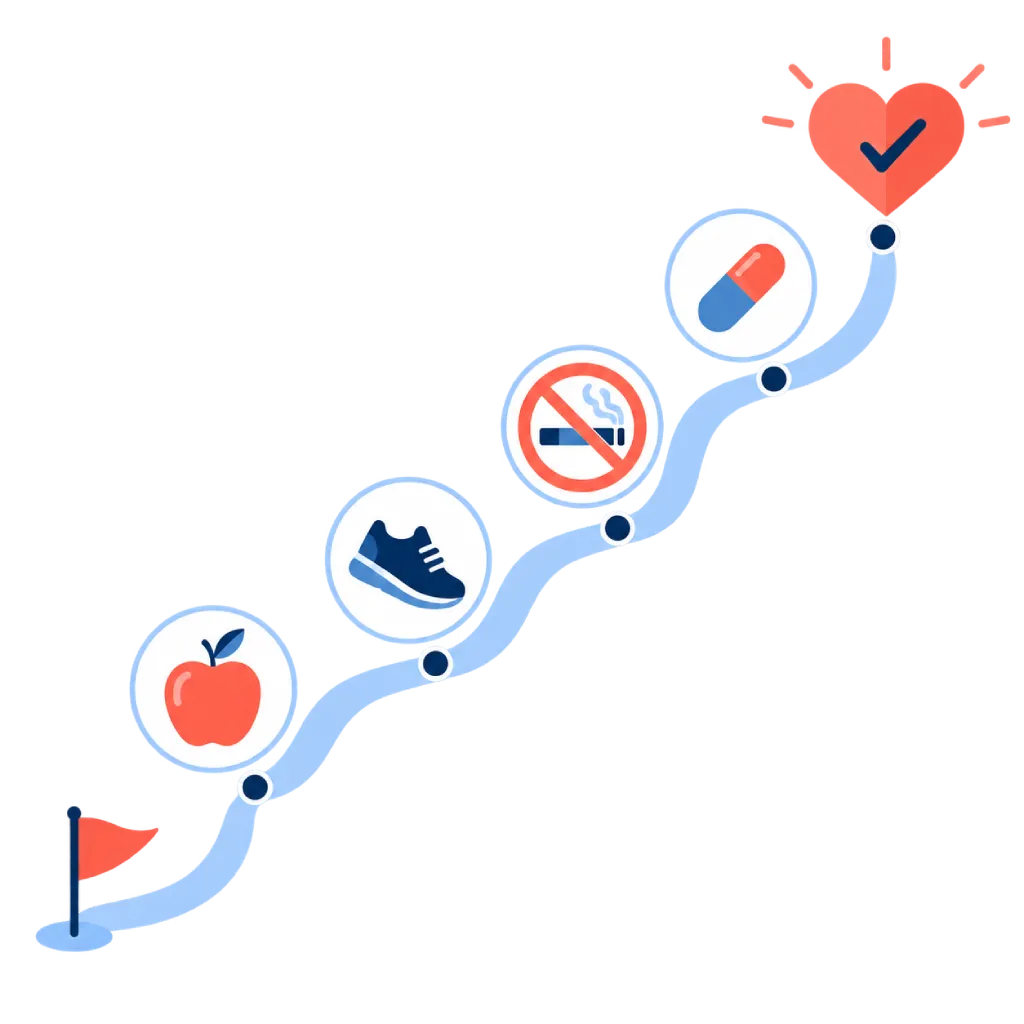
The program starts with a risk assessment to set personal targets. After that, the team prepares a step-by-step plan covering diet, physical activity, quitting smoking, and medicines if needed. At each follow-up visit, the results are compared with the targets. If the targets have not been reached, the plan is strengthened step by step. Once they are reached, the focus is on keeping the results stable.
Program Components
- Risk assessment and targets: calculating your 10-year risk and setting targets for blood pressure, LDL cholesterol, and blood sugar. This is covered on the Individual Heart Risk Screening page.
- Diet: a balanced eating pattern such as the Mediterranean or DASH pattern, with more vegetables, fruit, nuts and legumes, and fish, and less salt, sugar, and saturated fat.
- Physical activity: at least 150 to 300 minutes per week of moderate activity, such as brisk walking, plus strength training twice a week.
- Quitting smoking: counseling and stop-smoking medicines if needed. For smokers, this is a step with a large impact.
- Weight, sleep, and stress: losing weight if you are overweight, getting enough sleep, and managing stress. This is covered on the Lifestyle Counseling and Risk Management page.
- Medicines if needed: blood pressure medicines, cholesterol-lowering medicines, or diabetes medicines if lifestyle changes alone are not enough. This is covered on the Integrated Medication Therapy page.
Commonly Used Targets
- Blood pressure: the top (systolic) number is generally 120 to 129 mmHg if tolerated.
- LDL cholesterol: depending on your risk level, for example below 100 mg/dL at moderate risk and below 70 mg/dL at high risk.
- Blood sugar: HbA1c generally below 7 percent for people with diabetes.
- Smoking: quitting completely.
- Weight: a loss of 5 to 10 percent for people who are overweight already brings benefits.
Who Should Join
This program is beneficial for people with high or very high heart risk; people with uncontrolled hypertension, high cholesterol, diabetes, or metabolic syndrome; smokers who want to quit; and people who have had a heart attack, a heart stent placement, or a stroke, as a continuation of their treatment and rehabilitation.
02 / Understanding the procedure
When Is This Procedure Considered?
A doctor may consider this procedure in the situations below. The decision is always made after a thorough assessment.
- High or Very High Heart RiskBased on the results of a risk assessment.
- Uncontrolled Hypertension, High Cholesterol, or DiabetesSupport is needed to reach the targets.
- Metabolic Syndrome or Excess WeightA cluster of risk factors that often appear together.
- Smokers Who Want to QuitSupport increases the chance of success.
- After a Heart Attack, Stent Placement, or StrokeAs a continuation of long-term treatment and rehabilitation.
- Premature Heart Disease in the FamilyTo control risk factors from an early stage.
Situations to Consider First
- Current Heart SymptomsChest pain, shortness of breath, or palpitations need to be checked beforehand.
- No Previous Risk AssessmentA risk assessment is done beforehand so the targets are appropriate.
- Limited Mobility or Joint DiseaseThe physical activity program is adjusted together with a rehabilitation doctor.
- Pregnancy or BreastfeedingMedicine choices and weight targets need to be adjusted.
- Kidney Disease or Other Serious IllnessTargets and medicines are adjusted to your condition.
03 / Before the procedure
How Should You Prepare?
The main preparation is bringing complete health information.
Test results. Bring the results of a medical check-up, blood tests, an ECG, or a previous risk assessment if you have them.
Medication list. Include the vitamins, supplements, and traditional herbal remedies you take.
Daily records. Records of your blood pressure or blood sugar at home, plus an overview of your diet and activity over one week.
Personal goals. Think about the changes you want to achieve, such as quitting smoking or losing weight, so the plan can be made together.
Blood tests if requested. Ask whether you need to fast before your blood is drawn.
Unsure about the preparation instructions? Ask our team before the procedure.
04 / During the procedure
How Is the Procedure Done?
The initial visit usually lasts about 1 hour. Later follow-up visits are shorter, at intervals adjusted to your progress.
Initial Assessment
The doctor reviews your health history, lifestyle, medicines, physical examination, and blood test results to calculate your risk and set targets.
Personal Plan
Together with your doctor, and if needed a clinical nutrition specialist and a rehabilitation doctor, you make a plan for diet, physical activity, quitting smoking, and medicines.
Regular Follow-Up Visits
Your blood pressure, weight, and blood test results are monitored. The plan is gradually strengthened if the targets have not been reached.
Maintenance
Once your targets are reached, follow-up visits become less frequent, to maintain the results and to reassess your risk periodically.
05 / Benefits and risks
Benefits and Risks Should Be Discussed Together.
Every medical procedure has benefits and risks. Your doctor will explain both for your situation before the procedure.
Benefits You Can Expect
- Lowering the Risk of Heart Attack and StrokeControlled risk factors reduce heart events.
- Clear and Measurable TargetsProgress can be seen at every follow-up visit.
- Team SupportCardiologists, clinical nutrition specialists, and rehabilitation doctors work together.
- A Plan Tailored to Your NeedsAdjusted to your risk, habits, and goals.
- Lasting Healthy HabitsRegular support helps keep lifestyle changes going.
The benefits of a procedure are not a promise of a cure. Ask how the results will affect your care plan.
Risks You Should Know
- Medicine Side EffectsIf the program requires medicines; these are monitored at every follow-up visit.
- Injury When Starting ExercisePrevented by increasing activity gradually.
- Low Blood SugarIn people with diabetes who change their diet or exercise while taking medicines.
- Results Take TimeLifestyle changes take several weeks to months to show results.
Risks can differ from person to person. A full explanation and consent are given after an individual assessment.
06 / After the procedure
What Is Recovery Like?
There is no recovery period. The program runs alongside your daily activities.
Change little by little. Small, consistent changes are easier to maintain than big changes all at once.
Monitor yourself at home. Record your blood pressure, weight, and daily step count if advised, then bring the records to your follow-up visit.
Involve your family. Healthy eating and activity habits in the family help you stay on track.
Warning signs. Go to the emergency room right away if you experience:
- Chest pain or pressure during activity or at rest
- Unusual shortness of breath
- Severe dizziness or fainting during exercise
- A drooping face, arm weakness, or slurred speech
Know the Signs That Need Prompt Care.
Follow the team's guidance on warning signs. If severe or sudden symptoms appear after the procedure, go to the nearest emergency department right away or call Heart Attack Center 1500 258.
07 / Team and support
Doctors and Procedure Support
The doctors below are listed for this procedure. Listed by name, not by ranking.

dr. Ayu Amalia U. Putri, Sp.KFR
Physical Medicine & Rehabilitation
Clinical focusCardiac Rehabilitation · Postoperative Rehabilitation
View Profile
Dr. med. dr. Denio A. Ridjab, Sp.JP(K)
Interventional Cardiology
Coronary Intervention Procedures +2 centers
Clinical focusInterventional Cardiology · Coronary Artery Disease
View Profile
dr. Juweni Joe, Sp.GK
Clinical Nutrition
Clinical focusMedical Nutrition Intervention · Nutrition for Cardiovascular Patients
View Profile08 / Common questions
Before You Plan the Procedure.
Frequently asked questions about the cardiovascular risk management program. The right plan for you is made together with your doctor.
What is the difference between this program and heart risk screening?
Heart risk screening is an assessment to find out your level of risk. The risk management program is the next step: regular support to actually lower that risk through diet, physical activity, quitting smoking, and medicines if needed, until your targets are reached and maintained.
How long does this program last?
Heart risk factors generally need to be controlled for life, but the intensity of support changes. At the start of the program, follow-up visits are usually more frequent so the plan can be adjusted. Once your targets are reached, visits become less frequent and focus on maintaining the results. The schedule is adjusted to your progress and can be made more frequent again if new problems arise.
Will I definitely have to take medicines?
Not always. At low to moderate risk, lifestyle changes are often the initial step. Medicines are added if the targets have not been reached or if your risk is already high from the start. Medicines and a healthy lifestyle complement each other, so lifestyle remains important even if you are already taking medicines.
What exercise is safe for me?
For the majority of people, brisk walking, cycling, or swimming at moderate intensity is a good start, then gradually increased to 150 to 300 minutes per week. If you have heart disease or have not exercised for a long time, the doctor may recommend an exercise test or a supervised exercise program beforehand.
Can my family be involved?
This is strongly encouraged. Eating patterns, smoking habits, and physical inactivity are often shared within a family. A family that understands the plan helps you stay on track, and family members who also have risk factors can be checked too. Bring a companion to your follow-up visits if possible, especially when making a meal plan.
How do I know if the program is working?
Success is measured by the targets reached, such as blood pressure, LDL cholesterol, blood sugar, weight, and quitting smoking. The doctor can also recalculate your 10-year risk periodically. Lowering that risk is the main goal of this program, along with healthy habits that last.
Sources and Medical Review
Translated from the Indonesian edition medically reviewed by Dr. med. dr. Denio A. Ridjab, Sp.JP(K).
Sources as cited in the Indonesian edition.
- Visseren FLJ, Mach F, Smulders YM, et al. 2021 ESC Guidelines on cardiovascular disease prevention in clinical practice. Eur Heart J. 2021;42(34):3227-3337.
- Lloyd-Jones DM, Allen NB, Anderson CAM, et al. Life's Essential 8: updating and enhancing the American Heart Association's construct of cardiovascular health: a presidential advisory from the American Heart Association. Circulation. 2022;146(5):e18-e43.
- Bull FC, Al-Ansari SS, Biddle S, et al. World Health Organization 2020 guidelines on physical activity and sedentary behaviour. Br J Sports Med. 2020;54(24):1451-1462.
- Wood DA, Kotseva K, Connolly S, et al. Nurse-coordinated multidisciplinary, family-based cardiovascular disease prevention programme (EUROACTION) for patients with coronary heart disease and asymptomatic individuals at high risk of cardiovascular disease: a paired, cluster-randomised controlled trial. Lancet. 2008;371(9629):1999-2012.
- McEvoy JW, McCarthy CP, Bruno RM, et al. 2024 ESC Guidelines for the management of elevated blood pressure and hypertension. Eur Heart J. 2024;45(38):3912-4018.
- Mach F, Baigent C, Catapano AL, et al. 2019 ESC/EAS Guidelines for the management of dyslipidaemias: lipid modification to reduce cardiovascular risk. Eur Heart J. 2020;41(1):111-188.