
Quick answer
What Is Silent Myocardial Infarction?
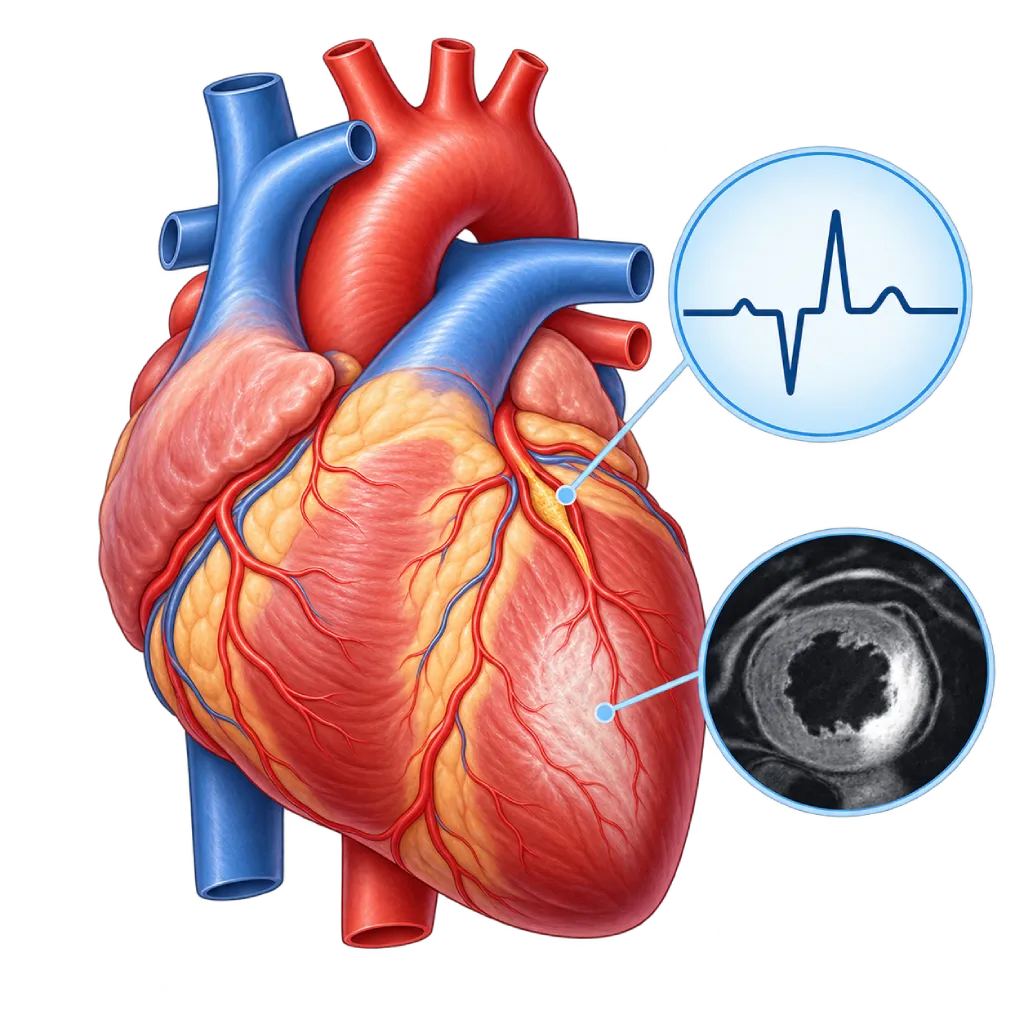
A silent myocardial infarction is a heart attack that goes unnoticed because its symptoms are vague or absent, and it is only discovered later on an ECG or heart imaging. The damage to the heart muscle is still real and needs follow-up.
SourcesSigns That Need Urgent Help
- Chest pain or pressure lasting more than 5 minutes
- New severe shortness of breath or shortness of breath when lying down
- Fainting or nearly fainting
- A very fast or irregular heartbeat with weakness
- Pale, cold, and sweaty skin
If these signs appear, go to the nearest emergency department right away or call Heart Attack Center 1500 258.
01 / Understanding the condition
About Silent Myocardial Infarction
A silent myocardial infarction, also called a silent or unrecognized heart attack, is damage to the heart muscle from a lack of blood flow that happens without the person noticing. There may be no symptoms at all, or the symptoms are so mild and atypical that they are mistaken for a cold or chill, an upset stomach, muscle aches, or ordinary tiredness. The condition is usually discovered weeks to years later, for example when a routine ECG shows Q waves that indicate scar tissue, or when echocardiography or cardiac MRI shows part of the heart wall that does not move normally.
How Common It Is and Why It Is Missed
Silent heart attacks are not rare. In the ARIC study in the United States, almost half of the myocardial infarctions found during follow-up were silent. A cardiac MRI study of older adults in Iceland also found more unrecognized infarctions than recognized ones. These infarctions are more easily missed in people with diabetes, because nerve damage can dull the sensation of pain, as well as in older adults and women, who more often have atypical symptoms.
How It Differs from Silent Ischemia
An infarction is different from ischemia. In ischemia, the heart muscle temporarily does not get enough blood but has not yet died, covered on the Silent Myocardial Ischemia page. In an infarction, part of the muscle has died and been replaced by scar tissue. Both are signs of coronary artery disease that need to be evaluated.
Why It Still Needs Treatment
Even though it happens without symptoms, this type of infarction carries risks similar to those of a recognized heart attack. A 2020 systematic review showed that people with an unrecognized infarction have a higher risk of death and further heart events than people without an infarction. The ARIC study also found a higher risk of heart failure. The first step is to confirm the finding, assess the heart's pumping strength, and check whether any part of the muscle is still not getting enough blood. Once identified, the condition can be managed like chronic coronary artery disease: heart-protective medications, risk factor control, and, if needed, a procedure to open the arteries. An overview of heart attacks is covered on the Myocardial Infarction / Heart Attack page.
02 / Understanding the condition
Symptoms to Recognize.
Common Symptoms
Many people feel nothing at all. When there are symptoms, they are vague and are often only remembered after the test results come back.
- Mild chest discomfort that is mistaken for a cold or chill
- Bloating, nausea, or a burning feeling in the upper abdomen that is mistaken for an upset stomach
- Aches in the upper back, shoulders, arms, or jaw
- Extreme tiredness for several days without a clear cause
- Mild shortness of breath or breathing that feels shorter than usual
- A brief cold sweat without strenuous activity
Symptoms in Older Adults
In older age, the symptoms that appear often do not point to the heart.
- Weakness or a sudden lack of energy
- Brief confusion or disorientation
- Shortness of breath without chest pain
- Loss of appetite or nausea without a clear cause
03 / Understanding the condition
What Causes This Condition?
- A cholesterol plaque in a coronary artery that ruptures and is then blocked by a blood clot, the same as in a typical heart attack
- Severe narrowing of a coronary artery, so blood flow is not enough when the heart works hard
- A spasm of a coronary artery or a blood clot carried into a coronary artery
- Nerve damage from diabetes that keeps pain from the heart from being felt
- Symptoms dismissed as a cold or an upset stomach, so they are not checked when they happen
04 / Understanding the condition
Who Is at Higher Risk?
Medical
Diabetes, hypertension, high LDL cholesterol, and chronic kidney disease. Long-standing diabetes can also damage the nerves so that heart pain is not felt.
Lifestyle
Smoking, physical inactivity, a diet high in saturated fat and salt, and obesity speed up the narrowing of the coronary arteries.
Age
Silent infarctions are found more often with age, especially over 65, when heart symptoms are often atypical.
Genetic
A family history of early coronary artery disease and inherited high cholesterol increase the risk of coronary artery disease, including the silent kind.
Groups at Higher Risk
- People with Diabetes: Nerve damage from diabetes can dull pain from the heart, so a heart attack is more likely to go unnoticed.
- Older Adults: Cardiac MRI studies in older adults have found more unrecognized infarctions than recognized ones.
- People with Hypertension: High blood pressure speeds up the narrowing of the coronary arteries and often accompanies unrecognized infarctions.
- People with Chronic Kidney Disease: Kidney disease speeds up the hardening of the arteries and often occurs together with diabetes and hypertension.
05 / Understanding the condition
How Is It Diagnosed?
A silent infarction is usually found during tests done for another reason, such as a routine health checkup, a diabetes follow-up, or preparation for surgery. Your doctor will ask about any vague symptoms you may have had, assess your risk factors, and check for signs of heart failure. An ECG may show pathological Q waves, which are traces of scar tissue in the heart wall, but an ECG alone is sometimes misleading.
For this reason, ECG findings are usually confirmed with echocardiography to look for wall segments that do not move normally and to assess pumping strength. Cardiac MRI with a contrast agent can show scar tissue in detail. Once an old infarction is confirmed, the doctor checks whether any heart muscle is still not getting enough blood, for example with stress echocardiography, myocardial perfusion imaging, or CT coronary angiography. Coronary angiography is performed if the results show severe narrowing or symptoms continue.
Electrocardiogram (ECG)
Often the first clue: pathological Q waves indicate scar tissue. The result needs to be confirmed because an ECG alone is sometimes misleading.
Echocardiography
Shows parts of the heart wall that do not move normally and assesses pumping strength after an ECG finding.
Cardiac MRI
With gadolinium contrast, it can show scar tissue in detail, even small areas, and distinguish it from other causes.
Stress Echocardiography
Assesses whether any part of the heart muscle is still not getting enough blood when the heart is under stress.
Myocardial Perfusion Imaging
A nuclear medicine test that compares blood flow to the heart muscle at rest and under stress.
CT Coronary Angiography
Shows plaque and narrowing in the coronary arteries without a catheter in selected patients.
Coronary Angiography
Performed when other tests show severe narrowing, extensive ischemia, or ongoing symptoms.
06 / Understanding the condition
Treatment Options.
Treatment is decided by a doctor after an assessment. The categories below can help you follow the conversation with your doctor.
Antiplatelet Medication
Helps prevent clots in coronary arteries that already have plaque. Your doctor chooses the type based on your bleeding risk.
Statins and Cholesterol Control
Lower LDL cholesterol to the target set by your doctor to slow the growth of plaque and stabilize it.
Medications to Protect Pumping Function
Beta blockers, ACE inhibitors or ARBs, and other heart failure medications when pumping strength is reduced, prescribed and monitored by your doctor.
Diabetes and Blood Pressure Control
In people with diabetes, your doctor may choose SGLT2 inhibitors or GLP-1 medications, which have been shown to protect the heart, along with a blood pressure target.
Opening the Arteries or Bypass Surgery
Considered when tests find severe narrowing with extensive ischemia, or symptoms that are not controlled with medication.
Cardiac Rehabilitation
Supervised exercise and education to improve fitness and help you recognize warning signs.
07 / Understanding the condition
Complications to Watch For.
Heart Failure
Scar tissue reduces the amount of muscle that pumps. The ARIC study found a higher risk of heart failure in people with a silent infarction.
Heart Rhythm Disorders
Scar tissue can become a source of irregular ventricular rhythms, especially when the heart's pumping strength is reduced.
Another Heart Attack
Plaque in the coronary arteries that is undetected and untreated can cause another attack, this time possibly with clear symptoms.
Sudden Cardiac Arrest
A chaotic ventricular rhythm can stop the heart. The risk is higher when the heart's pumping function is greatly reduced.
08 / Understanding the condition
What Can You Do?
- If you have diabetes or hypertension, ask your doctor to assess your heart risk regularly.
- Do not ignore unusual vague symptoms, such as a severe chill, a sudden upset stomach, or extreme tiredness.
- Keep your blood sugar, blood pressure, and LDL cholesterol at the targets set by your doctor.
- Stop smoking and avoid secondhand smoke.
- Stay active for at least 150 minutes per week at moderate intensity.
- If your ECG results mention an abnormality, take them to a cardiologist even if you feel healthy.
09 / Understanding the condition
When Should You See a Doctor?
Make an appointment with a cardiologist if your ECG, echocardiography, or MRI results mention signs of an old infarction, Q waves, or abnormal heart wall motion, even if you feel healthy. If chest pain or pressure lasts more than 5 minutes, go to the nearest emergency room right away. A heart evaluation is also recommended if:
- You have diabetes or hypertension and have never had your heart checked.
- You have had unusual vague symptoms, such as a severe chill or extreme tiredness for several days.
- You get more short of breath during activities that used to feel easy.
- Your legs are swollen or you are short of breath when lying down.
Don't Wait in an Emergency.
If symptoms are severe or come on suddenly, go to the nearest emergency department right away or call Heart Attack Center 1500 258, rather than waiting for an appointment.
10 / Common questions
Questions You May Have.
Frequently asked questions about heart attacks that go unnoticed.
How can a heart attack go unnoticed?
The way the body senses pain from the heart differs from person to person. In people with diabetes, the nerves that carry pain signals can be damaged. In older adults and some women, symptoms often take the form of tiredness, nausea, or mild shortness of breath that are easily mistaken for other illnesses. Some people do notice symptoms but dismiss them as a cold or an upset stomach, so they do not get checked.
When did the heart attack probably happen?
Often it cannot be determined. An ECG and cardiac MRI can show that scar tissue is already present, but they cannot tell when it formed. Troponin levels have also returned to normal if the attack happened more than a few weeks earlier. Doctors sometimes estimate the timing from older ECGs or vague symptoms you remember, but what matters more is the follow-up now.
Does a Q wave on an ECG always mean I have had a heart attack?
Not always. Q waves can appear because of the heart's position, thickening of the heart muscle, or certain conduction abnormalities, and are sometimes just a normal variation. For this reason, doctors usually confirm the ECG finding with echocardiography or cardiac MRI. Only when imaging shows scar tissue or a heart wall that does not move normally can an old infarction be confirmed.
Will I need a stent or surgery?
Not necessarily. Many people with an old infarction can be managed with medication and risk factor control. A stent or bypass surgery is considered when tests show severe narrowing with heart muscle that is still not getting enough blood, or when symptoms are not controlled with medication. Your doctor will explain the options based on your test results.
Do people with diabetes need regular heart checkups?
The 2023 ESC guidelines on diabetes recommend a resting ECG for people with diabetes, especially if they also have hypertension or suspected heart disease. Further tests such as echocardiography or a stress test are tailored to each person's symptoms and risk level. Discuss with your doctor how often you need to be checked and the right targets for your blood sugar, blood pressure, and cholesterol.
Can a silent infarction happen again?
Yes, because the underlying coronary artery disease is still there. The next attack may also happen without clear symptoms or, on the contrary, with severe symptoms. Taking your medication regularly, stopping smoking, controlling your blood sugar and blood pressure, and having regular checkups help lower that risk. Help your family learn the signs of a heart attack so they can act quickly.
Sources and Medical Review
Translated from the Indonesian edition medically reviewed by Dr. dr. Jajang Sinardja, Sp.JP(K).
Sources as cited in the Indonesian edition.
- Thygesen K, Alpert JS, Jaffe AS, et al. Fourth universal definition of myocardial infarction (2018). Eur Heart J. 2019;40(3):237-269.
- Vrints C, Andreotti F, Koskinas KC, et al. 2024 ESC Guidelines for the management of chronic coronary syndromes. Eur Heart J. 2024;45(36):3415-3537.
- Marx N, Federici M, Schutt K, et al. 2023 ESC Guidelines for the management of cardiovascular disease in patients with diabetes. Eur Heart J. 2023;44(39):4043-4140.
- Yang Y, Li W, Zhu H, et al. Prognosis of unrecognised myocardial infarction determined by electrocardiography or cardiac magnetic resonance imaging: systematic review and meta-analysis. BMJ. 2020;369:m1184.
- Zhang ZM, Rautaharju PM, Prineas RJ, et al. Race and Sex Differences in the Incidence and Prognostic Significance of Silent Myocardial Infarction in the Atherosclerosis Risk in Communities (ARIC) Study. Circulation. 2016;133(22):2141-2148.
- Qureshi WT, Zhang ZM, Chang PP, et al. Silent Myocardial Infarction and Long-Term Risk of Heart Failure: The ARIC Study. J Am Coll Cardiol. 2018;71(1):1-8.
- Schelbert EB, Cao JJ, Sigurdsson S, et al. Prevalence and prognosis of unrecognized myocardial infarction determined by cardiac magnetic resonance in older adults. JAMA. 2012;308(9):890-896.
Doctors Who Treat This Condition

Dr. med. dr. Denio A. Ridjab, Sp.JP(K)
Interventional Cardiology
Coronary Intervention Procedures +2 centers
Clinical focusInterventional Cardiology · Coronary Artery Disease
View Profile
Dr. dr. Jajang Sinardja, Sp.JP(K)
Interventional Cardiology
Coronary Intervention Procedures
Clinical focusAcute Coronary Syndrome · Primary Coronary Intervention
View Profile
dr. Debby C. Soemitha, Sp.PD
Internal Medicine
Clinical focusDiabetes and Diabetes Complications · Obesity and Metabolic Disease
View Profile