
Quick answer
What Is Coronary Artery Disease Management?
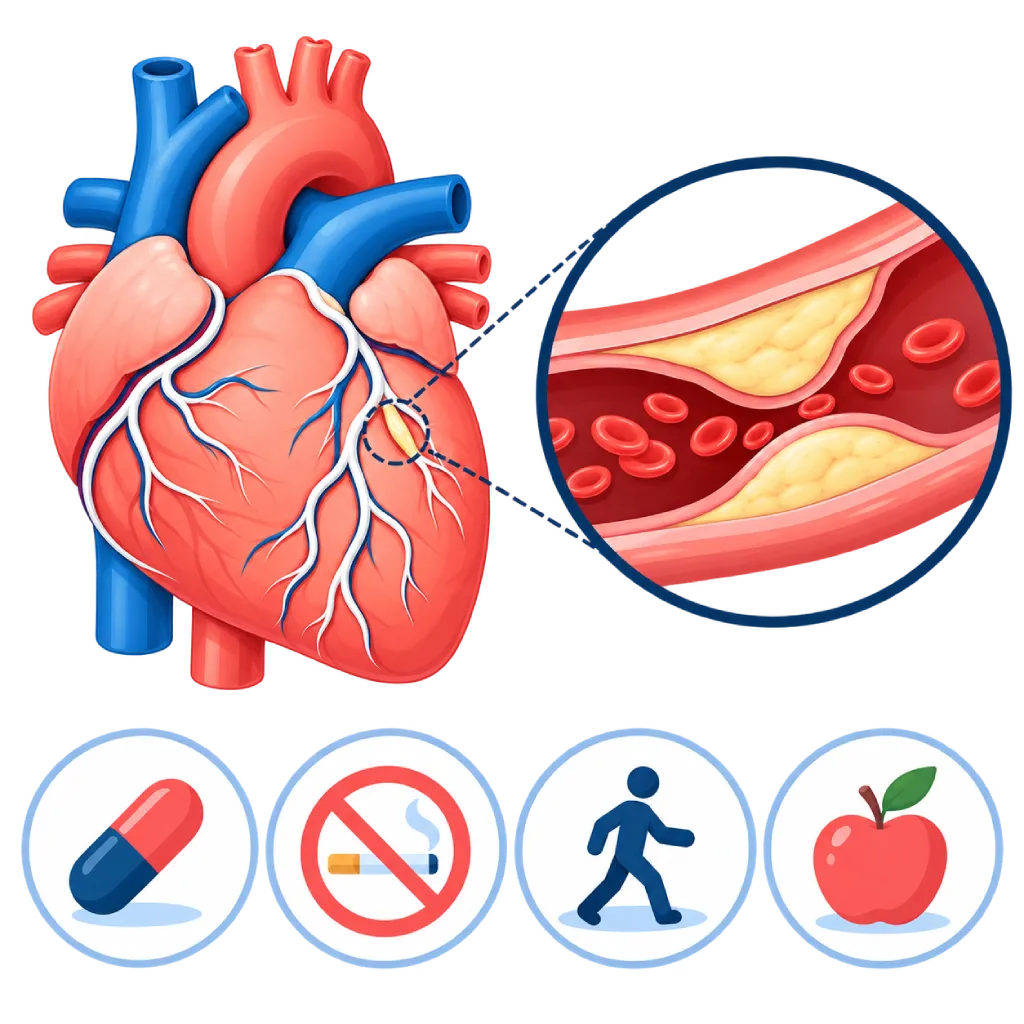
Coronary artery disease management is long-term care to relieve chest pain, prevent heart attacks, and prolong life. It is built on medicines such as antiplatelets and statins, control of cholesterol, blood pressure, blood sugar, and smoking, and cardiac rehabilitation. A stent or bypass surgery is considered when symptoms persist or the narrowing is severe.
Sources01 / Understanding the procedure
About Coronary Artery Disease Management
What Is Coronary Artery Disease Management
Coronary artery disease occurs when the blood vessels that supply the heart muscle narrow because of a buildup of fatty plaque, called atherosclerosis. The typical symptom is pain or pressure in the chest during activity that eases with rest, called angina. Plaque can also rupture and trigger a clot that suddenly blocks the vessel, which is a heart attack. Coronary artery disease management is long-term care to relieve symptoms and prevent these events.
How It Works in Brief
Treatment works on two goals. One is stabilizing plaque and preventing clots: statins lower LDL cholesterol and make plaque more stable, while antiplatelets such as aspirin keep platelets from clumping together. The other is maintaining the oxygen supply to the heart muscle: antianginal medicines relieve chest pain, and if the narrowing is severe, blood flow can be restored with a stent or bypass surgery.
Forms of Coronary Artery Disease
Chronic coronary artery disease, including stable angina, develops slowly and can usually be controlled with medicines and lifestyle changes. Acute coronary syndrome, namely unstable angina and heart attack, is an emergency that must be treated right away in a hospital. After a heart attack or stent placement, long-term care is still needed to prevent recurrent events.
Pillars of Treatment
- Medicines to prevent heart attacks: antiplatelets and statins; some patients need an additional cholesterol-lowering medicine if the target has not been reached. This is covered on the Integrated Medication Therapy page.
- Medicines to relieve chest pain: beta blockers, calcium antagonists, or nitrates, chosen according to your symptoms and the condition of your heart.
- Risk factor control: LDL cholesterol, blood pressure, blood sugar, body weight, and quitting smoking. These are covered on the Dyslipidemia Management and Hypertension Management pages.
- Restoring blood flow: a stent placed through a catheter or bypass surgery, if symptoms remain bothersome despite treatment, or if a severe narrowing is in an important location. These are covered on the Coronary Angioplasty and Coronary Artery Bypass Grafting (CABG) pages.
- Cardiac rehabilitation: supervised exercise, education, and support after a heart attack, stent placement, or bypass surgery. This is covered on the Structured Cardiac Rehabilitation Program page.
Tests to Assess the Disease
Your doctor chooses tests based on your condition, for example an ECG, echocardiography, a cardiac exercise test, imaging of the coronary arteries, or catheterization if a procedure is being considered. These are covered on the Treadmill Stress Test, Stress Echocardiography, CT Coronary Angiography, and Coronary Angiography pages.
02 / Understanding the procedure
When Is This Procedure Considered?
A doctor may consider this procedure in the situations below. The decision is always made after a thorough assessment.
- Chest Pain During ActivityAngina symptoms that need to be assessed and controlled.
- After a Heart AttackTo prevent another heart attack and restore your ability to carry out daily activities.
- After a Stent or Bypass SurgeryMedicines and follow-up visits are still needed to keep the vessels open.
- Coronary Narrowing Found on TestsFound on a coronary CT scan or angiography, even if there are no symptoms yet.
- Uncontrolled Risk FactorsHigh cholesterol, blood pressure, or blood sugar in people with coronary artery disease.
- New Shortness of Breath or Tiring EasilyThis can be a sign of reduced blood flow to the heart, especially in older adults and people with diabetes.
Situations to Consider First
- Severe Chest Pain or Chest Pain Not Relieved by RestThis may be a heart attack; go to the emergency room right away, not to a scheduled follow-up visit.
- Bleeding or a History of BleedingThe choice of antiplatelet and how long it is used need to be adjusted.
- Severe Asthma or a Very Slow Heart RateSome antianginal medicines, such as beta blockers, are chosen with more caution.
- Taking Erectile Dysfunction MedicinesThese must not be combined with nitrates because blood pressure can drop very low.
- Planned Surgery or Tooth ExtractionDo not stop antiplatelets on your own; discuss it with your cardiologist beforehand.
03 / Before the procedure
How Should You Prepare?
The main preparation is bringing your health records and data.
Medication list. Bring all your medicines in their packaging, including over-the-counter medicines, supplements, and herbal remedies.
Test results. Bring your ECG, echocardiography, treadmill test, coronary CT, and angiography results, as well as stent or bypass surgery reports, if any.
Laboratory results. Bring your recent cholesterol, blood sugar, and kidney function results. If your doctor orders a new blood test, ask whether you need to fast.
Symptom notes. Write down when chest pain appears, how long it lasts, and what relieves it, as well as your home blood pressure readings if you monitor them.
Unsure about the preparation instructions? Ask our team before the procedure.
04 / During the procedure
How Is the Procedure Done?
Each consultation visit usually lasts about 30 minutes. After a heart attack or stent placement, the initial follow-up visit is usually scheduled sooner.
Assessment of Symptoms and Risk
Your doctor asks about chest pain, shortness of breath, and your ability to be active, then checks your blood pressure, pulse, body weight, and waist circumference.
Supporting Tests
An ECG and blood tests for LDL cholesterol and blood sugar, plus a cardiac exercise test or coronary imaging if symptoms change or a treatment decision needs to be made.
Adjusting Medicines and Targets
Medicine doses are adjusted until symptoms are controlled and the targets for LDL cholesterol, blood pressure, and blood sugar are reached. How long you take two antiplatelet medicines after stent placement is decided by your doctor.
Follow-Up Plan
If symptoms persist despite treatment, or tests show a severe narrowing, your doctor discusses the options of a stent or bypass surgery with you. A referral to cardiac rehabilitation is given when needed.
05 / Benefits and risks
Benefits and Risks Should Be Discussed Together.
Every medical procedure has benefits and risks. Your doctor will explain both for your situation before the procedure.
Benefits You Can Expect
- Lower Risk of Heart AttackStatins, antiplatelets, and risk factor control have been shown to reduce cardiovascular events.
- Less Chest PainAntianginal medicines and, when needed, procedures relieve symptoms.
- Greater Ability to Stay ActiveEspecially with cardiac rehabilitation.
- Better-Informed Treatment DecisionsA stent or bypass surgery is chosen when its benefit for you is clear.
- Long-Term SupportYour cholesterol, blood pressure, and blood sugar targets are monitored regularly.
The benefits of a procedure are not a promise of a cure. Ask how the results will affect your care plan.
Risks You Should Know
- BleedingAn effect of antiplatelet medicines; the risk is higher when two types are used together.
- Muscle Pain from StatinsRarely severe; tell your doctor so the dose or type can be adjusted.
- Dizziness or Low Blood PressureCan occur with antianginal medicines, especially when standing up suddenly.
- Headache from NitratesUsually eases after a few days of use.
Risks can differ from person to person. A full explanation and consent are given after an individual assessment.
06 / After the procedure
What Is Recovery Like?
There is no recovery period for a consultation. What matters is keeping healthy habits and taking your medicines regularly.
Take your medicines every day. Do not stop antiplatelets or statins without your doctor's approval, especially after stent placement.
Quit smoking. This is one step that greatly benefits people with coronary artery disease.
Stay active. Regular physical activity and cardiac rehabilitation help improve fitness and lower the risk of recurrent events.
Diet. Eat more vegetables, fruit, nuts and legumes, and fish; limit saturated fat, salt, and sugar.
Have a plan for chest pain. If your doctor prescribes nitrates to take under the tongue, learn when and how to use them.
Warning signs. Go to the emergency room right away if you have:
- Chest pain lasting more than 20 minutes or not relieved by rest or nitrates
- Chest pain spreading to the arm, neck, jaw, or back with a cold sweat
- Severe shortness of breath or fainting
- Chest pain that occurs more often or appears at rest
Know the Signs That Need Prompt Care.
Follow the team's guidance on warning signs. If severe or sudden symptoms appear after the procedure, go to the nearest emergency department right away or call Heart Attack Center 1500 258.
07 / Team and support
Doctors and Procedure Support
The doctors below are listed for this procedure. Listed by name, not by ranking.

dr. Adrianus Kosasih, Sp.JP(K)
Interventional Cardiology
Coronary Intervention Procedures
Clinical focusPrimary Coronary Intervention · PCI for Acute Coronary Syndrome
View Profile
Dr. med. dr. Denio A. Ridjab, Sp.JP(K)
Interventional Cardiology
Coronary Intervention Procedures +2 centers
Clinical focusInterventional Cardiology · Coronary Artery Disease
View Profile
Dr. dr. Jajang Sinardja, Sp.JP(K)
Interventional Cardiology
Coronary Intervention Procedures
Clinical focusAcute Coronary Syndrome · Primary Coronary Intervention
View ProfileTreadmill Test System
A testing system that records your ECG, heart rate, and blood pressure while you walk on a treadmill as the workload increases in…
The availability of technology and test support is confirmed with the team. Technology is chosen according to clinical need.
08 / Common questions
Before You Plan the Procedure.
Frequently asked questions about coronary artery disease management. Your treatment plan is developed together with your doctor.
Can coronary artery disease be cured?
A narrowing that has already formed usually does not go away completely, but the disease can be controlled. With the right medicines, low LDL cholesterol, quitting smoking, and regular physical activity, plaque becomes more stable and the risk of a heart attack falls. Many people with the condition keep working and doing their usual activities with regular follow-up visits.
Does every coronary narrowing need a stent?
Not always. The large ISCHEMIA study showed that in many stable patients, placing a stent early did not lower the risk of a heart attack or death compared with medicines and lifestyle changes, although chest pain improved more. A stent or bypass surgery is considered when symptoms remain bothersome, a severe narrowing is in an important location, or during a heart attack.
Do I still need to take medicines after getting a stent?
Yes. A stent only opens one narrowed section of the vessel, while the disease in other parts remains. Antiplatelets prevent clots inside the stent, and statins slow the formation of new plaque. Stopping antiplatelets too early can trigger a blockage in the stent, so do not stop before discussing it with your doctor.
What is the cholesterol target for people with coronary artery disease?
European guidelines recommend LDL cholesterol below 55 mg/dL and a reduction of at least half from the starting value for the majority of people with coronary artery disease. This target often requires a high-dose statin, and some patients need an additional medicine. Your doctor sets your target and monitors the results through regular blood tests.
Can people with coronary artery disease exercise?
Yes, and it is recommended. Regular physical activity improves fitness and helps control body weight, blood pressure, and cholesterol. After a heart attack or a procedure, start through a supervised cardiac rehabilitation program so the intensity is safe. Stop exercising and tell your doctor if chest pain appears during exercise.
What is the difference between angina and a heart attack?
Angina is chest pain caused by a temporary lack of oxygen to the heart muscle; it usually appears during activity and eases with rest. A heart attack happens when a coronary artery is blocked so that part of the heart muscle is damaged; the pain is usually more severe, lasts longer, and does not ease with rest. A heart attack is an emergency that needs immediate treatment in the emergency room.
Sources and Medical Review
Translated from the Indonesian edition medically reviewed by Dr. dr. Jajang Sinardja, Sp.JP(K).
Sources as cited in the Indonesian edition.
- Vrints C, Andreotti F, Koskinas KC, et al. 2024 ESC Guidelines for the management of chronic coronary syndromes. Eur Heart J. 2024;45(36):3415-3537.
- Byrne RA, Rossello X, Coughlan JJ, et al. 2023 ESC Guidelines for the management of acute coronary syndromes. Eur Heart J. 2023;44(38):3720-3826.
- Virani SS, Newby LK, Arnold SV, et al. 2023 AHA/ACC/ACCP/ASPC/NLA/PCNA Guideline for the Management of Patients With Chronic Coronary Disease. Circulation. 2023;148(9):e9-e119.
- Maron DJ, Hochman JS, Reynolds HR, et al. Initial Invasive or Conservative Strategy for Stable Coronary Disease. N Engl J Med. 2020;382(15):1395-1407.
- Dibben G, Faulkner J, Oldridge N, et al. Exercise-based cardiac rehabilitation for coronary heart disease. Cochrane Database Syst Rev. 2021;11:CD001800.