
Quick answer
What Is Non-ST-Elevation Myocardial Infarction (NSTEMI)?
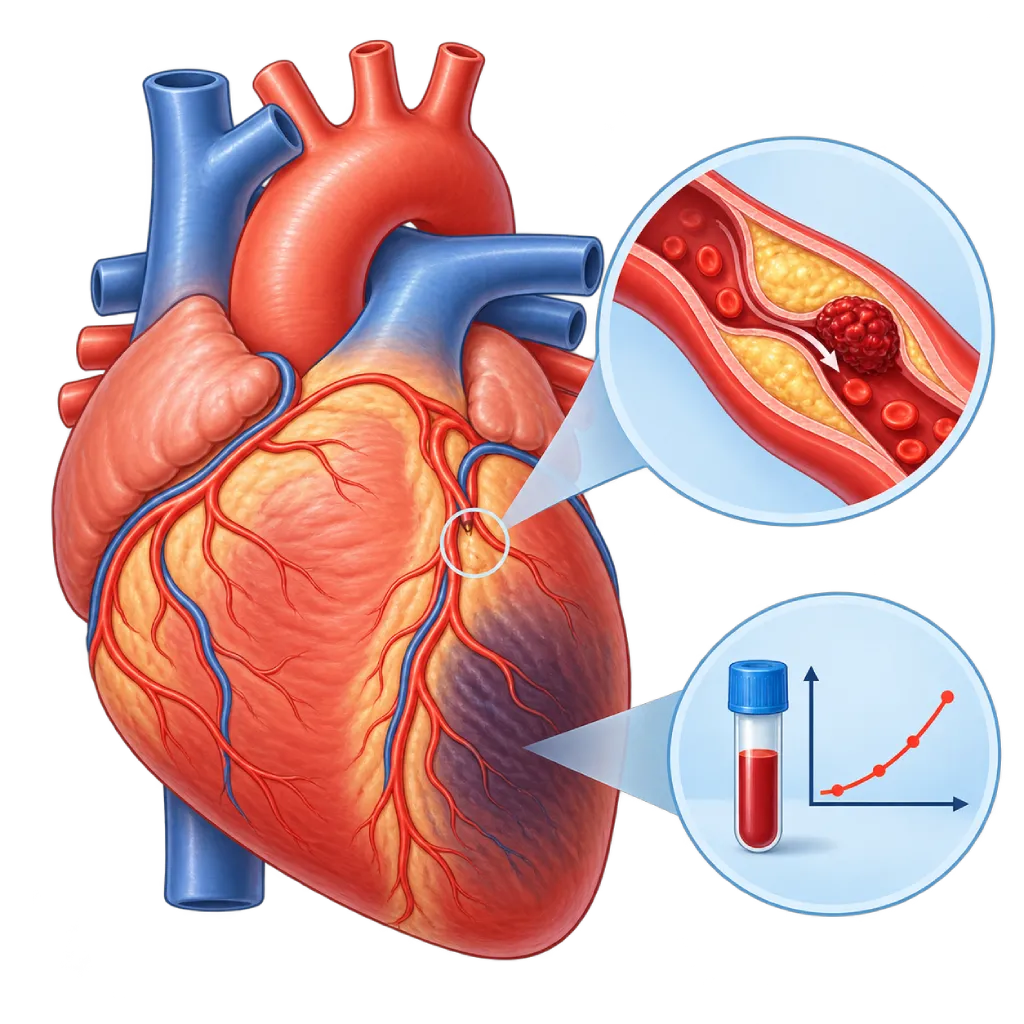
Non-ST-elevation myocardial infarction (NSTEMI) is a heart attack that usually occurs because of a partial blockage of a coronary artery. The ECG does not show ST-segment elevation, but a troponin test proves that the heart muscle has been damaged.
Sources01 / Understanding the condition
About Non-ST-Elevation Myocardial Infarction (NSTEMI)
Non-ST-elevation myocardial infarction, or NSTEMI, is a heart attack in which the ECG does not show a raised ST segment. The ECG may show a lowered ST segment or inverted T waves, or may even look normal. The diagnosis is made from a rise in troponin, a heart muscle protein that is released into the blood when heart cells are damaged. NSTEMI is a type of acute coronary syndrome and is now found more often than STEMI, especially in older adults.
Differences from STEMI and Unstable Angina
In STEMI, the artery is usually completely blocked, so it must be opened within hours, covered on the ST-Elevation Myocardial Infarction (STEMI) page. In NSTEMI, the blockage is usually partial or has closed briefly and then reopened, so blood still flows but not enough. In some patients with NSTEMI, the artery turns out to be completely blocked, especially arteries on the back of the heart that are less visible on the ECG. If the symptoms are similar but troponin does not rise, the condition is called unstable angina, covered on the Unstable Angina page.
Deciding the Timing of Treatment
Not every patient with NSTEMI needs catheterization within minutes. The ESC 2023 guideline groups patients by risk. Patients at very high risk, for example with ongoing chest pain, falling blood pressure, dangerous rhythm disturbances, or acute heart failure, are advised to undergo immediate coronary angiography, within 2 hours. Patients with a confirmed NSTEMI diagnosis are considered high risk and are generally advised to undergo angiography within 24 hours. The angiography results determine whether the artery is opened with a stent, treated with bypass surgery, or managed with medicines alone.
Long-Term Recovery
People with NSTEMI are often older and also have other conditions, such as diabetes, hypertension, or kidney disease. For this reason, their long-term risk is not lower than with STEMI. Antiplatelet medicines, statins, risk factor control, and cardiac rehabilitation are important parts of recovery. Before you go home, the doctor will explain the medicines you need to take, the warning signs to watch for, and your next follow-up appointment. An overview of all types of heart attack is covered on the Myocardial Infarction / Heart Attack page.
02 / Understanding the condition
Symptoms to Recognize.
Common Symptoms
- Pain, pressure, or heaviness in the chest at rest or with light activity
- Chest pain that comes and goes, becoming more frequent or lasting longer over a few days
- Pain spreading to the arm, neck, jaw, back, or upper abdomen
- Shortness of breath
- Cold sweat
- Nausea or a bloated feeling in the upper abdomen that resembles a stomach problem
- Weakness or unusual fatigue
Symptoms in Adult Women
Women more often have atypical accompanying symptoms, so a heart attack is easily mistaken for a stomach problem or tiredness.
- Shortness of breath or unusual fatigue with no clear cause
- Pain in the upper back, shoulder, neck, or jaw
- Nausea, vomiting, or discomfort in the upper abdomen
- Mild chest pressure that comes and goes
- Unusual trouble sleeping or anxiety in the preceding days
Symptoms in Older Adults
NSTEMI is common in older adults, and the symptoms are often vague, without clear chest pain.
- New or worsening shortness of breath
- Sudden confusion or disorientation
- Severe weakness and being unable to do usual activities
- Fainting or falling for no clear reason
- Nausea or loss of appetite with cold sweat
03 / Understanding the condition
What Causes This Condition?
- Plaque in a coronary artery that ruptures or erodes and is then partly covered by a blood clot
- A clot that closes the artery briefly and then reopens, so blood flow rises and falls
- Clot fragments from a ruptured plaque that block small blood vessels in the heart muscle
- The heart's oxygen demand exceeding the supply in an already narrowed artery, for example during severe anemia, severe infection, or a very fast heart rhythm
- Cramping (spasm) of a coronary artery
04 / Understanding the condition
Who Is at Higher Risk?
Lifestyle
Smoking, a diet high in saturated fat and salt, lack of physical activity, and excess weight speed up plaque buildup in the coronary arteries.
Medical
Diabetes, hypertension, high LDL cholesterol, chronic kidney disease, and a history of heart attack, stent placement, or bypass surgery.
Genetic
A history of early coronary artery disease in a parent or sibling, including inherited high cholesterol (familial hypercholesterolemia).
Age
Risk rises sharply after age 65. In older age, NSTEMI is more common than STEMI and its symptoms are more vague.
Groups at Higher Risk
- Older Adults: NSTEMI is more common in older age, and the symptoms are often vague, such as only shortness of breath, weakness, or confusion.
- People with Diabetes: Diabetes speeds up hardening of the arteries in many vessels and can dull the pain signals from the heart.
- People with Chronic Kidney Disease: Kidney disease speeds up hardening of the arteries, and troponin levels need careful interpretation by the doctor.
- Patients Who Have Had a Stent or Bypass: Plaque can grow in other arteries or inside stents and bypass grafts, so follow-up and long-term medicines are still needed.
05 / Understanding the condition
How Is It Diagnosed?
If you arrive with chest pain, an ECG is recorded within 10 minutes. If there is no ST-segment elevation, the doctor checks high-sensitivity cardiac troponin on arrival and repeats it 1 to 2 hours later, following the 0/1-hour or 0/2-hour algorithm in the ESC guideline. A rise or fall in troponin levels above the normal limit, together with symptoms or ECG changes, confirms NSTEMI.
Once the diagnosis is confirmed, the doctor assesses the level of risk, including with the GRACE score, to decide when coronary angiography should be done. Echocardiography assesses the heart's pumping strength and wall motion. If troponin is raised but the cause is still unclear, cardiac MRI can help distinguish a heart attack from myocarditis or Takotsubo cardiomyopathy. The doctor also rules out other causes of raised troponin, such as pulmonary embolism, heart failure, or severe infection.
Electrocardiogram (ECG)
Recorded within 10 minutes of arrival to rule out STEMI and look for a lowered ST segment or inverted T waves. A normal ECG does not rule out NSTEMI.
Cardiac Troponin Test
High-sensitivity troponin on arrival, repeated 1 to 2 hours later. A rise or fall above the normal limit confirms heart muscle damage.
Coronary Angiography
Done immediately, within 24 hours, or as a planned procedure depending on the level of risk, to see where the blockage is and choose a stent, bypass, or medicines.
Echocardiography
Assesses pumping strength and heart wall motion, and looks for other causes of chest pain such as valve problems or fluid in the sac around the heart.
Cardiac MRI
Used when troponin is raised but the cause is unclear, to distinguish a heart attack from myocarditis or Takotsubo cardiomyopathy.
CT Coronary Angiography
In low-risk patients with uncertain troponin or ECG results, it can help rule out coronary artery disease without a catheter.
06 / Understanding the condition
Treatment Options.
Treatment is decided by a doctor after an assessment. The categories below can help you follow the conversation with your doctor.
Antiplatelet and Anticoagulant Medicines
Prevent the clot from growing larger. Usually aspirin and one other antiplatelet, plus an injectable anticoagulant during the hospital stay; the doctor decides the type and duration.
Angiography and Percutaneous Coronary Intervention
Narrowed arteries are opened with a balloon and stent during angiography, with the timing of the procedure adjusted to the level of risk.
Coronary Bypass Surgery
Chosen when the blockage involves several vessels or the left main coronary artery, or in people with diabetes and disease in many vessels.
Anti-Ischemic Medicines
Nitrates and beta blockers help relieve chest pain and reduce the heart's workload, depending on blood pressure and heart rhythm.
Statins and Cholesterol Control
Statins are started during the hospital stay to lower LDL cholesterol to the target set by the doctor, sometimes with another cholesterol-lowering medicine.
Cardiac Rehabilitation
Supervised exercise, education about medicines and warning signs, and risk factor control after discharge to prevent another attack.
07 / Understanding the condition
Complications to Watch For.
Repeat Heart Attack
A ruptured plaque can form a clot again and even block the artery completely, especially in the first few weeks if medicines are not taken regularly.
Heart Rhythm Disorders
Heart muscle that lacks blood can trigger irregular rhythms, from atrial fibrillation to dangerous ventricular rhythms.
Heart Failure
Muscle damage and repeated ischemia weaken the heart's pumping, causing shortness of breath and swelling.
Cardiogenic Shock
Less common than in STEMI, but it can occur when a large area of heart muscle is affected, and it requires intensive care.
Bleeding from Blood Thinners
Antithrombotic medicines prevent clots but can cause bleeding, especially in older adults and people with kidney disease; the doctor adjusts the choice of medicine.
Kidney Problems from Contrast Dye
In people with kidney disease, the contrast dye used in angiography can temporarily reduce kidney function, so the doctor gives fluids and monitors it.
08 / Understanding the condition
What Can You Do?
- Quit smoking and avoid secondhand smoke.
- Control your blood pressure, blood sugar, and LDL cholesterol according to the targets set by your doctor.
- Take antiplatelet medicines and statins as prescribed; do not stop on your own even if you feel well.
- Be active for at least 150 minutes per week at moderate intensity, once your doctor says it is safe.
- Choose foods rich in vegetables, fruits, fish, and whole grains; limit salt, sugar, and saturated fat.
- Get chest pain checked if it becomes more frequent or lasts longer, because it can be an early sign of a heart attack.
09 / Understanding the condition
When Should You See a Doctor?
Call an ambulance (119) right away or go to the nearest emergency room if chest pain or pressure lasts more than 5 minutes, occurs at rest, or becomes more frequent over a few days. Without testing, NSTEMI cannot be told apart from STEMI, so do not wait for the symptoms to ease.
After you return home from the hospital, contact your cardiologist or bring your follow-up visit forward if:
- Brief chest pain returns during activity.
- You become more short of breath, your legs swell, or your weight rises quickly.
- You have palpitations, dizziness, or nearly faint.
- You notice bruising, bleeding gums, black stools, or other unusual bleeding.
10 / Common questions
Questions You May Have.
Frequently asked questions about NSTEMI and its treatment.
Why is it called a heart attack if my ECG does not show ST elevation?
ST-segment elevation is only one sign of a heart attack. In NSTEMI, damage to the heart muscle is proven by a rise in troponin in the blood, along with symptoms or other ECG changes such as a lowered ST segment. The universal definition of myocardial infarction considers both to be heart attacks. The difference lies in the ECG pattern and how quickly the artery needs to be opened.
Is NSTEMI milder than STEMI?
It cannot be called mild. In the early phase, the heart muscle damage in NSTEMI is usually smaller. However, patients with NSTEMI are often older and have diabetes, hypertension, or kidney disease, so the long-term risk of another heart attack and of death can be similar to STEMI. For this reason, treatment and long-term follow-up are just as important.
Do all patients with NSTEMI need a stent?
Not always. Most patients undergo coronary angiography, and the results determine the next step. If there are one or two suitable narrowings, the doctor usually places a stent. If the blockage involves many vessels or the left main artery, bypass surgery may be more appropriate. Some patients can be treated with medicines alone, for example if the narrowing is small or the risk of a procedure is high.
How is NSTEMI different from unstable angina?
The symptoms can be the same, and both are types of acute coronary syndrome. The difference lies in the troponin result. In NSTEMI, troponin rises because part of the heart muscle is already damaged. In unstable angina, the heart muscle lacks blood but troponin does not rise above the normal limit. Both still need hospital treatment because they can progress to a larger heart attack.
Does a raised troponin always mean a heart attack?
Not always. Troponin rises whenever the heart muscle is injured, including in myocarditis, pulmonary embolism, heart failure, severe infection, or kidney disease. A heart attack is concluded only when the troponin rise comes with signs of reduced blood flow to the heart. The doctor assesses the rise and fall pattern of troponin together with symptoms, the ECG, and imaging, as covered on the Cardiac Troponin Test page.
How long do I need to take two antiplatelet medicines?
In general, two antiplatelet medicines are taken together for about 12 months after a heart attack. The doctor may shorten or adjust this if your bleeding risk is high, or change the combination after a few months. After that, one antiplatelet is usually continued long term. Do not stop your medicines on your own, especially if you recently had a stent placed.
Sources and Medical Review
Translated from the Indonesian edition medically reviewed by dr. Adrianus Kosasih, Sp.JP(K).
Sources as cited in the Indonesian edition.
- Byrne RA, Rossello X, Coughlan JJ, et al. 2023 ESC Guidelines for the management of acute coronary syndromes. Eur Heart J. 2023;44(38):3720-3826.
- Thygesen K, Alpert JS, Jaffe AS, et al. Fourth universal definition of myocardial infarction (2018). Eur Heart J. 2019;40(3):237-269.
- Rao SV, O'Donoghue ML, Ruel M, et al. 2025 ACC/AHA/ACEP/NAEMSP/SCAI Guideline for the Management of Patients With Acute Coronary Syndromes: A Report of the American College of Cardiology/American Heart Association Joint Committee on Clinical Practice Guidelines. Circulation. 2025;151(13):e771-e862.
- Gulati M, Levy PD, Mukherjee D, et al. 2021 AHA/ACC/ASE/CHEST/SAEM/SCCT/SCMR Guideline for the Evaluation and Diagnosis of Chest Pain: A Report of the American College of Cardiology/American Heart Association Joint Committee on Clinical Practice Guidelines. Circulation. 2021;144(22):e368-e454.
- Mehta LS, Beckie TM, DeVon HA, et al. Acute Myocardial Infarction in Women: A Scientific Statement From the American Heart Association. Circulation. 2016;133(9):916-947.
Doctors Who Treat This Condition

dr. Puti S. Saus, Sp.JP(K)
Interventional Cardiology
Coronary Intervention Procedures
Clinical focusAcute Coronary Syndrome · Primary Coronary Intervention
View Profile
dr. Adrianus Kosasih, Sp.JP(K)
Interventional Cardiology
Coronary Intervention Procedures
Clinical focusPrimary Coronary Intervention · PCI for Acute Coronary Syndrome
View Profile
Dr. dr. Dudy A. Hanafy, Sp.BTKV, Subsp. JD(K), MARS
Adult Cardiac Surgery
Advanced Cardiovascular Surgical Care +1 center
Clinical focusMinimally Invasive Cardiac Surgery · Coronary Artery Bypass Surgery
View Profile