
Quick answer
What Is Creatine Kinase (CK) Test?
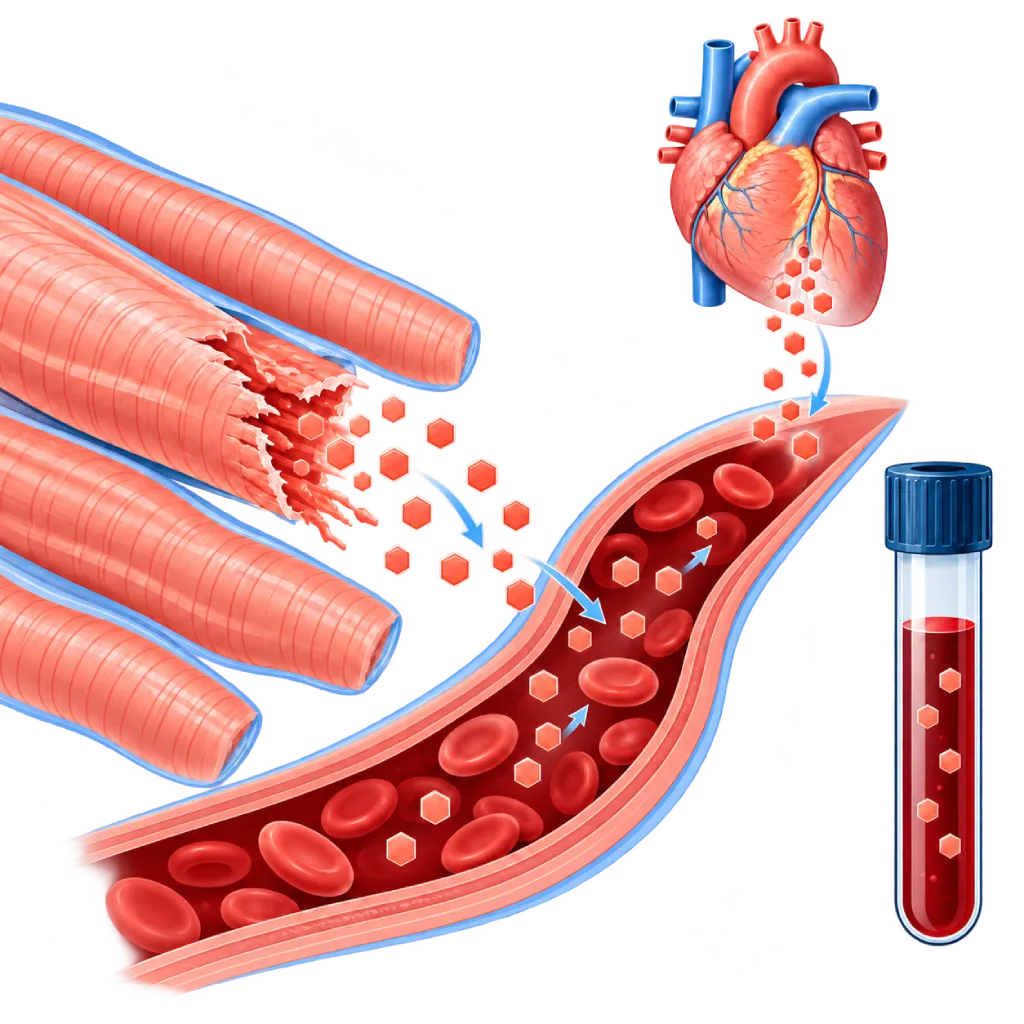
The creatine kinase (CK) test is a blood test that measures an enzyme released into the bloodstream when muscle cells are damaged. It is used to assess muscle pain or weakness, especially while taking statins, to detect severe muscle damage, and to monitor muscle diseases. For heart attacks, troponin is now the main test.
Sources01 / Understanding the procedure
About Creatine Kinase (CK) Test
What Is Creatine Kinase
Creatine kinase (CK), also called creatine phosphokinase (CPK), is an enzyme that helps muscle cells produce energy. This enzyme is found mainly in skeletal muscle and heart muscle. When muscle cells are damaged, CK leaks out of the cells into the bloodstream, so its level in the blood rises.
Types of Creatine Kinase
- CK-MM: comes mainly from skeletal muscle and makes up the majority of the CK in the blood.
- CK-MB: found in large amounts in heart muscle, and in small amounts in skeletal muscle.
- CK-BB: found mainly in the brain and rarely raised in the blood.
How It Works in Brief
The laboratory measures total CK from a blood sample. If the doctor requests it, CK-MB is measured separately to see the portion that comes from heart muscle.
Creatine Kinase and Statins
Statins, which are cholesterol-lowering medications, sometimes cause muscle pain or weakness. The CK test helps the doctor assess whether these symptoms are accompanied by muscle damage. As long as there are no symptoms, routine CK testing while taking statins is generally not needed. If muscle symptoms appear, do not stop your statin on your own. Talk to your doctor, because the benefits of statins for the heart and blood vessels are very large.
Creatine Kinase and Troponin
In the past, CK-MB was used to diagnose heart attacks. Today, troponin is the main choice because it is more sensitive and more specific to heart muscle. CK-MB can still help in certain situations, for example when a troponin test is not available.
Reading the Results
Reference values differ between laboratories and are affected by sex, muscle mass, and physical activity. Mild increases often occur after strenuous exercise, an injection into a muscle, or a fall. A very high increase may indicate extensive muscle damage (rhabdomyolysis), which can harm the kidneys and needs prompt treatment.
02 / Understanding the procedure
When Is This Procedure Considered?
A doctor may consider this procedure in the situations below. The decision is always made after a thorough assessment.
- Muscle Pain or Weakness While Taking StatinsTo assess whether muscle symptoms are accompanied by muscle damage, before the doctor adjusts the type or dose of medication.
- Suspected Severe Muscle DamageFor example after a serious injury, very strenuous exercise, or certain medications, especially if your urine is dark like tea.
- Muscle Diseases That Can Affect the HeartSuch as muscular dystrophy or Danon disease, as part of assessment and monitoring.
- Muscle Weakness of Unclear CauseIncluding to determine the source of raised liver enzymes, which can also come from muscle.
- Assessing Heart Muscle DamageCK-MB may be measured in certain situations, although troponin is now the main marker for heart attacks.
Situations to Consider First
- Recent Strenuous ExerciseCK can rise for several days after strenuous exercise, so the results need to be interpreted carefully or the test repeated.
- Recent Surgery, Muscle Injection, or InjuryAll of these can raise CK. Tell the staff so the results are interpreted correctly.
- Taking Medications That Can Affect MusclesTell your doctor about all the medications and supplements you take, including statins, because some medications can raise CK.
- Blood Clotting Disorders or Taking Blood ThinnersThe puncture site needs to be pressed longer to prevent bleeding or bruising.
- Severe Symptoms That Appear SuddenlyIf your urine is very dark, your muscles are very painful or weak, or you are passing less urine, do not wait for a scheduled test; go to the emergency room right away.
03 / Before the procedure
How Should You Prepare?
The creatine kinase test uses a blood sample from your arm and usually does not require any special preparation.
No fasting needed. You can eat and drink as usual, unless another test taken at the same time requires fasting.
Avoid strenuous exercise. If possible, avoid strenuous exercise or weightlifting for two days before the test, because these activities can raise CK. Follow your doctor's instructions if they differ.
Medications. Keep taking your routine medications, including statins, unless your doctor gives other instructions. Bring a list of the medications and supplements you take.
Recent events. Tell the staff if you have recently had an injection into a muscle, a fall, surgery, or a seizure.
Clothing. Wear a top with loose sleeves so your arm is easy to prepare.
Unsure about the preparation instructions? Ask our team before the procedure.
04 / During the procedure
How Is the Procedure Done?
Blood collection is usually finished within 10 minutes, and CK test results are usually available on the same day.
Identity Check
The staff match your identity with the test request, then ask about the medications you take and any strenuous activity or injury in the past few days.
Blood Collection
A tourniquet is tied around your upper arm, the skin is cleaned with antiseptic, and a small needle is inserted into a vein in the crook of your elbow. The blood is collected in a tube, then the puncture site is pressed and covered with a small bandage.
Laboratory Analysis
Laboratory equipment measures CK activity in the blood and reports it in U/L. If requested, CK-MB is measured separately.
Interpreting the Results
The doctor compares the results with the reference values, your symptoms, medications, and activities. Sometimes the test is repeated a few days later to see whether the level is rising or falling.
05 / Benefits and risks
Benefits and Risks Should Be Discussed Together.
Every medical procedure has benefits and risks. Your doctor will explain both for your situation before the procedure.
Benefits You Can Expect
- Detects Muscle DamageHelps confirm whether muscle pain or weakness is accompanied by damage to muscle cells.
- Safer Statin TreatmentHelps the doctor decide whether a statin should be continued, switched, or have its dose adjusted.
- Earlier Detection of RhabdomyolysisExtensive muscle damage that is recognized quickly can be treated promptly to protect the kidneys.
- Helps Monitor Muscle DiseasesTogether with other tests, CK levels help the doctor assess muscle involvement in certain diseases.
- A Simple and Quick TestOnly a small amount of blood is needed, and results are usually available on the same day.
The benefits of a procedure are not a promise of a cure. Ask how the results will affect your care plan.
Risks You Should Know
- Minor Pain or BruisingAt the needle site, usually mild and quick to go away.
- Brief Dizziness or FaintingSome people feel dizzy when blood is drawn. Tell the staff so you can lie down.
- Results Affected by ActivityExercise, injections, or injury can raise CK, so a high result does not necessarily mean disease.
- Normal CK Does Not Always Rule Out a ProblemMuscle symptoms while taking statins can occur with normal CK, so the doctor still assesses your symptoms.
- Infection at the Puncture SiteVery rare because the skin is cleaned and the equipment used is sterile and single-use.
Risks can differ from person to person. A full explanation and consent are given after an individual assessment.
06 / After the procedure
What Is Recovery Like?
There is no special recovery period. You can return to your activities right away.
Puncture site. A small bruise at the puncture site is normal and goes away within a few days. Avoid lifting heavy objects with that arm for a few hours.
Discussing the results. Discuss the results with your doctor, including whether your medications need to be adjusted and when the test should be repeated.
Statins. Do not stop or switch your statin on your own based on the test results. The decision is made together with your doctor.
Warning signs. Go to the emergency room right away or contact the medical team if you experience:
- Urine that is dark like tea or cola
- Severe muscle pain, swelling, or weakness
- Passing much less urine than usual
- Chest pain, shortness of breath, or a strongly pounding heart
Know the Signs That Need Prompt Care.
Follow the team's guidance on warning signs. If severe or sudden symptoms appear after the procedure, go to the nearest emergency department right away or call Heart Attack Center 1500 258.
07 / Team and support
Doctors and Procedure Support
The doctors below are listed for this procedure. Listed by name, not by ranking.

dr. Debby C. Soemitha, Sp.PD
Internal Medicine
Clinical focusDiabetes and Diabetes Complications · Obesity and Metabolic Disease
View Profile
Dr. med. dr. Denio A. Ridjab, Sp.JP(K)
Interventional Cardiology
Coronary Intervention Procedures +2 centers
Clinical focusInterventional Cardiology · Coronary Artery Disease
View Profile
dr. Puti S. Saus, Sp.JP(K)
Interventional Cardiology
Coronary Intervention Procedures
Clinical focusAcute Coronary Syndrome · Primary Coronary Intervention
View Profile08 / Common questions
Before You Plan the Procedure.
Frequently asked questions about the creatine kinase test. Specific instructions for your test are given by your doctor or the laboratory staff.
Do I need to fast before a creatine kinase test?
No. Eating and drinking do not affect CK levels, so you can have breakfast and take your medications as usual. Fasting is only needed if another test is taken at the same time, such as fasting blood sugar. What matters more is avoiding strenuous exercise for two days before the test, unless your doctor gives other instructions.
What does a high CK level mean?
A high CK level shows that some muscle cells are damaged, but it does not show the cause. Mild increases often occur after strenuous exercise, an injection into a muscle, or a fall. A very high increase may indicate extensive muscle damage that puts the kidneys at risk. The doctor interprets the results together with your symptoms, medications, and other tests, and may repeat the test.
Does exercise affect the test results?
Yes. Strenuous exercise, especially weightlifting or long-distance running, can raise CK for several days. For this reason, avoid strenuous exercise for two days before the test if possible, and tell the staff if you have recently done strenuous exercise. Light daily activities such as walking usually do not affect the results much.
I take a statin and have muscle pain. Do I need a CK test?
Talk to your doctor about your symptoms. The doctor usually checks CK to assess whether the muscle pain is accompanied by muscle damage. The results help decide whether the statin should be continued, have its dose reduced, or be replaced with another type. Do not stop your statin on your own, because this medication protects you from heart attack and stroke.
What is the difference between CK-MB and troponin?
Both are markers of heart muscle damage. Troponin is more sensitive and more specific to heart muscle, so it is now the main test for diagnosing a heart attack. CK-MB is also present in small amounts in skeletal muscle, so it can rise because of an ordinary muscle injury. CK-MB is still used in certain situations at the doctor's discretion.
How long does it take to get the test results?
CK test results are usually available on the same day, often within a few hours after the blood is drawn. In emergencies, the test can be done more quickly. The staff will tell you the estimated time at registration. You should discuss the results with your doctor so their meaning is clear for your situation.
Sources and Medical Review
Translated from the Indonesian edition medically reviewed by dr. Puti S. Saus, Sp.JP(K).
Sources as cited in the Indonesian edition.
- Stroes ES, Thompson PD, Corsini A, et al. Statin-associated muscle symptoms: impact on statin therapy. European Atherosclerosis Society Consensus Panel Statement on Assessment, Aetiology and Management. Eur Heart J. 2015;36(17):1012-1022.
- Mach F, Baigent C, Catapano AL, et al. 2019 ESC/EAS Guidelines for the management of dyslipidaemias: lipid modification to reduce cardiovascular risk. Eur Heart J. 2020;41(1):111-188.
- Byrne RA, Rossello X, Coughlan JJ, et al. 2023 ESC Guidelines for the management of acute coronary syndromes. Eur Heart J. 2023;44(38):3720-3826.
- Thygesen K, Alpert JS, Jaffe AS, et al. Fourth universal definition of myocardial infarction (2018). Eur Heart J. 2019;40(3):237-269.
- Bosch X, Poch E, Grau JM. Rhabdomyolysis and Acute Kidney Injury. N Engl J Med. 2009;361(1):62-72.