
Quick answer
What Is Drug-Induced Hypotension?
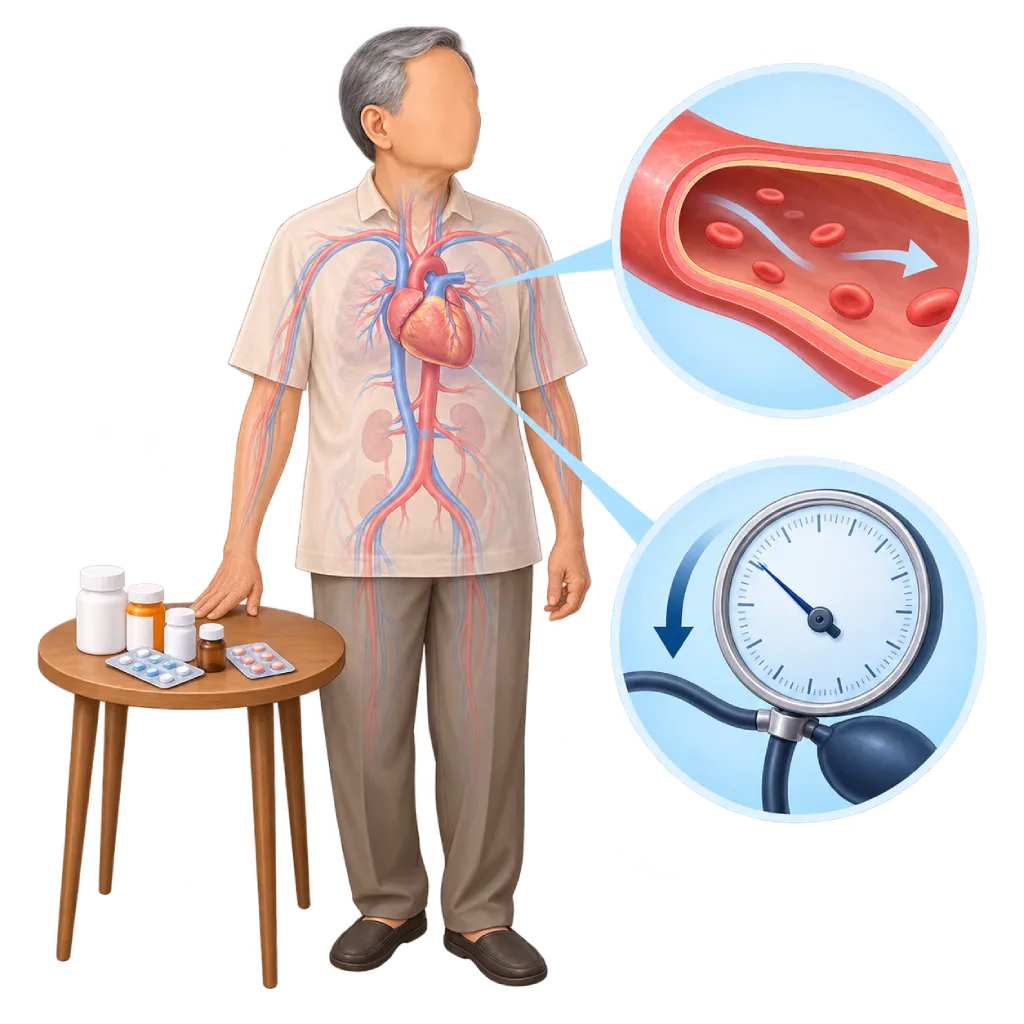
Drug-induced hypotension is blood pressure that drops too low because of the effects of a medication, whether a blood pressure medication or another drug. Symptoms include dizziness, weakness, or falls, and it can usually be managed by having your doctor adjust your medications.
SourcesSigns That Need Urgent Help
- Fainting with chest pain, shortness of breath, or palpitations
- Very low blood pressure with cold, pale skin and confusion
- Severe dizziness after using erectile dysfunction medication together with nitrate medication
- Accidentally taking more than the prescribed dose or taking someone else's medication
- A very slow heartbeat with severe weakness
If these signs appear, go to the nearest emergency department right away or call Heart Attack Center 1500 258.
01 / Understanding the condition
About Drug-Induced Hypotension
Many medications can lower blood pressure, either as the intended effect or as a side effect. Drug-induced hypotension occurs when the drop is too large and causes symptoms, such as dizziness when standing up, weakness, or fainting. The drop can be constant, happen only when standing, or occur only a few hours after the medication is taken.
Medications That Often Play a Role
The first group is blood pressure medications, such as diuretics, ACE inhibitors, ARBs, calcium channel blockers, beta blockers, and alpha blockers. These medications are important for protecting the heart, brain, and kidneys, but a combination of several drugs, an increased dose, or certain circumstances can make blood pressure drop too much. The second group is other heart medications, such as nitrates for chest pain and heart failure medications. The third group is medications outside heart care whose effects are often overlooked, for example alpha blocker prostate medications, erectile dysfunction medications, Parkinson's medications, some antidepressants, antipsychotics, sedatives, opioids, and certain diabetes medications that remove sugar and fluid through the urine.
Situations That Trigger It
A medication that has been safe so far can suddenly lower blood pressure too much when the body is short of fluids, for example because of diarrhea, vomiting, fever, fasting, or hot weather. A drop is also more likely in older adults, after weight loss, when kidney function declines, when a new medication is added, or when medications are taken with alcohol. In some people, the drop only happens when standing up, taking the form of orthostatic hypotension, which is covered on the Orthostatic Hypotension page.
Adjusting Medications with Your Doctor
The good news is that this condition usually improves after the doctor reviews your medications. The doctor will weigh the benefits of each medication against its risks, and may then change the type, reduce the dose, or change the time it is taken. Stopping medications on your own is not recommended, because some medications, such as beta blockers and heart failure medications, can cause new problems if stopped suddenly.
In vulnerable older adults, the blood pressure target can also be adjusted to their physical condition, risk of falls, and other illnesses. The goal is not to push the numbers as low as possible, but to reach a blood pressure that protects the organs without making you dizzy or causing falls. Drug-induced hypotension is one type of hypotension, which is covered on the Hypotension page.
02 / Understanding the condition
Symptoms to Recognize.
Common Symptoms
- Dizziness or lightheadedness, especially when standing up
- Weakness or tiring quickly a few hours after taking medication
- Blurred vision or vision that briefly goes dark
- Nausea or a cold sweat
- Difficulty concentrating
- Nearly fainting or fainting
- Symptoms that appear after a new medication is started or a dose is increased
Symptoms in Older Adults
In older adults, medication effects often show up as atypical symptoms.
- Falls without a clear cause
- Confusion or excessive sleepiness
- Weakness to the point of difficulty walking
- Passing less urine
03 / Understanding the condition
What Causes This Condition?
- A combination of several blood pressure medications or an increased dose
- Diuretics that remove a lot of fluid, especially when you are not drinking enough
- Alpha blocker prostate medications, particularly when first started
- Nitrates, especially when used together with erectile dysfunction medications
- Parkinson's medications, antidepressants, antipsychotics, opioids, and sedatives
- Dehydration from diarrhea, vomiting, fever, or hot weather while medications are still being taken
- Reduced kidney or liver function that causes medications to build up in the body
04 / Understanding the condition
Who Is at Higher Risk?
Age
Older adults are more sensitive to medications because the reflexes that regulate blood pressure slow down and the kidneys clear medications more slowly.
Medical
Chronic kidney disease, heart failure, diabetes with nerve damage, Parkinson's disease, and preexisting orthostatic hypotension.
Lifestyle
Not drinking enough, drinking alcohol, and spending long periods in hot places while taking medications that lower blood pressure.
Other
Taking five or more medications at the same time, taking medications from several doctors without a shared list, and buying medications without a prescription.
Groups at Higher Risk
- Older Adults: They more often take many medications at once and are more likely to fall when blood pressure drops.
- People with Hypertension Taking Several Medications: Many people need a combination of medications, but the doses need to be adjusted during illness or after weight loss.
- People with Heart Failure: Heart failure medications lower blood pressure as part of how they work, so they are increased gradually and monitored.
- Men Taking Prostate Medications: Alpha blocker prostate medications can lower blood pressure when standing, especially when first started.
- People with Parkinson's Disease: Both the disease itself and its medications can lower blood pressure.
05 / Understanding the condition
How Is It Diagnosed?
The first step is to review all the medications you take. Bring your medications in their packaging, including over-the-counter medicines, herbal remedies, and supplements, or a complete list of them to your appointment. The doctor will ask when the symptoms started and whether they are related to a new medication, a new dose, or the time you take it. Your blood pressure and pulse are measured while lying down and while standing.
Monitoring your blood pressure over 24 hours, or measuring it at home, helps show whether blood pressure drops a few hours after the medication is taken. Blood tests assess kidney function, electrolytes such as sodium and potassium, and blood sugar, because problems with these can intensify the effects of medications. An ECG looks for a heartbeat that is too slow because of medication.
Physical Examination
Blood pressure and pulse are measured while lying down and standing, along with a review of all the medications you take.
Ambulatory Blood Pressure Monitoring
A 24-hour recording to see drops in blood pressure in the hours after medications are taken.
Home Blood Pressure Monitoring
Morning and evening measurements at home help assess the effects of medications and the results of adjustments.
Kidney Function Test
Creatinine and eGFR tests, because weakened kidneys cause medications to build up and blood pressure to drop further.
Blood Electrolyte Test
Sodium and potassium tests to look for the effects of diuretics and other blood pressure medications.
Electrocardiogram (ECG)
A heart recording to look for a heartbeat that is too slow or electrical conduction problems caused by medication.
06 / Understanding the condition
Treatment Options.
Treatment is decided by a doctor after an assessment. The categories below can help you follow the conversation with your doctor.
Medication Review by a Doctor
The doctor weighs the benefits and risks of each medication, and may then change the type, reduce the dose, or gradually stop medications that are no longer needed.
Adjusting Medication Timing
Moving the time some medications are taken, for example so they are not taken together or not right before a meal, can reduce the drop in blood pressure.
Sick Day Plan
The doctor can give written instructions on which medications to pause temporarily when you have diarrhea, are vomiting, or cannot eat and drink.
Fluids and Daily Habits
Drinking enough fluids, getting up gradually, and avoiding alcohol help reduce symptoms while medications are being adjusted.
07 / Understanding the condition
Complications to Watch For.
Falls and Fractures
Sudden dizziness caused by medication can lead to falls, hip fractures, or head injuries in older adults.
Fainting
A large enough drop in blood pressure can cause a brief loss of consciousness, which is covered on the Syncope page.
Reduced Kidney Function
Blood pressure that is too low, especially when you are dehydrated, reduces blood flow to the kidneys.
Stopping Needed Medications
Side effects often lead people to stop their medications on their own, leaving blood pressure or heart disease uncontrolled.
08 / Understanding the condition
What Can You Do?
- Keep a list of all your medications, including over-the-counter medicines, herbal remedies, and supplements, and show it to every doctor you see.
- Take your medications as directed and do not increase the dose on your own.
- Measure your blood pressure at home, especially after a new medication is started or a dose is changed.
- Ask your doctor which medications should be paused when you have diarrhea, are vomiting, or cannot drink.
- Avoid alcohol and get up gradually if you are taking blood pressure medications.
- Do not use erectile dysfunction medications if you take nitrate medications for chest pain.
09 / Understanding the condition
When Should You See a Doctor?
Contact the doctor who prescribed your medication if you notice symptoms of low blood pressure after starting or changing a medication. Do not stop your medication before talking to your doctor.
- Dizziness, darkened vision, or nearly fainting after taking medication
- Home blood pressure readings that are repeatedly much lower than usual, along with symptoms
- A fall or fainting episode since a new medication was started
- Diarrhea, vomiting, or being unable to drink while taking blood pressure medications or diuretics
- An older family member becoming confused or weak since their medication was changed
- Go to the emergency room right away if fainting comes with chest pain, shortness of breath, or a very slow heartbeat
Don't Wait in an Emergency.
If symptoms are severe or come on suddenly, go to the nearest emergency department right away or call Heart Attack Center 1500 258, rather than waiting for an appointment.
10 / Common questions
Questions You May Have.
Frequently asked questions about low blood pressure caused by medications.
Can I stop taking my medication if my blood pressure is low?
Do not stop on your own. Some medications, such as beta blockers, heart failure medications, and medications to prevent stroke, can cause new problems if stopped suddenly. Record your blood pressure and symptoms, then contact the doctor who prescribed them. The doctor can reduce the dose, change the type, or change the timing so that you still get the benefits of the medication.
Why does a medication that used to be safe now make my blood pressure low?
Your body's need for a medication can change. Weight loss, getting older, declining kidney function, hot weather, not drinking enough, diarrhea, or a newly added medication can make an existing medication work more strongly. For this reason, your medication list needs regular review, especially after an illness or a hospital stay.
Why should erectile dysfunction medications not be used with nitrates?
PDE5 inhibitor medications for erectile dysfunction and nitrate medications for chest pain both widen the blood vessels. When they are used together, blood pressure can drop very far, which is dangerous. Tell your doctor about all the medications you take, and do not buy erectile dysfunction medications without a prescription if you have heart disease.
Can herbal remedies or supplements lower blood pressure?
Yes. Some herbal remedies and supplements can lower blood pressure or remove fluid from the body, which can add to the effect of the medications your doctor prescribes. Their contents and strength are also often uncertain. Always tell your doctor about any herbal remedies and supplements you take, including those considered natural, so that the cause of your low blood pressure can be fully assessed.
When should blood pressure medication be taken?
The timing of your medication is set by your doctor based on the type of medication and your blood pressure pattern. If you often feel dizzy at certain times, for example in the morning or after meals, note the times and show them to your doctor. The doctor may move the timing or split the medications so they do not act at the same time. Do not change the schedule yourself without your doctor's advice.
What should I prepare for a follow-up visit?
Bring all your medications in their packaging or a complete list, including over-the-counter medicines, herbal remedies, and supplements. Include your home blood pressure records, taken while sitting and standing if possible, along with the times you take your medications and any symptoms. Also mention if you have had a fall, diarrhea, or weight loss. This information helps the doctor safely rearrange your medications.
Sources and Medical Review
Translated from the Indonesian edition medically reviewed by dr. Debby C. Soemitha, Sp.PD.
Sources as cited in the Indonesian edition.
- Bhanu C, Nimmons D, Petersen I, Orlu M, Davis D, Hussain H, et al. Drug-induced orthostatic hypotension: a systematic review and meta-analysis of randomised controlled trials. PLoS Med. 2021;18(11):e1003821.
- Rivasi G, Rafanelli M, Mossello E, Brignole M, Ungar A. Drug-related orthostatic hypotension: beyond anti-hypertensive medications. Drugs Aging. 2020;37(10):725-738.
- Juraschek SP, Hu JR, Cluett JL, Ishak A, Mita C, Lipsitz LA, et al. Effects of intensive blood pressure treatment on orthostatic hypotension: a systematic review and individual participant-based meta-analysis. Ann Intern Med. 2021;174(1):58-68.
- By the 2023 American Geriatrics Society Beers Criteria Update Expert Panel. American Geriatrics Society 2023 updated AGS Beers Criteria for potentially inappropriate medication use in older adults. J Am Geriatr Soc. 2023;71(7):2052-2081.
- McEvoy JW, McCarthy CP, Bruno RM, Brouwers S, Canavan MD, Ceconi C, et al. 2024 ESC Guidelines for the management of elevated blood pressure and hypertension. Eur Heart J. 2024;45(38):3912-4018.
- Brignole M, Moya A, de Lange FJ, Deharo JC, Elliott PM, Fanciulli A, et al. 2018 ESC Guidelines for the diagnosis and management of syncope. Eur Heart J. 2018;39(21):1883-1948.
Doctors Who Treat This Condition

dr. Siska S. Danny, Sp.JP(K)
Interventional Cardiology
Coronary Intervention Procedures
Clinical focusPCI for Acute Coronary Syndrome · Primary Coronary Intervention
View Profile
dr. Debby C. Soemitha, Sp.PD
Internal Medicine
Clinical focusDiabetes and Diabetes Complications · Obesity and Metabolic Disease
View Profile
Dr. dr. Faris Basalamah, Sp.JP(K)
Interventional Cardiology
Coronary Intervention Procedures +1 center
Clinical focusComplex Coronary Intervention · Cardiac Electrophysiology
View Profile