
Quick answer
What Is Integrated Medication Therapy?
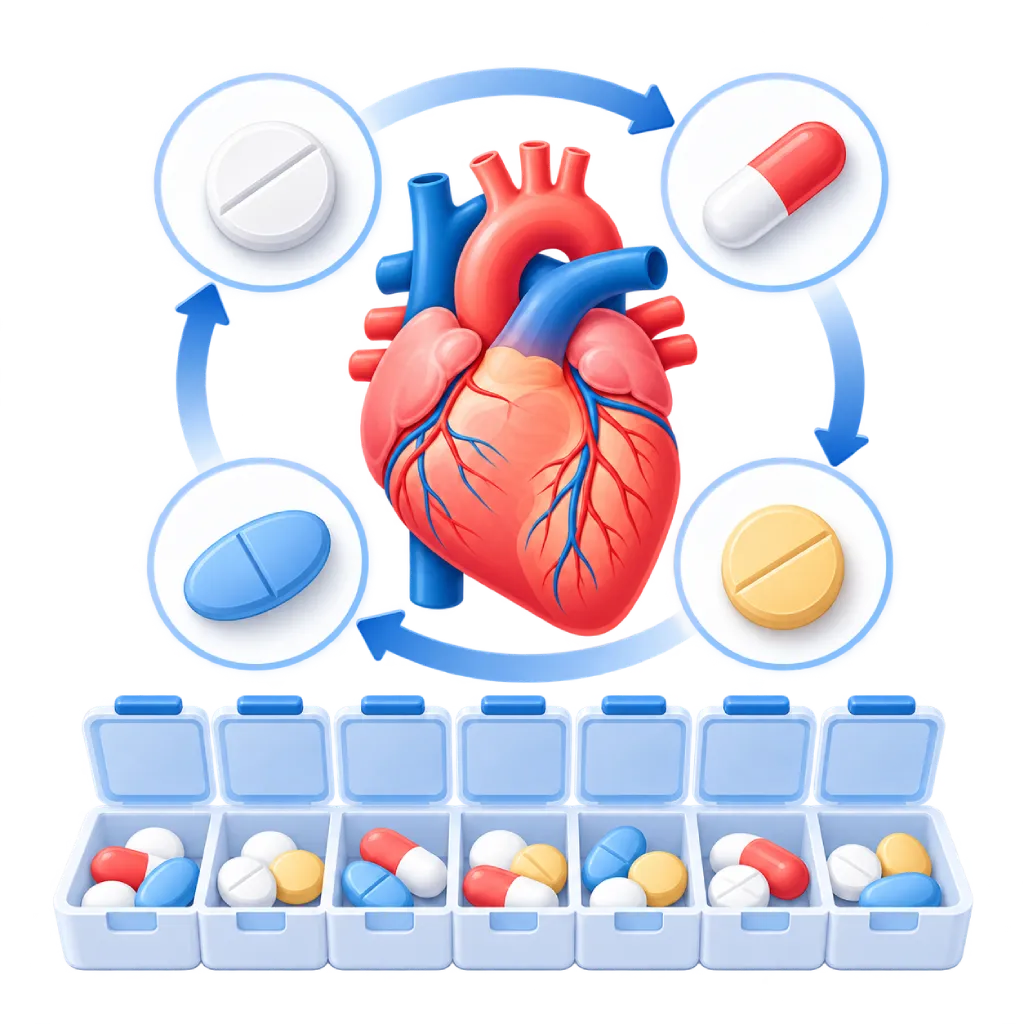
Integrated medication therapy is the treatment of heart disease with several types of medication chosen and monitored together, for example blood pressure medication, cholesterol-lowering drugs, blood thinners, and heart failure medication. The aim is to prevent heart attack, stroke, and worsening disease. Doses are adjusted step by step and monitored with regular blood tests.
Sources01 / Understanding the procedure
About Integrated Medication Therapy
What Is Integrated Medication Therapy
Many heart and blood vessel diseases are controlled mainly with medication. A person often needs several medications at once, for example for blood pressure, cholesterol, blood sugar, and preventing blood clots. Integrated medication therapy means all these medications are chosen, combined, and monitored as one plan rather than prescribed separately, so the benefits are greater and the risks are smaller.
How It Works in Brief
Each class of medication works on a different target. Blood pressure medications reduce the strain on the blood vessels and heart, statins lower LDL cholesterol and stabilize plaque, antiplatelets or anticoagulants prevent blood clots, and heart failure medications help the heart work with less effort. When combined correctly, their effects complement each other and lower the risk of cardiac events more than a single medication alone.
Commonly Used Medication Classes
- Blood pressure medications: for example ACE inhibitors, ARBs, calcium channel blockers, and diuretics, often in a single combination tablet. This is covered on the Hypertension Management page.
- Cholesterol-lowering medications: statins, which may be combined with ezetimibe or other medications if the target has not been reached. This is covered on the Dyslipidemia Management page.
- Antiplatelets: such as aspirin and clopidogrel, especially after a heart attack or coronary stent placement.
- Anticoagulants: blood thinners for atrial fibrillation or clots in the veins. This is covered on the Anticoagulation Therapy and Stroke Prevention page.
- Heart failure medications: four main classes, namely an ARNI or ACE inhibitor, a beta blocker, a mineralocorticoid receptor antagonist, and an SGLT2 inhibitor.
- Diabetes medications that protect the heart: SGLT2 inhibitors and GLP-1 receptor agonists for people with diabetes who have heart disease.
Starting and Adjusting the Dose
Medications are usually started at a low dose, then increased step by step to the dose shown to be beneficial or the maximum dose you can tolerate. At each follow-up visit, the doctor assesses your blood pressure, pulse, symptoms, and blood test results such as kidney function, potassium, and cholesterol. Combination tablets can be used to reduce the number of tablets you take each day.
Medication Adherence
The benefits of heart medications are only gained if they are taken regularly over the long term, even when you already feel well. Stopping medications on your own, especially blood thinners after coronary stent placement, can be dangerous. Tell your doctor if you have side effects, cost difficulties, or a confusing dosing schedule, so the plan can be adjusted.
02 / Understanding the procedure
When Is This Procedure Considered?
A doctor may consider this procedure in the situations below. The decision is always made after a thorough assessment.
- Coronary Artery Disease or After a Heart AttackMedications prevent repeat attacks and help keep heart stents open.
- Heart FailureThe combination of core medications has been shown to prolong life and reduce hospital stays.
- Uncontrolled HypertensionOften requires two or more medications to reach the target.
- High Cholesterol or High Heart RiskStatins and add-on medications help reach the LDL target.
- Atrial FibrillationBlood thinners prevent stroke, along with medications to control heart rate or rhythm.
- Diabetes with Heart or Kidney DiseaseCertain diabetes medications also protect the heart and kidneys.
Situations to Consider First
- Allergies or Previous Medication Side EffectsTell your doctor so another medication can be chosen.
- Kidney or Liver ProblemsThe dose or choice of medication needs to be adjusted.
- Pregnant, Planning a Pregnancy, or BreastfeedingSome heart medications, such as ACE inhibitors and statins, are not used during pregnancy.
- Bleeding or a History of Gastrointestinal BleedingThe use of blood thinners needs careful consideration.
- Taking Other Medications, Supplements, or Herbal RemediesThese can interact with heart medications, so all of them need to be reported.
03 / Before the procedure
How Should You Prepare?
The main preparation is bringing complete information about your medications and health.
All the medications you are taking. Bring them in their packaging, including over-the-counter medicines, vitamins, supplements, and herbal remedies.
Test results. Bring your recent blood test, ECG, or echocardiography results, as well as your home blood pressure and blood sugar records.
Symptom notes. Write down any side effects you have had, such as a dry cough, dizziness when standing up, muscle pain, or bruising easily.
Blood tests if requested. Your doctor may request kidney function, potassium, or cholesterol tests before your follow-up visit. Ask whether you need to fast.
Unsure about the preparation instructions? Ask our team before the procedure.
04 / During the procedure
How Is the Procedure Done?
Each consultation visit generally takes about 30 minutes. The therapy itself is long term, with regular follow-up visits.
Medication Review
The doctor goes through all the medications you take, looking for duplicate medications, interactions, or medications that are no longer needed.
Examination
Your blood pressure, pulse, weight, and signs of fluid buildup are checked, and your blood test results are assessed.
Building the Plan
The doctor decides on the medications, doses, and dosing schedule, including combination tablets when suitable, then explains the purpose of each medication.
Follow-Up and Adjustment
At the start of therapy, follow-up visits are usually scheduled every few weeks to increase the dose step by step until the target is reached, then less often once your condition is stable.
05 / Benefits and risks
Benefits and Risks Should Be Discussed Together.
Every medical procedure has benefits and risks. Your doctor will explain both for your situation before the procedure.
Benefits You Can Expect
- Preventing Heart Attack and StrokeThe right combination of medications lowers the risk of repeat events.
- Prolonging Life in Heart FailureCore heart failure medications have been shown to reduce deaths and hospital stays.
- Fewer TabletsCombination tablets and a well-organized schedule make it easier to take medications regularly.
- Reducing Side Effects and InteractionsAll medications are reviewed together as one plan.
- Clear TargetsBlood pressure, cholesterol, and blood sugar are monitored toward personal targets.
The benefits of a procedure are not a promise of a cure. Ask how the results will affect your care plan.
Risks You Should Know
- Medication Side EffectsSuch as a dry cough, dizziness, muscle pain, or digestive problems; these can usually be managed with adjustments.
- BleedingIn people taking antiplatelets or anticoagulants.
- Blood Pressure or Heart Rate Too LowEspecially when the dose is increased or the body is dehydrated.
- Kidney or Potassium ProblemsSome medications affect kidney function and potassium levels, so regular blood tests are needed.
- Drug InteractionsWith other medications, supplements, or herbal remedies.
Risks can differ from person to person. A full explanation and consent are given after an individual assessment.
06 / After the procedure
What Is Recovery Like?
There is no recovery period. You continue your usual activities while taking your medications on schedule.
Take your medications regularly. Use a weekly pill organizer or a phone reminder. Do not double the dose if you forget, unless your doctor advises it.
Do not stop on your own. Medications such as blood thinners, beta blockers, and statins must not be stopped without your doctor's guidance.
Lifestyle still matters. Medications work better together with a healthy diet, physical activity, and quitting smoking.
Warning signs to watch for. Contact your doctor or go to the emergency room right away if you experience:
- Bleeding that is hard to stop, vomiting blood, or black stools
- Severe dizziness, fainting, or a very slow pulse
- Swelling of the face, lips, or tongue, or difficulty breathing
- Chest pain, worsening breathlessness, or rapid weight gain due to swelling
Know the Signs That Need Prompt Care.
Follow the team's guidance on warning signs. If severe or sudden symptoms appear after the procedure, go to the nearest emergency department right away or call Heart Attack Center 1500 258.
07 / Team and support
Doctors and Procedure Support
The doctors below are listed for this procedure. Listed by name, not by ranking.

dr. Debby C. Soemitha, Sp.PD
Internal Medicine
Clinical focusDiabetes and Diabetes Complications · Obesity and Metabolic Disease
View Profile
Dr. med. dr. Denio A. Ridjab, Sp.JP(K)
Interventional Cardiology
Coronary Intervention Procedures +2 centers
Clinical focusInterventional Cardiology · Coronary Artery Disease
View Profile
Dr. dr. Jajang Sinardja, Sp.JP(K)
Interventional Cardiology
Coronary Intervention Procedures
Clinical focusAcute Coronary Syndrome · Primary Coronary Intervention
View Profile08 / Common questions
Before You Plan the Procedure.
Frequently asked questions about integrated medication therapy. The right medications and doses for you are determined by your doctor.
Why do I have to take so many heart medications?
Each medication works on a different target, such as blood pressure, cholesterol, blood clots, or heart function. Research shows that the right combination of medications lowers the risk of heart attack, stroke, and death more than a single medication alone. If the number of tablets feels like a burden, ask about combination tablets.
Do heart medications have to be taken for life?
The majority of heart medications, such as statins and blood pressure medications, are taken long term because the diseases they treat are chronic. Some medications, such as dual antiplatelet therapy after coronary stent placement, are taken for a set period. Your doctor regularly reviews which medications are still needed, can be reduced, or can be stopped.
Can heart medications be taken together with herbal remedies or supplements?
Some herbal remedies and supplements can interact with heart medications, for example by increasing the risk of bleeding in people taking blood thinners or by interfering with how other medications work. Tell your doctor about all the herbal remedies and supplements you take. Do not replace medications from your doctor with herbal remedies without talking it over beforehand.
What should I do if I forget to take my medication?
In general, take it as soon as you remember, unless it is nearly time for your next dose. In that case, skip the missed dose and do not double the dose. The rules may differ for certain medications, such as blood thinners, so ask about the specific rules for your medications. A weekly pill organizer or a phone alarm helps prevent forgetting.
My blood pressure and cholesterol are already normal. Can I stop my medications?
Do not stop your medications on your own. Normal numbers are often thanks to the medications you take, and if you stop them, your blood pressure or cholesterol can rise again. Suddenly stopping blood thinners or beta blockers can even be dangerous. Discuss it with your doctor if you want to reduce your medications.
Why do I need blood tests while taking heart medications?
Some heart medications affect kidney function, potassium levels, or the liver, and the effects of others need to be assessed, such as the drop in cholesterol. Regular blood tests help your doctor make sure the medications remain safe, adjust doses, and check whether treatment targets have been reached. The test schedule is set according to the medications you take.
Sources and Medical Review
Translated from the Indonesian edition medically reviewed by Dr. dr. Jajang Sinardja, Sp.JP(K).
Sources as cited in the Indonesian edition.
- McDonagh TA, Metra M, Adamo M, et al. 2021 ESC Guidelines for the diagnosis and treatment of acute and chronic heart failure. Eur Heart J. 2021;42(36):3599-3726.
- Vrints C, Andreotti F, Koskinas KC, et al. 2024 ESC Guidelines for the management of chronic coronary syndromes. Eur Heart J. 2024;45(36):3415-3537.
- McEvoy JW, McCarthy CP, Bruno RM, et al. 2024 ESC Guidelines for the management of elevated blood pressure and hypertension. Eur Heart J. 2024;45(38):3912-4018.
- Visseren FLJ, Mach F, Smulders YM, et al. 2021 ESC Guidelines on cardiovascular disease prevention in clinical practice. Eur Heart J. 2021;42(34):3227-3337.
- Castellano JM, Pocock SJ, Bhatt DL, et al. Polypill strategy in secondary cardiovascular prevention. N Engl J Med. 2022;387(11):967-977.