
Quick answer
What Is Hemorrhagic Stroke?
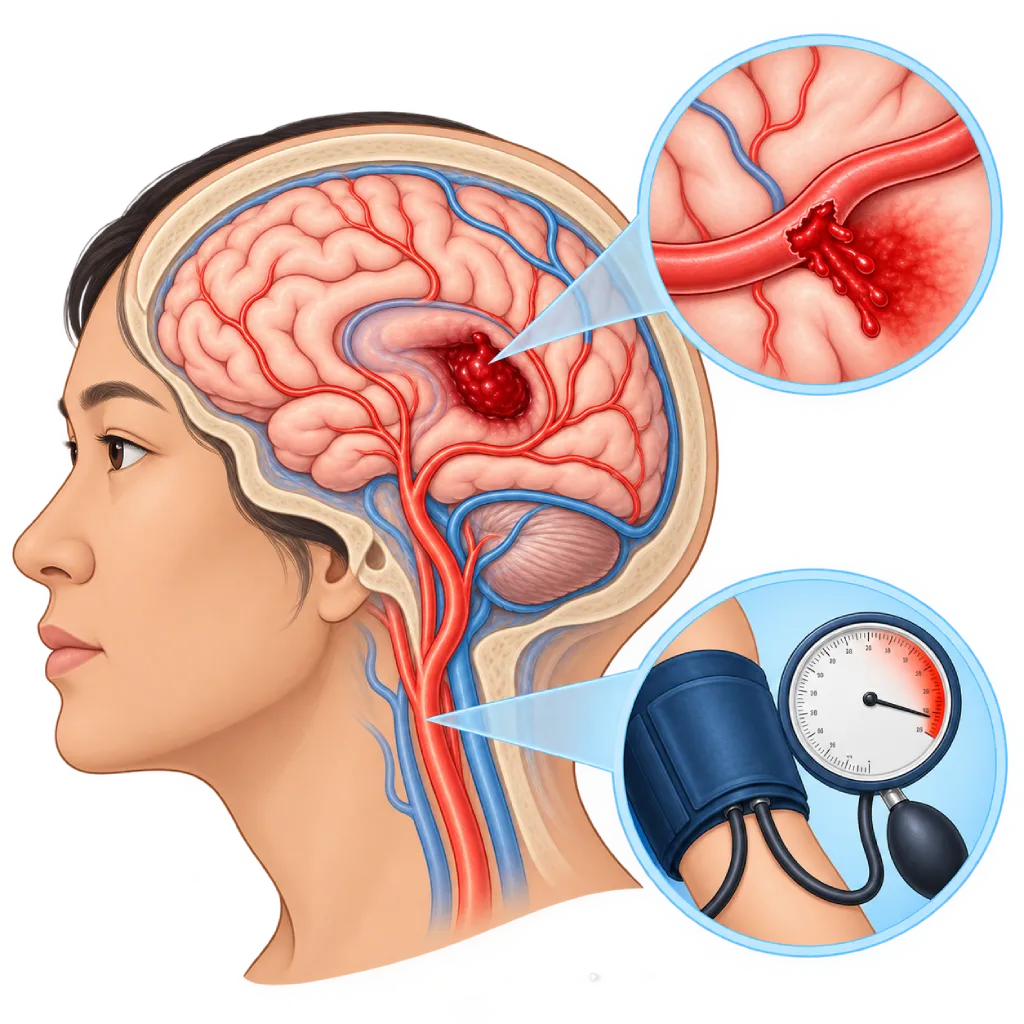
A hemorrhagic stroke happens when a blood vessel in or around the brain bursts, so blood presses on and damages brain tissue. This is an emergency: go to the emergency room right away if signs of stroke appear.
Sources01 / Understanding the condition
About Hemorrhagic Stroke
A hemorrhagic stroke is a stroke caused by a blood vessel bursting inside the head. The blood that escapes clots and presses on the surrounding brain tissue, while the part of the brain that the vessel should supply runs short of blood. This type is less common than ischemic stroke, but it is often more severe and requires intensive care. An overview of all types of stroke is covered on the Stroke page.
Two Types of Bleeding
Intracerebral hemorrhage occurs within the brain tissue and is the more common form. Subarachnoid hemorrhage occurs in the thin space surrounding the brain, usually because a bulge in a blood vessel (aneurysm) bursts, and it usually begins with a severe headache that comes on instantly. Aneurysms are covered on the Cerebral Aneurysm page.
Why Blood Vessels in the Brain Burst
The main cause is high blood pressure that lasts for years. This pressure weakens the walls of small blood vessels deep in the brain until one eventually tears. In older adults, deposits of amyloid protein in the walls of brain blood vessels (cerebral amyloid angiopathy) make the vessels fragile, especially on the surface of the brain. Other causes are congenital blood vessel abnormalities such as arteriovenous malformations, blood clotting disorders, and stimulant drugs.
Connection with the Heart
Hypertension damages the heart and the brain at the same time, so controlling it is the foundation of prevention, as covered on the Hypertension page. In addition, many people with atrial fibrillation or a mechanical artificial heart valve take blood thinners (anticoagulants). These medicines prevent strokes caused by clots, but they add to the risk of bleeding, including in the brain, although that risk is small. If bleeding in the brain occurs, the medicine's effect needs to be reversed right away. Once the condition is stable, the neurologist and the cardiologist together weigh whether and when to restart the medicine, or whether closing the left atrial appendage is more suitable. A heart valve infection can also weaken the blood vessels of the brain, which is covered on the Infective Endocarditis page.
Emergency Treatment
Unlike in ischemic stroke, clot-dissolving medicines are not given, because they would make the bleeding worse. That is why a head CT scan is done before any treatment. The AHA/ASA 2022 guidelines emphasize controlled lowering of blood pressure, reversal of blood thinners, care in a stroke unit or intensive care unit, and, in certain cases, neurosurgery to remove the clot or reduce pressure inside the head.
02 / Understanding the condition
Symptoms to Recognize.
Common Symptoms
Symptoms come on suddenly and can worsen over minutes to hours as the bleeding increases.
- A severe headache that comes on suddenly
- Nausea and vomiting, often together with the headache
- Weakness or paralysis of the arm or leg on one side
- Facial drooping or numbness on one side
- Slurred speech or difficulty understanding speech
- Blurred or double vision, or loss of part of the field of vision
- Spinning dizziness (vertigo) and difficulty walking
- A stiff neck and sensitivity to light, especially in subarachnoid hemorrhage
03 / Understanding the condition
What Causes This Condition?
- Years of high blood pressure that weakens small blood vessels deep in the brain
- Cerebral amyloid angiopathy, protein deposits in the walls of brain blood vessels in older age that make them fragile
- Use of blood thinners, especially when blood pressure is also high
- A ruptured brain aneurysm, which is covered on the Cerebral Aneurysm page
- Arteriovenous malformations in the brain or other congenital blood vessel abnormalities
- Blood clotting disorders, severe liver disease, or stimulant drugs such as cocaine and amphetamines
- Bleeding into an area of ischemic stroke or into a brain tumor, which is less common
04 / Understanding the condition
Who Is at Higher Risk?
Medical
Uncontrolled high blood pressure is the main risk factor. Other factors are use of blood thinners, blood clotting disorders, severe liver or kidney disease, and a previous stroke.
Lifestyle
Excessive alcohol, smoking, and stimulant drugs such as cocaine or amphetamines. These habits raise blood pressure and weaken the blood vessels of the brain.
Age
The risk increases with age, and cerebral amyloid angiopathy is usually found in older age. In younger people, blood vessel malformations and drugs are more often the cause.
Genetic
A history of brain aneurysm or brain bleeding in a close family member, and inherited conditions such as polycystic kidney disease and some hereditary blood vessel disorders.
Groups at Higher Risk
- People with Uncontrolled Hypertension: Years of high blood pressure weaken small blood vessels deep in the brain and are the main cause of intracerebral hemorrhage.
- People Taking Blood Thinners: Anticoagulants for atrial fibrillation, artificial valves, or vein clots add to the risk of bleeding, especially if blood pressure is high or checkups are irregular.
- Older Adults: The risk increases with age, and cerebral amyloid angiopathy makes the blood vessels on the surface of the brain more fragile.
- People with a Brain Aneurysm or Blood Vessel Malformation: These blood vessel abnormalities can burst and cause bleeding, so they need to be monitored or treated as your doctor advises.
05 / Understanding the condition
How Is It Diagnosed?
In the emergency room, testing happens alongside treatment. The team asks when the symptoms started and which medicines you take, especially blood thinners, then checks blood pressure, blood sugar, and level of consciousness. A head CT scan is done as quickly as possible because only imaging can tell bleeding apart from a blockage. The results show the location and size of the bleed, which helps the doctor estimate its severity and decide whether surgery is needed.
After that, the doctor looks for the cause. Bleeding deep in the brain in a person with hypertension is usually related to blood pressure. Bleeding on the surface of the brain in an older adult, bleeding at a young age, or subarachnoid hemorrhage requires further blood vessel imaging with CT angiography, MRI, or catheter angiography. Blood tests for clotting and for kidney and liver function, along with an ECG, complete the assessment.
A non-contrast head CT scan right after arrival in the emergency room to confirm bleeding and show its location and size.
CT angiography of the head to look for an aneurysm or blood vessel abnormality, as well as signs of ongoing bleeding.
Brain MRI to look for causes not visible on CT, such as amyloid angiopathy, small malformations, or a tumor.
Catheter angiography of the brain (DSA) if an aneurysm or arteriovenous malformation is suspected, while also planning its treatment.
Coagulation Tests
Coagulation tests to assess blood clotting, especially in people taking warfarin or other anticoagulants, as the basis for giving an antidote.
Complete Blood Count (CBC)
A complete blood count to assess the number of platelets and blood cells involved in clotting.
Electrocardiogram (ECG)
An ECG to assess the heart rhythm, because bleeding in the brain can affect the heart, and to detect atrial fibrillation.
06 / Understanding the condition
Treatment Options.
Treatment is decided by a doctor after an assessment. The categories below can help you follow the conversation with your doctor.
Controlled Blood Pressure Lowering
Blood pressure is lowered gradually with intravenous medicines and closely monitored. Guidelines generally target a systolic pressure of about 140 mmHg, and the doctor sets the target for each patient.
Reversal of Blood Thinners
In people taking anticoagulants, the medicine's effect is reversed as quickly as possible with an antidote suited to its type, such as vitamin K and clotting factor concentrate for warfarin.
Care in a Stroke Unit or Intensive Care Unit
A specialized team monitors consciousness, breathing, blood sugar, temperature, and swallowing ability, and takes steps to prevent clots in the leg veins.
Neurosurgery
Removal of the clot through open surgery or a small incision, or placement of a tube to drain brain fluid, for large bleeds or bleeds in the cerebellum. The decision rests with the neurosurgeon.
Treatment of an Aneurysm or Malformation
A ruptured aneurysm is sealed with wire coils through a catheter (coiling) or clamped through surgery (clipping). A malformation is treated according to its location and size.
Rehabilitation After Stroke
Physical therapy, speech therapy, and occupational therapy start gradually once the condition is stable, to restore everyday abilities.
Preventing Recurrent Bleeding
Blood pressure is kept below 130/80 mmHg when possible, alcohol is stopped, and the decision about blood thinners is weighed together with the neurologist and the cardiologist.
07 / Understanding the condition
Complications to Watch For.
Expanding Bleed
The clot can grow during the first few hours, especially if blood pressure is high or the patient takes blood thinners, so the patient is closely monitored.
Brain Swelling and Increased Pressure
The clot and the swelling around it press on the brain. In certain cases, a neurosurgeon removes the clot or opens part of the skull.
Fluid Buildup in the Brain (Hydrocephalus)
Blood can block the flow of brain fluid so that fluid builds up. This is treated with a temporary drainage tube.
Narrowing of Brain Blood Vessels (Vasospasm)
It can appear several days after a subarachnoid hemorrhage and cause a new stroke from blockage, so the patient is cared for and monitored for about two weeks.
Seizures
More common when the bleeding is on the surface of the brain. The doctor gives medicine if seizures occur.
Paralysis and Speech Problems
Weakness on one side of the body, speech problems, and swallowing problems may partly persist and improve gradually with rehabilitation.
Recurrent Bleeding
The risk of recurrence is higher if blood pressure is not controlled or with amyloid angiopathy, so blood pressure control continues in the long term.
08 / Understanding the condition
What Can You Do?
- Measure your blood pressure regularly, both at the clinic and at home, and reach the target agreed with your doctor
- Take your blood pressure medicine every day even if you have no symptoms
- If you take blood thinners, take them as prescribed, have regular checkups, and ask your doctor before using pain relievers
- Stop excessive drinking and quit smoking
- Avoid stimulant drugs such as cocaine and amphetamines
- Learn the signs of stroke and teach them to your family
09 / Understanding the condition
When Should You See a Doctor?
A hemorrhagic stroke always requires emergency help. If a sudden severe headache, weakness on one side of the body, slurred speech, seizures, or reduced consciousness appears, call 119 or go to the nearest emergency room right away. Do not give food, drinks, or medicines by mouth, and bring a list of the medicines being taken.
Make an appointment if:
- Your blood pressure is often above 140/90 mmHg or has not reached your target
- You take blood thinners and often have nosebleeds, bleeding gums, or unexplained bruises
- You have had a brain bleed and need to reconsider your atrial fibrillation medicines
- A close family member has a history of brain aneurysm or brain bleeding
10 / Common questions
Questions You May Have.
Frequently asked questions about hemorrhagic stroke, blood pressure, and blood thinners.
What is the difference between hemorrhagic stroke and ischemic stroke?
An ischemic stroke happens when a blood vessel in the brain is blocked, while a hemorrhagic stroke happens when a blood vessel bursts. The symptoms can be very similar, so the two can only be told apart with a CT or MRI of the head. This difference matters because the treatments are opposite: clot-dissolving medicines help ischemic stroke but are dangerous in hemorrhagic stroke. That is why no medicine should be given before the patient is examined in the emergency room.
Why does blood pressure play such a big role in hemorrhagic stroke?
Long-standing high blood pressure weakens the walls of small blood vessels deep in the brain until they tear easily. When bleeding occurs, high pressure can also make the clot grow. That is why blood pressure is lowered in a controlled way in the emergency room and then kept within a long-term target. Controlling blood pressure is the main step to prevent recurrent bleeding.
I take blood thinners for atrial fibrillation. What happens if I have a brain bleed?
In the emergency room, the medicine is stopped and its effect is reversed as quickly as possible with an antidote suited to its type. Once your condition is stable, the neurologist and cardiologist weigh the risk of a stroke from blockage against the risk of repeat bleeding. Options may include restarting anticoagulants after some time, or closing the left atrial appendage through a catheter. As long as there is no bleeding, do not stop the medicine on your own, because the risk of a stroke from blockage increases.
Does a hemorrhagic stroke always need surgery?
No. Many intracerebral hemorrhages are treated without surgery, through blood pressure control, reversal of blood thinners, and intensive care. Surgery is considered for a large bleed pressing on the brain, bleeding in the cerebellum, fluid buildup in the brain, or when the cause is an aneurysm or malformation that needs to be secured. The decision is made by the neurosurgeon based on the location and size of the bleed and the patient's condition.
What is cerebral amyloid angiopathy?
Cerebral amyloid angiopathy is a buildup of amyloid protein in the walls of small blood vessels on the surface of the brain, usually in older age. The vessels become fragile and bleed easily, sometimes repeatedly. The diagnosis is usually made with MRI. In this condition, doctors are cautious about giving blood thinners and emphasize blood pressure control to prevent further bleeding.
Can people recover from a hemorrhagic stroke?
Many survivors improve, especially in the first few months as the body absorbs the clot and the brain forms new nerve pathways. How much recovery happens depends on the size and location of the bleed, how quickly it was treated, and how consistently rehabilitation is followed. Physical therapy, speech therapy, and family support help survivors become independent again. Blood pressure control remains important so that bleeding does not recur.
Sources and Medical Review
Translated from the Indonesian edition medically reviewed by dr. Emanoel Oepangat, Sp.JP(K).
Sources as cited in the Indonesian edition.
- Greenberg SM, Ziai WC, Cordonnier C, et al. 2022 Guideline for the Management of Patients With Spontaneous Intracerebral Hemorrhage: A Guideline From the American Heart Association/American Stroke Association. Stroke. 2022;53(7):e282-e361.
- Hoh BL, Ko NU, Amin-Hanjani S, et al. 2023 Guideline for the Management of Patients With Aneurysmal Subarachnoid Hemorrhage: A Guideline From the American Heart Association/American Stroke Association. Stroke. 2023;54(7):e314-e370.
- Sandset EC, Anderson CS, Bath PM, et al. European Stroke Organisation (ESO) guidelines on blood pressure management in acute ischaemic stroke and intracerebral haemorrhage. Eur Stroke J. 2021;6(2):XLVIII-LXXXIX.
- Sheth KN. Spontaneous Intracerebral Hemorrhage. N Engl J Med. 2022;387(17):1589-96.
- Ma L, Hu X, Song L, et al. The third Intensive Care Bundle with Blood Pressure Reduction in Acute Cerebral Haemorrhage Trial (INTERACT3): an international, stepped wedge cluster randomised controlled trial. Lancet. 2023;402(10395):27-40.
- Al-Shahi Salman R, Dennis MS, Sandercock PAG, et al. Effects of antiplatelet therapy after stroke due to intracerebral haemorrhage (RESTART): a randomised, open-label trial. Lancet. 2019;393(10191):2613-23.
- Van Gelder IC, Rienstra M, Bunting KV, et al. 2024 ESC Guidelines for the management of atrial fibrillation developed in collaboration with the European Association for Cardio-Thoracic Surgery (EACTS). Eur Heart J. 2024;45(36):3314-414.
Doctors Who Treat This Condition

dr. Indah A. Putri, Sp.N, Subsp, NIOO(K), MSc
Neurovascular, Interventional, Otology, Imaging, and Ophthalmology
Clinical focusStroke and Cerebrovascular Disease · Neurosonology
View Profile
dr. Siska S. Danny, Sp.JP(K)
Interventional Cardiology
Coronary Intervention Procedures
Clinical focusPCI for Acute Coronary Syndrome · Primary Coronary Intervention
View Profile
dr. Emanoel Oepangat, Sp.JP(K)
Interventional Cardiology
Vascular Diagnostic and Therapeutic Center +1 center
Clinical focusCoronary Intervention · Peripheral Vascular Intervention
View Profile