
Quick answer
What Is Coagulation Tests?
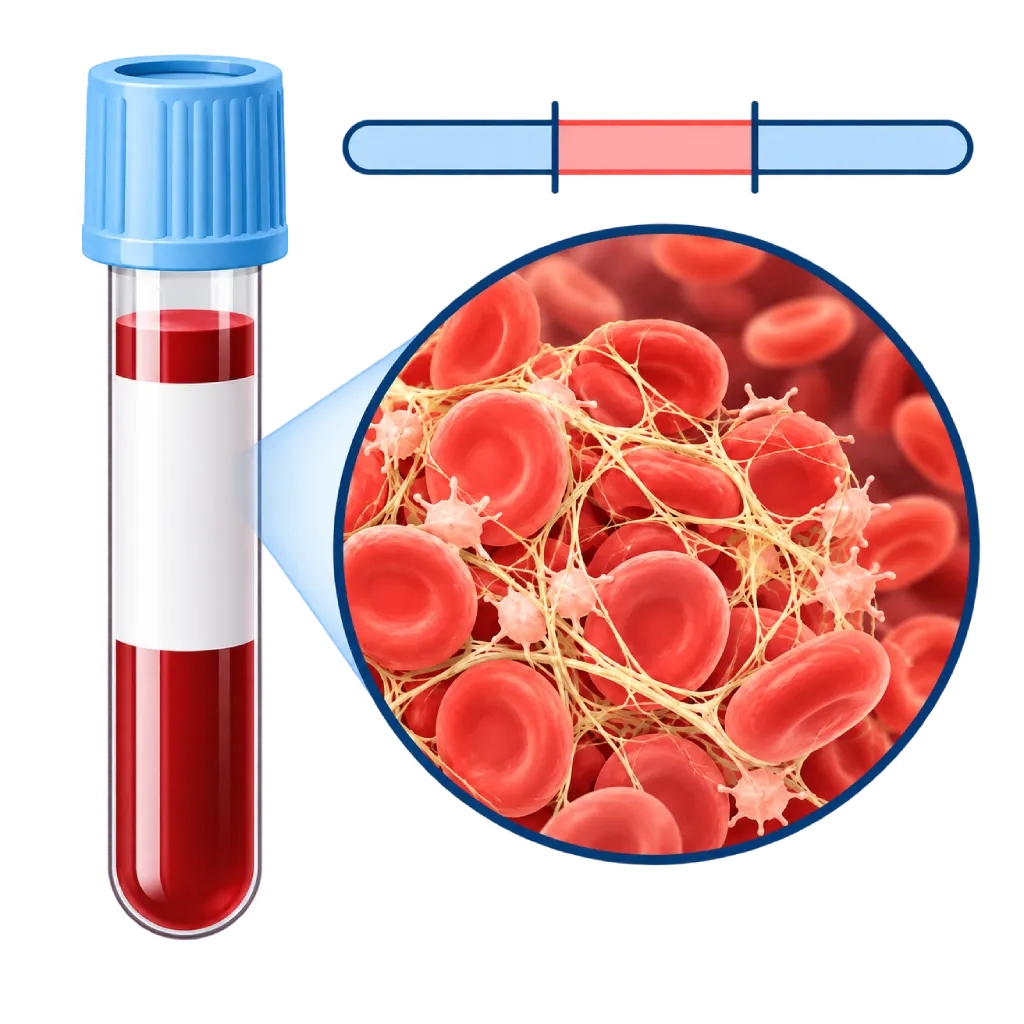
Coagulation tests are blood tests that assess your blood's ability to clot. Commonly used tests are PT and INR to monitor warfarin, aPTT to monitor heparin, and fibrinogen. These tests are also used before catheterization or heart surgery, and to look for the cause of unusual bleeding or clotting.
Sources01 / Understanding the procedure
About Coagulation Tests
What Are Coagulation Tests
When a blood vessel is injured, the body forms a clot through a chain of proteins called clotting factors. Coagulation tests measure how long blood takes to clot in the laboratory. The results show whether your blood bleeds too easily, clots too easily, or is already within the desired range while you take blood thinners.
Common Types of Tests
- PT and INR: INR is the PT result standardized across laboratories. This test is used to monitor warfarin.
- aPTT: used mainly to monitor heparin given by IV infusion in the hospital.
- Fibrinogen: a clot-forming protein, checked in severe bleeding or certain diseases.
Related tests, such as D-dimer and the platelet count in a complete blood count, are covered on the D-Dimer Test page and the Complete Blood Count (CBC) page.
How It Works in Brief
Blood is drawn into a blue-capped tube containing a substance that prevents clotting. In the laboratory, a trigger substance is added, and a machine measures how many seconds it takes for a clot to form.
INR and Warfarin
Warfarin works well when the INR is within the target range. For the majority of patients with atrial fibrillation or blood clots in the veins, the target is usually 2 to 3. With mechanical heart valves, the target is often higher, depending on the type and position of the valve. An INR that is too low means there is not enough protection against clots, while an INR that is too high increases the risk of bleeding.
Newer Blood Thinners
Medications such as apixaban, rivaroxaban, edoxaban, and dabigatran do not require routine INR testing. PT and aPTT tests are also not reliable for assessing the levels of these medications. The doctor monitors kidney function, liver function, and complete blood count periodically.
02 / Understanding the procedure
When Is This Procedure Considered?
A doctor may consider this procedure in the situations below. The decision is always made after a thorough assessment.
- Warfarin MonitoringINR is checked regularly, more often at the start of treatment or when the dose is changed.
- Heparin Monitoring in the HospitalaPTT helps adjust the dose of a heparin infusion, for example after a heart attack or for a blood clot in the lungs.
- Preparation for a Heart Procedure or SurgeryEspecially if you take blood thinners, have liver disease, or have had unusual bleeding before.
- Unusual Bleeding or BruisingFor example, repeated nosebleeds, gums that bleed easily, or bruises without a clear cause.
- Blood Clots or Liver DiseaseAs part of the evaluation of blood clots, or to assess the function of the liver, which makes clotting factors.
Situations to Consider First
- Taking Blood ThinnersThis does not prevent the test, but tell the staff the name of the medication and when you last took it so the results are interpreted correctly.
- Puncture Site That Bleeds EasilyThe puncture site needs to be pressed longer, especially if your INR is high.
- Recent Transfusion or Certain InfusionsPlasma transfusions and heparin infusions can affect the results, so the team will arrange the timing of the blood draw.
- Supplements and Herbal RemediesSome supplements and herbal remedies affect clotting or how warfarin works. Tell your doctor about all of them.
- Ongoing Severe BleedingDo not wait for a scheduled test. Go to the emergency room right away, and the test will be done as part of emergency care.
03 / Before the procedure
How Should You Prepare?
Coagulation tests use a blood sample from your arm and usually do not require special preparation.
No fasting needed. You can eat and drink as usual, unless another test that requires fasting is taken at the same time.
Blood thinners. Take your medication as usual unless your doctor gives other instructions. Note the name of the medication, the dose, and the time you last took it, and tell the staff.
INR record book. If you take warfarin, bring your record of previous INR results and doses so the doctor can see your progress.
New medications and supplements. Tell your doctor if you have recently started taking antibiotics, other medications, supplements, or traditional herbal remedies, because they can change your INR.
Clothing. Wear a shirt with loose sleeves so your arm can be prepared easily.
Unsure about the preparation instructions? Ask our team before the procedure.
04 / During the procedure
How Is the Procedure Done?
The blood draw is usually completed within 10 minutes, and coagulation test results are usually available on the same day.
Identity Check
The staff match your identity with the test request, then ask about your blood thinners and when you last took them.
Blood Draw
A tourniquet is tied around your upper arm, the skin is cleaned, and a small needle is inserted into a vein in the crook of your elbow. Blood is collected in a blue-capped tube up to the marked line, because the amount of blood must match the substance inside the tube.
Pressing the Puncture Site
After the needle is removed, the puncture site is pressed for a few minutes, longer if you take blood thinners, and then covered with a bandage.
Laboratory Testing
The sample is processed and a machine measures the clotting time. Results are reported in seconds along with reference values, and the INR is reported as a number.
Interpreting the Results
The doctor interprets the results together with the medications you take and your condition, then decides whether your medication dose needs to be adjusted or other tests are needed.
05 / Benefits and risks
Benefits and Risks Should Be Discussed Together.
Every medical procedure has benefits and risks. Your doctor will explain both for your situation before the procedure.
Benefits You Can Expect
- Safe Use of Blood ThinnersINR monitoring helps keep the warfarin dose high enough to prevent clots without being excessive.
- Safer Preparation for ProceduresHelps the team plan catheterization or surgery, including when medications need to be stopped temporarily.
- Finding the Cause of BleedingHelps detect clotting disorders in unusual bleeding or bruising.
- Assessing EmergenciesIn severe bleeding, the test results help determine which antidote or transfusion is needed.
- A Simple and Quick TestOnly a small amount of blood is needed, and results are usually available on the same day.
The benefits of a procedure are not a promise of a cure. Ask how the results will affect your care plan.
Risks You Should Know
- Minor Pain or BruisingAt the needle site, more likely if you take blood thinners.
- Bleeding at the Puncture SiteUsually stops with longer pressure. Tell the staff if it does not stop.
- Brief Dizziness or FaintingSome people feel dizzy when blood is drawn. Tell the staff so you can lie down.
- Results Can Be Affected by How the Sample Is TakenAn underfilled tube or a delayed sample can change the results, so the test sometimes needs to be repeated.
- Infection at the Puncture SiteVery rare because the skin is cleaned and the equipment used is sterile and single-use.
Risks can differ from person to person. A full explanation and consent are given after an individual assessment.
06 / After the procedure
What Is Recovery Like?
There is no recovery period. You can return to your activities right away.
Puncture site. A small bruise is normal and fades within a few days. If you take blood thinners, press the puncture site longer if it is still bleeding.
Dose adjustment. If your INR is outside the target, the doctor may change your warfarin dose. Follow the new dose exactly and record it in your INR book.
Food. Foods high in vitamin K, such as green vegetables, do not need to be avoided, but the amount you eat should be consistent from day to day to keep your INR stable.
Next test schedule. INR testing is repeated according to your doctor's schedule, more often at the start of treatment or after a dose change.
Warning signs to watch for. Go to the emergency room right away or contact the medical team if you experience:
- Bleeding that does not stop, vomiting blood, or black stools
- Red or brownish urine
- A sudden, severe headache
- A swollen, painful leg, or sudden shortness of breath
Know the Signs That Need Prompt Care.
Follow the team's guidance on warning signs. If severe or sudden symptoms appear after the procedure, go to the nearest emergency department right away or call Heart Attack Center 1500 258.
07 / Team and support
Doctors and Procedure Support
The doctors below are listed for this procedure. Listed by name, not by ranking.

dr. BRM Ario S. Kuncoro, Sp.JP(K)
Echocardiography & Cardiovascular Imaging
Cardiovascular Diagnostic Center +2 centers
Clinical focusAdvanced and 3D Echocardiography · Transesophageal Echocardiography
View Profile
dr. Debby C. Soemitha, Sp.PD
Internal Medicine
Clinical focusDiabetes and Diabetes Complications · Obesity and Metabolic Disease
View Profile
dr. Sunu B. Raharjo, Sp.JP(K), Ph.D.
Arrhythmia and Electrophysiology
Arrhythmia and Device Center
Clinical focusClinical and Interventional Electrophysiology · Cardiac Arrhythmia Ablation
View Profile08 / Common questions
Before You Plan the Procedure.
Frequently asked questions about coagulation tests. Your specific targets and test schedule are set by your doctor.
What is INR, and what is the normal target?
INR is a number that shows how long your blood takes to clot compared with normal. In people who do not take warfarin, the INR is about 1. If you take warfarin, the target is usually 2 to 3, and it may be higher with a mechanical heart valve. Your doctor will determine the right target for you.
Do I need to fast before a coagulation test?
No. Eating and drinking do not affect coagulation test results, so you can have breakfast and take your medications as usual. Fasting is only needed if another test is taken at the same time, such as fasting blood sugar. What matters is telling the staff about your blood thinners and when you last took them.
How often does INR need to be checked?
At the start of warfarin treatment, INR is checked several times a week until it is stable. Once stable, testing every few weeks is usually enough. INR needs to be checked sooner if the dose is changed, you start a new medication such as an antibiotic, you become ill, or your diet changes a lot.
Do I need an INR test if I take a newer blood thinner?
Medications such as apixaban, rivaroxaban, edoxaban, and dabigatran do not require routine INR testing. INR and aPTT results also do not accurately reflect the levels of these medications. Instead, the doctor checks kidney function, liver function, and complete blood count periodically to make sure the dose remains appropriate.
Which foods affect INR?
Foods high in vitamin K, such as spinach, broccoli, and other green vegetables, can lower your INR. You do not need to avoid them; just eat them in consistent amounts every day. Major changes in diet, alcohol, supplements, and traditional herbal remedies can also change your INR, so tell your doctor about them.
How long does it take to get the results?
Coagulation test results are usually available on the same day, often within a few hours after the blood draw. In emergencies, the test is done more quickly. If you take warfarin, wait for your doctor's instructions on your next dose based on the INR result, and record the result in your INR book.
Sources and Medical Review
Translated from the Indonesian edition medically reviewed by Dr. med. dr. Denio A. Ridjab, Sp.JP(K).
Sources as cited in the Indonesian edition.
- Van Gelder IC, Rienstra M, Bunting KV, et al. 2024 ESC Guidelines for the management of atrial fibrillation developed in collaboration with the European Association for Cardio-Thoracic Surgery (EACTS). Eur Heart J. 2024;45(36):3314-3414.
- Vahanian A, Beyersdorf F, Praz F, et al. 2021 ESC/EACTS Guidelines for the management of valvular heart disease. Eur Heart J. 2022;43(7):561-632.
- Steffel J, Collins R, Antz M, et al. 2021 European Heart Rhythm Association Practical Guide on the Use of Non-Vitamin K Antagonist Oral Anticoagulants in Patients with Atrial Fibrillation. Europace. 2021;23(10):1612-1676.
- Witt DM, Nieuwlaat R, Clark NP, et al. American Society of Hematology 2018 guidelines for management of venous thromboembolism: optimal management of anticoagulation therapy. Blood Adv. 2018;2(22):3257-3291.
- Chee YL, Crawford JC, Watson HG, et al. Guidelines on the assessment of bleeding risk prior to surgery or invasive procedures. Br J Haematol. 2008;140(5):496-504.