
Quick answer
What Is Prosthetic Valve Dysfunction?
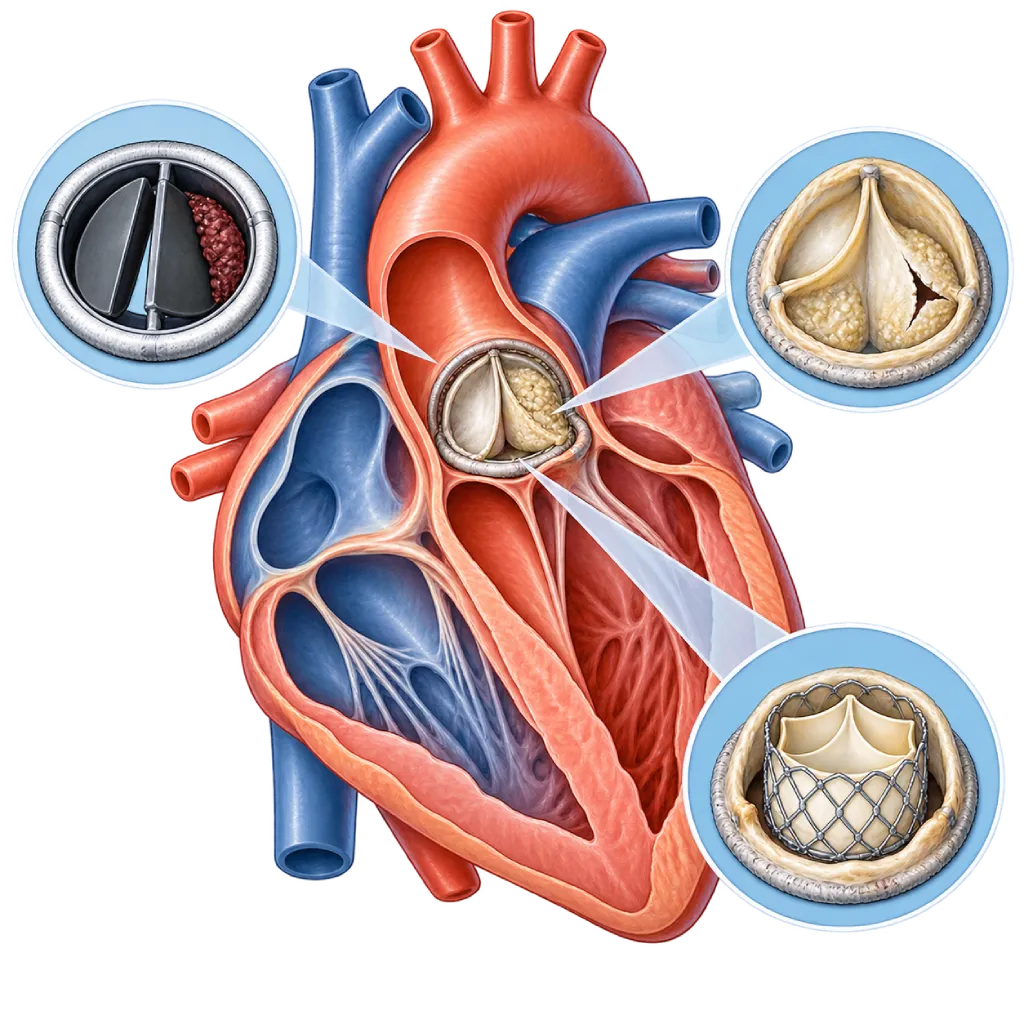
Prosthetic valve dysfunction is when an artificial heart valve, whether mechanical or biological, no longer opens or closes properly. Causes include blood clots, excess tissue growth, a worn biological valve, or infection.
SourcesSigns That Need Urgent Help
- Sudden severe shortness of breath or being unable to lie flat
- The click of a mechanical valve suddenly can no longer be heard
- Chest pain, fainting, or cold and pale skin
- A drooping face, slurred speech, or weakness on one side of the body
- High fever and chills after valve implantation
- Coughing up pink, frothy phlegm
If these signs appear, go to the nearest emergency department right away or call Heart Attack Center 1500 258.
01 / Understanding the condition
About Prosthetic Valve Dysfunction
An artificial (prosthetic) heart valve is placed through surgery or through a catheter to replace a damaged valve. Mechanical valves are made of special carbon material and metal that last a long time, but they require blood thinners for life. Biological valves are made from animal tissue and generally do not require long-term blood thinners, but they can wear out over time. Prosthetic valve dysfunction is when an artificial valve no longer works as it should, so it becomes narrowed (stenosis), leaks (regurgitation), or both.
Types and Causes
Guidelines divide prosthetic valve dysfunction into several groups. First, structural deterioration, in which the leaflets of a biological valve thicken, calcify, or tear as the valve ages. This damage usually starts to appear from several years to more than 10 years after implantation, earlier in younger people, and progresses slowly. Second, nonstructural dysfunction, such as a leak around the valve ring or a valve that is too small for the body's needs. Leaks around the ring are covered on the Paravalvular Leak page. Third, valve thrombosis, a blood clot that restricts the movement of the leaflets, which is more common with mechanical valves when blood thinning is inadequate. Fourth, endocarditis, an infection of the artificial valve, which is covered on the Infective Endocarditis page. In addition, excess tissue growth (pannus) can gradually restrict the movement of a mechanical valve.
Why It Needs to Be Recognized
Dysfunction that develops slowly often causes no symptoms at first, then shows up as shortness of breath and tiredness that keep getting worse. In contrast, thrombosis of a mechanical valve can develop within days and cause severe shortness of breath, so it needs urgent treatment. A clot from the valve can also break off and block a blood vessel in the brain, causing a stroke.
That is why everyone with an artificial valve is advised to have a baseline echocardiogram a few weeks to months after implantation, followed by regular check-ups. For biological valves, echocardiography is generally repeated every year starting a few years after implantation, according to the schedule set by your doctor. A change in the click of a mechanical valve, a new murmur, or new symptoms are reasons to be checked sooner.
Treatment Based on the Cause
Treatment depends on the cause: adjusting blood thinners or giving clot-dissolving medicine for thrombosis, antibiotics for infection, and replacing the valve again through surgery or through a catheter (valve-in-valve) for structural deterioration. Decisions are made by a heart team made up of imaging cardiologists, interventional cardiologists, and cardiac surgeons.
02 / Understanding the condition
Symptoms to Recognize.
Common Symptoms
- Shortness of breath during activity that keeps getting worse
- Tiring easily and a reduced ability to be active
- The click of a mechanical valve becoming softer or changing
- Palpitations or an irregular heart rhythm
- Swelling in the legs or rapid weight gain
- Dizziness or nearly fainting during activity
- Paleness, weakness, or dark urine because red blood cells are being damaged
03 / Understanding the condition
What Causes This Condition?
- Structural deterioration of a biological valve: the leaflets thicken, calcify, or tear as the valve ages
- A blood clot (thrombosis) on the valve, especially a mechanical valve with inadequate blood thinning
- Excess tissue growth (pannus) around the valve ring
- Infection of the artificial valve (prosthetic valve endocarditis)
- A leak around the valve ring caused by loose stitches or attachment
- A valve that is too small for the body's needs (patient-prosthesis mismatch)
04 / Understanding the condition
Who Is at Higher Risk?
Medical
An INR (the monitoring value for warfarin) that is often below target with a mechanical valve, atrial fibrillation, weak heart function, chronic kidney disease, and diabetes increase the risk of clots or valve damage.
Age
Under the age of 60, biological valves tend to develop structural deterioration sooner than in older adults.
Lifestyle
Skipping blood thinners, sudden changes in diet that affect warfarin, smoking, and poor dental hygiene increase the risk of clots or infection.
Other
Artificial valves in the mitral and tricuspid positions are more prone to thrombosis, and pregnancy in people with a mechanical valve also increases the risk of clots.
Groups at Higher Risk
- People with a Mechanical Valve: They depend on blood thinners for life; an unstable INR increases the risk of clots on the valve.
- People with a Biological Valve for More Than 10 Years: The risk of structural deterioration increases as the valve ages, so regular echocardiography becomes important.
- Pregnant Women with a Mechanical Valve: Pregnancy increases the blood's tendency to clot and requires special blood thinner management by the medical team.
- People with a History of Endocarditis: A previous infection increases the risk of another infection of the artificial valve.
05 / Understanding the condition
How Is It Diagnosed?
The first step is a medical interview and physical examination: when the valve was placed, what type it is, which blood thinner you take, and any new symptoms. The doctor listens to the valve sounds and checks for a new murmur.
Transthoracic echocardiography (TTE) is the main test. The results are compared with the baseline echocardiogram after implantation to look for changes in flow pressure and leaks. If a problem is suspected, transesophageal echocardiography (TEE), done through the esophagus, gives a clearer picture, especially of the mitral valve. For mechanical valves, brief fluoroscopy shows whether the leaflets move freely, while cardiac CT helps tell a clot apart from pannus. Blood tests include INR, a complete blood count, and markers of red blood cell damage. If there is a fever, blood cultures are taken before antibiotics, and PET-CT can help when infection is still uncertain. The results of all these tests determine whether medicine is enough or a repeat procedure is needed.
Physical Examination
The doctor listens to the click of a mechanical valve and checks for a new murmur, signs of fluid congestion, or signs of infection.
Echocardiography
The main test: TTE is compared with the baseline result after implantation, then TEE gives a clearer view of clots, pannus, leaks, or vegetations.
Fluoroscopy: a brief X-ray recording that shows the opening and closing of the mechanical valve leaflets to check whether any leaflet is stuck.
Cardiac CT Scan
Helps tell a clot apart from pannus, assess calcification of a biological valve, and plan a repeat procedure.
Coagulation Tests
Checks the INR to see whether vitamin K antagonist blood thinners are within the target range.
Blood cultures: several sets are taken before antibiotics if there is a fever, to find the germ causing the valve infection.
Cardiac PET Scan
Nuclear imaging that helps find infection around an artificial valve when echocardiography has not given a clear answer.
06 / Understanding the condition
Treatment Options.
Treatment is decided by a doctor after an assessment. The categories below can help you follow the conversation with your doctor.
Blood Thinner Adjustment
For a small clot that does not cause a severe blockage, your doctor may readjust vitamin K antagonist anticoagulants or heparin with close monitoring.
Clot-Dissolving Medicine
Thrombolytics may be considered for mechanical valve thrombosis when surgery is high risk or cannot be done right away.
Intravenous Antibiotics
Given for several weeks if there is endocarditis, matched to the germ found in blood cultures.
Repeat Valve Replacement Surgery
Chosen for thrombosis with severe symptoms, infection that damages tissue, severe structural deterioration, or a large leak.
Valve-in-Valve Implantation
A new biological valve is placed through a catheter inside the old, damaged biological valve, an option for patients with a high risk of repeat surgery.
Paravalvular Leak Closure
A small plug device is placed through a catheter to close the gap around the valve ring in selected patients.
Heart Failure and Hemolysis Treatment
Diuretics and other heart medicines to relieve symptoms, as well as iron supplements or a transfusion if hemolysis causes anemia.
07 / Understanding the condition
Complications to Watch For.
Heart Failure
A narrowed or leaking valve makes the heart work harder, leading to shortness of breath, swelling, and a reduced ability to be active.
Stroke and Embolism
A clot from the valve can break off and block blood vessels in the brain, kidneys, or legs.
Cardiogenic Shock
A mechanical valve leaflet that suddenly gets stuck can sharply reduce blood flow and needs urgent treatment in the hospital.
Hemolytic Anemia
Fast flow through a narrow gap damages red blood cells, causing weakness, paleness, and dark urine.
Prosthetic Valve Endocarditis
Infection can damage the tissue around the valve, form an abscess, and often requires surgery.
Bleeding from Blood Thinners
Adjusting blood thinners to treat a clot needs to be balanced with monitoring of the bleeding risk.
08 / Understanding the condition
What Can You Do?
- Take your blood thinner on schedule and check your INR as advised
- Talk to your doctor first before making major changes to medicines, supplements, herbal remedies, or diet
- Have a baseline echocardiogram after implantation and regular check-ups
- Keep your teeth clean and see a dentist regularly
- Tell your doctor or dentist that you have an artificial valve before any procedure
- Plan any pregnancy together with your cardiology team if you have a mechanical valve
- Get to know the click of your mechanical valve and report it if it changes
09 / Understanding the condition
When Should You See a Doctor?
If you have an artificial heart valve, contact your treating doctor or make an earlier appointment if shortness of breath and tiredness increase, leg swelling appears, you have palpitations, or your INR results are repeatedly outside the target. Also report any fever with no clear cause, even a mild one, before taking antibiotics.
Go to the emergency room right away if:
- You have sudden severe shortness of breath or cannot lie flat
- The click of your mechanical valve suddenly can no longer be heard
- You have chest pain, faint, or have cold and pale skin
- Signs of stroke appear, such as a drooping face, slurred speech, or weakness on one side of the body
Don't Wait in an Emergency.
If symptoms are severe or come on suddenly, go to the nearest emergency department right away or call Heart Attack Center 1500 258, rather than waiting for an appointment.
10 / Common questions
Questions You May Have.
Frequently asked questions about problems with how artificial heart valves work.
How long can an artificial heart valve last?
Mechanical valves are designed to last a lifetime, as long as blood thinners are taken regularly. Biological valves can wear out; many last 10 to 20 years, but they wear out sooner in younger people. How long a valve lasts also depends on its position and your overall health. Regular echocardiography helps your doctor see signs of wear before they cause severe symptoms.
Why is the click of a mechanical valve important?
A soft clicking sound shows that the leaflets of a mechanical valve are opening and closing. A sound that suddenly becomes softer or disappears can mean a leaflet is blocked by a clot or tissue, especially if you are also short of breath, and needs to be checked right away. A usual click that sounds regular is not a sign of a problem. Many people with a mechanical valve get used to this sound and no longer notice it.
Does a damaged biological valve have to be operated on again?
Not always with open surgery. When possible, a new valve can be placed inside the old biological valve through a catheter, which is called valve-in-valve. This option is considered mainly when the risk of repeat surgery is high. However, surgery is still needed if there is an infection damaging the tissue, the old valve is too small, or the anatomy is not suitable.
Do people with an artificial valve need antibiotics before a tooth extraction?
The 2023 ESC endocarditis guidelines recommend preventive antibiotics before certain dental procedures, such as tooth extraction or scaling that injures the gums, in people with an artificial valve. Your doctor decides the type and timing. Keeping your teeth clean and having regular dental checkups remain the main form of prevention. Tell your dentist that you have an artificial valve.
What should I do if my INR is often unstable?
An INR that is often too low increases the risk of clots on the valve, while one that is too high increases the risk of bleeding. Record your INR results, other medicines, supplements, and changes in diet, then discuss them with your doctor. Green vegetables, herbal remedies, and some antibiotics can affect how warfarin works. Do not change the dose yourself; your doctor adjusts the dose or the testing schedule.
Can newer blood thinners be used for a mechanical valve?
No. Newer oral blood thinners (NOACs or DOACs) are not recommended for mechanical valves because research has shown a higher risk of clots and stroke compared with warfarin. People with a mechanical valve continue to use vitamin K antagonists with INR monitoring. For biological valves, the choice of medicine may differ and is decided by the doctor, for example if there is atrial fibrillation.
Sources and Medical Review
Translated from the Indonesian edition medically reviewed by Dr. dr. Faris Basalamah, Sp.JP(K).
Sources as cited in the Indonesian edition.
- Praz F, Borger MA, Lanz J, et al. 2025 ESC/EACTS Guidelines for the management of valvular heart disease. Eur Heart J. 2025;46(44):4635-4736.
- Otto CM, Nishimura RA, Bonow RO, et al. 2020 ACC/AHA Guideline for the Management of Patients With Valvular Heart Disease: A Report of the American College of Cardiology/American Heart Association Joint Committee on Clinical Practice Guidelines. Circulation. 2021;143(5):e72-e227.
- Zoghbi WA, Jone PN, Chamsi-Pasha MA, et al. Guidelines for the Evaluation of Prosthetic Valve Function With Cardiovascular Imaging: A Report From the American Society of Echocardiography Developed in Collaboration With the Society for Cardiovascular Magnetic Resonance and the Society of Cardiovascular Computed Tomography. J Am Soc Echocardiogr. 2024;37(1):2-63.
- Delgado V, Ajmone Marsan N, de Waha S, et al. 2023 ESC Guidelines for the management of endocarditis. Eur Heart J. 2023;44(39):3948-4042.
- Dangas GD, Weitz JI, Giustino G, Makkar R, Mehran R. Prosthetic Heart Valve Thrombosis. J Am Coll Cardiol. 2016;68(24):2670-2689.
- Capodanno D, Petronio AS, Prendergast B, et al. Standardized definitions of structural deterioration and valve failure in assessing long-term durability of transcatheter and surgical aortic bioprosthetic valves: a consensus statement from the European Association of Percutaneous Cardiovascular Interventions (EAPCI) endorsed by the European Society of Cardiology (ESC) and the European Association for Cardio-Thoracic Surgery (EACTS). Eur Heart J. 2017;38(45):3382-3390.
Doctors Who Treat This Condition

dr. BRM Ario S. Kuncoro, Sp.JP(K)
Echocardiography & Cardiovascular Imaging
Cardiovascular Diagnostic Center +2 centers
Clinical focusAdvanced and 3D Echocardiography · Transesophageal Echocardiography
View Profile
Dr. dr. Dudy A. Hanafy, Sp.BTKV, Subsp. JD(K), MARS
Adult Cardiac Surgery
Advanced Cardiovascular Surgical Care +1 center
Clinical focusMinimally Invasive Cardiac Surgery · Coronary Artery Bypass Surgery
View Profile
Dr. dr. Faris Basalamah, Sp.JP(K)
Interventional Cardiology
Coronary Intervention Procedures +1 center
Clinical focusComplex Coronary Intervention · Cardiac Electrophysiology
View Profile