
Quick answer
What Is Masked Hypertension?
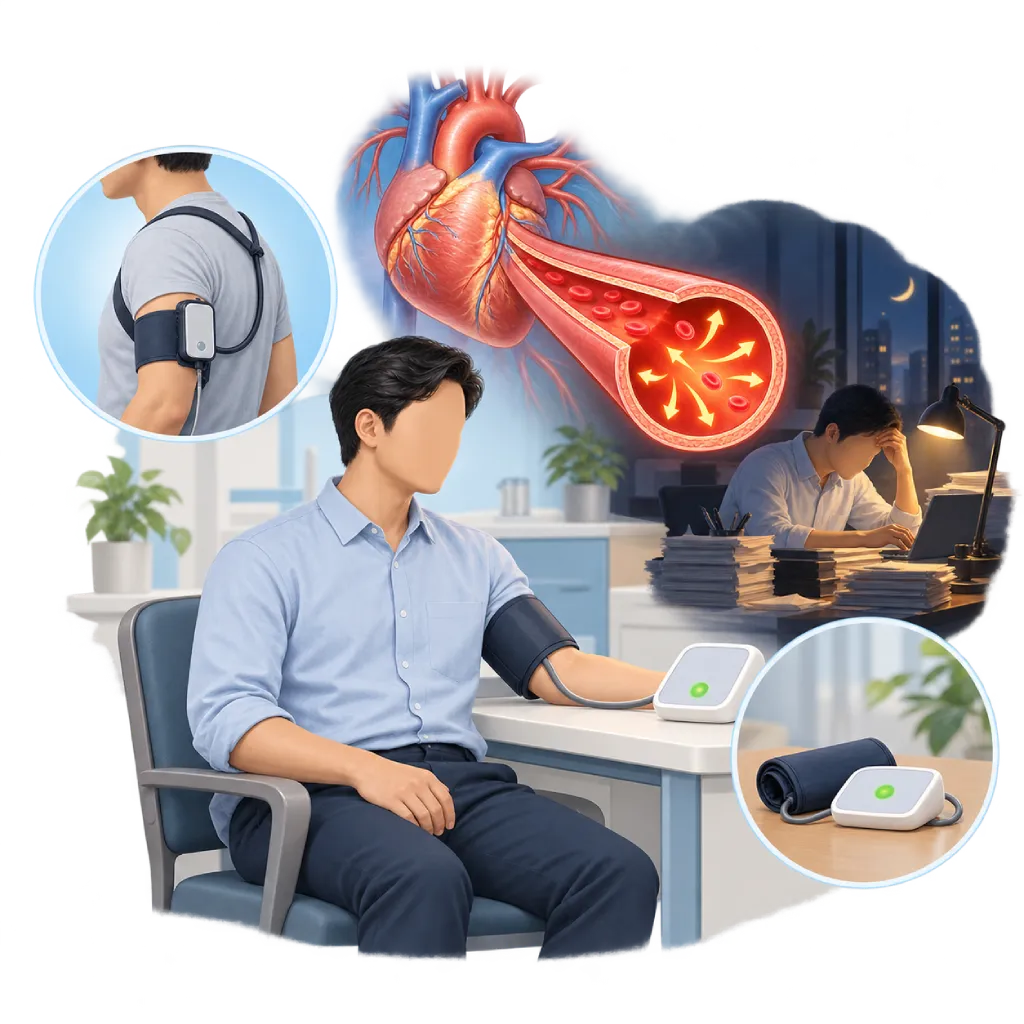
Masked hypertension is blood pressure that is normal when measured at the clinic but high at home, at work, or during sleep. Because it is easily missed, it can only be found through home measurements or 24-hour monitoring.
SourcesSigns That Need Urgent Help
- Chest pain or a feeling of pressure in the chest
- Severe shortness of breath
- A drooping face, weakness in an arm or leg on one side, or slurred speech
- Sudden severe headache with vomiting or confusion
- Sudden blurred or lost vision
If these signs appear, go to the nearest emergency department right away or call Heart Attack Center 1500 258.
01 / Understanding the condition
About Masked Hypertension
Masked hypertension is a condition in which clinic blood pressure is below 140/90 mmHg, but measurements outside the clinic show high readings: a home average of 135/85 mmHg or higher, or a 24-hour average of 130/80 mmHg or higher. It is the opposite of white coat hypertension, covered on the White Coat Hypertension page.
Why It Can Stay Hidden
Blood pressure changes throughout the day with activity, stress, sleep, smoking, and caffeine. In some people, the calm setting of the clinic actually makes blood pressure lower than at work or at home. In others, blood pressure rises mainly at night during sleep, for example in obstructive sleep apnea, chronic kidney disease, or diabetes. Occasional clinic measurements cannot capture these patterns. As a result, a person can believe for years that their blood pressure is safe because routine checkups are always normal, while in fact they spend the majority of their time with high blood pressure.
Who Should Be Alert
Suspicion increases if your clinic blood pressure is in the high-normal range, which is 130 to 139 for the top number or 85 to 89 for the bottom number. Suspicion also arises if there is thickening of the heart muscle or protein in the urine even though clinic blood pressure is normal. This condition is more common in young to middle-aged men, smokers, people with high-pressure jobs, and people with diabetes or kidney disease. In people with hypertension who are already on treatment, a similar situation is called masked uncontrolled hypertension: clinic readings have reached the target, but home readings are still high.
Why Finding It Matters
Large studies show that the risk of stroke, heart attack, and death in masked hypertension is close to that of sustained hypertension, and in some studies even higher. Because it goes undetected, people who have it often have not received treatment. The good news is that home measurements with a validated upper-arm device and 24-hour monitoring can find this condition earlier, while also helping your doctor judge whether treatment is sufficient. An overview of hypertension is covered on the Hypertension page.
02 / Understanding the condition
Symptoms to Recognize.
Common Symptoms
Masked hypertension usually causes no symptoms. Clues more often come from test results.
- Usually no symptoms
- Normal blood pressure at the clinic, but high when measured at home or at work
- Clinic blood pressure in the high-normal range
- Thickening of the heart muscle on ECG or echocardiography without a clear cause
- Protein in the urine or reduced kidney function without another cause
- Headache or a heavy feeling in the back of the neck when busy or stressed, although this is not specific
03 / Understanding the condition
What Causes This Condition?
- Blood pressure that rises during work or activity but drops while sitting calmly at the clinic
- Work stress and prolonged mental strain
- Smoking, caffeine, and alcohol, which raise blood pressure for several hours after use
- High nighttime blood pressure in obstructive sleep apnea, chronic kidney disease, or diabetes
- In people on treatment, medication that wears off before the next dose or medication that is not taken regularly
04 / Understanding the condition
Who Is at Higher Risk?
Lifestyle
Smoking, drinking alcohol, drinking a lot of coffee, lack of sleep, and high-pressure jobs.
Medical
Diabetes, chronic kidney disease, obstructive sleep apnea, obesity, and clinic blood pressure in the high-normal range.
Genetic
A history of hypertension in parents or siblings indicates an inherited tendency that should be balanced with measurements outside the clinic.
Other
Men are affected more often. In people already on treatment, medication that is not taken regularly can cause high readings at home even when readings are normal at follow-up visits.
Groups at Higher Risk
- People with High-Normal Clinic Blood Pressure: Clinic readings of 130 to 139 or 85 to 89 mmHg more often turn out to be high when measured outside the clinic.
- People with Diabetes: Diabetes often comes with high nighttime blood pressure and damage to small blood vessels.
- People with Chronic Kidney Disease: Kidney disease often keeps blood pressure high at night.
- Smokers and Workers Under High Stress: Smoking and work pressure raise blood pressure during the day, when it is rarely measured.
- People with Hypertension Already on Treatment: Clinic readings that are on target do not necessarily reflect blood pressure throughout the day and night.
05 / Understanding the condition
How Is It Diagnosed?
Masked hypertension cannot be found with clinic measurements alone. Your doctor will suggest measurements outside the clinic if your clinic blood pressure is in the high-normal range, if there are signs of organ damage without a clear cause, or if you have diabetes or kidney disease.
Home measurements are taken twice in the morning and twice in the evening for 7 days with a validated upper-arm device. Ambulatory 24-hour monitoring gives additional information, including blood pressure during sleep, which you cannot measure yourself. If readings outside the clinic are high, your doctor assesses the effect on your organs with an ECG, a urine test, and echocardiography if needed, the same as for other types of hypertension. In people already on treatment, home readings are used to adjust treatment.
Home Blood Pressure Monitoring
Measurements in the morning and evening for 7 days; an average of 135/85 mmHg or higher indicates hypertension even if clinic readings are normal.
Ambulatory Blood Pressure Monitoring
Records blood pressure during work and sleep; a 24-hour average of 130/80 mmHg or higher, or a nighttime average of 120/70 mmHg or higher, supports the diagnosis.
Hypertension and Blood Pressure Screening
Clinic measurement done the correct way; readings in the high-normal range are a reason to measure outside the clinic.
Electrocardiogram (ECG)
Looks for signs of heart muscle thickening that can point to undetected high blood pressure.
Urine Protein Test
Looks for albumin in the urine as an early sign of kidney and blood vessel damage.
Echocardiography
Assesses heart wall thickness and function if organ damage is suspected.
06 / Understanding the condition
Treatment Options.
Treatment is decided by a doctor after an assessment. The categories below can help you follow the conversation with your doctor.
Lifestyle Changes
Reducing salt, quitting smoking, limiting alcohol and caffeine, getting enough sleep, staying active, and managing work stress.
Blood Pressure-Lowering Medication
Medication may be considered if blood pressure outside the clinic stays high, with the target assessed from home or 24-hour measurements.
Adjusting Medication for People Already on Treatment
Your doctor may choose longer-acting medication or adjust the combination so blood pressure stays controlled throughout the day and night.
Treating Underlying Conditions
Sleep apnea, diabetes, and kidney disease are also treated because they can raise blood pressure at night.
Regular Monitoring Outside the Clinic
Regular home measurements become the main way to assess treatment results.
07 / Understanding the condition
Complications to Watch For.
Left Ventricular Hypertrophy
Undetected high blood pressure makes the left ventricle thicken, which is often found before the hypertension itself is known.
Stroke
The risk of stroke rises as in sustained hypertension, especially if nighttime blood pressure is also high.
Heart Attack
Long-standing high blood pressure speeds up the buildup of plaque in the coronary arteries.
Chronic Kidney Disease
Protein in the urine and reduced kidney function can develop without being noticed. Covered on the Chronic Kidney Disease page.
Sustained Hypertension
Over time, clinic blood pressure can also rise, so the condition becomes sustained hypertension.
08 / Understanding the condition
What Can You Do?
- Measure your blood pressure at home if clinic readings are in the high-normal range
- Use a validated upper-arm device with a cuff that fits your arm
- Stop smoking and limit caffeine and alcohol
- Get enough sleep and have loud snoring checked
- Manage work stress and fit physical activity into your workday
- If you are already on treatment, take your medication on schedule and bring your blood pressure log to follow-up visits
09 / Understanding the condition
When Should You See a Doctor?
Because clinic readings look normal, the measurements you take yourself are often the key to finding it. Make an appointment if:
- Your average home blood pressure is 135/85 mmHg or higher even though clinic readings are normal
- Your clinic blood pressure is in the range of 130 to 139 for the top number or 85 to 89 for the bottom number
- ECG or urine test results show signs of organ damage without a clear cause
- You are already on treatment and clinic readings are on target, but home readings stay high
- You have diabetes or kidney disease and have never measured your blood pressure outside the clinic
Go to the emergency room right away if you have chest pain, severe shortness of breath, weakness on one side of the body, slurred speech, or sudden vision problems.
Don't Wait in an Emergency.
If symptoms are severe or come on suddenly, go to the nearest emergency department right away or call Heart Attack Center 1500 258, rather than waiting for an appointment.
10 / Common questions
Questions You May Have.
Frequently asked questions about masked hypertension.
Why is my blood pressure normal at the clinic but high at home?
Blood pressure changes throughout the day. When you sit calmly at the clinic, your blood pressure can be lower than when you are working, stressed, after smoking, or during sleep if you have sleep apnea. As long as home measurements are done correctly with a validated device, high home readings should be discussed with your doctor, not ignored because clinic readings are normal.
Can a home blood pressure monitor be trusted?
Yes, if you use an automatic upper-arm device that has been clinically validated and a cuff that fits your arm. Wrist and finger devices are less recommended. Measure after sitting calmly for 5 minutes, twice in the morning and twice in the evening for 7 days, then record the results. Bring your device to follow-up visits so it can be compared with the clinic device.
Does masked hypertension need treatment?
It needs to be managed because its risk is close to that of sustained hypertension. The first step is lifestyle changes, such as reducing salt, quitting smoking, limiting alcohol, and getting enough sleep. If blood pressure outside the clinic stays high, your doctor may consider medication. Success is judged from home measurements or 24-hour monitoring, not from clinic readings.
What is nighttime hypertension?
Nighttime hypertension is blood pressure that stays high during sleep, with an average of 120/70 mmHg or higher on 24-hour monitoring. Normally, blood pressure drops during sleep. This pattern is often linked to obstructive sleep apnea, kidney disease, and diabetes. Because you cannot measure it yourself, nighttime hypertension can only be found through 24-hour monitoring.
How is it different from white coat hypertension?
The two are opposites. In white coat hypertension, blood pressure is high only when measured at the clinic and normal at home. In masked hypertension, blood pressure is normal at the clinic but high at home, at work, or during sleep. The two can only be told apart with measurements outside the clinic. This is covered on the White Coat Hypertension page.
Sources and Medical Review
Translated from the Indonesian edition medically reviewed by dr. Siska S. Danny, Sp.JP(K).
Sources as cited in the Indonesian edition.
- McEvoy JW, McCarthy CP, Bruno RM, et al. 2024 ESC Guidelines for the management of elevated blood pressure and hypertension. Eur Heart J. 2024;45(38):3912-4018.
- Mancia G, Kreutz R, Brunström M, et al. 2023 ESH Guidelines for the management of arterial hypertension The Task Force for the management of arterial hypertension of the European Society of Hypertension: Endorsed by the International Society of Hypertension (ISH) and the European Renal Association (ERA). J Hypertens. 2023;41(12):1874-2071.
- Stergiou GS, Palatini P, Parati G, et al. 2021 European Society of Hypertension practice guidelines for office and out-of-office blood pressure measurement. J Hypertens. 2021;39(7):1293-1302.
- Banegas JR, Ruilope LM, de la Sierra A, et al. Relationship between Clinic and Ambulatory Blood-Pressure Measurements and Mortality. N Engl J Med. 2018;378(16):1509-1520.
- Shimbo D, Artinian NT, Basile JN, et al. Self-Measured Blood Pressure Monitoring at Home: A Joint Policy Statement From the American Heart Association and American Medical Association. Circulation. 2020;142(4):e42-e63.
Doctors Who Treat This Condition

dr. Siska S. Danny, Sp.JP(K)
Interventional Cardiology
Coronary Intervention Procedures
Clinical focusPCI for Acute Coronary Syndrome · Primary Coronary Intervention
View Profile
Dr. med. dr. Denio A. Ridjab, Sp.JP(K)
Interventional Cardiology
Coronary Intervention Procedures +2 centers
Clinical focusInterventional Cardiology · Coronary Artery Disease
View Profile
dr. Debby C. Soemitha, Sp.PD
Internal Medicine
Clinical focusDiabetes and Diabetes Complications · Obesity and Metabolic Disease
View Profile