
Quick answer
What Is Hypertension and Blood Pressure Screening?
Hypertension screening is the measurement of blood pressure to detect high blood pressure, which often causes no symptoms. A clinic reading of 140/90 mmHg or higher points to hypertension and is usually confirmed with home measurements or 24-hour monitoring. Screening is recommended at least once a year from age 40.
Sources01 / Understanding the procedure
About Hypertension and Blood Pressure Screening
What Is Hypertension Screening
Hypertension, or high blood pressure, usually causes no symptoms, so nearly half of the people who have it worldwide are not aware of it. Yet high blood pressure over a long period damages blood vessels and is a main cause of stroke, heart attack, heart failure, and kidney disease. Hypertension screening is the correct measurement of blood pressure to detect it early, when it is still easier to control.
How It Works in Brief
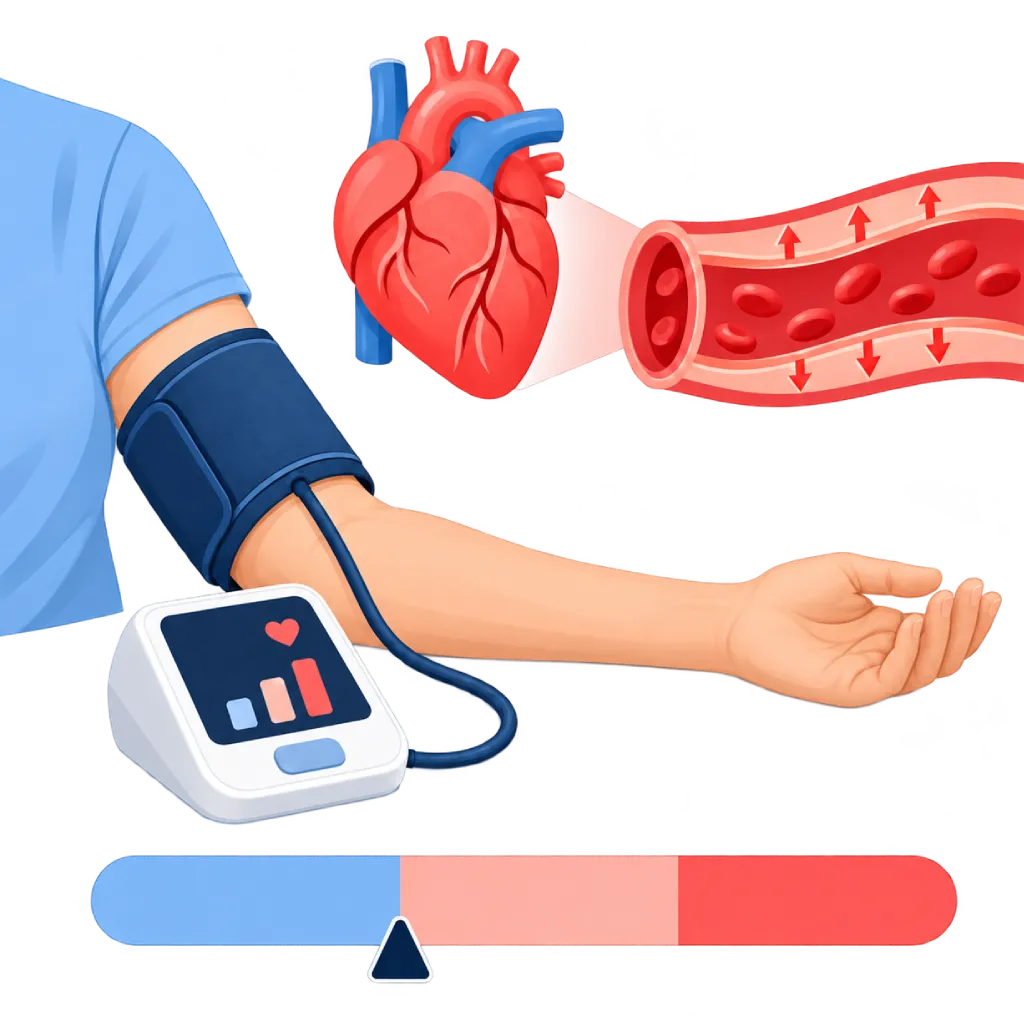
Blood pressure is the force of blood pushing against the walls of the blood vessels, written as two numbers. The top number, or systolic pressure, is the pressure when the heart pumps, while the bottom number, or diastolic pressure, is the pressure when the heart rests between beats. An automated device with a cuff on the upper arm measures both in mmHg. Because blood pressure goes up and down throughout the day, a single high reading is not enough to diagnose hypertension.
How It Is Measured
- Clinic measurement: after you sit quietly for 5 minutes, blood pressure is measured 2 to 3 times about 1 minute apart, then averaged. At the initial visit, both arms are measured.
- Home measurement: with a validated automated device, in the morning and evening for several days. This is covered on the Home Blood Pressure Monitoring page.
- 24-hour monitoring: a small device measures blood pressure at regular intervals during daily activities and sleep. This is covered on the Ambulatory Blood Pressure Monitoring page.
Reading the Results
- Non-elevated: below 120/70 mmHg at the clinic.
- Elevated: a top number of 120 to 139 or a bottom number of 70 to 89 mmHg. Your doctor assesses your heart risk to decide whether treatment is needed.
- Hypertension: 140/90 mmHg or higher at the clinic, confirmed by a home average of 135/85 mmHg or higher, or a 24-hour average of 130/80 mmHg or higher.
In some people, blood pressure is high only at the clinic because they feel tense, which is called white coat hypertension. Conversely, some people have normal readings at the clinic but high readings outside it, which is called masked hypertension. Home measurement or 24-hour monitoring helps tell them apart.
Who Should Be Screened
All adults are encouraged to know their blood pressure. Screening is recommended at least once a year for people aged 40 and over and for those at higher risk, for example people who are overweight or have diabetes, kidney disease, a family history of hypertension, or previously elevated blood pressure. People aged 18 to 39 with normal blood pressure and no risk factors only need to be checked every 3 to 5 years.
02 / Understanding the procedure
When Is This Procedure Considered?
A doctor may consider this procedure in the situations below. The decision is always made after a thorough assessment.
- Age 40 and OverScreening is recommended at least once a year.
- Excess Weight or Lack of Physical ActivityIncreases the likelihood of rising blood pressure.
- Diabetes, Kidney Disease, or High CholesterolTogether with hypertension, these increase the risk of heart disease and stroke.
- Hypertension in the FamilyA parent or sibling with hypertension.
- History of Hypertension During PregnancyIncreases the risk of hypertension later in life.
- Loud Snoring or Pauses in Breathing During SleepBreathing problems during sleep often occur together with high blood pressure.
Situations to Consider First
- Severe Symptoms Happening NowChest pain, shortness of breath, a severe headache, or weakness on one side of the body require immediate care in the emergency room, not screening.
- Recent Smoking, Coffee, or ExerciseWait at least 30 minutes so the result is not higher than usual.
- Incorrect Cuff SizeA cuff that is too small gives a reading that is too high; the staff choose a size that fits your arm circumference.
- Arm with Dialysis Access or Previous Breast SurgeryThe measurement is taken on the other arm.
- Irregular Heart RhythmAutomated devices may be less accurate, so the measurement is repeated several times or done manually.
03 / Before the procedure
How Should You Prepare?
Blood pressure screening does not require fasting.
Before the measurement. Avoid coffee, smoking, and exercise for at least 30 minutes beforehand, and empty your bladder before the measurement.
Clothing. Wear a top with sleeves that are easy to roll up, because the cuff is placed directly on the skin of your upper arm.
Medications. Keep taking your routine medications as usual. Bring a list of your medications, including cold medicines, pain relievers, or herbal remedies you often take, because some of them can raise blood pressure.
Blood pressure records. If you already measure your blood pressure at home, bring your records and your device so they can be compared with the clinic device.
Unsure about the preparation instructions? Ask our team before the procedure.
04 / During the procedure
How Is the Procedure Done?
The measurement and consultation usually take about 30 minutes.
Sitting Quietly
You sit with your back supported, your feet flat on the floor and your legs uncrossed, then rest for 5 minutes without talking.
Repeated Measurements
A cuff that fits your arm is placed at heart level. Blood pressure is measured 2 to 3 times about 1 minute apart, and on both arms at the initial visit.
Risk Assessment
The doctor asks about your health history, medications, and family history. If needed, the doctor also checks your pulse, weight, waist circumference, blood sugar, cholesterol, or ECG.
Follow-Up Plan
If your blood pressure is high, the doctor usually recommends home measurements or 24-hour monitoring to confirm it before a diagnosis is made.
05 / Benefits and risks
Benefits and Risks Should Be Discussed Together.
Every medical procedure has benefits and risks. Your doctor will explain both for your situation before the procedure.
Benefits You Can Expect
- Detects Hypertension Without SymptomsMany people with hypertension do not feel any symptoms.
- Prevents Stroke and Heart AttackLowering blood pressure has been proven to reduce the risk of heart events and stroke.
- Quick and Needle-FreeOnly uses a cuff on the upper arm.
- Distinguishes True HypertensionMeasurements outside the clinic identify the white coat effect and masked hypertension.
- A More Complete Picture of RiskResults are interpreted together with blood sugar, cholesterol, and smoking habits.
The benefits of a procedure are not a promise of a cure. Ask how the results will affect your care plan.
Risks You Should Know
- Squeezing Feeling in the ArmWhen the cuff inflates; the tight feeling goes away as soon as the air is released.
- Small Red Spots on the ArmSometimes appear after repeated measurements, especially in people taking blood thinners.
- Results Affected by Temporary ConditionsTension, pain, coffee, or cigarettes can temporarily raise blood pressure.
- One Reading Is Not EnoughA diagnosis requires repeated measurements or measurements outside the clinic.
Risks can differ from person to person. A full explanation and consent are given after an individual assessment.
06 / After the procedure
What Is Recovery Like?
There is no recovery period. You can resume your activities right away.
If the results are normal. Repeat the check every year if you are 40 or older or at risk, and every 3 to 5 years if you are younger with no risk factors.
If your blood pressure is elevated or high. Reducing salt, keeping your weight in check, staying active, limiting alcohol, and quitting smoking help lower blood pressure. Your doctor decides whether medication is needed based on the confirmation results and your heart risk.
If the numbers are very high. A blood pressure of 180/120 mmHg or higher needs to be assessed by a doctor promptly. Go to the emergency room right away if a reading that high comes with:
- Chest pain or shortness of breath
- Severe headache, blurred vision, or confusion
- A drooping face, arm weakness, or slurred speech
- Nausea, vomiting, or seizures
Know the Signs That Need Prompt Care.
Follow the team's guidance on warning signs. If severe or sudden symptoms appear after the procedure, go to the nearest emergency department right away or call Heart Attack Center 1500 258.
07 / Team and support
Doctors and Procedure Support
The doctors below are listed for this procedure. Listed by name, not by ranking.

Dr. med. dr. Denio A. Ridjab, Sp.JP(K)
Interventional Cardiology
Coronary Intervention Procedures +2 centers
Clinical focusInterventional Cardiology · Coronary Artery Disease
View Profile
Dr. dr. Faris Basalamah, Sp.JP(K)
Interventional Cardiology
Coronary Intervention Procedures +1 center
Clinical focusComplex Coronary Intervention · Cardiac Electrophysiology
View Profile
dr. Siska S. Danny, Sp.JP(K)
Interventional Cardiology
Coronary Intervention Procedures
Clinical focusPCI for Acute Coronary Syndrome · Primary Coronary Intervention
View Profile08 / Common questions
Before You Plan the Procedure.
Frequently asked questions about hypertension and blood pressure screening. What the results mean for your condition is explained by your doctor.
What is a normal blood pressure?
According to the 2024 European guidelines, a clinic blood pressure below 120/70 mmHg is classified as non-elevated. A top number of 120 to 139 or a bottom number of 70 to 89 is classified as elevated, and 140/90 mmHg or higher points to hypertension. For people with hypertension who are already on treatment, the target top number is usually 120 to 129 mmHg if tolerated.
Is hypertension always marked by headaches or a stiff neck?
No. The majority of people with hypertension do not feel any symptoms. Headaches or a stiff neck cannot be used as a guide, because they can occur with normal blood pressure and often do not occur with high blood pressure. Blood pressure can only be known by measuring it.
Why is my blood pressure always high at the clinic?
Many people feel tense when being examined, so their blood pressure rises at the clinic, which is called the white coat effect. For this reason, your doctor usually asks you to measure at home or wear a 24-hour monitor before confirming hypertension. If your readings outside the clinic are normal, you may not need medication, but you still need regular monitoring.
When is 24-hour blood pressure monitoring needed?
24-hour monitoring is recommended when clinic and home readings differ, when white coat or masked hypertension is suspected, or when the doctor needs to know your blood pressure while you sleep. This test also helps assess hypertension that is hard to control despite taking several medications.
How often should blood pressure be checked?
If you are 40 or older or have risk factors such as excess weight or diabetes, have it checked at least once a year. If you are 18 to 39 with normal blood pressure and no risk factors, a check every 3 to 5 years is usually enough. People with hypertension check more often as directed by their doctor.
Can hypertension be controlled without medication?
With elevated blood pressure or mild hypertension at low risk, lifestyle changes such as reducing salt, losing weight, and regular physical activity can lower blood pressure meaningfully. Many people with hypertension still need medication to reach their target. Do not stop your medication on your own even if your blood pressure is normal, because normal readings are often thanks to that medication.
Sources and Medical Review
Translated from the Indonesian edition medically reviewed by Dr. med. dr. Denio A. Ridjab, Sp.JP(K).
Sources as cited in the Indonesian edition.
- McEvoy JW, McCarthy CP, Bruno RM, et al. 2024 ESC Guidelines for the management of elevated blood pressure and hypertension. Eur Heart J. 2024;45(38):3912-4018.
- US Preventive Services Task Force, Krist AH, Davidson KW, et al. Screening for hypertension in adults: US Preventive Services Task Force reaffirmation recommendation statement. JAMA. 2021;325(16):1650-1656.
- Stergiou GS, Palatini P, Parati G, et al. 2021 European Society of Hypertension practice guidelines for office and out-of-office blood pressure measurement. J Hypertens. 2021;39(7):1293-1302.
- NCD Risk Factor Collaboration (NCD-RisC). Worldwide trends in hypertension prevalence and progress in treatment and control from 1990 to 2019: a pooled analysis of 1201 population-representative studies with 104 million participants. Lancet. 2021;398(10304):957-980.